Home » Posts tagged 'prison' (Page 5)
Tag Archives: prison

Trying to silence me didn’t work
This month marks one year since I sat in front of a disciplinary hearing at Petty France.

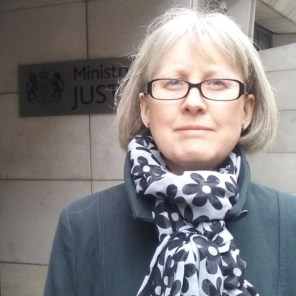
Interview outside Petty France straight after the disciplinary hearing
I had stood up and spoken out publicly on the state of our prisons and the state of the Independent Monitoring Boards that has a statutory role within each prison. Some may think I was too severe, and undermined the work that was done by volunteers. Others praised me for being brave enough to speak out as they were too fearful to face the consequences themselves.
I spoke from my experience and I spoke the truth. Seriously, the IMB is a shambles for the main part, a weak voiceless organisation that purports to be independent. Yes, there are some serious members that care about their role but blink and you will miss them! It’s not independent by any stretch of the imagination, it’s a department of the Ministry of Justice based at the MoJ headquarters Petty France.
I didn’t have to appear at the disciplinary hearing, the MoJ/IMB could have made a decision on my future as a Chairman of an IMB without my presence. I was determined to be there and try to uncover the ridiculous allegations against me. What a farce it was. I had been suspended from my role for 8 months and during that time was investigated twice by the MoJ.
During the investigation, I learnt that the article I wrote “Whistle blower without a whistle” in the Prisons Handbook 2016 was not an issue with the IMB Secretariat. The problem was that I spoke to the press. I was interviewed by my local paper ‘East Anglian Daily Times and by the ‘InsideTime’ prison newspaper. Suddenly my story was not only out in the open but was in every prison across the country.
Then came the prejudicial character assassination by both MoJ and IMB. I had struck a raw nerve. Three years previously the MoJ had commissioned Karen Page Associates to review the IMB. Conclusion was the IMB needed root and branch reform. They were so right, each board operating as a separate entity. There was nothing earth shattering about by article, I raised similar points to the review so why did the MoJ/IMB try to shut me down and silence me?
I believe it was a campaign initiated by a member of my board who had the audacity to send in additional material to the disciplinary hearing as he was scared that the decision would go in my favour and that I would reveal what was really going on in the IMB. It was rejected of course.
I didn’t realise that when you needed support or help in situations you faced as a member of an IMB it wouldn’t be available. There is so much I could say but basically the care team made up of members around the country that you could approach for support and guidance had been disbanded. So where difficult situations arose I was on my own.
Entering the hearing I was faced with a couple of familiar faces. The first panel member was on the executive committee for AMIMB. The same association that without permission had taken part of my article and printed it in their magazine and sent it to their members. So, no impartiality there.
I realised the MoJ had decided to change the terms of reference for the investigation without informing me, is that right?
The investigation was as a result of being suspended yet the direction and conclusion of the investigation had changed. I also found out the MoJ had been watching my every step for months and had a list of what I had said and when. Boy they were determined to silence me. I requested notes taken during the hearing and was disappointed but not surprised that so much that I had said was missed out. I don’t know what so-called “evidence” was sent to the Prisons Minister everything was done behind closed doors. They had made up their minds, nothing I could say or do would change that. Just as in the beginning of their campaign against me I knew there would not be fairness. Ironic that the IMB strapline is “Monitoring fairness and respect for those in custody”
Trying to silence me didn’t work
Since the hearing and at every opportunity without my hands being tied anymore, I have spoken out for positive change in the Criminal Justice System both locally and nationally.
I have met some amazing people, visited excellent schemes within prisons and worked with those I admire for their stand.
In trying to silence me the IMB/MoJ have given me a voice, a National voice. As I have said so many times before, I have never tried to raise my personal profile, for me the priority has been the issues I have raised. If you knew me you would understand this.
There have been so many that have walked beside me over the past year, some I have laughed with and some cried with. We have encouraged each other, we have shared our stories. I thank them all.
I am stronger now than I was a year ago and even more determined to play a part in the change that is needed within the Criminal Justice System.

I am a woman on a mission
With my kids no longer in education my summer doesn’t have a definite start or finish date any more. Summer just happens.
I’m not one to sit around and do nothing or to sit on the beach or by the pool changing into a darker shade of lobster. No that’s not for me. Here are some of my highlights.
May
So, I will start on 16th May at the David Jacobson Gallery. Contrarian Prize giving.
This was an extraordinary event and I was privileged to have been nominated for this prestigious prize. A few months earlier I had met the founder Ali Miraj and had prepared a short bio to be shown to the invited guests. It was a great evening and even though I didn’t win I was delighted to have been a part.
Two days later I attended a networking lunch with Lady Val Corbett, Professional Women’s network designed as a way for Executive ladies to support one another whilst raising money for the Robin Corbett Awards.  I have attended these awards for the last two years and to be part of this network is something I am proud of. I was introduced to the group of ladies by Lady Val which stimulated much conversation afterwards.
June
This month revolved mainly around coffee and food.
Coffee with Hugh Fraser, actor, and crime writer (Captain Hastings from Poirot) He was such a gentleman and we talked about crime, prisons etc
Lunch with Chris Moore, Chief Executive of the Clink Charity at Brixton Prison. Great food great company and lots to catch up together.
Dinner with Peter Holloway CEO Prison Fellowship England and Wales
Other stuff included:
Giving a talk to a local group on Restorative Justice
Being interviewed by a German journalist from DIE ZEIT
July
Started the month at a Rick Astley concert with my closest friend Helen, our dancing to 80’s hits was a sight for sore eyes!
Coffee with Zahid Mubarek Trust
Lunch with Ali Miraj (Contrarian Prize)
On 12th July BBC article by Laurence Cawley which he expected to get around 200,000 unique views, in fact it reached 690,000 unique views on the first day and was the 8th most read article that day globally on the BBC.
In Westminster for the launch of Proof magazine with the Justice Alliance

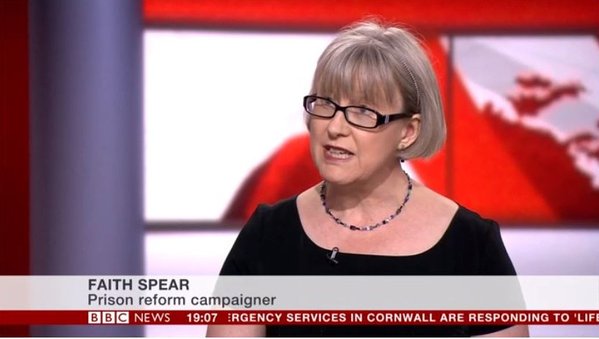
18th July Interview by Ben Brown live on BBC News Channel
Met up with a friend who works in Petty France, good job walls don’t have ears!
Met Natasha Porter (Unlocked Grads) spent the morning chatting with the team and observing some of the training in the form of workshops
Interview with Injustice Documentary for a blog promoting new documentary out in October
August
Tea with a journalist friend in London for a catch-up
Travelled to London to be interviewed by Simon Israel for Channel 4 News at 7pm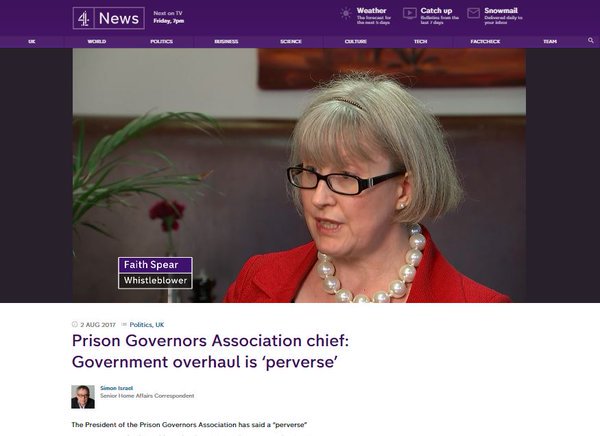
Afternoon tea with a friend, an ex-offender working within the prison system has a lot of experience and a true gentleman.
Bloomsbury book launch for Michael Irwin, meeting with other Criminologists and chatting over a G&T, perfect.

Lunch with various charities, yes food again including Jane Gould (Clean Sheet)
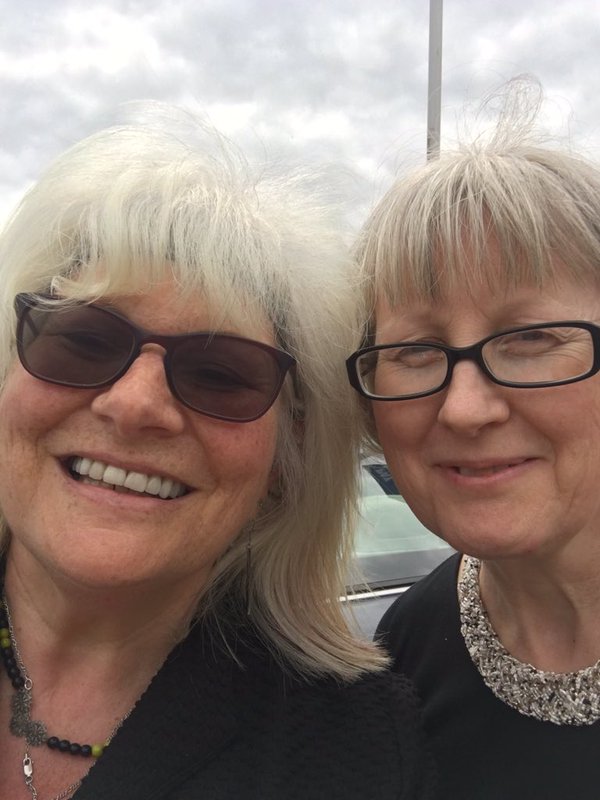
But now as Autumn has arrived there is work to do.
I am a woman on a mission.
Watch this space!
The Power of the written word

Richard W. Hardwick (@RWHardwick) asked me recently if I would consider writing a review for his new book The Truth About Prison in the form of a blog. So here goes.
Reading this book is like listening to myself as Richard writes like I think!
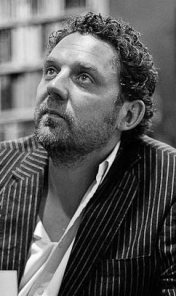
This is a compilation of journeys of many people within a prison environment with a reoccurring theme, the truth about prisons. Truth can be hard to swallow, it can be hidden, but it’s there if we take the time to find it.
I know that speaking the truth can come at a personal cost.
Truth also hurts. But should we ignore it, should we cover it up? No, certainly not.
Walking into a prison is like opening that door C.S. Lewis wrote about and entering another world. A world without the same rules regulations or expectations. To start with its rather strange, almost intriguing and no day is ever the same. Conversations are limited, people are watching you and waiting for you to make a mistake as you are expected to know the rules, but when they are unwritten how can you? It’s like you walk into someone else’s life
When you start reading this book you open in your mind that wardrobe door. If you have never visited a prison you begin to visualise what really happens, who lives and works there. Most importantly you begin to wonder what are the benefits? What is its purpose? And just Why?
Questioning the stories, the anecdotes, the nitty gritty of prison life changes you. Once you open that door there is no going back. From then on, the reader cannot say “I never knew” as you have just begun to learn and hopefully understand about prison.

On release why does punishment continue?
Sentencing removes many from society and places them in Prison.
But what happens when they are released back?
With their belongings in a bag and a small grant off they go back to the society that removed them in the first place.
Then what?
Due to the nature of the crime or the often-complex background many face the prospect of no real home and no job.
I speak at every opportunity of my frustration that skills acquired in prison are seemingly just worthless on release. The skills need to match the work available. However, I have seen excellent examples of tutors training those in prison and encouraging them to reach standards that they never thought possible. I have read letters and cards sent to these tutors in thanks for believing in them and helping to achieve qualifications that have led to decent jobs on release.
Unfortunately, this doesn’t happen enough.
What about those with existing skills that have had to lay dormant whilst they serve their sentence?
How can they re-join the workplace?
Should they be able to go back into their old job or field?
For some picking up where they left off is not an option due to the nature of the crime, family circumstances or health.
But if we build a barrier to those who pose no threat to society which prevents them from re-joining their work sector then are we continuing to punish?
One perfect example is a man I have known for over 4 years. He is articulate, polite, intelligent, well dressed, always encouraging, constantly pushing for prison reform, and has a network that most would be grateful for. He has been known to take into prisons celebrities such as Russell Brand and Derek Martin and MP’s to encourage those on their journey in life.

He has written two books on his experiences whilst in prison and the challenges he faced on release.
His name is Jonathan Robinson, a former helicopter instructor.
After helping an MP with content for a book, he asked for a reference to get back to the job he loved so that he could once again use the skills which he had acquired over many years. You would think that was a simple enough request. He asked and was told YES.
But then was told NO and was hit by deafening silence that I have personally witnessed on many occasions from MP’s.
His story can be found this morning as a guest blog on www.prisonerben.blogspot.co.uk please read it as one day it may be someone you know facing the same stigma.
If Jonathan was prevented from working what hope have others?

Contrarian Prize 2017 nominee
I feel proud to have been nominated for the Contrarian Prize for 2017 and thank you to Ali Miraj and the judges for considering me for this prestigious prize. My congratulations go to Professor Patrick Minford for winning the Contrarian Prize 2017.

Ali Miraj with Faith Spear
This is the Mission statement for her Majesty’s Prison Service for England and Wales:
“Her Majesty’s Prison Service serves the public by keeping in custody those committed by the courts. Our duty is to look after them with humanity and help them lead law-abiding and useful lives in custody and after release”
I’m sorry but this is nonsense
- The reality is that on average there is a suicide in prison every 3 days
- Violence is on the increase
- Self-harm is on the increase
- Drugs are everywhere.
- Prisons are overpopulated and under staffed.
- Many prisoners are locked in their cell for up to 23 hours per day with little to do and little to eat.
Our prisons are in crisis but reform is taking too long. It has become a humanitarian issue.
Yet, for speaking the truth to those in power for prison reform I was bullied, ostracised, suspended and investigated by the MoJ for misconduct.
Despite a prejudicial character assassination against me, continuing to speak out for prison reform and for speaking to the press was, according to the MoJ, gross misconduct so the Prisons Minister dismissed me from the Independent Monitoring Board for 5 years.
I haven’t finished yet I’m just getting started. I assure you this I am not shutting up and I am not going away. I will put this nomination to work immediately by using my voice as a Contrarian to assure reform in the Criminal Justice System.
I’m not here to join the debate I’m here to change the debate…that’s what Contrarians do!

Has prison reform become a humanitarian issue?
Think carefully – why would people who have been released from prison want to be integrated back into a society that thinks it’s okay for them to be locked up for 23 hours a day, with little nutritious food, lack of education, virtually no purposeful activity, squalid living conditions, unsafe, rife with drugs and violence, where staff struggle to maintain order, where corruption, suicides, self-harm and unrest are all increasing, where budgets are cut and staff numbers reduced.
Surely it’s time we asked why?
I think it’s because prison reform should not be just a political issue.
Regardless of who the Secretary of State for Justice is, or who the Prisons Minister is, or what political party they are from, prison reform should not be contingent on who is at No 10, it should be happening anyway.
It has become a humanitarian issue.

Nominee for The Contrarian Prize 2017
I want to get things done.
I’ve had some prison Governors and Officers talk to me about prisoners and – honestly – I cannot even repeat the words that came out of their mouths.
And yet I’ve had other prison Governors and Officers confide in me about the growing concerns they have for people in prison.
On Friday 28 April, I learned that I was named a nominee of The Contrarian Prize 2017. It’s a prestigious prize for those who have shown independence, courage and sacrifice. I didn’t apply for this or seek the nomination, it found me. And I’m deeply grateful for it.
My fellow nominees are a formidable bunch and we’re all Contrarians in our own way. In my case, I wasn’t afraid to speak the truth to those in power, talking about the criminal justice system in the public interest. Doing so came at a huge personal cost including a face-off with the ‘goliath’ of the Ministry of Justice.
I’d like to use this nomination to propel and advance the issues I’ve been talking about. If it means we can see change and real prison reform by people seeing it more as a humanitarian issue then it has been worth it.
~
Contrarian Prize 2017 shortlist announced here
The Contrarian Prize seeks to recognise individuals in British public life who demonstrate independence, courage and sacrifice.
Now in its fifth year, it aims to shine a light on those who have made a meaningful contribution to the public debate through the ideas that they have introduced or the stand they have taken.
Ali Miraj (@AliMirajUK) is the founder of the Contrarian Prize.
~

On this day the only April fools are my critics
Today marks a year since my life was turned upside down.
On this day, one year ago, I accepted an invitation from the editor of The Prisons Handbook to write an article on my personal experiences of being a member of the Independent Monitoring Board (IMB) for the Prisons Handbook 2016.

Door of opportunity: University Library, Cambridge
If I wrote it, he promised to publish it, and he did! You can find it on pages 20-23, after Michael Gove’s Foreward and just before the transcript of David Cameron’s speech on prisons.
Little did either of us realise the scale of interest from that one article.
Even before the book went to press I was catapulted into the media both local and National.
The local IMB board, IMB Secretariat, President of the National Council and National Council itself all decided that I needed to be shut up and shut up quickly.
The bullying started, then the intimidation, then the lies and then the prejudicial character assassination.
One Hollesley Bay IMB member who is still a member had the audacity to tell me that it would have helped if I had cried in front of the board whilst apologising for writing the article.
Call me contrary, but I make no apologies for having written the article. It was well grounded and factually correct, corroborated by the contents of the report by Karen Page Associates which the Ministry of Justice itself commissioned.
I did apologise for any offence caused as that was not my intention. The issues I raised are as important now as they were a year ago, I haven’t seen enough progress in any of the points I carefully considered and wrote about.
Those who truly know me can understand why I spoke out so passionately and continue to do so. I was given a platform which I took eagerly but never expected the venom, backlash, and dirty tactics by the IMB and MoJ in trying to destroy me my reputation and my working life.
But I have remained and will continue to remain steadfast in the knowledge that I spoke the truth and ultimately that’s all that matters.
My life has been turned upside down but I’m in some way I’m grateful for that. I have had the privilege to meet some of the most extraordinary people both in and out of prison and I have no regrets.
So, I’m not shutting up and I’m not going away
I’m #justgettingstarted
Join the conversation on Twitter: @fmspear #justgettingstarted
~

Over 60,000 allocated visits in prisons by the IMB
Did you know that there are between 60-65,000 allocated visits by the IMB to Prisons and Immigration Removal Centres each year?
This allocation is dependent on the money available for expenses such as travel and subsistence. But that is not the actual number of visits.
I can reveal to you for the first time that since April 2016 HMP/YOI Hollesley Bay, an open Cat D prison, only achieved 58% of its allocated visits.
That cannot be effective monitoring and yet the MoJ has repeatedly told me that effective monitoring is going on there. Really?
How many more prisons do not satisfy their allocations?
If the projected percentage of allocated visits turns out to be 58% in terms of actual visits across the custodial estate then monitoring in YOIs, HMPs and IRCs is dangerously low. It also means that this part of the National Preventative Mechanism (NPM) is dysfunctional.
The IMB is very topical on Twitter now and that’s not just because of my story.
There are many vacancies on boards from Cat D open prisons to closed and remand prisons. It’s not a glamorous job, you need passion, determination, time, and a true interest in the welfare of prisoners and the mechanisms of the prison estate. Oh and you won’t get paid, there are no guarantees that your voice will be heard and there is a lack of support from IMB Secretariat. If you can get beyond all that, apply.
Some IMB members only visit wings to retrieve applications from the IMB boxes and perhaps to speak to those that have asked to see them. But if the IMB members are regarded by prisoners as practically useless, having no influence and are part of the MoJ then what are tax payers paying for?
Annual Reports
Every IMB is required to write an Annual Report. However, by the time it is published it is so out of date that it precludes any chance of swift meaningful action to resolve issues and will be filed away to collect dust just as previous years.
Am I being harsh? NO.
I have spent hours and hours preparing, collating, and writing Annual Reports. I was determined that the 2015/16 Annual Report for HMP/YOI Hollesley Bay would be different, that it would not be cut and paste as previous years. But there will be no Annual Report for 2015/16. I don’t even know where all the preparations went it was abandoned when the HBIMB ambushed me on 19th April and ostracised me in reprisal for speaking out for reform.
I recently learned that HMP Doncaster didn’t publish an Annual Report and it does not even have an IMB board. When the Chair left the board followed and it then had to rely on members from other prisons dual boarding.
So how many other IMB’s are suffering from similar dilemmas?
Updated 07 March 2017
Its even worse at HMP/YOI Hollesley Bay than I revealed when I posted this blog on Sunday.
Information made available to me show new figures for the actual number of visits is even lower.
Allocated visits were 354 actual were 204. New figures allocated visits 354 actual were 196.
Just 55%, Lousy performance means that when monitoring is not effective it places people in custody and people who work there at higher risk.

Why our prisons need to be reformed
First published 05 January 2017 in East Anglian Daily Times under the headline ‘Prison reform is taking too long, say ex-Hollesley Bay IMB chairman and former inmate’
Had the authorities listened to the Independent Monitoring Board (IMB) at HMP Birmingham the riot on 16 December maybe could have been prevented. In their annual report the IMB wrote:
“the increasingly difficult behaviour of individual prisoners coupled with staff resource constraints give the Board cause for concern… Many staff are now concerned for their personal safety as well as for the safety of the prisoners… A solution is required urgently.”
Instead what happened was described by the Prison Officers Association as the biggest prison riot since Strangeways in 1990.
So why have prisoners behaved in this way?
Toxic combination
Sentencing guidelines have placed more people in prison for longer periods of time and has, therefore, inflated the prison population to record numbers. This in turn has given rise to overcrowding, and together with under-staffing and the emergence of psychoactive substances also known as “legal highs”, our prisons have become places of deprivation on a record scale. It’s a toxic combination.

Faith Spear
Less well publicised factors such as restricted access to education, to facilities, and the right of association with one another add to the frustration felt by those living inside. People being locked in their cell for 23 hours every day or sometimes for days on end during “lock down” creates a volatile atmosphere.
A high number of people in custody suffer from genuine mental health issues. They are imprisoned sometimes to protect society. But those are in the minority. Many people in prison with mental health issues are only there because the courts have no idea what else to do with them. For their sake and for the sake of society in which we all live, it is entirely the wrong place to send them.
IPP is defunct
Others are in prison under the now defunct rules on Imprisonment for Public Protection, known simply as “IPP”. These people don’t have a release date. Many prisoners today under IPP have already served time far beyond the normal tariff They are left to languish until the parole board decides it is safe to let them out.
I’m not saying we should open the prison doors and let everyone walk out. That would be reckless and irresponsible. But I am saying it is time to speed up the process of evaluation to make sure that those who don’t pose any risk to the public be allowed to go home as soon as possible.
What concerns me most is the utter boredom that so many of people in custody must endure. They are invariably portrayed as having a low IQ, a high percentage with a reading age of an 11year old; many have been in care and come from seriously complex situations. What isn’t realised is that many people in custody are intelligent, well-educated and have skills that could benefit other prisoners and need something worthwhile to do.
In other words, purposeful activity whilst in prison must be a priority. Lives are wasted here; I see it all the time.
So many organisations are involved in the ‘prison industrial complex’. Big money is made from those who find themselves on the wrong side of the law. Everyone wants a slice of the profits, but too little is re-invested in the prisoners and in the conditions in which they are held.
There are not enough links with the outside community, with colleges and University. Too few businesses are willing to give prisoners another chance, but without a fresh start it is impossible for them to be reintegrated back into society.
Beyond the Gate
I have seen the crushing stigma that ex-prisoners live under on release; the failure of a system that is meant to be there for them beyond the gate, the lack of accommodation, the difficulties of finding work, the list goes on.
It’s time for society to think differently towards people who find themselves in prison.
“Our prisons are in crisis and prison reform is taking too long.”
Art for arts sake/prison for prisons sake
I was in Liverpool at the weekend attending the ‘How violent is Britain’ conference, hosted by the University of Liverpool and the Centre for Crime and Justice Studies which was attended by academia, policy makers and practitioners within the Criminal Justice System.
Whilst walking around the Tate in Liverpool, I recognised some unlikely parallels believe it or not between prisons and art galleries. It started by me thinking “who decided this was art? why is this piece of art here? and Oh that is a good idea” we all have our tastes, our ideas, our expressions, we are all different, individual. Every piece of art here is numbered, recorded and catalogued. Some piece have been transferred from other collections or other galleries, yet some are new. There are many flavours, many expressions and many tastes here. Security is high, you are watched.
Now let’s turn the page; walking around a prison my thoughts are “who decided this was a crime? why is this prisoner here? and that is a good idea” Every prisoner is numbered, recorded and categorised. Some have been transferred from other jails or other institutions and some are new to the system. Many nationalities many ethnic origins are represented here. Security is high, you are watched.
Which environment do I prefer?
In a gallery I look, enquire, have an interest, ponder, sometime write, buy postcards as a reminder to myself and to show others and then leave and return to my world.
In a prison I look, enquire, have an interest, ponder, write reports to remind me and to inform others and then leave.
The difference is I cannot just return to my world, what I see and hear surrounds my mind and my soul. I cannot just turn away, I want to be able to initiate change, see progress and ultimately see the Criminal Justice System reduced. That’s not to say that I want to close all prisons, sack all the police and let people live how they want. But there has to be an element of Restoration, just like a dirty canvas to reveal the true picture. I believe justice should restore and not just criminalize. Some pieces of art have a lasting impression on me the same can be said of certain prisoners. There is an uproar when we leave pieces of art to rot and in so doing deteriorate in front of our eyes so let’s not let people rot in jails and have greater problems on release than when they arrived.
 The Criminal Justice Blog