
Home » Posts tagged 'prison reform' (Page 2)
Tag Archives: prison reform

The paralysis of too many priorities.
Sat immediately behind the new Secretary of State at the Justice Select Committee (@CommonsJustice) on 07 September, I registered a lot of awkwardness that was beyond mere nervousness felt by many a new joiner.
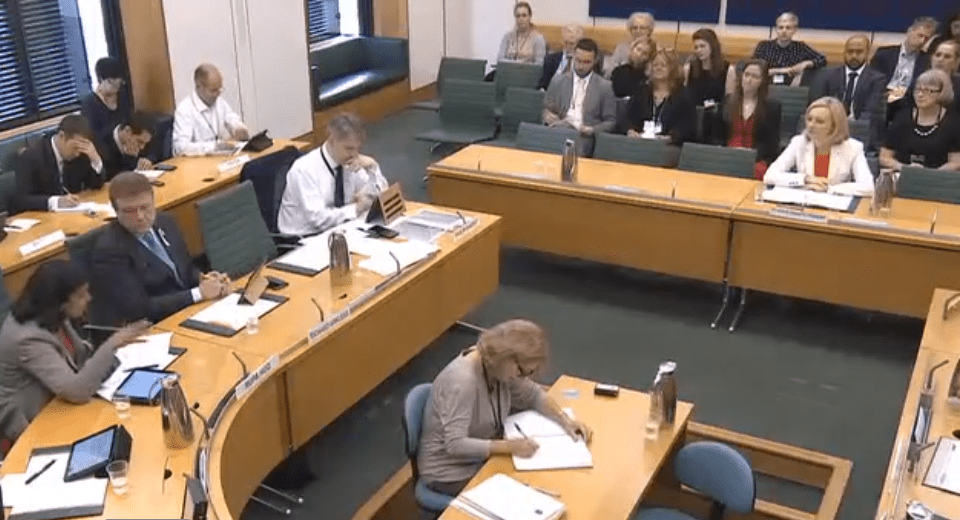
Thatcher Room, 07 Sept 2016
Just like Gove’s debut in front of the same Committee where he rattled on about “we’re reviewing it” (yes, I was there for that one too), Liz Truss (@trussliz) talked largely about the formulating of “plans” but on the day said nothing about tangible actions she will take.
How many more reviews do we need?
Has Truss inherited a poisoned chalice passed from one SoS to the next? Her department has a huge accumulated mess to sort out and doesn’t know what to do about it. Is she wondering what to tackle first? The paralysis of too many priorities?
Her critics say she’s doing things wrong. Look at it for yourself and you’ll see some of the priorities she is confronted with:
- Extremism and radicalisation in prison
- Violence against other offenders and against prison staff
- Over population
- Under staffing of prisons
- Death in custody
- Drugs and drones
- Education and purposeful activity
- Resettlement and homelessness on release
You would think her advisors would know what the order of priorities are. They don’t, or if they do, they obviously prefer the relative safety of “talking shop” over the tough task of taking concrete action on these priorities.
The key question people are asking is has she actually got the shoulders for the job; she has the high office and gilded robe of the Lord Chancellor but does she have the support of those working within the criminal justice system?
Soon after her appointment from Defra to Ministry of Justice, Liz Truss paid token visits to two prisons but cannot be expected to become an instant expert on the prison system.
What other mess does the SoS need to deal with?
The system of prison monitoring is in a mess. The IMB Secretariat is in utter disarray. They say they have policies and procedures but don’t always follow them themselves. For the most part, IMBs are doing their own thing. There’s no real accountability anymore. It’s a disgrace and it’s deplorable that it’s been allowed to get as bad as it has.

Faith Spear
For my critique of prison reform and Independent Monitor Boards, I’ve been put through two MOJ investigations. Each one takes away a little piece of me. But for me it’s always been about the issues. That’s why they can’t and won’t shut me up.
The message of prison reform has become urgent and has to get to the top. If no one else will step up and if it falls to me to take it then so be it.
No accountability anymore? Give me an example.
You want an example? Here’s one of many: At HMP Garth, the IMB Chair issued a Notice To Prisoners 048/2016 dated May 2016 without the authority to do so, and apparently without the Board agreeing it. The Chair acted unilaterally outside of governance. I found out about it because a copy of that prison notice was sent to me as it happened to be about the article “Whistle Blower Without a Whistle” that I’d written for The Prison Handbook 2016 that the IMB Garth Chair was pin-pointing, (accusing me of a “rant” whilst both his prison notice and covering letter were dripping with distain).
I’m still standing by all I said in my Whistleblower article even though writing it has been at a high personal cost. In all candour, any pride I may have had in writing it has been completely sucked away from me. It’s back to the bare metal. The inconvenient truth of what I wrote remains. Readers will find that my main themes also feature prominently in the findings of the report by Karen Page Associates, commissioned by the MOJ at a cost to the taxpayer of £18,500.
An invite I received from Brian Guthrie to the forthcoming AGM of Association of Members of IMB says it all. It read:
“From the Chair Christopher Padfield
AMIMB – the immediate future
IMB needs a voice. We believe that without AMIMB this voice will not be heard. AMIMB intends to raise its voice, but needs the support of our members.
An outline plan for the immediate future of AMIMB will be put up for discussion at the forthcoming AGM (11 October 2016 at 2 Temple Place). It aims to respond both to the main needs and opportunities, and to the practicalities of the current situation.The greatest need, as the executive committee of the AMIMB sees it, is to achieve a public voice for Independent Monitoring Boards – to let the British public know what we, as monitors, think about prison and immigration detention policy and practice in England and Wales and the impact this has on the men, women and children detained; to achieve some public recognition for the role of IMBs; in short to speak out about what we hear and see. We have urged the National Council to do this itself, but to no avail. In character, the NC propose as their contribution to the Parliamentary Justice Select Committee’s current consultation on Prison Reform, a response to a procedural question: ‘are existing mechanisms for … independent scrutiny of prisons fit for purpose?’ If the NC cannot or will not speak out, AMIMB should.”
Mr Padfield has served as IMB Chairman at HMP Bedford but to my knowledge has never been suspended pending investigation by the Prisons Minister like I was for speaking out on such things.
And therein lays the dilemma: whereas the official line is to encourage monitors to speak out, the reprisals levelled at you when you actually do are still shocking.
Is this what happens to women who use their voice?
People want you to get back in the box.
To shut up.
To go away.
The IMB doesn’t need a makeover; that would only hide most of the systemic problems behind filler and veneer. So rebranding clearly isn’t going to be the answer any more than putting lipstick on a pig.
People who think I want to abolish the IMB have totally misjudged me and the situation. I don’t want to abolish it. Far from it. I want the IMB to perform like it was set up to under OPCAT and to be all it should be as part of our NPM.
The clue is in the name: Independent. Monitoring. Board.
Have you noticed that the MOJ is haemorrhaging people at the moment?
Maybe Liz Truss could use that as an opportunity to enlist the help of those who do give a damn about the conditions in which people are held in custody and who do have a clue about strategies to stem radicalisation in prison, minimise violence, reduce prison over population, have the right staff and staffing levels, reduce death in custody, counter drones and drug misuse, revitalise education and purposeful activity, and last but not least, resettle and house people after their time in custody.
Join the conversation on Twitter @fmspear @trussliz @CommonsJustice #prisons #reform #IMB #AMIMB #SpeakUp
First published 17 Sept 2016.
Edited 18 Sept 2016.
~
We don’t just need a vision, we need a cause!

“She’s no rebel and she’s got a cause”
In the space of 6 weeks I have written an article which has been published in The Prisons Handbook 2016, just before the Prime Ministers speech. I have been interviewed by Ian Dunt with an article put on politics.co.uk, been in my local paper with a 2 page spread, had a front page article in Converse prison newspaper, had an interview with another newspaper with an article ready for the next months edition… If I can achieve all this in just 6 weeks, just imagine what could be achieved in 6 months or a year?. It’s all about going at pace.
It’s not always about what you have achieved in the past, although it does help. But it’s about what you can/will/want to do in the future.
Can’t abide being held back because of what I haven’t done yet. Especially when I’m at the start of something significant and have plenty of passion, energy and drive for what is to come.
And despite the knock backs, to keep a sense of humour.
Yes I have mainly worked with vulnerable adults and children before, but we all have a vulnerable side to us. Some are able to reveal it, others not, some it leads to being a victim and others it leads them into criminal activity.
Have you noticed how quick some people are to judge others, put you into boxes and to categorise? I hope you won’t judge my life by the chapter you just walked in on.
Prisons are no different.
Many problems arise when people enter the prison system and then leave in a worse state than when they arrived.
Why after all the money pumped into prisons is this happening?
Profits are made out of prisoners, we all know that.
How many reviews, reports can you count over the last say 10 years that involve prisoners?
There have been countless
How many organisations do you know that work hard to bring reform to prisons and prisoners?
There are countless
How much money has been spent on prison reform?
Countless
On 8th February, the Prime Minister set out a vision for prison reform. Mr Cameron said:
This system will be hard to change because it is, in some ways, still stuck in the dark ages – with old buildings, old thinking and old ways of doing things.
So I don’t want to go slow here – I want us to get on with proper, full-on prison reform.
Today, 27th May the Public Accounts Committee report warns that the criminal justice system is close to breaking point:
Report summary
- The criminal justice system is close to breaking point.
- Lack of shared accountability and resource pressures mean that costs are being shunted from one part of the system to another and the system suffers from too many delays and inefficiencies.
- There is insufficient focus on victims, who face a postcode lottery in their access to justice due to the significant variations in performance in different areas of the country.
Criminal justice system “already overstretched”
- The system is already overstretched and we consider that the Ministry of Justice has exhausted the scope to make more cuts without further detriment to performance.
- The Government is implementing reforms to improve the system but we are concerned that users of the system won’t see the full benefit for another four years.
- There are opportunities for the Ministry to make improvements before then, including better sharing of good practice and making sure that everyone is getting things right first time.
But what is the answer?
(If I had the answer I would be a very rich woman!)
Over the last few years I have visited every category of prison, YOI and Women’s. I have sat behind the Right hon. Michael Gove MP whilst he has been in front of the Justice Select Committee twice. I have attended meeting after meeting in Westminster, attended conferences, training courses, lectures, seminars etc. at my own cost.
Why?
I want to learn, I want to understand but most of all I want answers to the questions I have posed.
I also want to be a part of the change that is so desperately needed in our prisons.
We don’t just need a vision, we need a cause!
Vision is often personal, but a cause is bigger than any one individual
People don’t generally die for a vision, but they will die for a cause
Vision is something you possess, a cause possess you
Vision doesn’t eliminate the options; a cause leaves you without any options
A good vision may out live you, but a cause is eternal
Vision will generate excitement, but a cause generates power
[Adapted from Houston (2001)]
Houston, B. (2001) For this Cause: Finding the meaning of life and living a life of meaning. Castle Hill: Maximised Leadership Inc.
Why this Daisy is no shrinking violet!
A situation update for those of you closely watching this debacle.
Firstly, thank you for the many, many messages of support.
Two HBIMB members resigned this week and at the monthly Board meeting yesterday I was the only one present. Sure, four Board members did email in their apologies – all within 10 minutes of each other – and two others decided not to contact me.

How many daisies can you see in this photo?
One HBIMB member in particular is incredibly hostile towards me and, again, I am being told I brought it on myself.
I don’t understand why they are so blinkered; this job needs people who look at the bigger picture.
But I have assured the Governing Governor of HMP/YOI Hollesley Bay that independent monitoring will continue to be done.
At the moment, I am awaiting the outcome of the Independent investigation by the MoJ into how I was treated at the Board meeting on 19th April.
Last week, we had the Secretary of State for Justice addressing the Governing Governors’ Forum.
Today we had the Queen’s Speech (see paragraphs 21-23 on prison reform) and the publication of Dame Sally Coates’ report Unlocking Potential: a review of education in prison.
Prison reform is front and centre of the political agenda. There’s no better time.
So why is it that the IMB is so reluctant to move on, to become more relevant and to have a stronger voice?
I certainly don’t regret making a stand, I did nothing wrong, but it has been and still is at great personal cost.
The situation continues.
~
Getting personal about the cost of being a Whistleblower
When you feel so passionately about a subject or issue(s) it is very hard to keep quiet. This is what I have experienced recently:

It’s not about me. It’s about the issues I’ve raised.
I had to weigh up the risk of possibly causing offence versus the need to speak.
I decided to speak!
What happened next shocked me.
Suddenly people that I had respect for and worked so well with turned against me in the most brutal way. I didn’t expect everyone to agree with me but I certainly didn’t expect quite the fallout.
I was looking at the bigger picture and the wider issues but they were blinkered. Was I wrong to speak out?
NO.
I wanted to raise issues and put them firmly on the agenda of those that could or should actually do something about them.
Maybe the problem was that they didn’t expect someone like me to put their head above the parapet and voice my opinion. We all have a voice, we all have opinions and we should not feel that we have to suppress them. I did, I felt that I couldn’t really express myself, would anyone listen?
It was an important step for me to speak out and it has come at a great personal cost. I haven’t slept well or eaten properly since 19th April. I have felt under pressure, stressed out and really not myself. It has been an emotional roller-coaster.
I made the decision to stand up, I could have rolled over and played dead but I didn’t.
But people are listening, they are taking notice and they are supportive and above all they agree!
We all know the saying ‘action speaks louder than words’ but often you have to speak before any action can take place. So I’ve spoken and I expect results.
I’m not looking for a slice of the action, the last time I was in a newspaper was at the age of 10 having won an art competition with my sister and fellow classmates. Now the press come looking for me!
Prisons.org.uk (pdf)
Converse (pdf)
I have faced criticism like never before, I have been told that I am not fit to stand for the public office I occupy and that they could never forgive me for what I have done.
But really it’s not about me, or shouldn’t be about me; instead it should be about the issues I have raised.
Justice Select Committee part 3
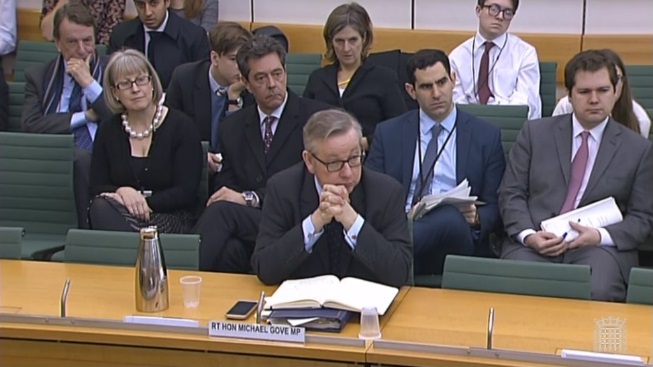
I seem to be making a habit of this; on Wednesday 16th March I attended the Justice Select Committee for the third time, again listening to the Rt Hon Michael Gove MP being questioned by a team of MP’s.
I sat behind Mr Gove and watched as he interacted with the committee. The meeting can be accessed from this link: http://parliamentlive.tv/Event/Index/e67772ca-8c75-4112-853a-0fbd80688389
The first question he was asked was “How would you encapsulate the overall purpose of the thrust of the Government’s prison policy”? Michael Gove replied “In a sentence, it is about turning prisoners from liabilities into assets”. Interesting use of language I thought.
He continued by stating that…”the critical thing is to make sure that during their time in prison there is purposeful activity…” I have come across some excellent forms of purposeful activity but to be honest there just isn’t enough going on. Is it all down to money? If millions can be found to build new prisons then surely purposeful activity has to be included.
The stories coming out of many of the prisons in England and Wales are appalling, locked up at least 22 hours a day, rat infested are but a few I have read this week.
When will we see real progress?
The most successful custodial establishment according to Nick Hardwick former chief inspector of prisons was the Military Corrective Training Centre (MCTC) in Colchester. However, in October 2015 there were 35 being held at the MCTC, hardly an example to compare. The ratio of staff to detainees is far higher than within the prison estate which is surely a factor along with greater governor autonomy that contributes to its success. I have visited it and was impressed by the order, cleanliness and regime. https://www.gov.uk/government/uploads/system/uploads/attachment_data/file/484448/Detainees_Military_Corrective_Training_Centre_Colchester.pdf
But how do you really measure success?
Michael Gove gave an example of Bronzefield prison as being a very successful female prison, yet this week one of the main stories I have read is about staff giving out sleeping bags to women released with no accommodation. It doesn’t add up!
I want to read more success stories, see real progress and watch as these “liabilities are turned into assets”
Westminster: Justice Select Committee
Tuesday 9th September 2014
Entering into Westminster Hall with its stone floor, places where famous people have stood and given speeches and seeing police with weapons can make you wonder where on earth you are. But walking up the steps at the back you enter a statue lined corridor and then you enter the lobby, beautiful architecture which never ceases to amaze me. I half expected to see Nick Robinson conducting an interview, instead I met Jonathan Robinson, an ex-prisoner, now author and prison reform campaigner.
Jonathan Robinson along with Paula Harriott, Head of Programme, User Voice, Angela Levin, former Chair of HMP Wormwood Scrubs Independent Monitoring Board, and Deborah Russo, Prisoners’ Advice Service were witnesses giving evidence on Prisons: Planning and Policies in front of the Justice Select Committee. The complete oral evidence is available from the following link:
I decided to sit in the public area and hear each witness in order to gain insight into what is actually happening in prisons. It is important that prisoners are rehabilitated whilst inside and one way is through using the skills that are present within the prison population itself.

Courtesy of Parliamentlive.tv
The Toe by Toe project run by the Shannon Trust is an excellent example of this, where literate prisoners help those that are illiterate. This is a peer-to-peer mentoring program. Not being able to read has a negative impact on job prospects and also self-esteem. It’s quite shocking when prisoners that have been in the prison estate many years face release unable to read!
Jonathan Robinson has spent the last three years pushing for prison reform, he has written on his own personal prison experience and is a voice for those inside. He champions mentoring and is on the Advisory Board for NoOffence CIC!
http://www.jonathanrobinson.org/

A remarkable woman with a cause – Lady Constance Lytton

In Prisons and Prisoners: some personal experiences by Constance Lytton and Jane Warton, Lady Constance Lytton challenges the current thinking of the 20th Century Anti-suffrage politics. Putting herself forward to be a champion of women (Lytton, 1914, p. 10) in the hope that one day women would be on a political equality with men (Lytton, 1909, pp.22-23)
This book is a comprehensive and at times a harrowing personal account of her four prison sentences as a militant suffragette in her pursuit of a purpose in life. It is a compelling insight into the mind of a young woman consumed by a cause which would be instrumental in prison reform and votes for women and would be a contributory factor in her death.
Desperate to find some way of empathising with the other suffragettes, Lady Constance Lytton had a desire to stand beside those who were fighting not as a spare part but as a comrade. Taking on the guise of “Jane Warton” was her way of experiencing the horrors of prison life including force-feeding, without receiving special treatment and privileges as a result of her family connections. Although her health suffered, she showed courage and determination and an undeniable dedication.
Concentrating on political injustice and votes for women, Lady Constance Lytton analyses disparities in punishment depending on social class and gender and the rights of women, developing the notion that the suffragette’s militant actions were political, rather than purely criminal.
Lytton, C. (1909) “No votes for Women”: A reply to some recent Anti-Suffrage Publications. London: A. C. Fiefield
Lytton, C. (1914) Prisons and Prisoners: Some Personal Experiences by Constance Lytton and Jane Warton, Spinster London: William Heinemann
Helpful or satisfying: What will victims of crime make of the new Restorative Justice Action Plan?
 In 2001 Lord Justice Auld recommended: ‘The development and implementation of a national strategy to ensure consistent, appropriate and effective use of restorative justice techniques across England and Wales’ (Auld, 2001, p. 391 para.69).
Last month the ‘Restorative Justice Action Plan for the Criminal Justice System’ was launched. “This action plan is a joint commitment to develop a more strategic and coherent approach to the use of restorative justice in England and Wales. It sets out the steps that will be taken to achieve this aim”.
This is an important step, but I have been reflecting on why it has taken more than a decade from Auld’s original recommendation to publication of the action plan itself.
In his ministerial forward Jeremy Wright MP states, “Restorative justice has the potential to break the destructive pattern of behaviour of those that offend by forcing them [italics mine] to confront the full extent of the emotional and physical damage they have caused to their victims”.
True. But why does Wright use the term “forcing them”?
Contrast this with the definition of Restorative Justice taken from Marshall (1999, p. 5) which is one of the most widely quoted. It states:
“A process whereby all the parties with a stake in a particular offence come together to resolve collectively how to deal with the aftermath of the offence and its implications for the future”
Earlier in his ministerial forward, Wright says “The benefits of restorative justice are well known by those working within the sector. 85% of victims who go through restorative justice conferences find it helpful [italics mine]”.
Is the best criteria to evaluate restorative justice as to whether it was “helpful” or not? I guess it depends of what is meant by helpful.
This reminds me of Andrew von Hirsh’s comments (Von Hirsh et al, 2003) when he observed participant satisfaction [italics mine] as being a criteria used to evaluate Restorative Justice, yet there was no explanation as to why “satisfaction” was an appropriate and meaningful criteria.
References:
Auld, Rt. Hon. Lord Justice (2001) Review of the criminal courts in England and Wales: Report. London: The Stationery Office.
Marshall, T. (1999) Restorative Justice: An Overview. London: Home Office Research, Development & Statistics Directorate.
Von Hirsch, A., Ashworth, A. and Shearing, C. (2003) ‘Specifying aims and limits for restorative justice: a “making amends” model?, in Von Hirsch, A. Roberts, J., Bottoms, A. E., Roach, K. and Schiff, M. (eds.) Restorative Justice and Criminal Justice: Competing of Reconcilable Paradigms? Oxford: Hart.
 The Criminal Justice Blog