Home » Posts tagged 'prison reform'
Tag Archives: prison reform

Chocolate & Grace: Succeed in the face of adversity
Back in 2017, in The Clink restaurant in HMP Brixton, I had lunch with Chris Moore, the then Chief Executive of The Clink Charity, and a lady from Scotland. We listened carefully as she shared her vision of helping women caught up in the justice system, with chocolate. Her vision was realised later that year, but we lost touch.
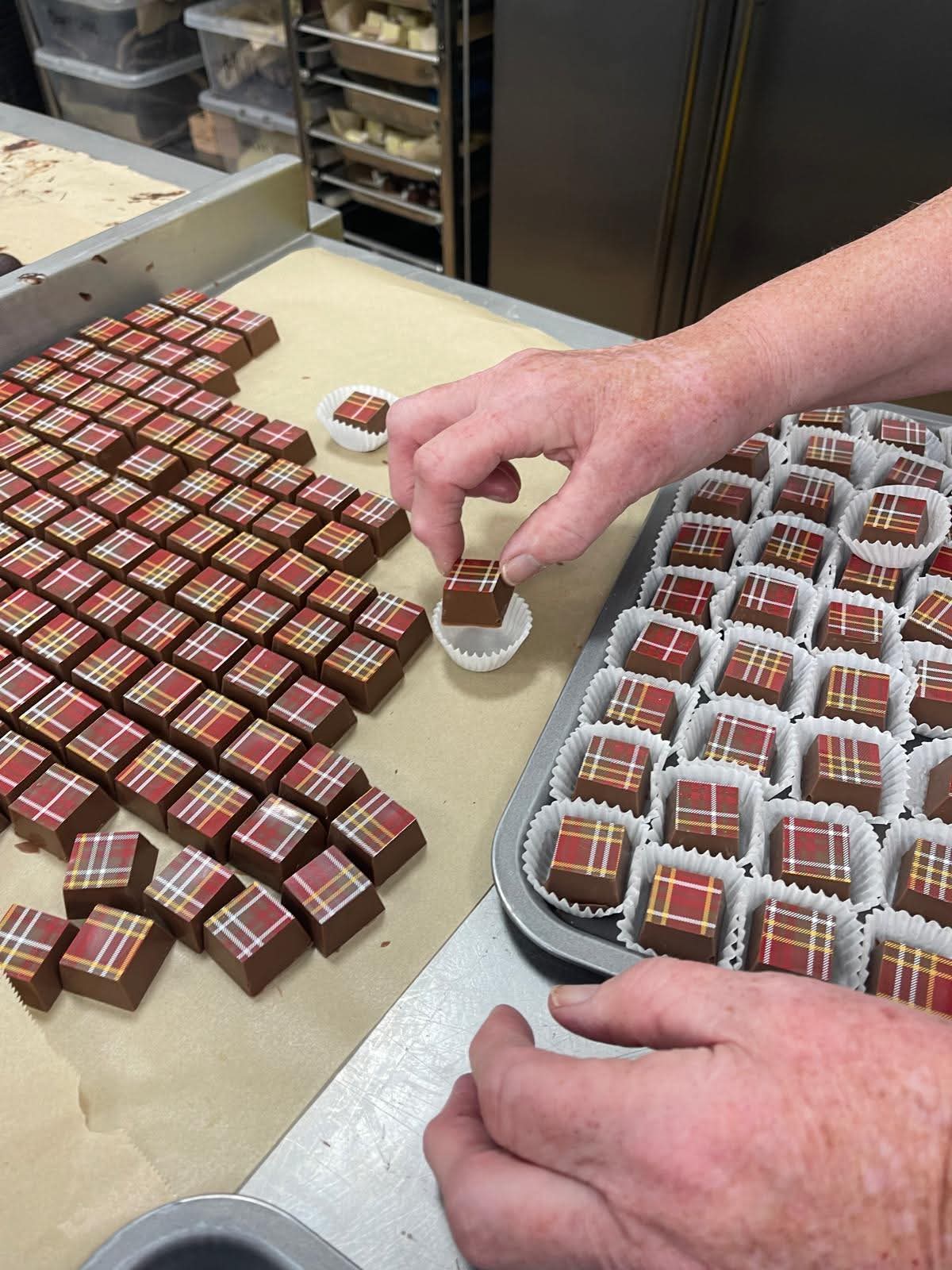
Last week, eight years later at Lady Val Corbett’s Professional Women’s networking lunch, I met Louise Humpington, CEO of Positive Changes, a CIC trading as Chocolate and Grace. The very same initiative that I had heard about all those years earlier. Louise became involved in July 2024.
This is the story of Chocolate & Grace, kindly written by Louise:

In a bustling kitchen in Stirling where the aroma of melting cocoa lingers, something more profound than chocolate is being crafted. Chocolate & Grace is not simply about indulgence; it is about empowerment, dignity, and rewriting futures.
At its heart, this initiative provides women who have lived experience of the justice system, with a safe, supportive space to heal, connect, and grow. Women describe the empowerment they feel when they are truly valued, treated with respect, and given the agency to rebuild their lives. Here, they are not defined by past mistakes but celebrated for their resilience, strength, and capacity for transformation.
Isolation is one of the silent challenges faced by many women leaving the justice system. Chocolate & Grace breaks that cycle by fostering community, reducing loneliness, and encouraging meaningful relationships. In doing so, it helps rebuild lives and, crucially, reduces reoffending—creating a positive ripple effect across society. The impact is not only personal but economic: lives rebuilt mean less strain on the public purse and a healthier, more connected community.

Every chocolate made is infused with purpose. Behind each truffle or bar is a story of hope, courage, and determination. Alongside training and employment opportunities, the program offers trauma-informed support and a platform for women’s voices to be heard, acknowledged, and amplified. The women are credited not as passive recipients of help, but as active changemakers who demonstrate extraordinary commitment to transformation.
Chocolate & Grace is proof that with compassion, respect, and opportunity, cycles can be broken. It is a movement that blends social impact with sweet creativity—reminding us that true empowerment is not given but cultivated, one act of grace, one piece of chocolate, one woman at a time.
But this approach isn’t just important for the women being supported by Chocolate & Grace, it also represents a critical redefining of what leadership and success look like.
This change matters not only because it corrects decades of narrow norms, but because it unlocks better outcomes for organisations, teams, and society. One in four people in the UK will have had been subjected to Adverse Childhood Experiences or some other trauma. Better recognising how marginalised groups and disenfranchised people can contribute because of their lived experience and not in spite of it, is not, therefore a nice to have, it’s a fundamental shift that society needs.
When we value difference, leadership becomes more human. It shows the value of connection, trust, and authenticity as strengths, not liabilities.
It shifts the metrics by creating a space where success isn’t defined solely by outcomes like profit, efficiency or hierarchy. Wellbeing, purpose, sustainability, inclusion are finding a space and making leadership more holistic and resilient in turbulent times.
When the rules are reworked, it opens up space for diverse voices that have been traditionally marginalised or excluded. It empowers people, amplifies their voices and revers the value of their perspective.

There is no question that challenges remain, but as we continue to push boundaries and challenges status quo, momentum builds. Systemic obstacles (bias, unequal expectations, lack of access) still create barriers. But as more women lead by new norms, those norms themselves become harder to ignore or dismiss. We are changing the normative landscape in leading by example, and in amplifying the voices of those who have the most to teach us about what it is really like to succeed in the face of adversity.
The chocolates are delicious, if you would like to support this inspiring organisation have a look at their shop and treat yourself (and others) https://www.chocolateandgrace.co.uk/collections

Dichotomy of Lived v Learned Experience
I first stepped foot in a prison in 2010; I was invited to be a community witness for a victim awareness course at HMP/YOI Hollesley Bay, around 40 minutes’ drive from my home. The environment was unfamiliar and so were the attendees. At that time, I was approaching my final year at University studying for BSc (Hons) Criminology, as a mature student, and I needed to figure out what my next steps should be. Each presentation I prepared as part of my coursework steered towards the justice system, prisons in particular. The first being a 10 minute talk on the Corston Report, by Baroness Jean Corston, published in the light of 6 women dying within a year in Styal prison.
I still remember the feedback I received as it was rather disheartening “Who is interested in women in prison?”
It soon became clear to me that very few were interested in prisons at all, both fellow students and lecturers.
Undeterred I carried on, highlighting where possible the appalling issues within the prison estate.
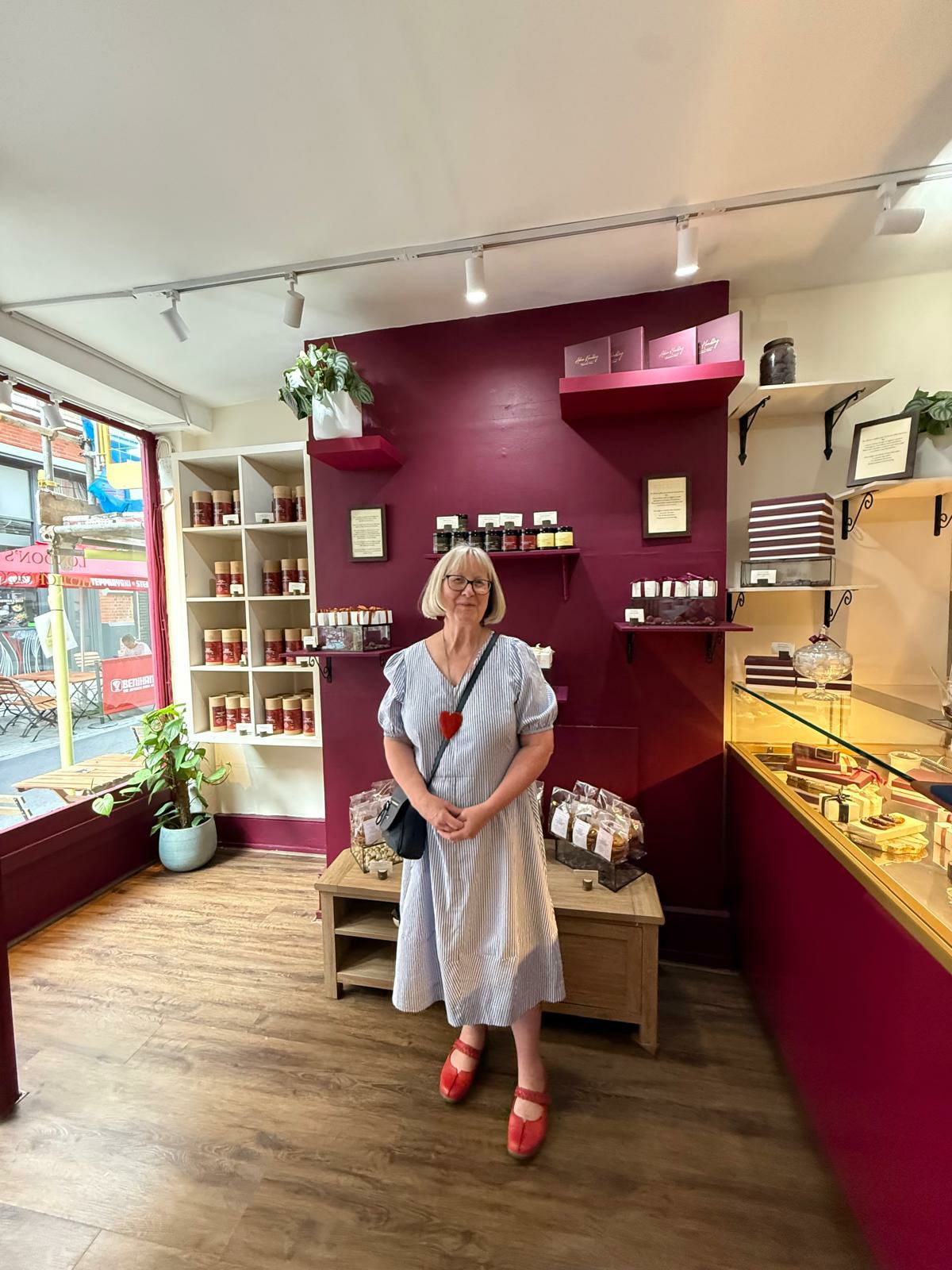
So, 15 years on, I have had the privilege to visit every category of prison up and down the country including the Women’s estate. I have delivered training in prisons, monitored a Cat D prison and became the Chair of an Independent Monitoring Board (IMB), attended numerous prison art exhibitions, toured prisons on the invitation of Governors, watched graduation celebrations for those that have completed courses in a Cat B, listened to guest speakers in prison libraries, judged a debating competition in a Cat C, written and edited policy documents and have published countless blogs that have been read and shared in over 150 countries. I have tirelessly spoken out for reform, and my work has been mentioned in the House of Lords.
I have seen the desperation, and I have felt the fear in prison, yet I have never resided in a prison.
“Well, what do you know?”
This question often ringing in my ears, as though I have just popped in from another planet.
“You don’t have lived experience”
A statement that is levelled against me far too many times to remember along with being White, A woman and Middle class…etc.
“Why is your writing so negative, instead of writing about problems, come up with solutions?”
It’s true, I don’t have a certain kind of “lived experience”, I’ve never stood in court accused of a crime and pleaded guilty or not guilty. I’ve never attended court awaiting my fate when the sentence is being read out.
I have sat and watched trials in the Supreme Court, the High Court and the courts in my local area. I have attended inquests and have given evidence, but most importantly I have been there for others, in court, supporting and comforting.
We all have lived experiences in some form. Personal lived experience of the justice system gives valuable insight, but does it make you an expert?
Surely, we can all work together to bring about much needed reform in our all too often failing system.
I believe there is a place for all who share a desire, a passion and determination to transform our criminal justice system into a fairer and more just structure. To give those that are or have been in prison the tools to rebuild or even build their lives for the first time. To give hope and a future.
Should lived experience and learned experience go hand in hand?
Do you think both are credible experts to whom we should be listening?
However, recently we have read about an individual with lived experience that became a valuable member of a prominent reform organisation, given responsibilities and then defrauded their employer.
This wasn’t a small amount, it was over £300,000. The organisation – Prison Reform Trust (PRT). They had appointed an individual with a previous fraud conviction for a senior role involving financial responsibility. Little by little right under the nose of the board of trustees, with the then Chairman who is now the Minister of State for Prisons, Probation and Reducing Reoffending. The current CEO, the former Head of Women’s prison estate was quick to say: “We would like to assure our supporters that no programmes or services were affected by this incident, and the charity remains committed to its mission to create a just, humane and effective prison system”.
Basically the money wasn’t missed?
That quote came from this statement on 19 May 2025 which has now been removed from the PRT website, so I have included a screenshot of it.

So where were the safeguards?
This case reminded me of 2021 when I received the Prison Reform Trust (PRT) booklet to commemorate their 40 years, after having attended their celebration in London. A short time afterwards I read the former CEO of The Howard League, Frances Crooks (farewell) piece.
PRT and The Howard League are two organisations that work for reform, two organisations that basically admitted they had failed in what they set out to do.
So why is so much money ploughed into them through donations, grants, membership, and legacies?
Both have an annual salary bill of over £1M, astonishing isn’t it. Yes, they have initiated some important campaigns, but our prisons are still in crisis and reform is taking too long.
So, what is going wrong?
Does the Ministry of Justice (MoJ) squeeze organisations and charities by limiting their progress and their ability to instigate change? Many rely on either their approval or their funding.
As you can deduce, I’m not here to popularise organisations, or to popularise individuals.
I am fiercely independent and intend to stay that way.
But I have many questions.
Was the system designed to be ineffective or designed to perpetuate harm?
Should prison be a place for healing as I have heard others say, or a place for true reform of itself or individuals?
Do we try and change something that does not want to change, does not want reforming, where politicians gaze briefly at and when those in a position to do something, don’t?
It is a place where inspectors inspect and issue recommendations, a place where monitors monitor and issue recommendations.
Endless reports and endless reviews.
Endless round table meetings.
New committees formed.
Let’s just step away for a moment.
I hear big voices, big egos and big personalities shout out, but no one can hear anything anymore.
Has society closed their ears to the noise?
Has society closed their eyes to the mess?
I will say again “Our prisons are in crisis and reform is taking too long”
Vision is often personal, but a cause is bigger than any one individual
People don’t generally die for a vision, but they will die for a cause
Vision is something you possess, a cause possess you
Vision doesn’t eliminate the options; a cause leaves you without any options
A good vision may out live you, but a cause is eternal
Vision will generate excitement, but a cause generates power
[Adapted from Houston (2001)]
You can have lived or learned experience, but what is your cause?
If the cause is yourself, this is not true reform, it is perpetuating the system with a sense of power.
If you have a cause and integrity you are seen as an interrupter.
But the greatest power is humility either lived or learned.

3 FILMS HIGHLIGHTING “MONUMENTAL INJUSTICE” OF IPP SENTENCES PASS 20 MILLION VIEWS
Social media sensation Peter Stefanovic – a lawyer, campaigner & CEO of CAMPAIGN FOR SOCIAL JUSTICE is creating a media storm with three films highlighting what he calls “one of the most shocking & monumental injustices of the past half century.” These films have now passed 20 million views.
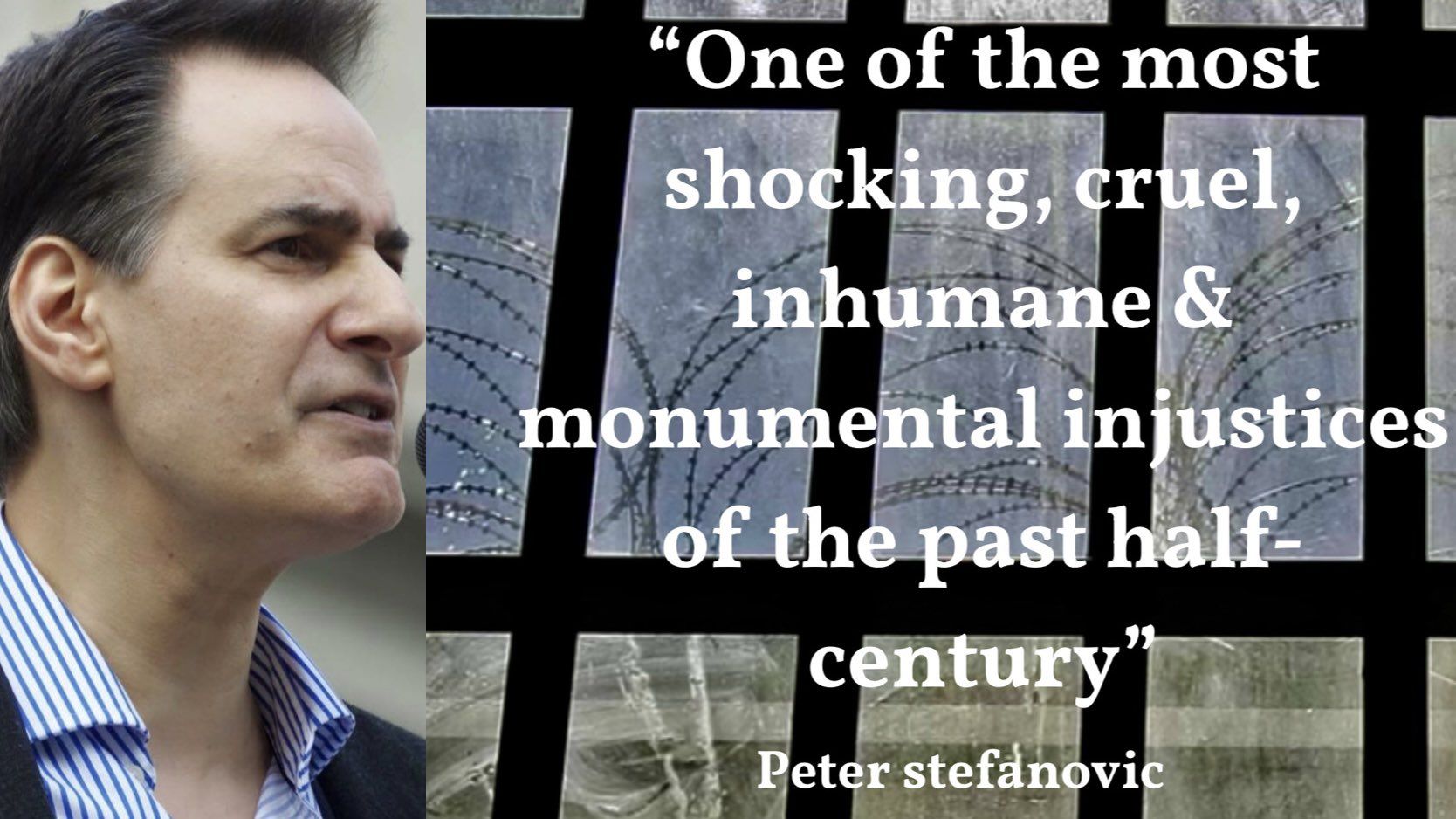
First IPP film has had 15 million views
Second film 1.3 million views
Third film 4.1 views
Click on each to view and please share with others
Below are typical comments from the public which his films are generating:
“Truly shocking”
“Absolutely horrifying”
“Unbelievable”
“Utterly awful”
“Madness”
“Inconceivable”
“Cruel”
LETTER TO THE SECRETARY OF STATE FOR JUSTICE
Stefanovic has recently joined a coalition of 70 criminal justice experts, civil society organisations, leading activists and campaigners in signing an open letter to Sir Keir Starmer MP’s new Labour Government and the Rt Hon Shabana Mahmood MP, Secretary of State for Justice, calling on them to deliver crucial reforms to the Imprisonment for Public Protection (IPP) sentence, which has claimed more than 100 lives since 2005 and has become a national scandal.
FILMS HIGHLIGHTING THE IPP SENTENCE
Stefanovic, whose films have been watched hundreds of millions of times, has posted a new video saying:
“I’ve just signed a letter calling on the new Justice Secretary to work at pace to end one of the most shocking, cruel, inhumane, degrading and monumental injustices of the past half-century – IPP sentences – a scandal which has a already claimed the lives of 90 people serving IPP sentences in prison and a further 31 that we know of in the community”
Stefanovic continued:
“I cannot overstate the urgency on this – in June one person serving an IPP sentence – a staggering 12 years over tariff set himself alight, another began his second hunger strike. This insanity has got to end – we must now put a stop to this inhumane and indefensible treatment which has absolutely no place in a modern Britain and political leaders – previously lacking the courage to take action – must now find the courage to do so.”
BACKGROUND
IPP sentences were introduced in England and Wales by the New Labour government with the Criminal Justice Act 2003, as it sought to prove it was tough on law and order. They were put in place to detain indefinitely serious offenders who were perceived to be a risk to the public. However, they were also used against offenders who had committed low-level crimes.
Astonishingly, this sentence has led to some people spending 18 years in jail for trying to steal a coat or imprisoned for 11 years for stealing a mobile phone. Another served 16 years in jail on a three-year IPP tariff for stealing a flower pot at the age of 17.
ABOLISHED BUT NOT RETROSPECTIVELY
In 2012, after widespread condemnation and a ruling by the European court of human rights that such sentences were, “arbitrary and therefore unlawful”, IPP terms were abolished by the Conservative government. But the measure was not retrospective, and thousands remain in prison.
Former supreme court justice Lord Brown called IPP sentences: “the greatest single stain on the justice system”. When Michael Gove was Justice Secretary, he recommended, “executive clemency” for IPP prisoners who had served terms much longer than their tariffs. But he didn’t act on it. Lord Blunkett, the Labour Home Secretary who introduced the sentences, regrets them, stating: “I got it wrong.” And more recently, Dr Alice Edwards, the UN rapporteur for torture has called IPP sentences an “egregious miscarriage of justice.” Even former Justice Secretary Alex Chalk KC has called them a stain on the justice system, despite that, the previous Conservative Government refused to implement the Justice Committees recommendation to re-sentence all prisoners subject to IPP sentences.
DEBATE IN THE HOUSE OF LORDS
In a debate in the House of Lords in May Lord Ponsonby – leading for Labour on justice said
“In Government we will work at pace to bring forward an effective action plan that will allow the safe release of IPP prisoners where possible”
In their letter the campaigners “urge the new government to honour its commitment, made in opposition, to “work at pace” to resolve this injustice.
HONOUR THE COMMITMENT…
Stefanovic says “The new government must now honour the commitment it made in opposition and work at pace to end this cruel, inhumane, degrading and most monumental of injustices”

Labour finds its courage as House of Lords tackle decades of injustice in crucial vote on IPP amendments.
Next Tuesday, 21st May, the House of Lords will vote on significant amendments to the Victims & Prisoners Bill, aimed at rectifying one of the most shocking injustices of the past half-century – Imprisonment for Public Protection (IPP) sentences.
BACKGROUND
IPP sentences were introduced in England and Wales by the New Labour government with the Criminal Justice Act 2003, as it sought to prove it was tough on law and order. They were put in place to detain indefinitely serious offenders who were perceived to be a risk to the public. However, they were also used against offenders who had committed low-level crimes.
Astonishingly, this sentence has led to some people spending 18 years in jail for trying to steal a coat or imprisoned for 11 years for stealing a mobile phone.
UNLAWFUL
In 2012, after widespread condemnation and a ruling by the European court of human rights that such sentences were, “arbitrary and therefore unlawful”, IPP terms were abolished by the Conservative government. But the measure was not retrospective, and as a result, thousands remain in prison.
Let’s not forget that over 90 people serving sentences under the discredited IPP regime have sadly taken their own lives whilst in prison.
In 2023 we saw the second year in a row of the highest number of self-inflicted deaths since the IPP sentence was introduced.
The former supreme court justice Lord Brown called IPP sentences: “the greatest single stain on the justice system”. When Rt Hon Michael Gove MP was justice secretary, he recommended, “executive clemency” for IPP prisoners who had served terms much longer than their tariffs. But he didn’t act on his own recommendation. Lord Blunkett, the Labour Home Secretary who introduced the sentences, regrets them, stating: “I got it wrong.” And more recently, Dr Alice Edwards, the UN rapporteur for torture has called IPP sentences an “egregious miscarriage of justice.” Even the Justice Secretary Rt Hon Alex Chalk KC MP has also called them a stain on the justice system, despite that, the Government has so far refused to implement the Justice Committees recommendation to re-sentence all prisoners subject to IPP sentences.
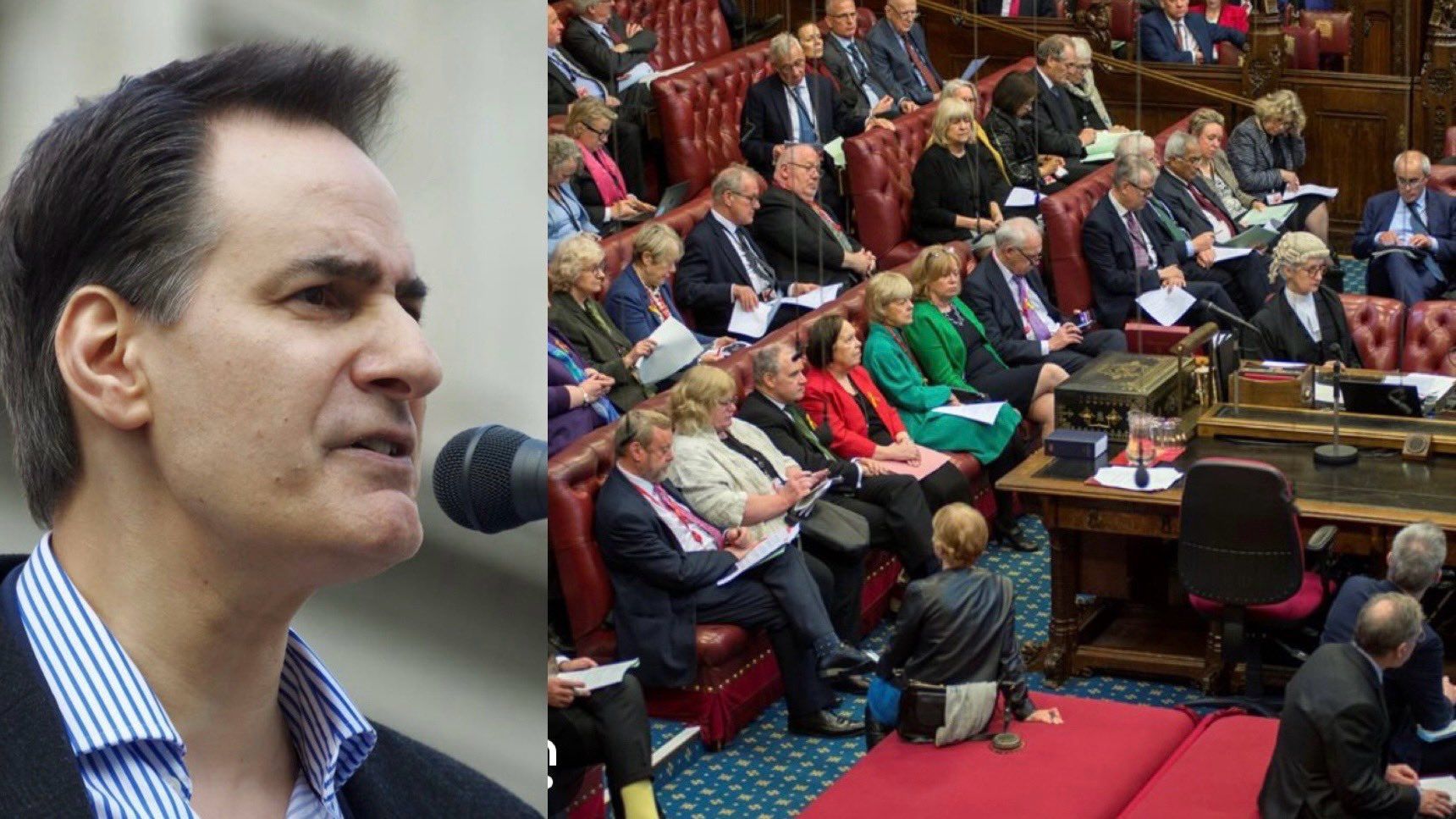
CAMPAIGN FOR SOCIAL JUSTICE
Campaign groups and their families have been fighting to end this tragic miscarriage of justice for more than a decade and a film posted online by social media sensation and campaigner Peter Stefanovic, a lawyer and CEO of CAMPAIGN FOR SOCIAL JUSTICE has ignited a wider public storm on this tragic miscarriage of justice and has been viewed a staggering 15 MILLION TIMES. It is not surprising that the public reaction to this film has been one of shock, outrage, and disbelief.
PUBLIC SUPPORT
Stefanovic said: “The public support for my film has been overwhelming and the comments it is getting are a testament to the public’s anger, outrage and disbelief at this tragic and monumental miscarriage of justice. Political leaders from both main parties must find the courage to step up and address the tragic injustice of indefinite jail terms”.
HOUSE OF LORDS DEBATE
His film was mentioned by Baroness Jones, Lord Moylan and Baroness Fox in the House of Lords debate on March 12. Furthermore, Baroness Fox also cited The Criminal Justice Blog.

HOPE FOR JUSTICE
The House of Lords is set to vote on a series of amendments to the government’s Victims and Prisoners Bill next Tuesday. These amendments are expected to challenge the government, with potential defeats on several fronts.
Of particular significance is the “Simon Brown Memorial Amendment,” named after the late former Supreme Court Justice who condemned IPP as the “greatest single stain on the British Justice system.” This amendment seeks to reverse the Parole Board release test burden, offering hope to IPP prisoners trapped in prolonged incarceration.
LABOUR FINDS IT’S COURAGE
Keir Starmer’s Labour Party has offered much needed hope to IPP prisoners trapped in the nightmare of prolonged incarceration and desperately needed hope for their families. In March 2024, Lord Ponsonby speaking for Labour said this in response to the important “Simon Brown Memorial Amendment”
“The noble Lord, Lord Moylan, in his amendment 161, is effectively reversing the burden of proof for IPP prisoners. He described it as a nudge to the Parole Board and discussed how significant that nudge would be, but it is a welcome nudge, non the less. It has the historic credentials of being supported originally by Lord Brown of Eaton-under-Haywood. It is a welcome amendment”
With Lord Ponsonby having confirmed Labour’s support for the all-important “Simon Brown Memorial Amendment,” which has given so much hope to those serving these sentences and their families. Campaign groups are now calling on the Lib Dems, Green Party, back benchers, Bishops and Tory rebels to join Labour in supporting it. The amendments will be voted on next Tuesday. Let’s hope they all step up and help bring to an end this injustice.

HOPE FOR JUSTICE FOR IPP PRISONERS AS LABOUR LORDS BACK AMENDMENTS
BACKGROUND
IPP sentences were introduced in England and Wales by the New Labour government with the Criminal Justice Act 2003, as it sought to prove it was tough on law and order. They were put in place to detain indefinitely serious offenders who were perceived to be a risk to the public. However, they were also used against offenders who had committed low-level crimes.
Astonishingly, this sentence has led to some people spending 18 years in jail for trying to steal a coat or imprisoned for 11 years for stealing a mobile phone.
UNLAWFUL
In 2012, after widespread condemnation and a ruling by the European court of human rights that such sentences were, “arbitrary and therefore unlawful”, IPP terms were abolished by the Conservative government. But the measure was not retrospective, and thousands remain in prison.
Over 90 people serving sentences under the discredited IPP regime have sadly taken their own lives whilst in prison. In 2023 we saw the second year in a row of the highest number of self-inflicted deaths since the IPP sentence was introduced.
The former supreme court justice Lord Brown has called IPP sentences: “the greatest single stain on the justice system”. When Rt Hon Michael Gove MP was justice secretary, he recommended, “executive clemency” for IPP prisoners who had served terms much longer than their tariffs. But he didn’t act on it. Lord Blunkett, the Labour Home Secretary who introduced the sentences, regrets them, stating: “I got it wrong.” And more recently, Dr Alice Edwards, the UN rapporteur for torture has called IPP sentences an “egregious miscarriage of justice.” Even the Justice Secretary Rt Hon Alex Chalk KC MP has also called them a stain on the justice system, despite that, the Government has so far refused to implement the Justice Committees recommendation to re-sentence all prisoners subject to IPP sentences.
CAMPAIGN FOR SOCIAL JUSTICE
Campaign groups and their families have been fighting to end this tragic miscarriage of justice for more than a decade and now a film posted online by social media campaigner Peter Stefanovic, a lawyer and CEO of CAMPAIGN FOR SOCIAL JUSTICE has ignited a wider public storm on this tragic miscarriage of justice and has been viewed 14 million times. It is not surprising that the public reaction to this film has been one of shock, outrage, and disbelief.

PUBLIC SUPPORT
Stefanovic said:
“The public support for my film has been overwhelming and the comments it is getting are a testament to the public’s anger, outrage and disbelief at this tragic miscarriage of justice. If Labour step up and back the amendments supported in the Lords by both Lib Dem and Green Party peers we can end this tragedy now. It’s time to do what we all know is right before more lives are tragically lost.”
HOUSE OF LORDS DEBATE
His film was mentioned by Baroness Jones, Lord Moylan and Baroness Fox in the House of Lords debate on March 12.
HOPE FOR JUSTICE
Hope for justice at last now comes in the form of amendments tabled in the House of Lords to the Victims and Prisoners Bill, two of which are particularly significant – 161 by Lord Moylan and 167 by Baroness Fox which have the backing of the Lib Dems and Green Party peers, and which have wide cross bench support.
AMENDMENTS
Amendment 167 seeks to implement the Justice Committees recommendation to re-sentence all prisoners subject to IPP sentences.
Amendment 161 would require the state to demonstrate that a prisoner is still a risk to the public rather than, as at present, requiring the prisoner to prove the opposite.
Under the proposed amendment, they would be released unless the Parole Board “is satisfied that it remains necessary and proportionate for the protection of the public from serious harm that they should continue to be confined”.
Amendment 161 is supported by Lord Blunkett, Baroness Chakrabarti and the former deputy president of the Supreme Court Lord Hope of Craighead. It is also supported by the Bar Council, representing 17,000 barristers in England and Wales.
On amendment 161 Lord Ponsonby, leading for Labour, said in the debate which took place in the House of Lords on 12 March.
“Lord Moylan in his amendment 161 effectively reversing the burden of proof for IPP prisoners described it as a nudge to the parole board and discussed in his contribution how significant that nudge would be but it’s a welcome nudge nevertheless, and he has the historic credentials of being supported originally by Lord Brown. It’s a welcome amendment.”
Voting on the amendments will take place in the coming weeks. If Labour vote for them this is finally a real opportunity to put right an egregious miscarriage of justice.

Prisons make more problems than they solve
Recently I watched again the movie ‘Erin Brockovich’ about a woman determined to get justice. My brain became filled with questions but instead of going to bed I decided to write and to capture what was in my head.
How many times will I have to read reports from the IMB, from the Inspectorate, from the PPO, all saying the same thing year after year?
How many more times will I have to read about the misery in prisons, the terrible food, the conditions that prisoners live in?
How much longer will I have to read about self-harm, deaths in custody, suicides and not just of prisoners?
How many more campaigns will I read about from organisations trying to better the system, yet very little ever changes?
Are there too many individuals and organisations wrapped up in “Prison works” and patting those on the back who are “heroes” or something. Meanwhile, watching this space carefully, it appears to me that senior members of HMPPS are beginning to jump ship.
Ministers come and ministers go but, looking at reality, I wonder what they are actually doing to bring to an end the misery and violence within our prisons. Yes, I say our prisons because our taxes pays for them. It’s like pouring money into a black hole.
Oh, and what about Rehabilitation?
What about Education?
Yet still we build more warehouses and more warehouses that don’t work, have never worked and I doubt will ever work in the future. And for what reason? Just this week the new Five Wells prison has come under scrutiny, missing the mark in many areas already just a year after it officially opened. Shortages of food, availability of drugs, turnover of staff, all this causing deficiencies reasoned away simply as “…considerable challenges that come with opening a new prison”.
We read about other prisons where those imprisoned for sexual offences have not had the opportunity to address their issues and their crimes are released back into society, homeless. Others who were given an IPP sentence languishing in their cells, not knowing when or if they will even be released. And also those imprisoned under joint enterprise.
We are making more problems, not solving them.
Despite what some people say, In the last 5 years I have visited many prisons. For example, I have delivered training to Custodial Managers and Prison Governors (Wandsworth), twice eaten at a restaurant in a prison (Brixton-Clink), attended an art exhibition in my local prison (Writer in Residence, Warren Hill), observed courses (Chrysalis, Oakwood), celebrated with prisoners on completion of their courses (Stand-Out, Wandsworth) and many more opportunities to talk with Governors. I have seen for myself some of the issues facing staff and prisoners.
Surely there is a better way.
If all we can do is build more prisons.
Prisons boast “we have in-cell technology” as though it’s like something from another planet.
Prisons boast “we have in-cell sanitation” as though it’s a gift when this should be standard.
Almost a year ago a Judge told me that even though they sentence people to custodial sentences, they had never set foot in a prison themselves. I sent a quick message there and then to put them in contact with someone I knew who could help change that.
Prison should be the last resort, and only for those that are a danger to society. Yet, there are people in prison who are there because it is deemed a safe place.
Prisons are not safe, not for prisoners and not for staff. If you don’t believe me then please do some research.
Overworked, underpaid and inexperienced staff working in difficult conditions.
Conditions deteriorate whilst the population increases.

In August 2019, I accepted an invitation from Rory Geoghegan to a speech on ‘Reducing Violent Crime’ hosted by the Centre for Social Justice. Rory gave me a copy of a paper he had co-authored with Ian Acheson called ‘Control, Order, Hope: A manifesto for prison safety and reform’, three things which in my opinion are severely lacking in our prisons. Rory had contacted me the previous September for my view on a key recommendation concerning IMB’s for this paper, as you can imagine I was pleased to read:
“Independent Monitoring Boards (IMBs) have a role to play, to “monitor the day-to-day life in their local prison or removal centre and ensure that proper standards of care and decency are maintained. In the wake of utterly unacceptable conditions across so many of our prisons, there must be questions about how effective IMB’s have been at ensuring standards of safety and decency have been met.”
Recommendation 59: Government to consult on the role and effectiveness of Independent Monitoring Boards (IMBs) to help ensure that they can play their vital role within the wider system of prison governance, early-warning, and accountability.
Source: page 64 and 65 https://www.centreforsocialjustice.org.uk/library/control-order-hope-a-manifesto-for-prison-safety-and-reform
As you can see here, and elsewhere in The Criminal Justice Blog, I have been consistently calling this out for years. The IMB has never been able to ensure anything; if it had then it has completely failed in its remit, as evidenced by the decline in the state of prisons in England and Wales.
Now the prison estate is running out of space, police station cells are on standby, not-so-temporary prison accommodation is being installed as ‘rapid deployment cells’.
Yet still we fill them.
What on earth are we doing?
When will a Secretary of State for Justice make a stand, be decisive and finally bring some control, order and hope into our prisons?
~

Penitence versus Redemption in the Criminal Justice System: Unedited
I once entered a cell of a high-profile prisoner; his crime had been blazoned on every national newspaper and was serving the last few months of his sentence as an education orderly. He sat on his raised bed, his legs dangling over the menial storage where he had meticulously and precisely arranged his pairs of trainers and invited me to sit on the only chair in the cell. During our 20-minute conversation, he was pensive and reflective, looking down all the while, except for when he raised his head, adjusted his glasses, then looked me straight in the eye.
“Don’t count the days, but make every day count,” he said, his voice monotone and hushed. Yet behind him, I noticed a calendar marked with neatly drawn crosses. He was clearly counting down his days, paying his penitence until his eventual release from prison.
As an independent criminologist, I have met many who feel a deep-seated obligation to “pay back” continuously in some way to society or a higher power. Those who are caught and convicted for committing a crime experience punishment in some form or other, but when should that punishment end? Is it once a sentence has been served or longer?
Over the last 12 years, I have visited every category of prison in England and Wales and monitored a Category D prison for four years. In all that time, I have encountered hundreds of inmates, many struggling with the punishment, not only that of the sentence given by the courts, but the continual punishment they experience as they serve it, as well as after release and beyond.
The Ministry of Justice proudly states on their website that their responsibility is to ensure that sentences are served, and offenders are encouraged to turn their lives around and become law-abiding citizens. Apparently, the Ministry has a vision of delivering a world-class justice system that works for everyone in society, and one of four of their strategic priorities is having a prison and probation service that reforms offenders.
But I am not at all convinced by this hyperbole. In my opinion, we must stop the madness of believing that we can change people and their behaviour by banging them up in warehouse conditions with little to do, not enough to eat, and sanitation from a previous century.
Penitence
If true reform is supposed to be achieved through time served, then a former inmate emerging from prison with a clean slate would be ready to contribute fully to society. Yet beyond prison gates people who have served their time all too often live under a cloud of penitence, suppressing a sense of guilt for their deeds.
Many of the formerly incarcerated insist on a daily act of penitence, a good deed, even raising money for a worthy cause. For onlookers, such acts carry an air of respectability, but it is important to understand what is really happening on the inside because some of those who engage in them do so as a form of self-punishment. The punishing of self both physically and mentally.
They sense they must compensate.
Their account never fully paid.
Lifelong indebtedness.
And of course there are those who appear to genuflect to the Ministry of Justice and the Criminal Justice System; a sign of respect or an act of worship to those always in a superior position.
On the balance of probabilities, it is more likely than not that some penal reform organisations and some individuals with lived experience approach the Ministry of Justice with such reverence showing their cursory act of respect.
The same act of penitence or faux reverence ingrained into them whilst they served their custodial sentence.
For others penitence is an act devoid of meaning or performed without knowledge.
According to the Oxford English Dictionary, the definition of penitence is “the action of feeling or showing sorrow and regret for having done wrong, repentance, a public display of penitence.” In addition to the formal punishment they endure, many prisoners engage in penitence both physically and mentally during and after serving their time, which keeps them from moving forward with their lives and is damaging to their sanity.
According to a 2021 report by the Centre for Mental Health, (page 24) “former prisoners…had significantly greater current mental health problems across the full spectrum of mental health diagnosis than the general public, alongside greater suicide risk, typically multiple mental health problems including dual diagnosis, and also lower verbal IQ…and greater current social problems.”
In my work, I have found that some people who have broken the law want others to know that they are sorry, whilst at the same time feel the pressure to prove this to themselves. In such cases, their penitence becomes a public display for families, caseworkers, and those in authority.
Witnesses to this display of penitence often think these people are a good example of someone who has turned their life around, but often, these former prisoners find themselves stuck in the act of penitence. Rather than turning their lives around, they are trapped forever in their guilt. In these cases, the act of atoning becomes all-consuming, an insatiable appetite to heed the voices in their soul that tell them, “you must do more and more, it’s not enough, I’m hungry.”
Redemption
When I speak to those who are serving a whole-life tariff, I know that their debt to society can never be repaid: they are resigned to a lifelong burden of irredeemable indebtedness. But many of those who are released from prison remain incarcerated by their own guilt, feeling as if they must hide any hint of happiness they may find in life after prison so as not to be judged.
For example, in 2019, I interviewed Erwin James, author, Guardian columnist and convicted murderer, who had just come out with his third book, Redeemable: a Memoir of Darkness and Hope. When I asked him, “What makes you happy?” he replied: “In the public, if I am laughing, I feel awful because there are people grieving because of me. Even in jail, I was scared to laugh sometimes because it looked like I didn’t care about anything.”
Just like I saw with the prisoner sat on his bed, I have witnessed a cloud hanging over many, especially when redemption, or the act of repaying the value of something lost, relates to acceptance and society’s opinion of you.
There are of course prisoners who have the intellectual capacity to learn from their mistakes, have the emotional capacity to adapt to their situations and – not forgetting – the spiritual capacity, a dimension that can lead to a voyage of self-discovery. But by no means all.
Unfortunately, in the UK, paying back to society can either be the light at the end of the tunnel, or a tunnel with no light.
I believe we live in a punitive society in which the continual punishment of those who have offended is tacitly endorsed. In so doing, society inadvertently encourages the penitentiaries of this world to hold offenders in an ever-tightening grip.
Even a sentence served in the community—a sentencing option all too often shunned by magistrates—can carry an arduous stigma. In a public show of humiliation, the words “Community Payback” are garishly emblasoned on the offenders’ brightly-coloured outerwear, announcing their status as a wrongdoer to all who see them. Basically, this is society’s way of saying, “we want you to be sorry, we want you to show you are sorry and we will not let you forget it.”
Statements such as “the loss of liberty is the punishment” become fictitious, enabling punishment in its various form to continue throughout the sentence served and even after release.
Let us no longer have this traditional stance, rather should we try to embolden others to move on from their actions?
And can groundless nimbyism be finally assigned to history?
I am mindful that pain and grief still abounds, that some crimes will not be erased from our minds, and that crimes will stubbornly continue. But surely, the answer cannot be to condemn those who have done wrong to a lifetime without forgiveness.
To move forward as a society, we need to discourage the continual need to offer an apology, and instead accept when former prisoners have paid their dues and served their sentences. Only then will we move from a vicious cycle of unending penitence to a world in which reform and redemption is truly possible.
~
An edited version of this article was first published on 28 February 2022 by New Thinking.
~

A conversation with: Lady Val Corbett, passionate about prison reform, empowerment of women and kindness in business
Lady Val Corbett, a feisty woman, with determination to rival most, striking red hair and a penchant for wearing bright scarves, is one way of introducing my latest “A conversation with…” Having known Lady Val for 6 years, I have found her to be compassionate, hilarious, focused and above all, a friend.

Her career in journalism started in Cape Town but with moving to the UK it was impossible to continue without being a member of the National Union of Journalists. Eventually she worked for the Sunday Express as a weekend reporter; a Features Editor of a noteworthy Furnishing Magazine; Editor of a magazine Woman’s Chronicle for the Spar customers and grocers which then led to becoming the consumer columnist on The Sun. With the birth of her daughter, Polly, she invented herself several times!
“I wrote a column for Cosmopolitan and for national papers and magazines plus scriptwriter for BBC TV then became one of the founder directors of an independent TV production company which sold programmes for major broadcasters – highlight was a six-part BBC1 series called Living with the Enemy on teenagers as I was struggling with mine at the time. I was a volunteer at the Hoxton Apprentice, a training restaurant for long term unemployed and saw how people could change direction. After that I co-wrote six novels with two friends and in between was an MP’s wife and later the PA for Lord Corbett of Castle Vale, when I regularly gave notice or got fired.”
That’s quite a résumé.
Val had a chance encounter on her first day as a features writer, which led to 42 years of happy marriage.
“On my first day I was having second thoughts about a new dress I had bought. Going to the canteen for lunch I paused at the door and asked my colleague: “Does this dress make me look dumpy?” To which an amused male voice said: “Yes it does.” I looked up – my 5ft 2” to his 6ft 3” – and thought he was the rudest man I’d ever met. He called me Dumpy for ages.”
Her husband, Lord Corbett of Castle Vale, sadly died on 19th February 2012.
Did you personally have an interest in politics?
Not for party politics. I knew apartheid was wrong, unfair, and cruel. My first time voting as a British citizen was in Fulham when I put my cross next to Major Wilmot-Seale whom I believed was the Liberal candidate (party allegiances were not then on ballot papers). He was the National Front candidate and garnered 45 votes of which mine was one. Robin never let me forget this. Over the years he became my political mentor because he thought going into politics was because you wanted to change the world. And goodness how he tried!
When Robin decided a cause was just, he was not swayed from the path, do you feel you have taken on that mantle?
I could have chosen from several of his crusades – his Private Members Bill which became law, granting lifetime anonymity for rape victims in courts and media was one but he was also active in prison reform during his 34-year parliamentary career. Chairing the All-Party Penal Affairs Group for 10 years until his death made him realist how much there was to do in the criminal justice system.
He used to say: “Prison isn’t full of bad people; it’s full of people who’ve done bad things and most need a chance to change direction.”
Was it a mantle you were willing to take on?
Yes, when I heard a man say on TV “All men die but some men live on.” I wanted Robin’s legacy in prison reform to live on. Though a novice in prison reform I immersed myself in prison reform in 2013 and though I am still learning now feel I am no longer a novice.
What makes you laugh?
I laugh a lot particularly at short jokes and always tell one or two at my professional women’s network events.
What makes you cry?
Anything concerning cruelty to children.

Since 2016, I have been part of Lady Val’s Professional Women’s Network consisting of female entrepreneurs, senior women in business, the arts, government, investment, HR, and many more diverse professions.

It’s a forum for women in business looking to further their careers by focusing on leadership skills, self-confidence, and other key areas of personal development. Meeting five times per year for lunch, each event starts with an icebreaker “How can I help you and how can you help me”, a simple formula which encourages meaningful connections. This is followed by an inspirational speaker, a leader in their field sharing business knowledge and expertise.
The professional networking lunches are all about business and not entertainment, how do you reflect that in your choice of speakers?
I choose keynote speakers with care. Most speakers have been leaders in their field of business: marketing, fin tech, green economy, Lloyds of London, Abbey Road Studios etc. We had Michael Palin and Jon Snow, both prison reform campaigners, also Prue Leith and Jeffrey Archer. They attracted large audiences, but the Network is a business one, not an entertainment one… So, we are going back to basics, with speakers appealing to businesswomen. I’m happy that through the contacts not only have networkers gained business contacts but also friends.
We are all in this together and if women don’t help each other, who will?
What in your opinion are some of the barriers for women to advance in their professional lives?
The main barrier is a lack of confidence. The glass ceiling is there to be smashed but few women want to. This is changing though not fast enough for me! I count myself not as a feminist but as an equalist and am proud that the wearethecity.com network voted me one of their 50 Trailblazers in gender equality.
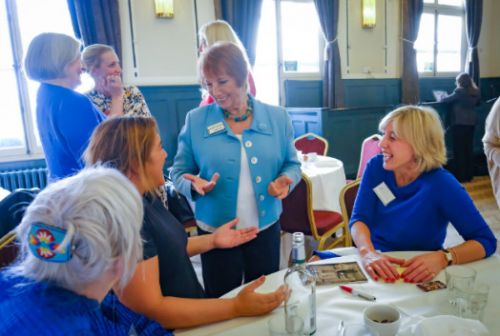
Face to face events are planned from April, are we all zoomed out after 2 years?
Zoom has become increasingly unpopular, and I hope we can go back to somewhere near our normal lives. I am worried that although the stats of Covid are decreasing, they are still worryingly high. On April 21st we are going back to Browns Courtrooms to restart our lunches with keynote speaker James Timpson who’ll be talking about kindness in business.
This network is not for ladies who lunch but ladies who work.
A donation comes from each booking going to our work on prison reform.
How did the Robin Corbett Award come about?
After a loved one dies, people gather around giving you sympathy and many cups of tea. A few weeks after the funeral they seem to think you will be able to manage but it is then that you are at your lowest. It was at this point that inspiration struck. As I mentioned before, the sentence I heard on TV: “All men die but some men live on.” was a eureka moment making me decide that I wanted Robin’s legacy to live on.

The Robin Corbett Award celebrates, supports, and rewards the best in prisoner re-integration programmes. Each year we donate funds to three charities, social enterprises or CICs whose mission is centred around giving returning citizens a chance to reintegrate back into society. The presentation is at the House of Lords.
The Robin Corbett Award for Prisoner Re-Integration was established by members of Lord Corbett’s family in conjunction with the Prison Reform Trust in 2013. It is now administered by The Corbett Foundation, a not-for-profit social enterprise.
What are the criteria to being a member of the Corbett Network?
The Corbett Network is a coalition of charities, social enterprises, community interest companies, non-profit organisations and businesses with a social mission who work with those in prison and after release. (Individuals are not eligible). These decision makers are dedicated to reducing re-offending by helping returning citizens find and keep a job. Some members offer mentoring, coaching, training or education.

How many members are there?
Currently there are 108 with four waiting to be introduced to their fellow members.
This network has expanded rapidly over the last few years, is this due to prison reform taking a greater platform?
Once the Robin Corbett Award was established, I kept on meeting people working in their own small pond, so to speak. I thought we could crusade better in a sea and invited them to join us. Since then, together we have created a powerful lobbying voice heard at the highest levels of government and recognized by those in the criminal justice sector as a force for change. I do sense that the media tend to focus on the problems.
Where do you see the Corbett Network positioned in the justice arena?
Peter Dawson, Director of the Prison Reform Trust told me that The Corbett Network is the only one of its kind in the UK. It sits alongside the Criminal Justice Alliance and Clinks which concentrate mainly on policing, courts, prisons, probation, and human rights. The Corbett Network are members of both these organisations.
What are your hopes for the future of this network?
To crusade effectively. To effect changes desperately needed in our prison system. To change public perception of people who have been inside – they are not sub- human. Since the Network started in 2017, we now have over 108 members, holding both face-to-face, virtual meetings, conferences and, crucially, encouraging greater collaboration across the work we collectively do. Together, we have created a powerful lobbying voice, heard at the highest levels of government, and recognised by those in the criminal justice sector as a force for change.
“Prisons should not be society’s revenge but a chance to change direction.” Robin Corbett
This interview was published to mark International Women’s Day 2022.
All photos courtesy of Lady Val Corbett. Used with permission.

It’s been quite a year but not a quiet one. A retrospective on 2017
My year opened memorably
In January, the Prisons Minister, Sam Gymiah, wrote to sack me from my role as a Chairman of the Independent Monitoring Board (IMB) at HMP/YOI Hollesley Bay and to ban me for 5 years from IMB membership. I spoke out in the public interest for prison reform, highlighting key weaknesses I found in the MoJ. They shot the messenger.
I’ve written extensively on the reasons for this as those of you kind enough to have followed the story will know only too well.

No doubt the MoJ and IMB hoped they had heard the last from me.
I have not shut up and I have not gone away
In fact, if anything, as a direct result of media interest from radio, tv and the local and national press, my voice became heard more widely. I was given many chances to raise important issues on the state of prisons in England and Wales and I took them.
In April, I learned that I had been nominated for The Contrarian Prize 2017. It is a prestigious prize for those who have shown independence, courage and sacrifice. Those who nominated me liked the fact that I was unafraid to speak the truth to those in power, talking about the criminal justice system in the public interest. They recognised that doing so came at a huge personal cost including a face-off with the ‘goliath’ of the Ministry of Justice.

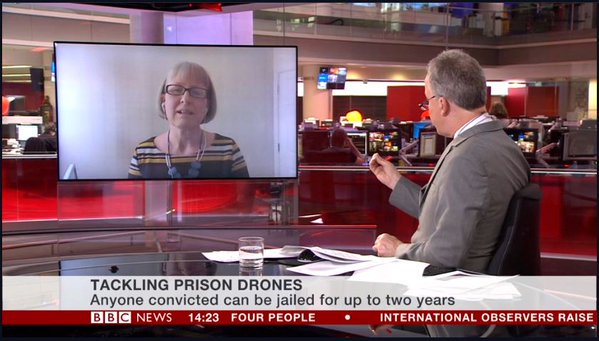
Also in April, producers at the BBC brought me onto a live link on BBC News Channel to talk about the problem of drones bringing in banned items into prisons. When presenter Julian Worricker asked for my take on it, I was able to outline the context of the issue and that it was impossible for all the drugs, phones etc within a prison to have been delivered via drones and that the new task force to be set up by the MoJ may have limited results. After working within the prison system for several years I was convinced that visitors and staff were likely routes in for contraband, yet security continued to be somewhat limited.
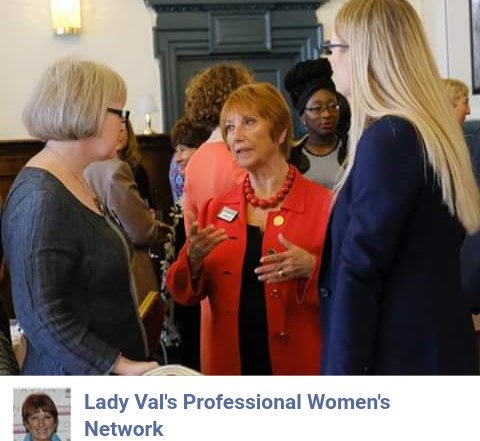
In May, I was delighted to join Lady Val Corbett, at her invitation, to attend the first of three ladies executive networking lunches. Each one inspired me and brought me into contact with remarkable women. Nicola McCalliog and Jo Apparicio are two women who I met through the lunches and who I especially admire; I look forward to the opportunity of working with them in the coming year. I have been amazed by the interest that was expressed in my own story and experience.
In my opinion, Lady Val has such determination, persistence, and guts! I thank her for accepting me into the Corbett Network as an associate member, it’s great to play an active part of something so vibrant.
In July, an article by Laurence Cawley was published on the BBC website. Here, the journalist wanted to explore in greater depth my experience with the IMB and the MoJ. The editorial team expected the article would get around 200,000 unique views. In fact, it reached 690,000 unique views on the first day and am told it was ranked the 8th most read article that day globally on the BBC. It was then I realised that there was a thirst by the public for coverage on justice matters.
In its mission statement, her Majesty’s Prison Service for England and Wales states that it:
“serves the public by keeping in custody those committed by the courts. Our duty is to look after them with humanity and help them lead law-abiding and useful lives in custody and after release.”
But it is shameful that HMPPS has fallen so short of its own mission statement. The situation in our prisons is worsening and really has become a humanitarian issue.

Also in July, I was invited to appear live on BBC News, this time in the studio, for an interview with Ben Brown about young people and children caught in the vagaries of the Criminal Justice System, highlighting the lack of care for these vulnerable individuals. This coverage proved a valuable opportunity to remind the public about the issue.

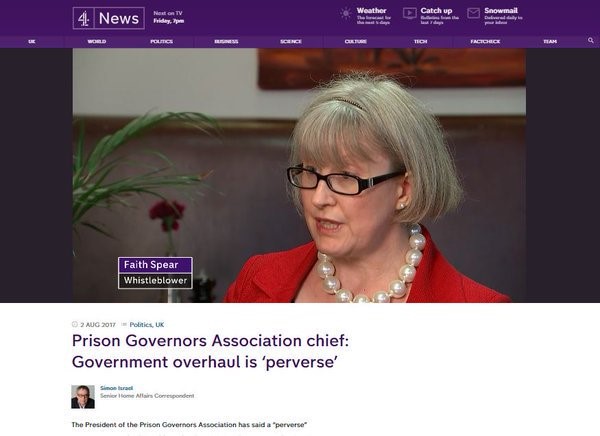
In August, I was invited to London to be interviewed by leading journalist, Simon Israel, who wanted to discuss the treatment I had encountered with the MoJ which tried to prevent me from speaking the truth concerning the prison crisis.
The interview went out on Channel 4 News causing quite a stir.
In the Autumn, I was part of one of the most important documentaries to be screened throughout the country. Here the theme was injustice and involved those from various angles within the Justice system. I was so delighted to meet those that had supported me over the last 18 months and together our voices were heard. There are more screenings planned for 2018.

This year new friendships were formed including Jane Gould (Clean Sheet) who works tirelessly in providing jobs for those that have been within the system and are often overlooked and penalised for having a criminal record. I joined her at the House of Lords for a tea reception.

My coffee and cake buddy Justin Williams has been a great friend. He has been a sounding board and has supported me when I have come under attack from those who have disagreed with my stand for prison reform.

On a lighter note, I was invited to the Opening Concert for Malta’s Presidency of the Council of the European Union by my friend Trevor Peel. Other invitations included ‘Why me’ evening at Clifford Chance with Peter Woolf and Mel Giedroyc; Probation Institute launch of Probation Services for Armed Forces Veterans under Supervision; ‘Fighting for Prison Reform’ at UCL and Robin Corbett Awards.
I have also taken up my usual seat at the Justice Select Committee on numerous occasions, the most memorable being when the IMB and AMIMB were in front of the committee. I listened carefully and made copious notes when the IMB President John Thornhill gave evidence. This man had caused so much harm to me and yet he was unaware that I was sitting right behind him. When he was informed who I was his face was like a rabbit in headlights. His plan to get rid of me had backfired, I was still there!
There were so many other events, meetings, coffee and cake times with those that have walked with me through 2017. I thank them all.
Richard Rowley, Daniel, Cranni, Jonathan Robinson, Jonathan Aitken, Unsound Robin, Charlotte, Khatuna, Chris Moore, Michael Irwin, Tracy Edwards…and more.
I started 2018 by celebrating with my twin sister our birthdays.
This year represents a year of great opportunity.
I intend to seize it with both hands.

Prison reform: paying the price
Well D-Day is rapidly approaching for me, the day the Ministry of Justice and the Independent Monitoring Board decide on my future not just as a Chairman but as a member of the IMB as I have to attend a Disciplinary Hearing.
 How it got to this is a long story.
In a nutshell, I spoke out for Prison Reform and IMB reform in an article in the Prisons Handbook 2016 entitled “Whistleblower without a whistle” and suffered reprisals for it.
Have you seen the state of prisons lately?
Have you heard about the state of prisons lately?
Too much is swept under the carpet pretending it’s not there.
But I put my head above the parapet, I made a personal stand.
The President of the IMB National Council, John Thornhill obtained a copy of my article “Whistle blower without a whistle” without permission before it went to print and sent it to the whole of the IMB organisation with his comments.
That action meant that any investigation would be prejudicial and it was!
I have had Prison Governors, prison staff, prisoners, ex-prisoners, prison reformers, those working in the justice sector, those working in the legal profession, leading academics, criminologists both here and abroad, friends and family standing up for me.
Are we all wrong?
Of course not!
But its like I have opened a can of worms which can’t be closed.
As I complete my final preparations for tomorrow I decided to bake a cake. It was my Nanna’s answer to everything as a child, comforting home-made cake.
I have upset the status-quo, I have revealed devious behaviour of other IMB members, I have spoken out about the nonsense in two MoJ investigations. I have had to endure bullying, intimidation, being ostracised, I have lost sleep and haven’t eaten properly, and I have been suspended from a role I loved. I have battled for over six months to clear my name and show what really is going on behind the scenes.
It has of course affected my family, yet my husband Joseph has been my rock.
I have a good idea of the outcome tomorrow at the Disciplinary Hearing, I’m not naive or stupid. But I think the MoJ and the IMB need to take a long hard look at their behaviour.
But whatever the outcome I will not be silenced and I will not go away.
If you are passionate enough about something then that cause which owns you can never be taken away from you.
The MoJ and the IMB can never say “Faith Spear who is she?”
This is not the end, it is the beginning…
P.S.
Even at the last-minute a former IMB member has sent in a pathetic plea to discredit me, obviously he is worried as now I have my chance to talk. Well DS your bullying, intimidation and manipulation I have endured for a couple of years is over!
And DH, your worries that I would let people know what you have said, haha now its my turn. You said you were on my side until I read out my statement and you told me it would have helped if I had cried. How dare you, as a woman I will not be intimidated by you. The fact you said you don’t deal in black and white only grey areas is perfect for the role as an IMB monitor in a prison, yet again an example of the farcical recruitment process.
CS, we worked well together but you followed your head and not your heart. You listened to a manipulative member and along with BM who I had much respect for started a damning campaign against me. Your friendship is a loss to me.
GR, you are a man with integrity and heart
Its time to build new bridges
 The Criminal Justice Blog