
Home » Posts tagged 'prison population'
Tag Archives: prison population

Keir Starmer whips AGAINST Lord Thomas amendment to end shocking #IPP scandal as campaigners vow to fight on
Campaigning Lawyer and CEO of CAMPAIGN FOR SOCIAL JUSTICE Peter Stefanovic – who’s films have been watched hundreds of millions of times online – has posted a new film calling on Prime Minister Keir Starmer to end the IPP scandal once and for all by adopting a plan drawn up by Lord Thomas, the former Lord Chief Justice.

BACKGROUND
IPP sentences were introduced in England and Wales by the then New Labour government with the Criminal Justice Act 2003. It sought to prove it was tough on law and order by putting in place IPP sentences to detain indefinitely serious offenders who were perceived to be a risk to the public. However, they were also used against offenders who had committed low-level crimes, resulting in people spending 18 years in jail for trying to steal a coat or imprisoned for 11 years for stealing a mobile phone. In one instance 16 years in jail for stealing a flowerpot.
UNLAWFUL
In 2012, after widespread condemnation and a ruling by the European court of human rights that such sentences were, “arbitrary and therefore unlawful”, IPP terms were abolished by the Conservative government. But the measure was not retrospective, and thousands remain in prison.
Over 90 people serving sentences under the discredited IPP regime have sadly taken their own lives whilst in prison. In 2023 we saw the second year in a row of the highest number of self-inflicted deaths since the IPP sentence was introduced.
Former supreme court justice Lord Brown called IPP sentences: “the greatest single stain on the justice system”. When Michael Gove was justice secretary, he recommended, “executive clemency” for IPP prisoners who had served terms much longer than their tariffs. But he didn’t act on it. Lord Blunkett, the Labour Home Secretary who introduced the sentences, regrets them, stating: “I got it wrong.” And more recently, Dr Alice Edwards, the UN rapporteur for torture has called IPP sentences an “egregious miscarriage of justice.” Even former Justice Secretary Alex Chalk KC has called them a stain on the justice system, yet despite that, the previous Conservative Government refused to implement the Justice Committees recommendation to re-sentence all prisoners subject to IPP sentences.
CAMPAIGN FOR SOCIAL JUSTICE
Their families and campaign groups have been fighting to end this tragic miscarriage of justice for more than a decade and films posted online by social media sensation and campaigner Peter Stefanovic have ignited a wider public storm on this tragic miscarriage of justice gathering millions of views.
You can watch Stefanovic’s latest film here:
https://x.com/peterstefanovi2/status/1937394593672089988?s=46&t=g6PUk4YExrOYprJSzQZ3lw
It is not surprising that the public reaction to his films have been one of shock, outrage, and disbelief.
PUBLIC SUPPORT
Stefanovic has said: “The public support for my films has been overwhelming and the comments they are getting are a testament to the public’s anger, outrage and disbelief at this tragic miscarriage of justice.”
HOPE FOR JUSTICE
Now – the Labour government is being given the chance to end this monstrous injustice once and for all by adopting a plan drawn up Lord Thomas, the former Lord Chief Justice.
An expert working group convened by The Howard League and led by Lord Thomas has come forward with considered proposals aimed at protecting the public while ending the long-running IPP scandal.
Below are the members of the working group:
Farrhat Arshad KC, barrister
Dr Jackie Craissati, clinical and forensic psychologist
Andrea Coomber KC (Hon), Chief Executive of the Howard League for Penal Reform
Dr Laura Janes KC (Hon), solicitor
Dr Frances Maclennan, clinical psychologist
Andrew Morris, served IPP sentence
Dr Callum Ross, forensic psychiatrist
Claire Salama, solicitor Sir John Saunders, retired High Court judge and former Vice Chair and member of the Parole Board
Professor Pamela Taylor, psychiatrist and academic
Paul Walker, Therapeutic Environments Lead for the OPD Pathway (HMPPS)
The working group’s report puts forward six recommendations – the most important of which is a change to the Parole Board test which would require the Parole Board to give people on IPP sentences a certain release date, within a two-year window, and to set out what action is required to achieve that safely.
Setting a date of up to two years provides a long period of time to enable professionals and statutory agencies to work together and help the person to prepare for a safe release – it completely knocks on the head any argument the justice secretary has previously raised about public safety and will end once and for all one of the most cruel and monumental injustices of the past half century.
Campaigners have hit out at the “short-sighted” decision not to include prisoners on indefinite sentences in the plans announced by the government to reduce the prison population.
The government has recently published its long-awaited sentencing review, led by former Conservative justice secretary David Gauke, who recommended that some offenders who behave well in jail only serve a third of their term in custody before being released. Yet the Chair of the Justice Committee, Andy Slaughter MP has raised the point recently that “Even if David Gauke’s recommendations are wholly successful the prisons will still be full, and this has unintended consequences.”
With Government Ministers saying they have inherited a prison system “on verge of collapse” Stefanovic says this is “nonsensical”.
He concludes his latest film saying:
“With our prisons at breaking point now is the time for James Timpson – the prisons minister and Labour peer to accept this sensible, workable and detailed plan and seek to close this shameful chapter in the history of British criminal justice. If the Justice Secretary refuses to sign off on this plan for fear of handing ammunition to ignorant critics who accuse her of being soft on crime the Prime Minister, a former director of public prosecutions, who understands the criminal justice system better than any minister should instruct her to act on the proposals – because the simple fact is that by refusing to do so Keir Starmer’s government would become responsible for allowing one of the most cruel, inhumane and monumental injustices of the past half-century – a scandal rightly described as a stain on our justice system – a scandal described by the UN rapporteur for torture as an egregious miscarriage of justice and psychological torture – and which likely breaches Article 3 of the Human Rights Act – to be continued and perpetrated – and I for one cannot believe that that is what a Labour government would want to happen”
Update:
We have now found out that Keir Starmer has whipped against Lord Thomas to end this shocking IPP scandal.
CAMPAIGNING LAWYER CALLS ON PRIME MINISTER TO END SHOCKING IPP SCANDAL
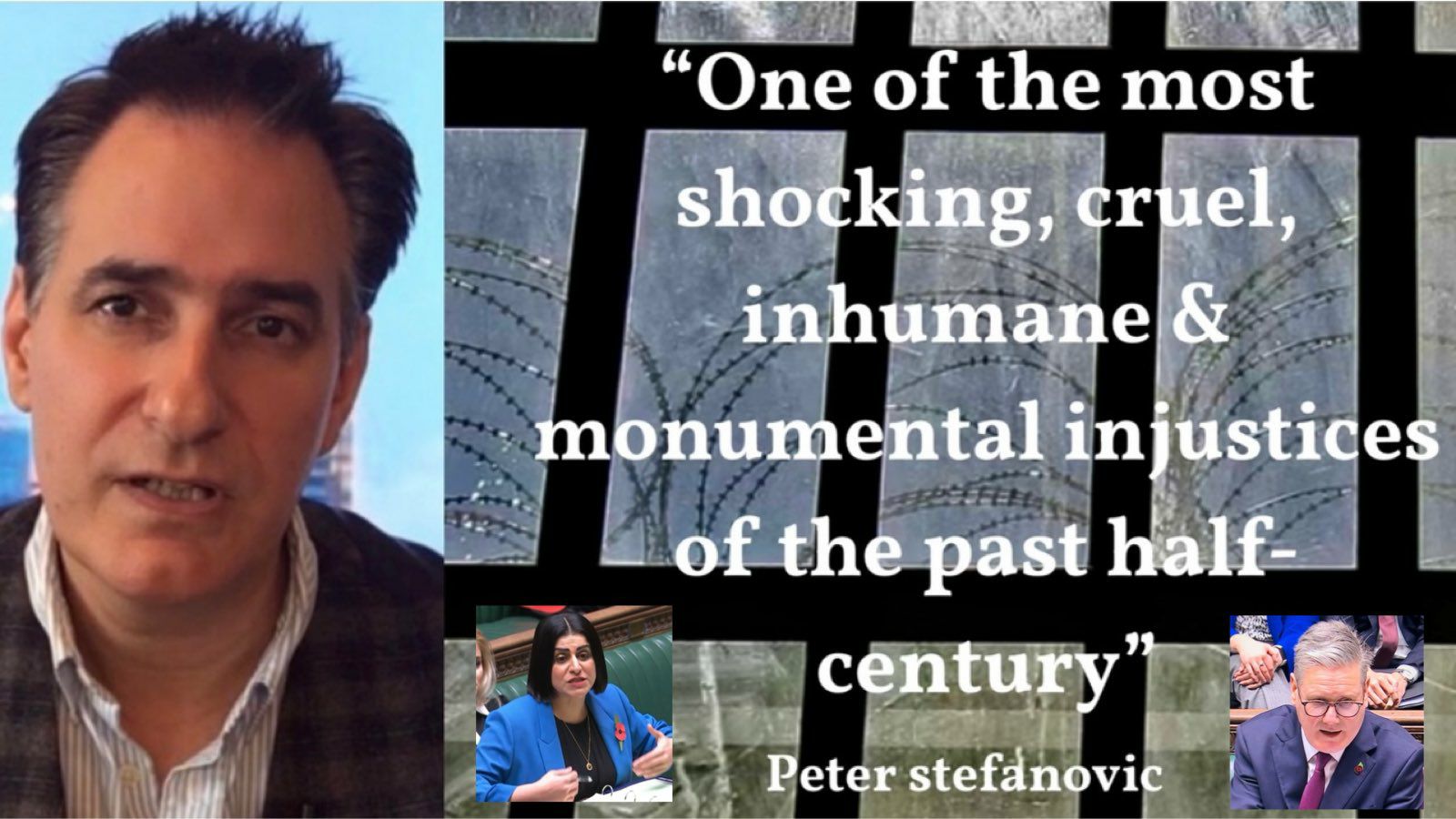
Campaigning Lawyer and CEO of CAMPAIGN FOR SOCIAL JUSTICE Peter Stefanovic – who’s films have been watched hundreds of millions of times online – has posted a new film, this time calling on the Prime Minister Keir Starmer to end the IPP scandal by backing a Private Members’ Bill by Labour peer Lord Woodley – the Imprisonment for Public Protection (Resentencing) Bill. Stefanovic has also called on the government to allow a free vote on this bill.
BACKGROUND
Some background information:
IPP sentences were introduced in England and Wales by the then New Labour government with the Criminal Justice Act 2003, as it sought to prove it was tough on law and order. These sentences were established to detain indefinitely serious offenders who were perceived to be a risk to the public. However, they were also used against offenders who had committed low-level crimes.
Astonishingly, this sentence has led to some people spending 18 years in jail for trying to steal a coat or imprisoned for 11 years for stealing a mobile phone. In one instance 16 years in jail for stealing a flowerpot.
UNLAWFUL
In 2012, after widespread condemnation and a ruling by the European court of human rights that such sentences were, “arbitrary and therefore unlawful”, IPP terms were abolished by the Conservative government. As the measure was not retrospective, thousands remain in prison.
Over 90 people serving sentences under the discredited IPP regime have sadly taken their own lives whilst in prison. In 2023 we saw the second year in a row of the highest number of self-inflicted deaths since the IPP sentence was introduced. This cannot be ignored.
Lord Brown, former supreme court justice called IPP sentences: “the greatest single stain on the justice system”. When Michael Gove was justice secretary, he recommended, “executive clemency” for IPP prisoners who had served terms far longer than their tariffs. But he didn’t act on it. Lord Blunkett, the Labour Home Secretary who introduced the sentences, regrets them, stating: “I got it wrong.” And more recently, Dr Alice Edwards, the UN rapporteur for torture has called IPP sentences an “egregious miscarriage of justice.” Even former Justice Secretary Alex Chalk KC has called them a stain on the justice system, yet despite that, the Conservative Government refused to implement the Justice Committees recommendation to re-sentence all prisoners subject to IPP sentences and the Labour government has so far similarly refused to engage in a resentencing exercise for those subject to IPP’s.
CAMPAIGN FOR SOCIAL JUSTICE
Campaign groups and their families have been fighting to end this tragic miscarriage of justice for more than a decade and films posted online by social media sensation and campaigner Peter Stefanovic have ignited a wider public storm on this tragic miscarriage of justice.
You can watch Stefanovic’s latest film here; https://x.com/peterstefanovi2/status/1927420211331772461?s=46&t=g6PUk4YExrOYprJSzQZ3lw
It is not surprising that the public reaction to his films have been one of shock, outrage, and disbelief.
PUBLIC SUPPORT
Stefanovic has said:
“The public support for my films has been overwhelming and the comments they are getting are a testament to the public’s anger, outrage and disbelief at this tragic miscarriage of justice.”
HOPE FOR JUSTICE
Now – a fresh attempt will be made to resolve the IPP scandal once and for all in the form of a Private Members’ Bill by the Labour peer Lord Woodley – the Imprisonment for Public Protection (Resentencing) Bill – a bill which Stefanovic is backing. In his latest film Stefanovic included an interview with Lord Woodley in which he asked the Labour peer about the importance of his bill. This was Lord Woolley’s reply:
“We’ve got a right as human beings to try and get things right and that’s why it’s really important that we force the government to take action and resentence these people who have no hope in life whatsoever at the moment”
Lord Woodley agrees with calls for a free vote on his bill. “It takes the politics out of it, instead of everyone fighting to say we don’t want to be seen to be weak on crime. It’s not about weak, it’s about fairplay, fairness, it’s about justice, it’s about treating families and family members with a degree of fairness and that’s why I think a free and open vote will allow people to see the justification in what we are asking for do the right thing” he says passionately.
If Lord Woodley’s Bill becomes law it will place the Justice Secretary under a legal obligation to ensure that all those serving an IPP sentence – whether in prison or in the community – are retrospectively given a determinate sentence.
To end the injustice faced by those serving IPP sentences the House of Commons Justice Select Committee has recommended a resentencing exercise take place, overseen by a panel of experts, for everyone still serving these sentences as the only way to address the unique injustice caused by the IPP sentence – but the Labour government has so far refused to engage with a such an exercise with Justice Secretary Shabana Mahmood telling MPs:
“We are not considering a resentencing exercise for IPP prisoners because that would automatically release a number of people who we do not believe would be safe to release”
However, as Stefanovic points out in his latest film
“the resentencing exercise recommended by the House of Commons Justice Select Committee would be overseen by a panel of experts who would explore how resentencing could happen in a timely way but one that would NOT jeopardise public protection – so it doesn’t mean immediate & automatic release as the Justice Secretary wrongly suggests”
Campaigners have recently hit out at the “short-sighted” decision not to include prisoners on indefinite sentences in the plans announced last week to reduce the prison population.
SENTENCING REVIEW
On Thursday 22nd May, the government published its long-awaited sentencing review, led by former Conservative justice secretary David Gauke, who recommended that some offenders who behave well in jail only serve a third of their term in custody before being released.
Not included in the scheme are prisoners serving IPP sentences. With Government Ministers saying they have inherited a prison system “on verge of collapse” Stefanovic says this is “nonsensical”. He concludes his latest film with strong words:
“So for heavens sake (Prime Minister) get behind Lord Woodley’s bill – If our prisons are at breaking point why on earth are prisoners given a 12 month sentence still there 19 years later whilst others are released early, it’s completely non sensical – almost three thousand people serving IPP sentences from behind bars is the equivalent to the population of four medium-sized men’s prisons, resentencing them will not only end once and for all one of the most cruel and monumental injustices of the past half century it will also head off the medium-term prison capacity crisis at the same time…the simple fact is that by refusing to engage in the resentencing exercise recommended by the House of Commons Justice Select Committee the Labour government is now allowing one of the most cruel, inhumane and monumental injustices of the past half-century – a scandal rightly described as a stain on our justice system – a scandal described by the U N rapporteur for torture as an egregious miscarriage of justice and psychological torture – and which likely breaches Article 3 of the Human Rights Act to be continued and perpetrated – this has got to end, so please prime minister – end this appalling injustice once and for all by getting behind and supporting Lord Woodleys bill – please don’t wait for the next ITV drama to do the right thing”

3 FILMS HIGHLIGHTING “MONUMENTAL INJUSTICE” OF IPP SENTENCES PASS 20 MILLION VIEWS
Social media sensation Peter Stefanovic – a lawyer, campaigner & CEO of CAMPAIGN FOR SOCIAL JUSTICE is creating a media storm with three films highlighting what he calls “one of the most shocking & monumental injustices of the past half century.” These films have now passed 20 million views.
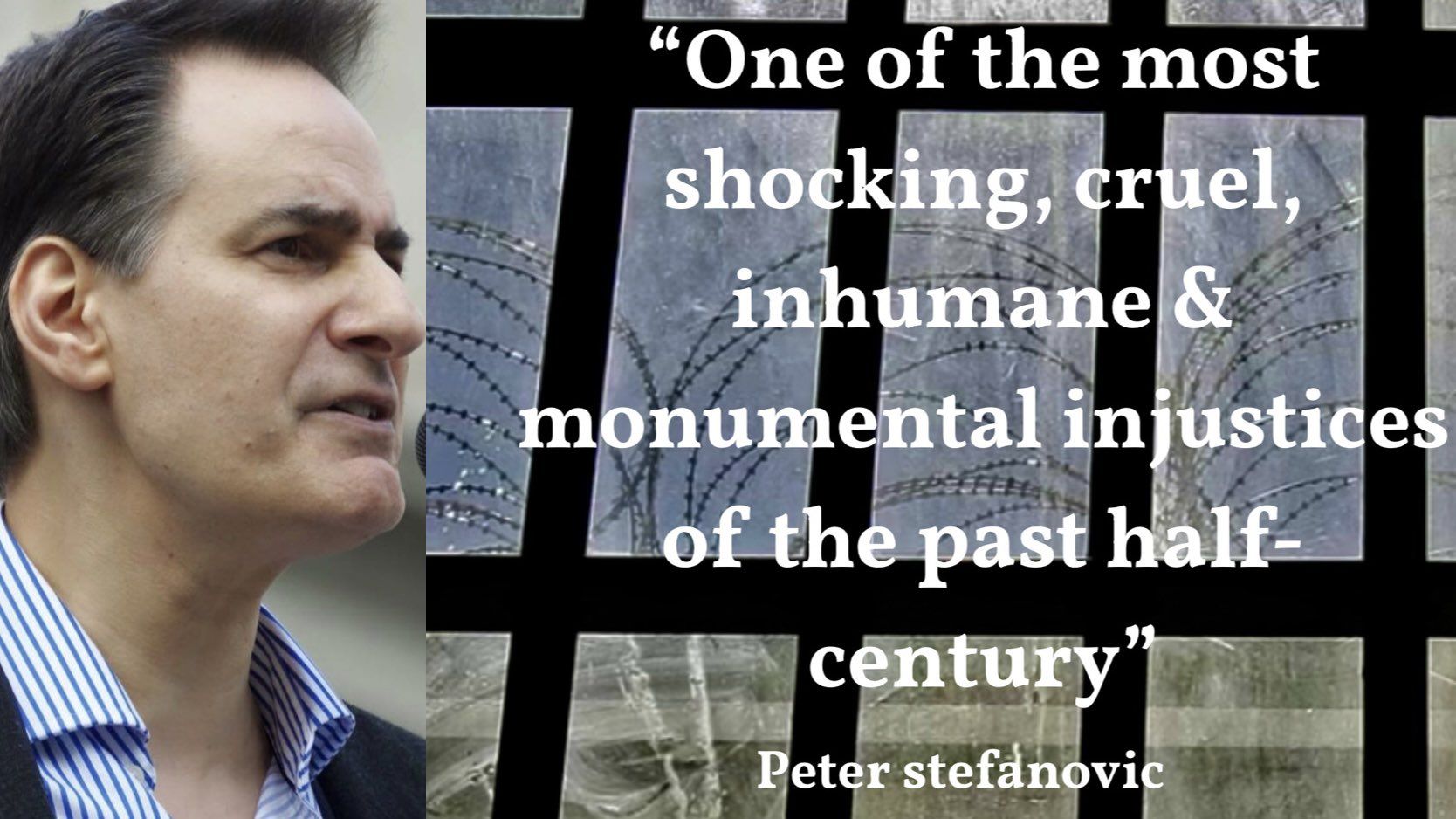
First IPP film has had 15 million views
Second film 1.3 million views
Third film 4.1 views
Click on each to view and please share with others
Below are typical comments from the public which his films are generating:
“Truly shocking”
“Absolutely horrifying”
“Unbelievable”
“Utterly awful”
“Madness”
“Inconceivable”
“Cruel”
LETTER TO THE SECRETARY OF STATE FOR JUSTICE
Stefanovic has recently joined a coalition of 70 criminal justice experts, civil society organisations, leading activists and campaigners in signing an open letter to Sir Keir Starmer MP’s new Labour Government and the Rt Hon Shabana Mahmood MP, Secretary of State for Justice, calling on them to deliver crucial reforms to the Imprisonment for Public Protection (IPP) sentence, which has claimed more than 100 lives since 2005 and has become a national scandal.
FILMS HIGHLIGHTING THE IPP SENTENCE
Stefanovic, whose films have been watched hundreds of millions of times, has posted a new video saying:
“I’ve just signed a letter calling on the new Justice Secretary to work at pace to end one of the most shocking, cruel, inhumane, degrading and monumental injustices of the past half-century – IPP sentences – a scandal which has a already claimed the lives of 90 people serving IPP sentences in prison and a further 31 that we know of in the community”
Stefanovic continued:
“I cannot overstate the urgency on this – in June one person serving an IPP sentence – a staggering 12 years over tariff set himself alight, another began his second hunger strike. This insanity has got to end – we must now put a stop to this inhumane and indefensible treatment which has absolutely no place in a modern Britain and political leaders – previously lacking the courage to take action – must now find the courage to do so.”
BACKGROUND
IPP sentences were introduced in England and Wales by the New Labour government with the Criminal Justice Act 2003, as it sought to prove it was tough on law and order. They were put in place to detain indefinitely serious offenders who were perceived to be a risk to the public. However, they were also used against offenders who had committed low-level crimes.
Astonishingly, this sentence has led to some people spending 18 years in jail for trying to steal a coat or imprisoned for 11 years for stealing a mobile phone. Another served 16 years in jail on a three-year IPP tariff for stealing a flower pot at the age of 17.
ABOLISHED BUT NOT RETROSPECTIVELY
In 2012, after widespread condemnation and a ruling by the European court of human rights that such sentences were, “arbitrary and therefore unlawful”, IPP terms were abolished by the Conservative government. But the measure was not retrospective, and thousands remain in prison.
Former supreme court justice Lord Brown called IPP sentences: “the greatest single stain on the justice system”. When Michael Gove was Justice Secretary, he recommended, “executive clemency” for IPP prisoners who had served terms much longer than their tariffs. But he didn’t act on it. Lord Blunkett, the Labour Home Secretary who introduced the sentences, regrets them, stating: “I got it wrong.” And more recently, Dr Alice Edwards, the UN rapporteur for torture has called IPP sentences an “egregious miscarriage of justice.” Even former Justice Secretary Alex Chalk KC has called them a stain on the justice system, despite that, the previous Conservative Government refused to implement the Justice Committees recommendation to re-sentence all prisoners subject to IPP sentences.
DEBATE IN THE HOUSE OF LORDS
In a debate in the House of Lords in May Lord Ponsonby – leading for Labour on justice said
“In Government we will work at pace to bring forward an effective action plan that will allow the safe release of IPP prisoners where possible”
In their letter the campaigners “urge the new government to honour its commitment, made in opposition, to “work at pace” to resolve this injustice.
HONOUR THE COMMITMENT…
Stefanovic says “The new government must now honour the commitment it made in opposition and work at pace to end this cruel, inhumane, degrading and most monumental of injustices”

Labour finds its courage as House of Lords tackle decades of injustice in crucial vote on IPP amendments.
Next Tuesday, 21st May, the House of Lords will vote on significant amendments to the Victims & Prisoners Bill, aimed at rectifying one of the most shocking injustices of the past half-century – Imprisonment for Public Protection (IPP) sentences.
BACKGROUND
IPP sentences were introduced in England and Wales by the New Labour government with the Criminal Justice Act 2003, as it sought to prove it was tough on law and order. They were put in place to detain indefinitely serious offenders who were perceived to be a risk to the public. However, they were also used against offenders who had committed low-level crimes.
Astonishingly, this sentence has led to some people spending 18 years in jail for trying to steal a coat or imprisoned for 11 years for stealing a mobile phone.
UNLAWFUL
In 2012, after widespread condemnation and a ruling by the European court of human rights that such sentences were, “arbitrary and therefore unlawful”, IPP terms were abolished by the Conservative government. But the measure was not retrospective, and as a result, thousands remain in prison.
Let’s not forget that over 90 people serving sentences under the discredited IPP regime have sadly taken their own lives whilst in prison.
In 2023 we saw the second year in a row of the highest number of self-inflicted deaths since the IPP sentence was introduced.
The former supreme court justice Lord Brown called IPP sentences: “the greatest single stain on the justice system”. When Rt Hon Michael Gove MP was justice secretary, he recommended, “executive clemency” for IPP prisoners who had served terms much longer than their tariffs. But he didn’t act on his own recommendation. Lord Blunkett, the Labour Home Secretary who introduced the sentences, regrets them, stating: “I got it wrong.” And more recently, Dr Alice Edwards, the UN rapporteur for torture has called IPP sentences an “egregious miscarriage of justice.” Even the Justice Secretary Rt Hon Alex Chalk KC MP has also called them a stain on the justice system, despite that, the Government has so far refused to implement the Justice Committees recommendation to re-sentence all prisoners subject to IPP sentences.
CAMPAIGN FOR SOCIAL JUSTICE
Campaign groups and their families have been fighting to end this tragic miscarriage of justice for more than a decade and a film posted online by social media sensation and campaigner Peter Stefanovic, a lawyer and CEO of CAMPAIGN FOR SOCIAL JUSTICE has ignited a wider public storm on this tragic miscarriage of justice and has been viewed a staggering 15 MILLION TIMES. It is not surprising that the public reaction to this film has been one of shock, outrage, and disbelief.
PUBLIC SUPPORT
Stefanovic said: “The public support for my film has been overwhelming and the comments it is getting are a testament to the public’s anger, outrage and disbelief at this tragic and monumental miscarriage of justice. Political leaders from both main parties must find the courage to step up and address the tragic injustice of indefinite jail terms”.
HOUSE OF LORDS DEBATE
His film was mentioned by Baroness Jones, Lord Moylan and Baroness Fox in the House of Lords debate on March 12. Furthermore, Baroness Fox also cited The Criminal Justice Blog.

HOPE FOR JUSTICE
The House of Lords is set to vote on a series of amendments to the government’s Victims and Prisoners Bill next Tuesday. These amendments are expected to challenge the government, with potential defeats on several fronts.
Of particular significance is the “Simon Brown Memorial Amendment,” named after the late former Supreme Court Justice who condemned IPP as the “greatest single stain on the British Justice system.” This amendment seeks to reverse the Parole Board release test burden, offering hope to IPP prisoners trapped in prolonged incarceration.
LABOUR FINDS IT’S COURAGE
Keir Starmer’s Labour Party has offered much needed hope to IPP prisoners trapped in the nightmare of prolonged incarceration and desperately needed hope for their families. In March 2024, Lord Ponsonby speaking for Labour said this in response to the important “Simon Brown Memorial Amendment”
“The noble Lord, Lord Moylan, in his amendment 161, is effectively reversing the burden of proof for IPP prisoners. He described it as a nudge to the Parole Board and discussed how significant that nudge would be, but it is a welcome nudge, non the less. It has the historic credentials of being supported originally by Lord Brown of Eaton-under-Haywood. It is a welcome amendment”
With Lord Ponsonby having confirmed Labour’s support for the all-important “Simon Brown Memorial Amendment,” which has given so much hope to those serving these sentences and their families. Campaign groups are now calling on the Lib Dems, Green Party, back benchers, Bishops and Tory rebels to join Labour in supporting it. The amendments will be voted on next Tuesday. Let’s hope they all step up and help bring to an end this injustice.

As his video hits 15M views, campaigning Lawyer calls on Political Leaders to find their courage
“Political leaders from both main parties must find the courage to step up and address the tragic injustice of indefinite jail terms” says Lawyer and CEO of CAMPAIGN FOR SOCIAL JUSTICE Peter Stefanovic.
BACKGROUND
IPP sentences were introduced in England and Wales by the New Labour government with the Criminal Justice Act 2003, as it sought to prove it was tough on law and order. They were put in place to detain indefinitely serious offenders who were perceived to be a risk to the public. However, they were also used against offenders who had committed low-level crimes.
Astonishingly, this sentence has led to some people spending 18 years in jail for trying to steal a coat or imprisoned for 11 years for stealing a mobile phone.
UNLAWFUL
In 2012, after widespread condemnation and a ruling by the European court of human rights that such sentences were, “arbitrary and therefore unlawful”, IPP terms were abolished by the Conservative government. But the measure was not retrospective, and thousands remain in prison.
Over 90 people serving sentences under the discredited IPP regime have sadly taken their own lives whilst in prison. In 2023 we saw the second year in a row of the highest number of self-inflicted deaths since the IPP sentence was introduced.
The former supreme court justice Lord Brown has called IPP sentences: “the greatest single stain on the justice system”. When Rt Hon Michael Gove MP was justice secretary, he recommended, “executive clemency” for IPP prisoners who had served terms much longer than their tariffs. But he didn’t act on it. Lord Blunkett, the Labour Home Secretary who introduced the sentences, regrets them, stating: “I got it wrong.” And more recently, Dr Alice Edwards, the UN rapporteur for torture has called IPP sentences an “egregious miscarriage of justice.” Even the Justice Secretary Rt Hon Alex Chalk KC MP has also called them a stain on the justice system, despite that, the Government has so far refused to implement the Justice Committees recommendation to re-sentence all prisoners subject to IPP sentences.
CAMPAIGN FOR SOCIAL JUSTICE
Campaign groups and their families have been fighting to end this tragic miscarriage of justice for more than a decade and now a film posted online by social media sensation and campaigner Peter Stefanovic, a lawyer and CEO of CAMPAIGN FOR SOCIAL JUSTICE has ignited a wider public storm on this tragic miscarriage of justice and has been viewed a staggering 15 MILLION TIMES. It is not surprising that the public reaction to this film has been one of shock, outrage, and disbelief.
PUBLIC SUPPORT
Stefanovic said:
“The public support for my film has been overwhelming and the comments it is getting are a testament to the public’s anger, outrage and disbelief at this tragic miscarriage of justice. If Labour step up and back the amendments supported in the Lords by both Lib Dem and Green Party peers, we can end this tragedy now. It’s time to do what we all know is right before more lives are tragically lost.”
HOUSE OF LORDS DEBATE
His film was mentioned by Baroness Jones, Lord Moylan and Baroness Fox in the House of Lords debate on March 12. Furthermore, Baroness Fox also cited The Criminal Justice Blog.
HOPE FOR JUSTICE
The House of Lords is set to vote on a series of amendments to the government’s Victims and Prisoners Bill sometime in May. If Labour join with the Lib Dem and Green Party peers who are already backing them the amendments will pass and an end to this tragic miscarriage of justice quickened
Stefanovic is calling on political leaders from all parties “to find the courage to step up and address the tragic injustice of indefinite jail terms once and for all”

HOPE FOR JUSTICE FOR IPP PRISONERS AS LABOUR LORDS BACK AMENDMENTS
BACKGROUND
IPP sentences were introduced in England and Wales by the New Labour government with the Criminal Justice Act 2003, as it sought to prove it was tough on law and order. They were put in place to detain indefinitely serious offenders who were perceived to be a risk to the public. However, they were also used against offenders who had committed low-level crimes.
Astonishingly, this sentence has led to some people spending 18 years in jail for trying to steal a coat or imprisoned for 11 years for stealing a mobile phone.
UNLAWFUL
In 2012, after widespread condemnation and a ruling by the European court of human rights that such sentences were, “arbitrary and therefore unlawful”, IPP terms were abolished by the Conservative government. But the measure was not retrospective, and thousands remain in prison.
Over 90 people serving sentences under the discredited IPP regime have sadly taken their own lives whilst in prison. In 2023 we saw the second year in a row of the highest number of self-inflicted deaths since the IPP sentence was introduced.
The former supreme court justice Lord Brown has called IPP sentences: “the greatest single stain on the justice system”. When Rt Hon Michael Gove MP was justice secretary, he recommended, “executive clemency” for IPP prisoners who had served terms much longer than their tariffs. But he didn’t act on it. Lord Blunkett, the Labour Home Secretary who introduced the sentences, regrets them, stating: “I got it wrong.” And more recently, Dr Alice Edwards, the UN rapporteur for torture has called IPP sentences an “egregious miscarriage of justice.” Even the Justice Secretary Rt Hon Alex Chalk KC MP has also called them a stain on the justice system, despite that, the Government has so far refused to implement the Justice Committees recommendation to re-sentence all prisoners subject to IPP sentences.
CAMPAIGN FOR SOCIAL JUSTICE
Campaign groups and their families have been fighting to end this tragic miscarriage of justice for more than a decade and now a film posted online by social media campaigner Peter Stefanovic, a lawyer and CEO of CAMPAIGN FOR SOCIAL JUSTICE has ignited a wider public storm on this tragic miscarriage of justice and has been viewed 14 million times. It is not surprising that the public reaction to this film has been one of shock, outrage, and disbelief.

PUBLIC SUPPORT
Stefanovic said:
“The public support for my film has been overwhelming and the comments it is getting are a testament to the public’s anger, outrage and disbelief at this tragic miscarriage of justice. If Labour step up and back the amendments supported in the Lords by both Lib Dem and Green Party peers we can end this tragedy now. It’s time to do what we all know is right before more lives are tragically lost.”
HOUSE OF LORDS DEBATE
His film was mentioned by Baroness Jones, Lord Moylan and Baroness Fox in the House of Lords debate on March 12.
HOPE FOR JUSTICE
Hope for justice at last now comes in the form of amendments tabled in the House of Lords to the Victims and Prisoners Bill, two of which are particularly significant – 161 by Lord Moylan and 167 by Baroness Fox which have the backing of the Lib Dems and Green Party peers, and which have wide cross bench support.
AMENDMENTS
Amendment 167 seeks to implement the Justice Committees recommendation to re-sentence all prisoners subject to IPP sentences.
Amendment 161 would require the state to demonstrate that a prisoner is still a risk to the public rather than, as at present, requiring the prisoner to prove the opposite.
Under the proposed amendment, they would be released unless the Parole Board “is satisfied that it remains necessary and proportionate for the protection of the public from serious harm that they should continue to be confined”.
Amendment 161 is supported by Lord Blunkett, Baroness Chakrabarti and the former deputy president of the Supreme Court Lord Hope of Craighead. It is also supported by the Bar Council, representing 17,000 barristers in England and Wales.
On amendment 161 Lord Ponsonby, leading for Labour, said in the debate which took place in the House of Lords on 12 March.
“Lord Moylan in his amendment 161 effectively reversing the burden of proof for IPP prisoners described it as a nudge to the parole board and discussed in his contribution how significant that nudge would be but it’s a welcome nudge nevertheless, and he has the historic credentials of being supported originally by Lord Brown. It’s a welcome amendment.”
Voting on the amendments will take place in the coming weeks. If Labour vote for them this is finally a real opportunity to put right an egregious miscarriage of justice.
Video Igniting Public Storm On IPP Sentencing Scandal Hits 14 Million Views
A video that has been posted online by campaigner, lawyer and the CEO of Campaign for Social Justice Peter Stefanovic has ignited a public storm by bringing the issue of the IPP sentencing scandal to a wide audience.
Now on a staggering 14 million views the following are typical of the comments it is getting,
“Truly shocking”
“Absolutely horrifying”
“Unbelievable”
“Utterly awful”
“Madness”
“inconceivable”
“cruel”
There has been overwhelming public support for this film which has manifested in an online petition signed by thousands which has forced the Government to respond.
Peter Stefanovic, a social media sensation, said:
“The public support for my film has been overwhelming & the comments it is getting are a testament to the public’s anger, outrage & disbelief at this tragic miscarriage of justice. If Labour step up next week and back the amendments supported in the Lords by both Lib Dem and Green Party peers we can end this tragedy now. It’s time to do what we all know is right before more lives are tragically lost”
IPP sentences were introduced in England and Wales by the New Labour government with the Criminal Justice Act 2003, as it sought to prove it was tough on law and order. They were put in place to detain indefinitely serious offenders who were perceived to be a risk to the public. However, they were also used against offenders who had committed low-level crimes.
Astonishingly, this sentence has led to some people spending 18 years in jail for trying to steal a coat or imprisoned for 11 years for stealing a mobile phone.
In 2012, after widespread condemnation and a ruling by the European court of human rights that such sentences were, “arbitrary and therefore unlawful”, IPP terms were abolished by the Conservative government. But the measure was not retrospective, and thousands remain in prison.
90 people serving sentences under the discredited IPP regime have sadly taken their own lives whilst in prison. In 2023 we saw the second year in a row of the highest number of self-inflicted deaths since the IPP sentence was introduced.
The former supreme court justice Lord Brown has called IPP sentences: “the greatest single stain on the justice system”. When Rt Hon Michael Gove MP was justice secretary, he recommended, “executive clemency” for IPP prisoners who had served terms much longer than their tariffs.
But he didn’t act on it.
Lord Blunkett, the Labour home secretary who introduced the sentences, regrets them, stating: “I got it wrong.” And more recently, Dr Alice Edwards, the UN rapporteur for torture has called IPP sentences an “egregious miscarriage of justice.” Even the Justice Secretary Rt Hon Alex Chalk KC MP has also called them a stain on the justice system but the Government has so far refused to implement the Justice Committees recommendation to re-sentence all prisoners subject to IPP sentences.
CAMPAIGN FOR SOCIAL JUSTICE
Campaign groups & their families have been fighting to end this tragic miscarriage of justice for more than a decade and now the film posted online by Peter Stefanovic has ignited a wider public storm on this tragic miscarriage of justice. The public reaction to it his film has been one of shock, outrage, and disbelief.
HOPE FOR JUSTICE
Hope for justice at last now comes in the form of 2 amendments tabled in the House of Lords to the Victims & Prisoners Bill (161 & 167) by Lord Moylan which are backed by the Lib Dems and Green Party peers, and which have wide cross bench support.
Amendment 167 seeks to implement the Justice Committees recommendation to re-sentence all prisoners subject to IPP sentences. Amendment 161 would require the state to demonstrate that a prisoner is still a risk to the public rather than, as at present, requiring the prisoner to prove the opposite. Under the proposed amendment, they would be released unless the Parole Board “is satisfied that it remains necessary and proportionate for the protection of the public from serious harm that they should continue to be confined”.
Amendment is 161 is supported by Lord Blunkett, Baroness Chakrabarti & the former deputy president of the Supreme Court Lord Hope of Craighead. It’s also supported by the Bar Council, representing 17,000 barristers in England and Wales. The outpouring of public support generated by Stefanovic’s video adds further pressure on Keir Starmers Labour to step up and act by backing the amendments tabled by Lord Moylan that are supported by Lib Dem and Green Party peers.
With Labour support this stain on our justice system can finally be ended,
NOW.
The amendments above will be debated in the House of Lords on 12 March.
Let’s not wait for an ITV drama to do the right thing.
Let’s not sit by whilst more tragically lose their lives. We must act now & we must act URGENTLY.

Guest blog: Being visible: Phil O’Brien
An interview with Phil O’Brien by John O’Brien
Phil O’Brien started his prison officer training in January 1970. His first posting, at HMDC Kirklevington, in April 1970. In a forty-year career, he also served at HMP Brixton, HMP Wakefield, HMYOI Castington, HMP Full Sutton, HMRC Low Newton and HMP Frankland. He moved through the ranks and finished his public sector career as Head of Operations at Frankland. In 2006, he moved into the private sector, where he worked for two years at HMP Forest Bank before taking up consultancy roles at Harmondsworth IRC, HMP Addiewell and HMP Bronzefield, where he carried out investigations and advised on training issues. Phil retired in 2011. In September 2018, he published Can I Have a Word, Boss?, a memoir of his time in the prison service.
John O’Brien holds a doctorate in English literature from the University of Leeds, where he specialised in autobiography studies.

You deal in the first two chapters of the book with training. How do you reflect upon your training now, and how do you feel it prepared you for a career in the service?
I believe that the training I received set me up for any success I might have had. I never forgot the basics I was taught on that initial course. On one level, we’re talking about practical things like conducting searches, monitoring visits, keeping keys out of the sight of prisoners. On another level, we’re talking about the development of more subtle skills like observing patterns of behaviour and developing an intimate knowledge of the prisoners in your charge, that is, getting to know them so well that you can predict what they are going to do before they do it. Put simply, we were taught how best to protect the public, which includes both prisoners and staff. Those basics were a constant for me.
Tell me about the importance of the provision of education and training for prisoners. Your book seems to suggest that Low Newton was particularly successful in this regard.
Many prisoners lack basic skills in reading, writing and arithmetic. For anyone leaving the prison system, reading and writing are crucial in terms of functioning effectively in society, even if it’s only in order to access the benefits available on release.
At Low Newton, a largely juvenile population, the education side of the regime was championed by two governing governors, Mitch Egan and Mike Kirby. In addition, we had a well-resourced and extremely committed set of teachers. I was Head of Inmate Activities at Low Newton and therefore had direct responsibility for education.
The importance of education and training is twofold:
Firstly, it gives people skills and better fits them for release.
Secondly, a regime that fully engages prisoners leaves less time for the nonsense often associated with jails: bullying, drug-dealing, escaping.
To what extent do you believe that the requirements of security, control and justice can be kept in balance?
Security, control, and justice are crucial to the health of any prison. If you keep these factors in balance, afford them equal attention and respect, you can’t be accused of bias one way or the other.
Security refers to your duty to have measures in place that prevent escapes – your duty to protect the public.
Control refers to your duty to create and maintain a safe environment for all.
Justice is about treating people with respect and providing them with the opportunities to address their offending behaviour. You can keep them in balance. It’s one of the fundamentals of the job. But you have to maintain an objective and informed view of how these factors interact and overlap. It comes with experience.

What changed most about the prison service in your time?
One of the major changes was Fresh Start in 1987/88, which got rid of overtime and the Chief Officer rank. Fresh Start made prison governors more budget aware and responsible. It was implemented more effectively at some places than others, so it wasn’t without its wrinkles.
Another was the Woolf report, which looked at the causes of the Strangeways riot. The Woolf report concentrated on refurbishment, decent living and working conditions, and full regimes for prisoners with all activities starting and ending on time. It also sought to enlarge the Cat D estate, which would allow prisoners to work in outside industry prior to release. Unfortunately, the latter hasn’t yet come to pass sufficiently. It’s an opportunity missed.
What about in terms of security?
When drugs replaced snout and hooch as currency in the 1980s, my security priorities changed in order to meet the new threat. I had to develop ways of disrupting drug networks, both inside and outside prison, and to find ways to mitigate targeted subversion of staff by drug gangs.
In my later years, in the high security estate, there was a real fear and expectation of organised criminals breaking into jails to affect someone’s escape, so we had to organise anti-helicopter defences.
The twenty-first century also brought a changed, and probably increased, threat of terrorism, which itself introduced new security challenges.
You worked in prisons of different categories. What differences and similarities did you find in terms of management in these different environments?
Right from becoming a senior officer, a first line manager at Wakefield, I adopted a modus operandi I never changed. I called it ‘managing by walking about’. It was about talking and listening, making sure I was there for staff when things got difficult. It’s crucial for a manager to be visible to prisoners and staff on a daily basis. It shows intent and respect.
I distinctly remember Phil Copple, when he was governor at Frankland, saying one day: “How do you find time to get around your areas of responsibility every day when other managers seem tied to their chairs?” I found that if I talked to all the staff, I was responsible for every day, it would prevent problems coming to my office later when I might be pushed for time. Really, it was a means of saving time.
The job is the same wherever you are. Whichever category of prison you are working in, you must get the basics right, be fair and face the task head on.
The concept of intelligence features prominently in the book. Can you talk a bit about intelligence, both in terms of security and management?
Successful intelligence has always depended on the collection of information.
The four stages in the intelligence cycle are: collation, analysis, dissemination and action. If you talk to people in the right way, they respond. I discovered this as soon as I joined the service, and it was particularly noticeable at Brixton.
Prisoners expect to be treated fairly, to get what they’re entitled to and to be included in the conversation. When this happens, they have a vested interest in keeping the peace. It’s easy to forget that prisoners are also members of the community, and they have the same problems as everyone else. That is, thinking about kids, schools, marriages, finances. Many are loyal and conservative. The majority don’t like seeing other people being treated unfairly, and this includes prisoner on prisoner interaction, bullying etc. If you tap into this facet of their character, they’ll often help you right the wrongs. That was my experience.
Intelligence used properly can be a lifesaver.
You refer to Kirklevington as an example of how prisons should work. What was so positive about their regime at the time?
It had vision and purpose and it delivered.
It was one of the few jails where I worked that consistently delivered what it was contracted to deliver. Every prisoner was given paid work opportunities prior to release, ensuring he could compete on equal terms when he got out. The regime had in place effective monitoring, robust assessments of risk, regular testing for substance abuse and sentence-planning meetings that included input from family and home probation officers.
Once passed out to work, each prisoner completed a period of unpaid work for the benefit of the local community – painting, decorating, gardening etc.
There was excellent communication.
The system just worked.
The right processes were in place.
To what extent do you feel you were good at your job because you understood the prisoners? That you were, in some way, the same?
I come from Ripleyville, in Bradford, a slum cleared in the 1950s. Though the majority of people were honest and hardworking, the area had its minority of ne’er-do-wells. I never pretended that I was any better than anyone else coming from this background.
Whilst a prisoner officer under training at Leeds, I came across a prisoner I’d known from childhood on my first day. When I went to Brixton, a prisoner from Bradford came up to me and said he recognised me and introduced himself. I’d only been there a couple of weeks. I don’t know if it was because of my background, but I took an interest in individual prisoners, trying to understand what made them tick, as soon as I joined the job.
I found that if I was fair and communicated with them, the vast majority would come half way and meet me on those terms. Obviously, my working in so many different kinds of establishments undoubtedly helped. It gave me a wide experience of different regimes and how prisoners react in those regimes.
How important was humour in the job? And, therefore, in the book?
Humour is crucial. Often black humour. If you note, a number of my ex-colleagues who have reviewed the book mention the importance of humour. It helps calm situations. Both staff and prisoners appreciate it. It can help normalise situations – potentially tense situations. Of course, if you use it, you’ve got to be able to take it, too.
What are the challenges, as you see them, for graduate management staff in prisons?
Credibility, possibly, at least at the beginning of their career. This was definitely a feature of my earlier years, where those in the junior governor ranks were seen as nobodies. The junior governors were usually attached to a wing with a PO, and the staff tended to look towards the PO for guidance. The department took steps to address this with the introduction of the accelerated promotion scheme, which saw graduate entrants spending time on the landing in junior uniform ranks before being fast-tracked to PO. They would be really tested in that rank.
There will always be criticism of management by uniform staff – it goes with the territory. A small minority of graduate staff failed to make sufficient progress at this stage and remained in the uniform ranks. This tended to cement the system’s credibility in the eyes of uniform staff.
Were there any other differences between graduate governors and governors who had come through the ranks?
The accelerated promotion grades tended to have a clearer career path and were closely mentored by a governor grade at HQ and by governing governors at their home establishments and had regular training. However, I lost count of the number of phone calls I received from people who were struggling with being newly promoted from the ranks to the governor grades. They often felt that they hadn’t been properly trained for their new role, particularly in relation to paperwork, which is a staple of governor grade jobs.
From the point of view of the early 21stC, what were the main differences between prisons in the public and private sectors?
There’s little difference now between public and private sector prisons. Initially, the public sector had a massive advantage in terms of the experience of staff across the ranks. Now, retention of staff seems to be a problem in both sectors. The conditions of service were better in the public sector in my time, but this advantage has been eroded. Wages are similar, retirement age is similar. The retirement age has risen substantially since I finished.
In my experience, private sector managers were better at managing budgets. As regards staff, basic grade staff in both sectors were equally keen and willing to learn. All that staff in either sector really needed was purpose, a coherent vision and support.
A couple of times towards the end of your book, you hint at the idea that your time might have passed. Does your approach belong to a particular historical moment?
I felt that all careers have to come to an end at some point and I could see that increasing administrative control would deprive my work of some of its pleasures. It was time to go before bitterness set in. Having said that, when I came back, I still found that the same old-fashioned skills were needed to deal with what I had been contracted to do. So, maybe I was a bit premature.
My approaches and methods were developed historically, over the entire period of my forty-year career. Everywhere I went, I tried to refine the basics that I had learned on that initial training course.
Thank you to John O’Brien for enabling Phil to share his experiences.

~
Prison as Punishment…really?
For a few years now I have been fascinated by people’s perception of Punishment. From Open Prisons seen as “Holiday Camps” to bringing back hanging all encompass the subject of Punishment.
We all have ideas of what it should be and have our preferred theories;
- Retribution: vengeance and just deserts
- Rehabilitation: reforming the offender
- Deterrence: reduction of crime by the threat or anticipation of a penalty
- Denunciation: reinforcement of community values by indicating certain behaviours reprehensible and not tolerated
- Restitution: compensation for the victim
- Incapacitation: physical restraints such as imprisonment, removing potential offenders from the community thus reducing future crime
But what does it really mean and does it work?
Does prison rehabilitate?
Should prison rehabilitate?
This is a really interesting report that I recommend:
Prison: the facts (Prison Reform Trust)
With custodial sentences one size does not fit all. Imagine all prisoners trying to fit in one box, doesn’t work and how can it work? There are too many variables within a prison which may affect the outcomes for inmates such as attitude of staff, regime, distance from families, abilities of inmates, crime committed, length of sentence…I could go on!
There are groups of prisoners that make little or no progress within a ‘normal’ prison environment; it’s similar to children that are unable to cope with mainstream schooling. These prisoners are unlikely to be able to address their offending behaviour.
This week I was invited to HMP Grendon by Officer Clare Cowell to see for myself how those that might fall between the cracks are treated by introducing the work undertaken.
F wing (TC+) is a new community providing specialist intervention for prisoners with a low-level of intellectual functioning to address offence-related risk and associated personality and psychological disorders.
It was explained that as part of the Personality Disorder pathway they deliver a core treatment model suitable for sentenced offenders with a wide range of offending needs whose complex needs cannot be adequately met by a single intervention.
Treatment consist of structured small group therapy and community living where members have shared responsibility inter the day-to-day running of the community, decision-making and problem solving.
F wing (TC+) places a greater emphasis on structural interventions targeting specific learning styles.
Residents (inmates) welcomed us to the unit alongside the friendly approachable staff, offering hot drinks and biscuits whilst revealing parts of their prison journey. The day was well planned with chances to take part in music therapy, discuss art therapy, relaxation and measuring the IQ of residents.
So back to the original question prison as punishment? You decide
Where’s Mum?…she’s in prison with an author and an actor off Eastenders!
Daughter: Did you just say Mum’s visiting a prison in London with an author and an actor off Eastenders ?
Son 1: If I stop someone from killing someone else and in so doing I kill them, am I a bad person or is it just what I have done bad?
Son 2: Did you really sit in a room with prisoners, what if they were murderers?
Boyfriend of daughter: Wow, you were in the audience and sat with prisoners?
Are these the kind of conversations you have with your family?

Over the past four years I have met many prisoners who all had one thing in common: they just needed someone to believe in them, to listen to them and to help them whilst in prison and once their sentence had ended.
I’ve found that, for some of them, criminal activity had become a way of life; they knew nothing else and would most likely continue in the same way after release. For others, falling into crime was a result of a stupid decision or action, often spontaneous, which had got them in to trouble with the law, convicted and sent to prison; they felt a debilitating remorse and that they had let themselves and their families down.
Crisis – what crisis?
We read that the prison population continues to rise, overcrowding in prison seems to be the norm rather than the exception and violence, suicides and self-harm are weekly occurrences. There is tragedy after tragedy yet we are told that there is no crisis in our prison system.
So what should we do? One solution is to accept the status quo and keep our heads in the sand. Another is to actually address the issues. But, as I keep hearing, this has to be a coherent team effort.
Not settling for the status quo
In January, I visited a London prison and was accompanied by NoOffence! Patron, actor Derek Martin (Eastenders’ Charlie Slater) and author Jonathan Robinson (@IN_IT_THE_BOOK) from their Advisory Board. I’ve already blogged about the visit and the lessons I took away from that experience.
At a peer mentoring conference last year, I met with Rob Owen OBE the chief executive of St Giles Trust, an Ambassador for NoOffence!
St Giles Trust aims to help break the cycle of prison, crime and disadvantage and create safer communities by supporting people to change their lives.
Next week, I will be meeting Geoff Baxter OBE the CEO of Prison Fellowship who is also an Ambassador of NoOffence!
This is just a small sample of the organisations that work to improve the lives of offenders, there are many more.
I’d dearly like to explore how these organisations can find more ways to work together; these plus leaders such as Howard League perform outstanding work as organisations in their own right. Just imagine what could be achieved if new ways of working could be agreed to improve the Criminal Justice System.
In December 2012 I was accepted by the Secretary of State to the Independent Monitoring Board (IMB) of an open prison. To carry out my duties effectively, the role provide the right of access to every prisoner and every part of the prison I monitor, and also to the prison’s records. Independent monitoring ensures people in custody are treated fairly and humanely; I take this work very seriously.
When I started working in prisons it was as a group facilitator for Sycamore Tree, a victim awareness programme teaching the principles of restorative justice. For many offenders on Sycamore Tree one of the most powerful element of the programme is when a victim of crime visits to talk with the group how crime has impacted their lives. In week 6 of the programme, participants have an opportunity to express their remorse – some write letters, poems or create works of art or craft. Members of the local community are invited to the course to observe the many varied symbolic acts of restitution.
I’ve seen some remarkable lives turned around among offenders who make it to this stage of the programme. Okay, you argue, there is no way these outcomes can be achieved in 100% of cases. I agree.
But programmes that provide education and encouragement have to be a more purposeful activity and more effective towards increasing the chances of better outcomes with more offenders than them simply being banged up for 23 hours a day with the TV.
But all it takes is a bit of coherent team work.
I like what NoOffence! says in their mission statement and vision:
Mission Statement: NoOffence! will encourage, promote and facilitate the collaboration of organisations from the voluntary, public and private sectors to address the issue of reducing crime and reoffending.
Vision: To be the leading online criminal justice communication, information exchange and networking community in the world. Our vision for NoOffence! has always been to bring justice people together to overcome barriers to rehabilitation. We believe the solution to complex justice problems lie with the people…
They have got a point, haven’t they?
I for one would be open to try to forge more collaboration than we see today. And I know I’m not alone in that view; many others are prepared to voice a similar willingness and appetite for supporting each other.
Actions speak louder than words. Let’s get on with it.
Continue the conversation on Twitter #rehabilitation
 The Criminal Justice Blog