Home » Posts tagged 'Ministry of Justice' (Page 4)
Tag Archives: Ministry of Justice

Hidden Heroes: Why are they hidden and why are they heroes?
Today, 29 September 2021, is the second Hidden Heroes Day. An initiative of The Butler Trust it aims be “a National Day of Thanks for our #HiddenHeroes across the UK”. As well as Hidden Heroes Day, there is a dedicated website http://www.hiddenheroes.uk and social media account.
“While most media coverage of the sector focuses on the negative, the @HiddenHeroes_uk Twitter account is used to share positive stories about prisons, IRCs, probation and youth justice services, and the #HiddenHeroes who work in them.”
Why is it that our prisons, IRCs, probation, and youth justice services is apparently full of hidden heroes?
It is one thing calling them heroes, but why are they hidden?
Who has made them hidden and what is keeping them hidden?
Are they hiding and if so what from?
Are they hiding something or from something?
Are they hidden because they don’t want a fuss or hidden because they don’t want people to know?
In this day and age, why is the harsh reality of prisons so well hidden?
How can it be that the average person still knows so little about what is happening behind prison walls?
Direct experience
It has been more than 10 years since I first stepped into a prison. The unfamiliar surroundings can quickly intimidate and unsettle you, and the smell can be nauseating.

Back then, I had to hide my job role. Some of my thoughts on my way to do my monitoring rota at a prison once were: “I need to get petrol for the journey to work, so I had better put my belt and key chain in my bag this morning as I don’t think I am supposed to let anyone see it. No one has said anything, and I haven’t read any rules about it, but I’ve got a feeling that it should stay hidden until I get to the prison car park. That’s the thing about being a prison monitor, there seems to be so many unwritten rules and regulations.”
How many paid staff feel that they too must hide the job they do from others?
I remember visiting a high security prison, for an Independent Monitoring Board (IMB) tour of the prison. We walked together as a small group and headed into a workshop. It was an example of one of those mind-numbingly boring workshops found in nearly every prison where they perform so-called “purposeful activity”.
As we entered escorted by IMB volunteers I was told by a member of staff that within that large room there were two blind spots. In a hushed voice they said:
“We are not responsible for your safety if you walk into a blind spot.”
The problem was that they avoided telling us where the blind spots were, for fear of being overheard.
Is that what is meant by hidden?
Yes, it can be a dangerous for staff but so too for those living inside.
Prisoner-on-staff attacks are counted, and stats reported. And they should be. Prisoner-on-prisoner attacks are also counted, and stats reported and they should be too. But have you ever tried to get stats for staff-on-prisoner attacks?
Along with others, perhaps yourself included, I took the time to review the HM Chief Inspector of Prisons report in August 2021 on HMP Chelmsford. The report said:
“Almost half of the prisoners said they had been victimised by staff, and those with disabilities and mental health problems were significantly more negative.”
How can you call them hidden heroes when reading something like this?
Should that be hidden too?
Can those who do such things really be heroes?
Opinions differ
Whilst preparing this blog, I decided to ask people for their views on Hidden Heroes.
Dita Saliuka told me:
“Prison staff get the good coverage in the media most of the time anyway and the public praise them for ‘doing a difficult job’. It’s more the prisoners that are labelled all sorts whether they committed a horrendous crime or not people just say all sorts just because they are a prisoner. I hate the word ‘hidden heroes’ so much as PPO (Prison and Probation Ombudsman) and Inquest clearly state that most deaths are due to staff failures so how is that a heroic thing? It’s disrespectful to us families that have lost a loved one in prison due to their neglect, failures and staff abuse.”
Phil O’Brien, who has a 40-year career in the Prison system, told me:
“I think it’s an excellent initiative. It quite rightly concentrates on the positives. But sometimes doing the dirty stuff can be equally effective and necessary but can’t be ‘celebrated’ because it’s not as easy to explain, not as attractive or appealing.”
Tough at the top
We have probably all read in the media this past week that there is a new Secretary of State for Justice, Dominic Raab MP, appointed on 15 September in the reshuffle. But did you also see that he has been quite vocal on what he really thinks about prisons.
Mr. Raab has said: “We are not ashamed to say that prisons should be tough, unpleasant and uncomfortable places. That’s the point of them”
Compare that with the official line that Ministry of Justice takes: “We work to protect and advance the principles of justice. Our vision is to deliver a world-class justice system that works for everyone in society.” And, according to its 4 strategic priorities, “a prison and probation service that reforms offenders”
https://www.gov.uk/government/organisations/ministry-of-justice/about
We are yet to learn the full extent of who is hiding what from whom at Petty France.
Mr. Raab will have to confront a few bastions of power there which prefer things to be properly hidden.
End of the day
#HiddenHeroesDay will come and go. Some people burst with enthusiasm for it, raising lots of money for great causes and all that is, of course, to be commended.
But at the end of the day the fact remains that the enduring problem of the criminal justice system, and daily for frontline workers in particular, is the pervading culture which dictates that everything remains hidden.
If we are to celebrate anything, wouldn’t it be better to celebrate openness rather than that which is hidden?
But within the justice arena so many tragedies stay hidden. Too many lives ruined, too many suicides, too many people suffering with mental health issues. And it is worsening by the day. That is the stark reality. And the reason things are hidden.
The Butler Trust, in creating the initiative, no doubt has the best of intentions.
In celebrating Hidden Heroes Day are we not in fact perpetuating the very problem it is trying to solve?
~ ends ~

Guest blog: Being visible: Phil O’Brien
An interview with Phil O’Brien by John O’Brien
Phil O’Brien started his prison officer training in January 1970. His first posting, at HMDC Kirklevington, in April 1970. In a forty-year career, he also served at HMP Brixton, HMP Wakefield, HMYOI Castington, HMP Full Sutton, HMRC Low Newton and HMP Frankland. He moved through the ranks and finished his public sector career as Head of Operations at Frankland. In 2006, he moved into the private sector, where he worked for two years at HMP Forest Bank before taking up consultancy roles at Harmondsworth IRC, HMP Addiewell and HMP Bronzefield, where he carried out investigations and advised on training issues. Phil retired in 2011. In September 2018, he published Can I Have a Word, Boss?, a memoir of his time in the prison service.
John O’Brien holds a doctorate in English literature from the University of Leeds, where he specialised in autobiography studies.

You deal in the first two chapters of the book with training. How do you reflect upon your training now, and how do you feel it prepared you for a career in the service?
I believe that the training I received set me up for any success I might have had. I never forgot the basics I was taught on that initial course. On one level, we’re talking about practical things like conducting searches, monitoring visits, keeping keys out of the sight of prisoners. On another level, we’re talking about the development of more subtle skills like observing patterns of behaviour and developing an intimate knowledge of the prisoners in your charge, that is, getting to know them so well that you can predict what they are going to do before they do it. Put simply, we were taught how best to protect the public, which includes both prisoners and staff. Those basics were a constant for me.
Tell me about the importance of the provision of education and training for prisoners. Your book seems to suggest that Low Newton was particularly successful in this regard.
Many prisoners lack basic skills in reading, writing and arithmetic. For anyone leaving the prison system, reading and writing are crucial in terms of functioning effectively in society, even if it’s only in order to access the benefits available on release.
At Low Newton, a largely juvenile population, the education side of the regime was championed by two governing governors, Mitch Egan and Mike Kirby. In addition, we had a well-resourced and extremely committed set of teachers. I was Head of Inmate Activities at Low Newton and therefore had direct responsibility for education.
The importance of education and training is twofold:
Firstly, it gives people skills and better fits them for release.
Secondly, a regime that fully engages prisoners leaves less time for the nonsense often associated with jails: bullying, drug-dealing, escaping.
To what extent do you believe that the requirements of security, control and justice can be kept in balance?
Security, control, and justice are crucial to the health of any prison. If you keep these factors in balance, afford them equal attention and respect, you can’t be accused of bias one way or the other.
Security refers to your duty to have measures in place that prevent escapes – your duty to protect the public.
Control refers to your duty to create and maintain a safe environment for all.
Justice is about treating people with respect and providing them with the opportunities to address their offending behaviour. You can keep them in balance. It’s one of the fundamentals of the job. But you have to maintain an objective and informed view of how these factors interact and overlap. It comes with experience.

What changed most about the prison service in your time?
One of the major changes was Fresh Start in 1987/88, which got rid of overtime and the Chief Officer rank. Fresh Start made prison governors more budget aware and responsible. It was implemented more effectively at some places than others, so it wasn’t without its wrinkles.
Another was the Woolf report, which looked at the causes of the Strangeways riot. The Woolf report concentrated on refurbishment, decent living and working conditions, and full regimes for prisoners with all activities starting and ending on time. It also sought to enlarge the Cat D estate, which would allow prisoners to work in outside industry prior to release. Unfortunately, the latter hasn’t yet come to pass sufficiently. It’s an opportunity missed.
What about in terms of security?
When drugs replaced snout and hooch as currency in the 1980s, my security priorities changed in order to meet the new threat. I had to develop ways of disrupting drug networks, both inside and outside prison, and to find ways to mitigate targeted subversion of staff by drug gangs.
In my later years, in the high security estate, there was a real fear and expectation of organised criminals breaking into jails to affect someone’s escape, so we had to organise anti-helicopter defences.
The twenty-first century also brought a changed, and probably increased, threat of terrorism, which itself introduced new security challenges.
You worked in prisons of different categories. What differences and similarities did you find in terms of management in these different environments?
Right from becoming a senior officer, a first line manager at Wakefield, I adopted a modus operandi I never changed. I called it ‘managing by walking about’. It was about talking and listening, making sure I was there for staff when things got difficult. It’s crucial for a manager to be visible to prisoners and staff on a daily basis. It shows intent and respect.
I distinctly remember Phil Copple, when he was governor at Frankland, saying one day: “How do you find time to get around your areas of responsibility every day when other managers seem tied to their chairs?” I found that if I talked to all the staff, I was responsible for every day, it would prevent problems coming to my office later when I might be pushed for time. Really, it was a means of saving time.
The job is the same wherever you are. Whichever category of prison you are working in, you must get the basics right, be fair and face the task head on.
The concept of intelligence features prominently in the book. Can you talk a bit about intelligence, both in terms of security and management?
Successful intelligence has always depended on the collection of information.
The four stages in the intelligence cycle are: collation, analysis, dissemination and action. If you talk to people in the right way, they respond. I discovered this as soon as I joined the service, and it was particularly noticeable at Brixton.
Prisoners expect to be treated fairly, to get what they’re entitled to and to be included in the conversation. When this happens, they have a vested interest in keeping the peace. It’s easy to forget that prisoners are also members of the community, and they have the same problems as everyone else. That is, thinking about kids, schools, marriages, finances. Many are loyal and conservative. The majority don’t like seeing other people being treated unfairly, and this includes prisoner on prisoner interaction, bullying etc. If you tap into this facet of their character, they’ll often help you right the wrongs. That was my experience.
Intelligence used properly can be a lifesaver.
You refer to Kirklevington as an example of how prisons should work. What was so positive about their regime at the time?
It had vision and purpose and it delivered.
It was one of the few jails where I worked that consistently delivered what it was contracted to deliver. Every prisoner was given paid work opportunities prior to release, ensuring he could compete on equal terms when he got out. The regime had in place effective monitoring, robust assessments of risk, regular testing for substance abuse and sentence-planning meetings that included input from family and home probation officers.
Once passed out to work, each prisoner completed a period of unpaid work for the benefit of the local community – painting, decorating, gardening etc.
There was excellent communication.
The system just worked.
The right processes were in place.
To what extent do you feel you were good at your job because you understood the prisoners? That you were, in some way, the same?
I come from Ripleyville, in Bradford, a slum cleared in the 1950s. Though the majority of people were honest and hardworking, the area had its minority of ne’er-do-wells. I never pretended that I was any better than anyone else coming from this background.
Whilst a prisoner officer under training at Leeds, I came across a prisoner I’d known from childhood on my first day. When I went to Brixton, a prisoner from Bradford came up to me and said he recognised me and introduced himself. I’d only been there a couple of weeks. I don’t know if it was because of my background, but I took an interest in individual prisoners, trying to understand what made them tick, as soon as I joined the job.
I found that if I was fair and communicated with them, the vast majority would come half way and meet me on those terms. Obviously, my working in so many different kinds of establishments undoubtedly helped. It gave me a wide experience of different regimes and how prisoners react in those regimes.
How important was humour in the job? And, therefore, in the book?
Humour is crucial. Often black humour. If you note, a number of my ex-colleagues who have reviewed the book mention the importance of humour. It helps calm situations. Both staff and prisoners appreciate it. It can help normalise situations – potentially tense situations. Of course, if you use it, you’ve got to be able to take it, too.
What are the challenges, as you see them, for graduate management staff in prisons?
Credibility, possibly, at least at the beginning of their career. This was definitely a feature of my earlier years, where those in the junior governor ranks were seen as nobodies. The junior governors were usually attached to a wing with a PO, and the staff tended to look towards the PO for guidance. The department took steps to address this with the introduction of the accelerated promotion scheme, which saw graduate entrants spending time on the landing in junior uniform ranks before being fast-tracked to PO. They would be really tested in that rank.
There will always be criticism of management by uniform staff – it goes with the territory. A small minority of graduate staff failed to make sufficient progress at this stage and remained in the uniform ranks. This tended to cement the system’s credibility in the eyes of uniform staff.
Were there any other differences between graduate governors and governors who had come through the ranks?
The accelerated promotion grades tended to have a clearer career path and were closely mentored by a governor grade at HQ and by governing governors at their home establishments and had regular training. However, I lost count of the number of phone calls I received from people who were struggling with being newly promoted from the ranks to the governor grades. They often felt that they hadn’t been properly trained for their new role, particularly in relation to paperwork, which is a staple of governor grade jobs.
From the point of view of the early 21stC, what were the main differences between prisons in the public and private sectors?
There’s little difference now between public and private sector prisons. Initially, the public sector had a massive advantage in terms of the experience of staff across the ranks. Now, retention of staff seems to be a problem in both sectors. The conditions of service were better in the public sector in my time, but this advantage has been eroded. Wages are similar, retirement age is similar. The retirement age has risen substantially since I finished.
In my experience, private sector managers were better at managing budgets. As regards staff, basic grade staff in both sectors were equally keen and willing to learn. All that staff in either sector really needed was purpose, a coherent vision and support.
A couple of times towards the end of your book, you hint at the idea that your time might have passed. Does your approach belong to a particular historical moment?
I felt that all careers have to come to an end at some point and I could see that increasing administrative control would deprive my work of some of its pleasures. It was time to go before bitterness set in. Having said that, when I came back, I still found that the same old-fashioned skills were needed to deal with what I had been contracted to do. So, maybe I was a bit premature.
My approaches and methods were developed historically, over the entire period of my forty-year career. Everywhere I went, I tried to refine the basics that I had learned on that initial training course.
Thank you to John O’Brien for enabling Phil to share his experiences.

~

It’s been quite a year but not a quiet one. A retrospective on 2017
My year opened memorably
In January, the Prisons Minister, Sam Gymiah, wrote to sack me from my role as a Chairman of the Independent Monitoring Board (IMB) at HMP/YOI Hollesley Bay and to ban me for 5 years from IMB membership. I spoke out in the public interest for prison reform, highlighting key weaknesses I found in the MoJ. They shot the messenger.
I’ve written extensively on the reasons for this as those of you kind enough to have followed the story will know only too well.

No doubt the MoJ and IMB hoped they had heard the last from me.
I have not shut up and I have not gone away
In fact, if anything, as a direct result of media interest from radio, tv and the local and national press, my voice became heard more widely. I was given many chances to raise important issues on the state of prisons in England and Wales and I took them.
In April, I learned that I had been nominated for The Contrarian Prize 2017. It is a prestigious prize for those who have shown independence, courage and sacrifice. Those who nominated me liked the fact that I was unafraid to speak the truth to those in power, talking about the criminal justice system in the public interest. They recognised that doing so came at a huge personal cost including a face-off with the ‘goliath’ of the Ministry of Justice.

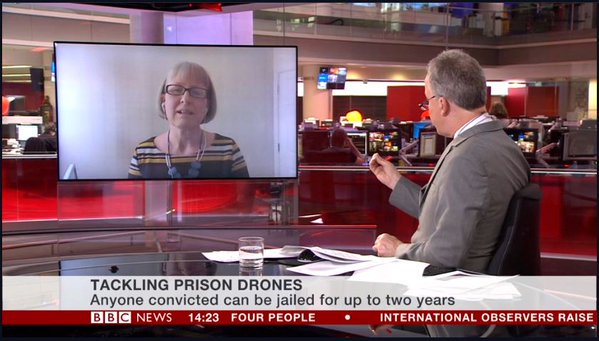
Also in April, producers at the BBC brought me onto a live link on BBC News Channel to talk about the problem of drones bringing in banned items into prisons. When presenter Julian Worricker asked for my take on it, I was able to outline the context of the issue and that it was impossible for all the drugs, phones etc within a prison to have been delivered via drones and that the new task force to be set up by the MoJ may have limited results. After working within the prison system for several years I was convinced that visitors and staff were likely routes in for contraband, yet security continued to be somewhat limited.
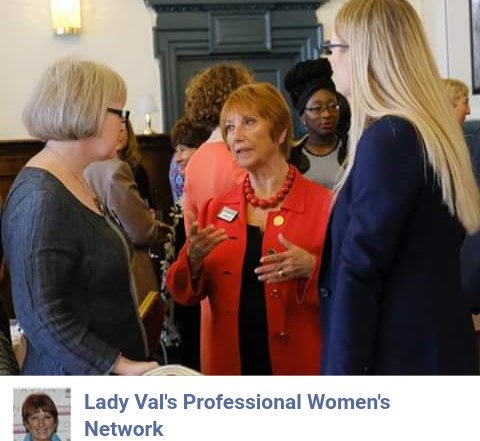
In May, I was delighted to join Lady Val Corbett, at her invitation, to attend the first of three ladies executive networking lunches. Each one inspired me and brought me into contact with remarkable women. Nicola McCalliog and Jo Apparicio are two women who I met through the lunches and who I especially admire; I look forward to the opportunity of working with them in the coming year. I have been amazed by the interest that was expressed in my own story and experience.
In my opinion, Lady Val has such determination, persistence, and guts! I thank her for accepting me into the Corbett Network as an associate member, it’s great to play an active part of something so vibrant.
In July, an article by Laurence Cawley was published on the BBC website. Here, the journalist wanted to explore in greater depth my experience with the IMB and the MoJ. The editorial team expected the article would get around 200,000 unique views. In fact, it reached 690,000 unique views on the first day and am told it was ranked the 8th most read article that day globally on the BBC. It was then I realised that there was a thirst by the public for coverage on justice matters.
In its mission statement, her Majesty’s Prison Service for England and Wales states that it:
“serves the public by keeping in custody those committed by the courts. Our duty is to look after them with humanity and help them lead law-abiding and useful lives in custody and after release.”
But it is shameful that HMPPS has fallen so short of its own mission statement. The situation in our prisons is worsening and really has become a humanitarian issue.

Also in July, I was invited to appear live on BBC News, this time in the studio, for an interview with Ben Brown about young people and children caught in the vagaries of the Criminal Justice System, highlighting the lack of care for these vulnerable individuals. This coverage proved a valuable opportunity to remind the public about the issue.

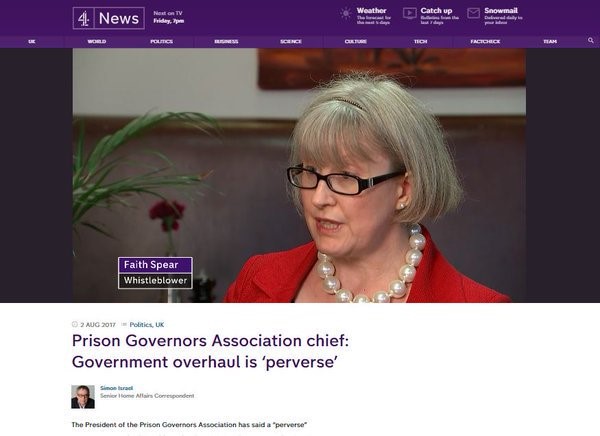
In August, I was invited to London to be interviewed by leading journalist, Simon Israel, who wanted to discuss the treatment I had encountered with the MoJ which tried to prevent me from speaking the truth concerning the prison crisis.
The interview went out on Channel 4 News causing quite a stir.
In the Autumn, I was part of one of the most important documentaries to be screened throughout the country. Here the theme was injustice and involved those from various angles within the Justice system. I was so delighted to meet those that had supported me over the last 18 months and together our voices were heard. There are more screenings planned for 2018.

This year new friendships were formed including Jane Gould (Clean Sheet) who works tirelessly in providing jobs for those that have been within the system and are often overlooked and penalised for having a criminal record. I joined her at the House of Lords for a tea reception.

My coffee and cake buddy Justin Williams has been a great friend. He has been a sounding board and has supported me when I have come under attack from those who have disagreed with my stand for prison reform.

On a lighter note, I was invited to the Opening Concert for Malta’s Presidency of the Council of the European Union by my friend Trevor Peel. Other invitations included ‘Why me’ evening at Clifford Chance with Peter Woolf and Mel Giedroyc; Probation Institute launch of Probation Services for Armed Forces Veterans under Supervision; ‘Fighting for Prison Reform’ at UCL and Robin Corbett Awards.
I have also taken up my usual seat at the Justice Select Committee on numerous occasions, the most memorable being when the IMB and AMIMB were in front of the committee. I listened carefully and made copious notes when the IMB President John Thornhill gave evidence. This man had caused so much harm to me and yet he was unaware that I was sitting right behind him. When he was informed who I was his face was like a rabbit in headlights. His plan to get rid of me had backfired, I was still there!
There were so many other events, meetings, coffee and cake times with those that have walked with me through 2017. I thank them all.
Richard Rowley, Daniel, Cranni, Jonathan Robinson, Jonathan Aitken, Unsound Robin, Charlotte, Khatuna, Chris Moore, Michael Irwin, Tracy Edwards…and more.
I started 2018 by celebrating with my twin sister our birthdays.
This year represents a year of great opportunity.
I intend to seize it with both hands.

Prison reform: paying the price
Well D-Day is rapidly approaching for me, the day the Ministry of Justice and the Independent Monitoring Board decide on my future not just as a Chairman but as a member of the IMB as I have to attend a Disciplinary Hearing.
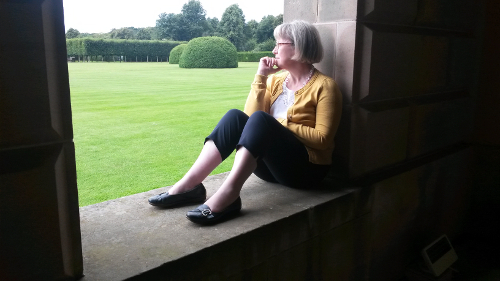 How it got to this is a long story.
In a nutshell, I spoke out for Prison Reform and IMB reform in an article in the Prisons Handbook 2016 entitled “Whistleblower without a whistle” and suffered reprisals for it.
Have you seen the state of prisons lately?
Have you heard about the state of prisons lately?
Too much is swept under the carpet pretending it’s not there.
But I put my head above the parapet, I made a personal stand.
The President of the IMB National Council, John Thornhill obtained a copy of my article “Whistle blower without a whistle” without permission before it went to print and sent it to the whole of the IMB organisation with his comments.
That action meant that any investigation would be prejudicial and it was!
I have had Prison Governors, prison staff, prisoners, ex-prisoners, prison reformers, those working in the justice sector, those working in the legal profession, leading academics, criminologists both here and abroad, friends and family standing up for me.
Are we all wrong?
Of course not!
But its like I have opened a can of worms which can’t be closed.
As I complete my final preparations for tomorrow I decided to bake a cake. It was my Nanna’s answer to everything as a child, comforting home-made cake.
I have upset the status-quo, I have revealed devious behaviour of other IMB members, I have spoken out about the nonsense in two MoJ investigations. I have had to endure bullying, intimidation, being ostracised, I have lost sleep and haven’t eaten properly, and I have been suspended from a role I loved. I have battled for over six months to clear my name and show what really is going on behind the scenes.
It has of course affected my family, yet my husband Joseph has been my rock.
I have a good idea of the outcome tomorrow at the Disciplinary Hearing, I’m not naive or stupid. But I think the MoJ and the IMB need to take a long hard look at their behaviour.
But whatever the outcome I will not be silenced and I will not go away.
If you are passionate enough about something then that cause which owns you can never be taken away from you.
The MoJ and the IMB can never say “Faith Spear who is she?”
This is not the end, it is the beginning…
P.S.
Even at the last-minute a former IMB member has sent in a pathetic plea to discredit me, obviously he is worried as now I have my chance to talk. Well DS your bullying, intimidation and manipulation I have endured for a couple of years is over!
And DH, your worries that I would let people know what you have said, haha now its my turn. You said you were on my side until I read out my statement and you told me it would have helped if I had cried. How dare you, as a woman I will not be intimidated by you. The fact you said you don’t deal in black and white only grey areas is perfect for the role as an IMB monitor in a prison, yet again an example of the farcical recruitment process.
CS, we worked well together but you followed your head and not your heart. You listened to a manipulative member and along with BM who I had much respect for started a damning campaign against me. Your friendship is a loss to me.
GR, you are a man with integrity and heart
Its time to build new bridges

The paralysis of too many priorities.
Sat immediately behind the new Secretary of State at the Justice Select Committee (@CommonsJustice) on 07 September, I registered a lot of awkwardness that was beyond mere nervousness felt by many a new joiner.

Thatcher Room, 07 Sept 2016
Just like Gove’s debut in front of the same Committee where he rattled on about “we’re reviewing it” (yes, I was there for that one too), Liz Truss (@trussliz) talked largely about the formulating of “plans” but on the day said nothing about tangible actions she will take.
How many more reviews do we need?
Has Truss inherited a poisoned chalice passed from one SoS to the next? Her department has a huge accumulated mess to sort out and doesn’t know what to do about it. Is she wondering what to tackle first? The paralysis of too many priorities?
Her critics say she’s doing things wrong. Look at it for yourself and you’ll see some of the priorities she is confronted with:
- Extremism and radicalisation in prison
- Violence against other offenders and against prison staff
- Over population
- Under staffing of prisons
- Death in custody
- Drugs and drones
- Education and purposeful activity
- Resettlement and homelessness on release
You would think her advisors would know what the order of priorities are. They don’t, or if they do, they obviously prefer the relative safety of “talking shop” over the tough task of taking concrete action on these priorities.
The key question people are asking is has she actually got the shoulders for the job; she has the high office and gilded robe of the Lord Chancellor but does she have the support of those working within the criminal justice system?
Soon after her appointment from Defra to Ministry of Justice, Liz Truss paid token visits to two prisons but cannot be expected to become an instant expert on the prison system.
What other mess does the SoS need to deal with?
The system of prison monitoring is in a mess. The IMB Secretariat is in utter disarray. They say they have policies and procedures but don’t always follow them themselves. For the most part, IMBs are doing their own thing. There’s no real accountability anymore. It’s a disgrace and it’s deplorable that it’s been allowed to get as bad as it has.
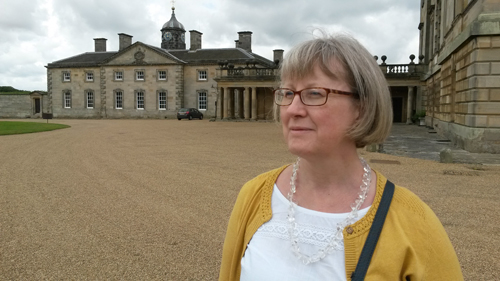
Faith Spear
For my critique of prison reform and Independent Monitor Boards, I’ve been put through two MOJ investigations. Each one takes away a little piece of me. But for me it’s always been about the issues. That’s why they can’t and won’t shut me up.
The message of prison reform has become urgent and has to get to the top. If no one else will step up and if it falls to me to take it then so be it.
No accountability anymore? Give me an example.
You want an example? Here’s one of many: At HMP Garth, the IMB Chair issued a Notice To Prisoners 048/2016 dated May 2016 without the authority to do so, and apparently without the Board agreeing it. The Chair acted unilaterally outside of governance. I found out about it because a copy of that prison notice was sent to me as it happened to be about the article “Whistle Blower Without a Whistle” that I’d written for The Prison Handbook 2016 that the IMB Garth Chair was pin-pointing, (accusing me of a “rant” whilst both his prison notice and covering letter were dripping with distain).
I’m still standing by all I said in my Whistleblower article even though writing it has been at a high personal cost. In all candour, any pride I may have had in writing it has been completely sucked away from me. It’s back to the bare metal. The inconvenient truth of what I wrote remains. Readers will find that my main themes also feature prominently in the findings of the report by Karen Page Associates, commissioned by the MOJ at a cost to the taxpayer of £18,500.
An invite I received from Brian Guthrie to the forthcoming AGM of Association of Members of IMB says it all. It read:
“From the Chair Christopher Padfield
AMIMB – the immediate future
IMB needs a voice. We believe that without AMIMB this voice will not be heard. AMIMB intends to raise its voice, but needs the support of our members.
An outline plan for the immediate future of AMIMB will be put up for discussion at the forthcoming AGM (11 October 2016 at 2 Temple Place). It aims to respond both to the main needs and opportunities, and to the practicalities of the current situation.The greatest need, as the executive committee of the AMIMB sees it, is to achieve a public voice for Independent Monitoring Boards – to let the British public know what we, as monitors, think about prison and immigration detention policy and practice in England and Wales and the impact this has on the men, women and children detained; to achieve some public recognition for the role of IMBs; in short to speak out about what we hear and see. We have urged the National Council to do this itself, but to no avail. In character, the NC propose as their contribution to the Parliamentary Justice Select Committee’s current consultation on Prison Reform, a response to a procedural question: ‘are existing mechanisms for … independent scrutiny of prisons fit for purpose?’ If the NC cannot or will not speak out, AMIMB should.”
Mr Padfield has served as IMB Chairman at HMP Bedford but to my knowledge has never been suspended pending investigation by the Prisons Minister like I was for speaking out on such things.
And therein lays the dilemma: whereas the official line is to encourage monitors to speak out, the reprisals levelled at you when you actually do are still shocking.
Is this what happens to women who use their voice?
People want you to get back in the box.
To shut up.
To go away.
The IMB doesn’t need a makeover; that would only hide most of the systemic problems behind filler and veneer. So rebranding clearly isn’t going to be the answer any more than putting lipstick on a pig.
People who think I want to abolish the IMB have totally misjudged me and the situation. I don’t want to abolish it. Far from it. I want the IMB to perform like it was set up to under OPCAT and to be all it should be as part of our NPM.
The clue is in the name: Independent. Monitoring. Board.
Have you noticed that the MOJ is haemorrhaging people at the moment?
Maybe Liz Truss could use that as an opportunity to enlist the help of those who do give a damn about the conditions in which people are held in custody and who do have a clue about strategies to stem radicalisation in prison, minimise violence, reduce prison over population, have the right staff and staffing levels, reduce death in custody, counter drones and drug misuse, revitalise education and purposeful activity, and last but not least, resettle and house people after their time in custody.
Join the conversation on Twitter @fmspear @trussliz @CommonsJustice #prisons #reform #IMB #AMIMB #SpeakUp
First published 17 Sept 2016.
Edited 18 Sept 2016.
~

More chance of finding a PokemonGO than finding transparency at IMB and MOJ ?
Yesterday, Friday 15 July, I was emailed by Saffron Clackson, Head of the IMB Secretariat with a letter from her to me explaining my right to information under two separate requests: the Data Protection Act 1998 (DPA) and the Freedom of Information Act 2000 (FOIA). She explained what was being made available to me today was under the Data Protection Act.
Attached were 4 separate pdfs containing the “submission” by her department, the IMB Secretariat, to the Prisons Minister Andrew Selous, subject: Conduct of Chair at Hollesley Bay IMB, which resulted in Mr Selous signing a letter (dated 26 May 2016) to suspend me as Chair of IMB Hollesley Bay pending investigation.
Initially I felt encouraged by this trickle of information after my countless requests for it. That was until I opened each pdf in turn only to discover HEAVILY REDACTED pages.
DOWNLOAD THE COMBINED PDF Faith Spear DPA response 15 July 2016 pp.1-4

![Faith Spear DPA response 15 July 2016 page 2 [screenshot]](https://i0.wp.com/thecriminaljusticeblog.com/wp-content/uploads/2016/07/faith-spear-dpa-response-15-july-2016-page-2-screenshot.png?w=476&h=476&crop=1&ssl=1 "Faith Spear DPA response 15 July 2016 page 2 [screenshot]")
![Faith Spear DPA response 15 July 2016 page 3 [screenshot]](https://i0.wp.com/thecriminaljusticeblog.com/wp-content/uploads/2016/07/faith-spear-dpa-response-15-july-2016-page-3-screenshot.png?w=476&h=476&crop=1&ssl=1 "Faith Spear DPA response 15 July 2016 page 3 [screenshot]")
![Faith Spear DPA response 15 July 2016 page 4 [screenshot]](https://i0.wp.com/thecriminaljusticeblog.com/wp-content/uploads/2016/07/faith-spear-dpa-response-15-july-2016-page-4-screenshot.png?w=476&h=476&crop=1&ssl=1 "Faith Spear DPA response 15 July 2016 page 4 [screenshot]")
I have little commentary to make at this time other than to say that I’ve been kept waiting six weeks for this. It could have been made available in under 48 hours unredacted.
Those who have been following this situation will appreciate how pathetic a response this truly is. Barristers may take a different view.
Those unfamiliar with this situation will find all this equally bizarre.
What possible use can be made of documents such as these which have been, at the taxpayer’s expense, so heavily redacted by expensive lawyers working as salaried civil servants at the MOJ.
At a time when our prisons are under so many challenges, why on earth don’t they reinstate Faith Spear and let her get back to her work as a monitor whilst all this gets sorted out?
Tend to agree. I do want to be reinstated. I’ve said so several times. Based on my direct experience, Hollesley Bay is very likely not being properly monitored at this time. The next Board meeting is scheduled to take place next Tuesday, 19 July but it currently hasn’t sufficient numbers of inducted and trained Board members to even make a quorum let alone to chair a Board meeting.
I wrote to Dr Thérèse Coffey, MP for Suffolk Coastal (in whose constituency Hollesley Bay is located) about these serious concerns; she’s been kind enough to acknowledge and to suggest I next contact my own MP.
Smokescreen
For me, being sent heavily redacted pages simply represents yet another example of how the MOJ play for time and try to grind you down in the hope you will shut up, lose interest and go away.
And because I’ve learned the MOJ is logging all my social media content, please note, for the record, I have absolutely no intention of shutting up, of losing interest or of going away.
The suspension, obstructions and kerfuffle serves as a very convenient smokescreen for the IMB Secret-ariat (sic), trying desperately to insulate itself from the critique I included in my article “Whistleblower Without a Whistle” published in The Prisons Handbook 2016.
As for the MOJ, it has totally lost sight of the issues I raised in that article because the Secretariat has done such an neat little stitch-up job on me and had obviously bamboozled the Prisons Minister into “shooting the messenger”; I doubt very much he even knows my name let alone why he suspended me from HBIMB.
Honey, I’ve shrunk the facts
Turning to the heavily redacted pages, I can just about recognise the words from my past colleagues at HBIMB whose venom towards me knows no bounds. For example, on the the top of page 3 it states:
“Overall, there are reasonable grounds to suspect that Faith may have committed “gross misconduct” according IMB complaints policy.”
Really, what do they hope to gain in claiming that? Could it be they wanted to deflect the public’s attention and the press’ scrutiny away from their own dishonesty?
Most of them resigned soon afterwards anyway, thinking that in so doing they would be absolving themselves of responsibility for their own complicity whilst in public office.
That’s where any gross misconduct is to be found, right there.
Unlike them, I have done nothing wrong, and certainly did nothing wrong in writing that Whistleblower article; the MOJ conceded that much to the editor of The Prisons Handbook 2016, Mark Leech (@prisonsorguk), in their response to a FOIA request he submitted off his own back.
Bullying
It is very clear now to everyone that neither the IMB Secretariat nor the MOJ takes workplace bullying seriously enough, or at all.
I still haven’t been sent the unredacted report written by MOJ investigator Sandra Marcantonio to the IMB Secretariat.
And I still haven’t been advised of the deliberations of the panel appointed to decide on that report, or the date they meet, or what their names are.
Is it because they feel that I don’t count or I’m not important? Or is it because they don’t want to recognise that workplace bullying occurred for fear of setting a precedent and opening the floodgates to other complaints?
Either way, bullying in prison remains a big issue. A really big issue.
Remember, the bullying I encountered on 19th April 2016 took place inside a prison, in HMP & YOI Hollesley Bay, at an IMB Board Meeting.
Oh and whilst we’re on that subject, unlike every board meeting I chaired, nobody can find any minutes of that meeting.
Independence Day?
Nigel Newcomen CBE, the Prisons and Probations Ombudsman, is well aware of who I am and needs no prompting. On 05 July after he gave oral evidence [watch] to the Justice Select Committee, he spoke with me about a meeting he had with John Thornhill, President of IMB, back in February 2016 questioning whether the IMB monitors if recommendations from the Ombudsman are being followed by prisons (refer to Official record, Q62 from Marie Rimmer MP).
He said he has even perceived a lack of independence in his own department (Official record, Q87 from Chris Elmore MP), underlining once again in my opinion that perhaps the biggest issue confronting the in-coming Secretary of State for Justice, Elizabeth Truss (@trussliz), is that the MOJ has everyone involved in prisons in a tight headlock, resisting reforms.
So what hope do I have of changing anything, or of being reinstated, or of my call for prisons reform even being heard?
Watch this space.
The situation continues.
Photo: Ministry of Justice MOJ 102 Petty France by Steph Gray via flickr
Pokémon Go is a free-to-play location-based augmented reality mobile game developed by Niantic and published by The Pokémon Company. It was released in July 2016 for iOS and Android devices.
~

I used to be ‘IN’ but now I’m ‘OUT’
An antidote to the EU Referendum.
The nation goes to the polls today to determine whether we Leave or Remain, but that’s all I’m saying about the European Referendum. You can think of this post as an antidote to all the drivel you’ve heard, from both sides of the debate it has to be said. The claims, the counterclaims and the half-truths we’ve all heard uttered sometimes with spectacular bravado.
There’s a micro- In or Out conundrum going on over here in the East of England, coincidentally not far from the most easterly geographical point of the UK to continental Europe.
Let’s talk about In or Out of prison.
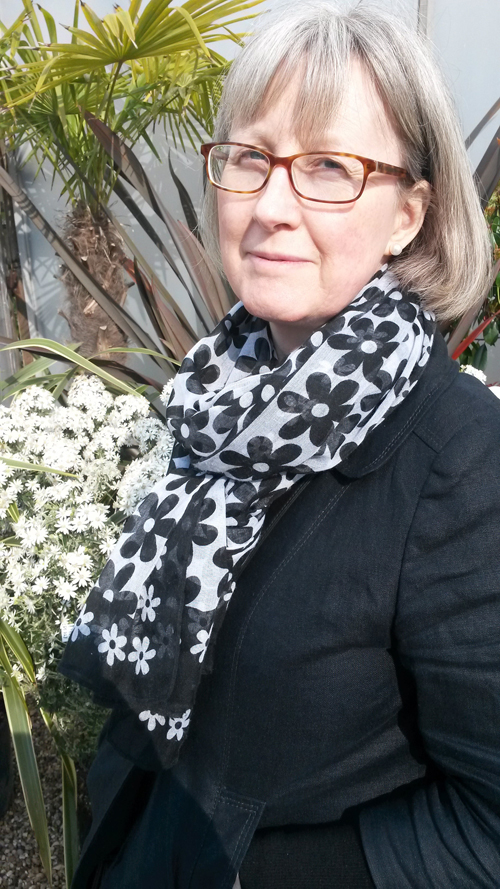
“I will not stop. I will not be silenced. I want to be reinstated”
I used to be ‘IN’
There’s truth in the well-used idiom “with power comes responsibility”. The right of access all areas within a prison is one of those situations to which this applies. I never took it lightly. Having keys to the prison seems to be a thoroughly abstract concept for many, but as a public official appointed by the Secretary of State for Justice to monitor that’s exactly what you have. You’re appointed to be the eyes and the ears. And to record what you see and what you hear around the prison you monitor.
This isn’t some fanciful hobby for those with a lot of time on their hands. Long the brunt of jibes about beige Volvos, tweed twin set and pearls, being an independent monitor should not be a country club. This is the sharp end of monitoring how a nation treats those in its custody. And it requires people who have the big picture as well as an eagle eye for the detail. I’ve seen a lot and I’ve heard a lot. And as a monitor I only write what I see and what I hear. No spin and no opinion. Just the facts.
Remembering how thrilled I was to be accepted onto the Independent Monitoring Board (IMB) when I first started. I absorbed the training, passed induction and quickly found my feet performing monitoring visits as part of the team rota. As a member, I derived considerable satisfaction from thinking that what I was doing was making a difference. It had to make a difference; there was no salary for the work so the only payback was the job satisfaction. And make no mistake, monitoring done properly is real work.
As a Vice-Chair, I served a frequently absent Chairman as if I were their very own personal assistant. It felt like it at times, especially the Saturday evening calls to my home number or the Sunday-for-Monday interruptions. My network became the area Chairs in other prisons. My responsibilities expanded and I took it all on board, in part relishing the challenge. Yet there were some niggles creeping in, as I was required to shoulder the thick end of the workload without being empowered with the authority to do much about any of it.
On one occasion I recall being put firmly back on my box by the then Chairman. “How dare you say you’re the acting Chair. You’re my Vice-Chair, not the acting Chair” they said, speaking down at me like an intolerant owner upbraiding a truanting cocker spaniel. Bit rich really, given that the then Chairman was the one for whom I had covered no less than 162 days absence in a single calendar year. Yes I kept a record! (as I told you, monitors record exactly what they see and what they hear, and tend to notice when the Chair is away for 44% of the time).
Believing the best and hoping it wouldn’t last, I went along with it. I wouldn’t go along with it now. Nor will I ever again in the future. I don’t recall many, if any, occasions I felt truly supported by them.
In retrospect, it’s a bit sad really, don’t you think?
When the time came, I embraced the opportunity to serve the Board as Chairman only after I was sure I was ready to fulfil the role and could gather dependable people around me. These positions are never ones to grasp at.
A colleague agreed that if I was willing to serve as Chairman then they would step up as Vice-Chair. Despite commitments running their own business the Vice-Chair was incredibly supportive in every way the past Chair wasn’t able to be. Or didn’t wish to be. And so it was from January 2016, following nominations the previous October, we set to work and gelled like dream team.
And together we worked hard to build the team around us. Sacrificing time from other priorities to come in to the prison often when it was inconvenient, why, because it just had to be done. These are the sort of things they don’t tell you about when they pitch volunteering to you. But we did it anyway, and cheerfully for the most part; it’s what you make if it.
Mentoring volunteers was very enjoyable but it took on dimensions I never thought would be part of the remit, for example, teaching an IMB member how to use a computer mouse for the first time in their lives, let alone the depths of Quantum, the NOMS secure intranet (Gawd bless it) or the CJSM email system (don’t get me started on that one).
More than matching time volunteered on monitoring with time volunteered on Chairman’s responsibilities (yes, even Chairs should perform monitoring visits), I expanded on my knowledge of the criminal justice system through taking up invitations to visit other prisons. I wanted to learn as much as I could about every category of prison and see for myself the conditions for those held in custody in those places, and better understand what monitoring looked like for them.
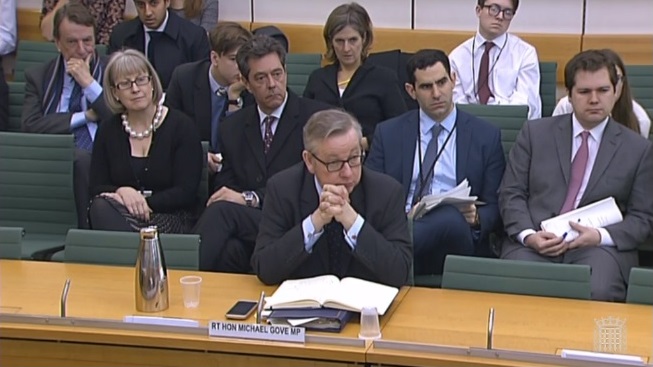
Grimond Room, 16 March 2016
Additionally, to learn more on policy, I became a frequent visitor at the House of Commons Select Committee on Justice (Twitter @CommonsJustice) where I could see, hear and meet those giving oral evidence. I learned to fine tune my own sense of scrutiny, making less hasty judgements and leaping to conclusions without having first studied the facts.
I read widely on the subject of justice, even calling into The Institute of Criminology and the Cambridge University Library on occasions to check for myself the validity of references being cited in some of the material I was consuming. (The Tea Room there is as much an eye opener as the Rare Books section; you get to talk and make friends with rather influential and interesting people over a cuppa).
In short, I was fortunate to gain a well-informed view of the big picture and a well-grounded understanding of how that applied to specific areas, including monitoring.
As my understanding grew, very obvious holes in the system began to make themselves clear to me, making them compelling enough for me not to look the other way.
As I monitored, I looked and listened. As I worked, I saw. As I visited, I heard. As I studied, I realised. And as I realised, I knew – I knew that what I was seeing and hearing and learning was not all it is cracked up to be.
So I wrote, firstly about topics that caught my attention and my responses to them and then about good practice and about areas for improvement. Whereas these first appeared only in blog format now my opinions have been published in The Prisons Handbook 2016, the definitive guide to prisons in England and Wales for over 18 years.
Just imagine my amazement when, having gone beyond the call of duty and having delivered all this into a Board I thought I had alongside me, an ambush was set for me on 19 April 2016 for which nothing could have prepared me.
I’ve written before about this awful episode and yes, regardless of what may have been claimed by others, I have had to call it what it was, workplace bullying (remember, as a monitor I only write what I see and what I hear, no spin). Suffice to say it has become a tipping point in more ways than anyone would have anticipated.
But now I’m ‘OUT’
Suspending me pending an MOJ investigation is what the Prisons Minister decided to do when he received a report from The IMB Secretariat about me. I’ve no idea what was in that report; I’ve not been given sight of it and although I’ve asked for a copy, nothing has been forthcoming. Despite what the Minister himself wrote, I have now been told it is not a report, but a submission from The IMB Secretariat, and legislation has been quoted to try and prevent me from seeing it.
Barred from stepping foot on the prison estate without prior appointment and vetting, the system has spat me out. Where once there was free movement anywhere inside, now I’m bouncing off the perimeter unable to enter let alone monitor.
The story is not quite finished and I’m not leaving it there.
There now seems to a “war of attrition” but I’m not playing those games. Information about me is being withheld despite my requesting unredacted copies of it from the Minister and the MOJ, and they are trying to keep me in the dark.
I want to be reinstated.
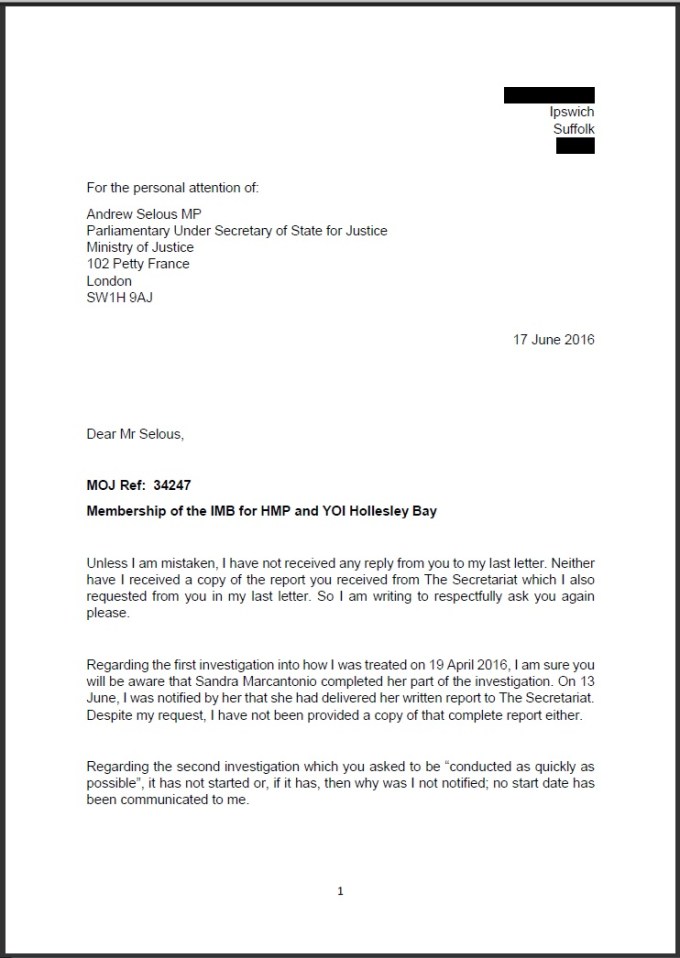
The second letter went in to the Prisons Minister on 17 June. I’ve asked the Minister to reinstate me.
But I’ve also asked the Prisons Minister eleven questions which you the public have a right to hear from him on. Refer to page 2 and page 3. If he doesn’t reply to me, perhaps he will reply to you. Write to him and press him for answers on what’s happening with Hollesley Bay monitoring. Don’t accept “stock answers” copied and pasted into pre-templated letters; demand the facts in a personal letter from the Minister not his staff.
DOWNLOAD : Letter Spear to Selous 17 Jun 2016 public
It’s not about me. It’s always been about the issues
And the issues I raised in my original article published in The Prisons Handbook 2016 have never been disputed by the Minister or by the Secretary of State, yet seem to be enough to turn my fellow board members hard-fast against me, to raise the hackles in the IMB Secret-ariat (sic) and to cause a thunder storm inside the MOJ.
Of course I do want the personal cost I’ve paid, and that my family has paid with me since 19 April, to amount to something.
I don’t want to be a name that meant something to a handful of people once then was quickly forgotten or surreptitiously ‘air-brushed’ from record.
Being reinstated would mean the Board can get on with the vital job of monitoring, becoming a watchdog again, and being in the heart of the action to realise prison reform.
IN CASE OF EMERGENCY
BREAK GLASS
In all candour, I’m so fearful that the net result of my speaking out in good faith will leave me at a massive disadvantage and consequently damage any prospects I might have had to find employment in anything related to the justice sector. Outside again, with a reputation on a par with the zika virus and with my self-esteem around my ankles tripping me up when trying to move forwards from here.
But my biggest fear of all is that nothing will change for those already in the sector.
Not calling out issues means no change for salaried civil servants spending immensely valuable time just going through the motions at taxpayers’ expense.
Keeping quiet on issues means no change for prison Governors with the Inspectorate breathing down their neck every so often without monitors there to provide real checks and balances.
Not calling out issues means no change for members of IMBs everywhere whose well-meaning sense of duty and willingness to volunteer is privately despised and whose voice is muffled by a dysfunctional Secretariat which is anything but independent.
Keeping quiet on issues means no changes to a pointless National Council whose nameless and faceless structure smacks more of a secret society with a presidency that’s widely regarded as irrelevant and a President even the public regard as yesterday’s man.
And whilst all that turbulence goes on inside the MOJ, not calling out issues means there’s no change for people in custody. In paying their “debt to society” through loss of liberty they also pay perhaps a higher price than most people imagine, banged up for 23 hours a day in institutions which for the most part are understaffed, unfunded and underperforming.
Penal facilities which neither correct, rehabilitate nor reduce reoffending are, in my considered opinion, facilities that should be the most closely monitored facilities of all.
I believe in monitoring.
And I want to be reinstated.
I want to be ‘IN’ all over again.

Independence Day?

Credit: 2016, Twentieth Century Fox Film Corporation via IndieWire
Firstly, thank you once again for the very many messages of support. Very grateful for each and every one of those tweets, texts, emails, letters and coffees.
Current state of mind: I’m not angry at the moment, just bemused.
Let me explain…
I was emailed by the Head of The Secretariat of the Independent Monitoring Board (IMB) with a copy of my suspension letter from Mr Selous and an offer of a chat about it. That was thoughtful.
On 02 June, I replied. Okay, admittedly at the time I was shocked and more than a bit miffed about what looked like a two-faced approach; on the one hand the Minister suspending me for my behaviour and on the other being offered a cosy chat with the Secretariat.
Anyway, on 07 June I received an email reply, not from the IMB but from the Deputy Director Offender Policy Team at Ministry of Justice (MOJ).
It’s that email exchange which bemuses me. Can anyone tell me why exactly MOJ staff is answering emails that were addressed to the IMB?
That shouldn’t be happening, should it?
Although the admin for IMB and admin for MOJ is co-located in offices in Petty France, London, the two organisations are entirely separate. Aren’t they?
So why is MOJ staff seeing emails to IMB at all? Are emails sent to IMB Secretariat being auto-forwarded to MOJ, or are inboxes being shared, or intercepted somehow? And are emails sent to MOJ seen by the IMB Secretariat?
What a conundrum.
Answers on a postcard please, probably best to address it to the Secretary of State for Justice actually, as Mr Gove will need to pay attention to this even if he is busy with Brexit.
In suspense
While we’re thinking about a potentially glaring lack of independence of IMB Secretariat, not merely these emails, let’s also think about the suspension decision itself.
Is it really normal practice for those subject to a complaint to be suspended? If it is then why were none of those I complained about also suspended pending the outcome of the investigation I asked for?
It would be useful to know who actually makes the decisions on such a suspension? Yes, of course I realise it is the who Minister signs it off, but who wrote the letter for Mr Selous to sign?
Are you wondering when the investigation that Mr Selous requires will start? So am I. No date has been given.
And when will a copy of the report by The Secretariat be forthcoming? Since the report is on me, I am named in it and no Government restriction applies to such a document, I believe I have the right to see it, don’t I?
Mothership
Okay, so the movie metaphor is a little light-hearted but there’s a very serious point I’m making here.
The public want to know where independence comes into it if, in reality, the IMB mothership is actually being remote controlled by civil servants on the MOJ payroll.
Or would it be more authentic to drop the word “independent” and just call it the Monitoring Board, and stop pretending it’s independent when it clearly no longer is.
Whatever we decide to do, we have to move at a far quicker pace to make monitoring fit for purpose, to improve on our National Preventative Mechanism and to restore public trust in prisons.
My grateful thanks to Twentieth Century Fox Film Corporation via IndieWire for graphic image used in this blog. By the way, ‘Independence Day: Resurgence’ (PG-13) is due for release in the UK two weeks from today, on 23 June 2016. No kidding! Pure coincidence.
~

This is not a game; prisons reform is essential
Now the debacle inside HMP / YOI Hollesley Bay IMB has a Government Minister involved.
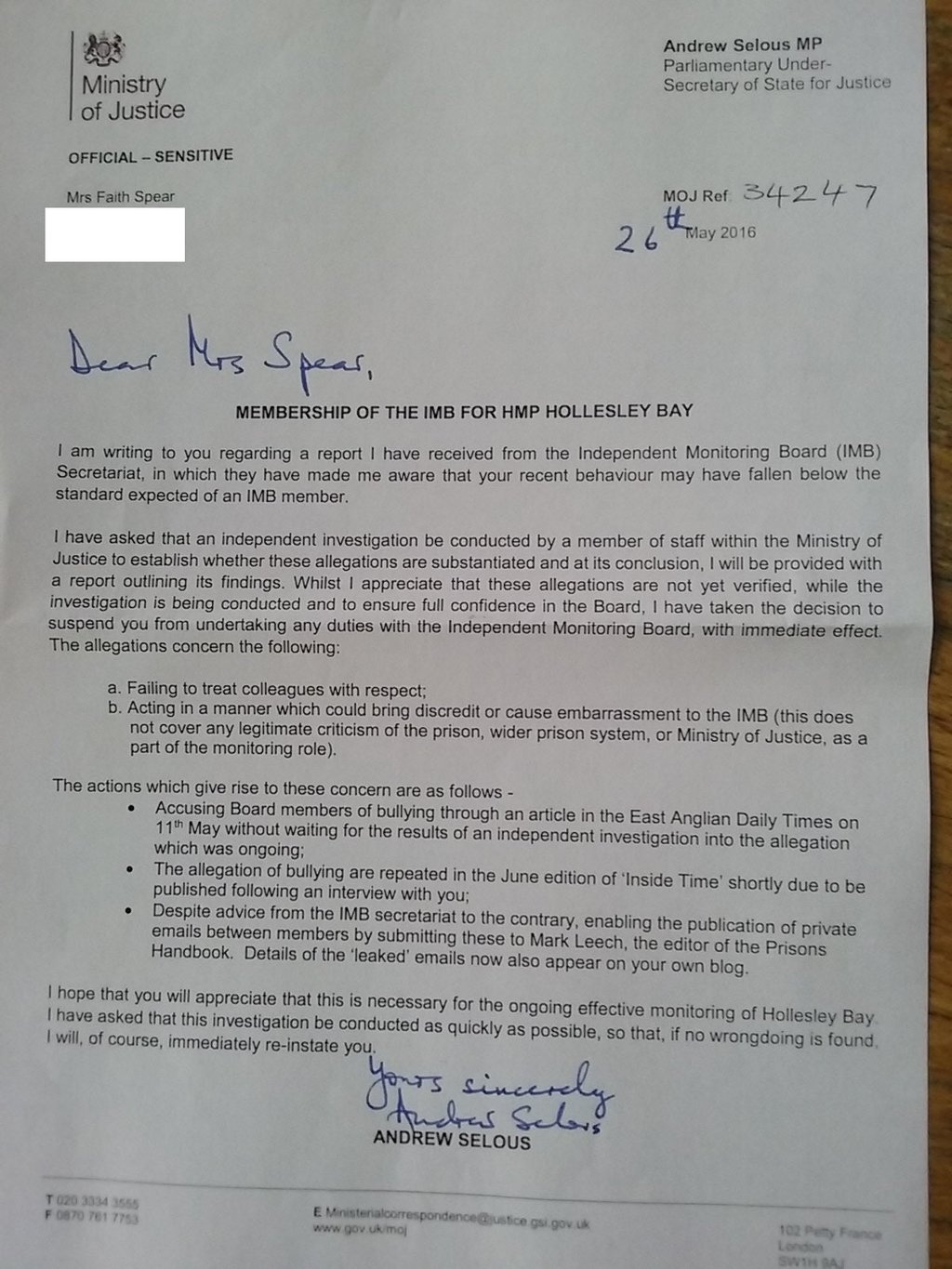
On 26 May 2016, Prisons Minister Andrew Selous (Twitter @AndrewSelous ) wrote to me by letter to inform me he had decided to suspend me. You can read his letter for yourself here.
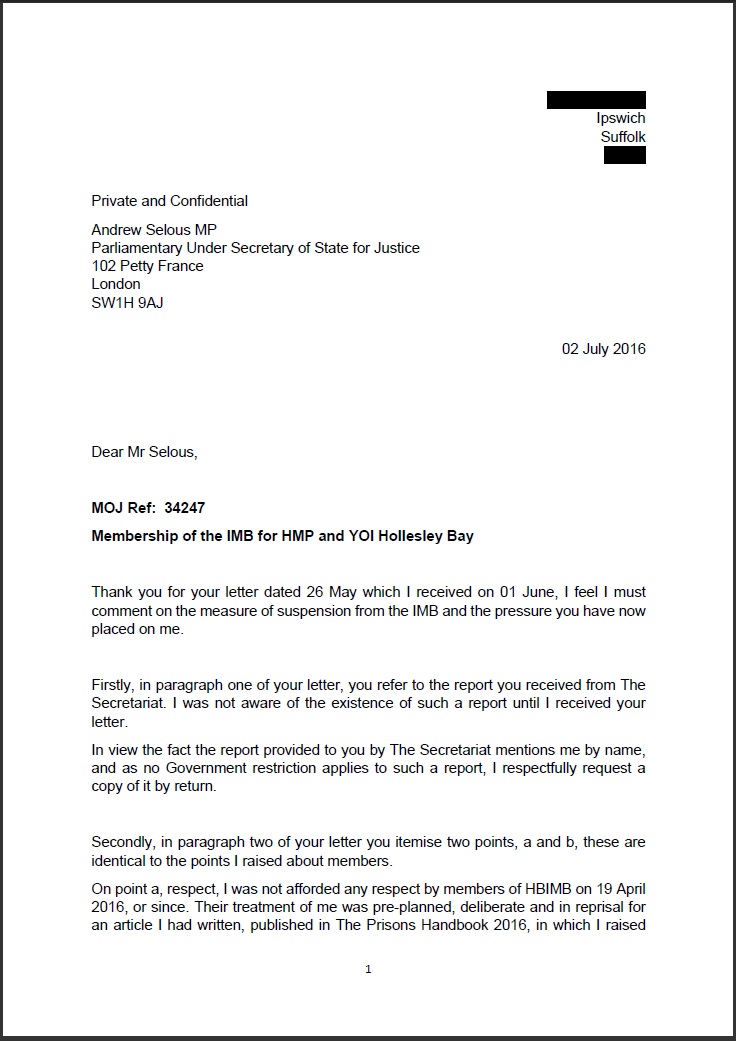
I reflected carefully on what he said and the next day wrote a letter of reply back to him. You can read my letter to Mr Selous for yourself here.*
CLICK TO DOWNLOAD : Letter Spear to Selous 02 Jul 2016 public
Don’t shoot the messenger
It has already been established that I needed no permissions to write about prison reform in The Prisons Handbook 2016, neither did I need any permission to speak to the media (see 1st and 2nd bullet points about ‘East Anglian Daily Times‘ and ‘Inside Time‘).
The reply to a request under the Freedom of Information Act to MOJ by Mark Leech, publisher of The Prisons Handbook 2016, makes that point abundantly clear. And in so doing I think answers the pretexts cited by Mr Selous in his justification for suspending me.
As a public official I acted in the public interest.
When Mr Selous “shot the messenger” he also shot himself in the foot.
The treatment I am currently receiving from Ministry of Justice is wearing very thin on me, frankly. Nonetheless, I remain level-headed and undeterred from speaking up when it comes to prison reform. This is not a game; prison reform is essential, overdue and a cause which the public cares deeply about.
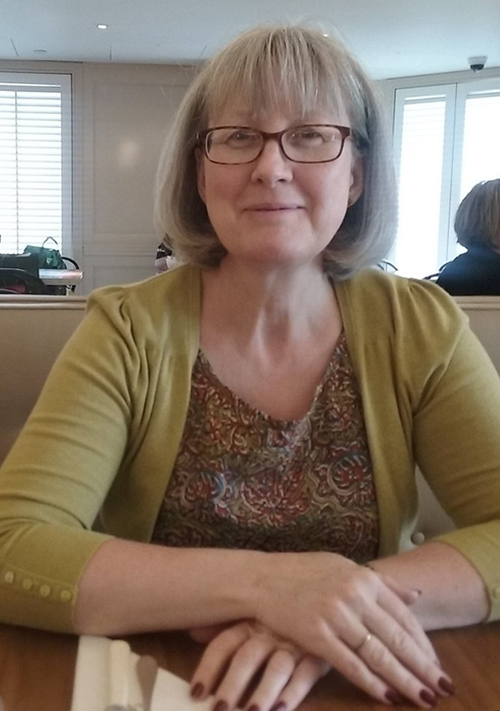
Faith Spear
I look forward with great interest to receiving the reply from Mr Selous along with the copy of the report he received from The Secretariat.
In the meantime, uppermost in my mind is the key issue of what monitoring is taking place in HMP and YOI Hollesley Bay?
If you are concerned I’d recommend you contact Mr Selous to ask the question. You can also contact Dr Therese Coffey MP (Twitter @theresecoffey) if you live in the constituency of Suffolk Coastal where Hollesley Bay is located.
Assuring ongoing independent monitoring is surely an vital operational issue that Mr Selous must prioritise finding a solution to, probably before going out on his EU Referendum circus campaign.
*yes, I know, the letter carries a July date instead of June. Typo was mine but other than my home address it is unredacted. Warts and all.
Blog last edited: 08 June
~
We don’t just need a vision, we need a cause!

“She’s no rebel and she’s got a cause”
In the space of 6 weeks I have written an article which has been published in The Prisons Handbook 2016, just before the Prime Ministers speech. I have been interviewed by Ian Dunt with an article put on politics.co.uk, been in my local paper with a 2 page spread, had a front page article in Converse prison newspaper, had an interview with another newspaper with an article ready for the next months edition… If I can achieve all this in just 6 weeks, just imagine what could be achieved in 6 months or a year?. It’s all about going at pace.
It’s not always about what you have achieved in the past, although it does help. But it’s about what you can/will/want to do in the future.
Can’t abide being held back because of what I haven’t done yet. Especially when I’m at the start of something significant and have plenty of passion, energy and drive for what is to come.
And despite the knock backs, to keep a sense of humour.
Yes I have mainly worked with vulnerable adults and children before, but we all have a vulnerable side to us. Some are able to reveal it, others not, some it leads to being a victim and others it leads them into criminal activity.
Have you noticed how quick some people are to judge others, put you into boxes and to categorise? I hope you won’t judge my life by the chapter you just walked in on.
Prisons are no different.
Many problems arise when people enter the prison system and then leave in a worse state than when they arrived.
Why after all the money pumped into prisons is this happening?
Profits are made out of prisoners, we all know that.
How many reviews, reports can you count over the last say 10 years that involve prisoners?
There have been countless
How many organisations do you know that work hard to bring reform to prisons and prisoners?
There are countless
How much money has been spent on prison reform?
Countless
On 8th February, the Prime Minister set out a vision for prison reform. Mr Cameron said:
This system will be hard to change because it is, in some ways, still stuck in the dark ages – with old buildings, old thinking and old ways of doing things.
So I don’t want to go slow here – I want us to get on with proper, full-on prison reform.
Today, 27th May the Public Accounts Committee report warns that the criminal justice system is close to breaking point:
Report summary
- The criminal justice system is close to breaking point.
- Lack of shared accountability and resource pressures mean that costs are being shunted from one part of the system to another and the system suffers from too many delays and inefficiencies.
- There is insufficient focus on victims, who face a postcode lottery in their access to justice due to the significant variations in performance in different areas of the country.
Criminal justice system “already overstretched”
- The system is already overstretched and we consider that the Ministry of Justice has exhausted the scope to make more cuts without further detriment to performance.
- The Government is implementing reforms to improve the system but we are concerned that users of the system won’t see the full benefit for another four years.
- There are opportunities for the Ministry to make improvements before then, including better sharing of good practice and making sure that everyone is getting things right first time.
But what is the answer?
(If I had the answer I would be a very rich woman!)
Over the last few years I have visited every category of prison, YOI and Women’s. I have sat behind the Right hon. Michael Gove MP whilst he has been in front of the Justice Select Committee twice. I have attended meeting after meeting in Westminster, attended conferences, training courses, lectures, seminars etc. at my own cost.
Why?
I want to learn, I want to understand but most of all I want answers to the questions I have posed.
I also want to be a part of the change that is so desperately needed in our prisons.
We don’t just need a vision, we need a cause!
Vision is often personal, but a cause is bigger than any one individual
People don’t generally die for a vision, but they will die for a cause
Vision is something you possess, a cause possess you
Vision doesn’t eliminate the options; a cause leaves you without any options
A good vision may out live you, but a cause is eternal
Vision will generate excitement, but a cause generates power
[Adapted from Houston (2001)]
Houston, B. (2001) For this Cause: Finding the meaning of life and living a life of meaning. Castle Hill: Maximised Leadership Inc.

