Authors
 faithspear
The Power of the written word

Richard W. Hardwick (@RWHardwick) asked me recently if I would consider writing a review for his new book The Truth About Prison in the form of a blog. So here goes.
Reading this book is like listening to myself as Richard writes like I think!
This is a compilation of journeys of many people within a prison environment with a reoccurring theme, the truth about prisons. Truth can be hard to swallow, it can be hidden, but it’s there if we take the time to find it.
I know that speaking the truth can come at a personal cost.
Truth also hurts. But should we ignore it, should we cover it up? No, certainly not.
Walking into a prison is like opening that door C.S. Lewis wrote about and entering another world. A world without the same rules regulations or expectations. To start with its rather strange, almost intriguing and no day is ever the same. Conversations are limited, people are watching you and waiting for you to make a mistake as you are expected to know the rules, but when they are unwritten how can you? It’s like you walk into someone else’s life

When you start reading this book you open in your mind that wardrobe door. If you have never visited a prison you begin to visualise what really happens, who lives and works there. Most importantly you begin to wonder what are the benefits? What is its purpose? And just Why?
Questioning the stories, the anecdotes, the nitty gritty of prison life changes you. Once you open that door there is no going back. From then on, the reader cannot say “I never knew” as you have just begun to learn and hopefully understand about prison.

On release why does punishment continue?
Sentencing removes many from society and places them in Prison.
But what happens when they are released back?
With their belongings in a bag and a small grant off they go back to the society that removed them in the first place.
Then what?
Due to the nature of the crime or the often-complex background many face the prospect of no real home and no job.
I speak at every opportunity of my frustration that skills acquired in prison are seemingly just worthless on release. The skills need to match the work available. However, I have seen excellent examples of tutors training those in prison and encouraging them to reach standards that they never thought possible. I have read letters and cards sent to these tutors in thanks for believing in them and helping to achieve qualifications that have led to decent jobs on release.
Unfortunately, this doesn’t happen enough.
What about those with existing skills that have had to lay dormant whilst they serve their sentence?
How can they re-join the workplace?
Should they be able to go back into their old job or field?
For some picking up where they left off is not an option due to the nature of the crime, family circumstances or health.
But if we build a barrier to those who pose no threat to society which prevents them from re-joining their work sector then are we continuing to punish?
One perfect example is a man I have known for over 4 years. He is articulate, polite, intelligent, well dressed, always encouraging, constantly pushing for prison reform, and has a network that most would be grateful for. He has been known to take into prisons celebrities such as Russell Brand and Derek Martin and MP’s to encourage those on their journey in life.
He has written two books on his experiences whilst in prison and the challenges he faced on release.
His name is Jonathan Robinson, a former helicopter instructor.
After helping an MP with content for a book, he asked for a reference to get back to the job he loved so that he could once again use the skills which he had acquired over many years. You would think that was a simple enough request. He asked and was told YES.
But then was told NO and was hit by deafening silence that I have personally witnessed on many occasions from MP’s.
His story can be found this morning as a guest blog on www.prisonerben.blogspot.co.uk please read it as one day it may be someone you know facing the same stigma.
If Jonathan was prevented from working what hope have others?

Contrarian Prize 2017 nominee
I feel proud to have been nominated for the Contrarian Prize for 2017 and thank you to Ali Miraj and the judges for considering me for this prestigious prize. My congratulations go to Professor Patrick Minford for winning the Contrarian Prize 2017.
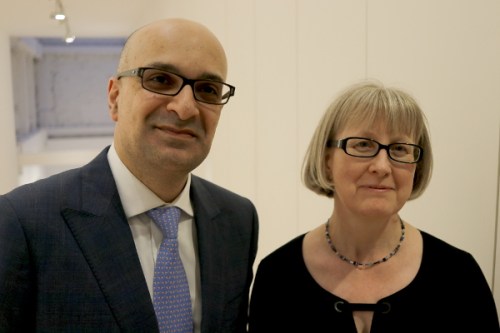
Ali Miraj with Faith Spear
This is the Mission statement for her Majesty’s Prison Service for England and Wales:
“Her Majesty’s Prison Service serves the public by keeping in custody those committed by the courts. Our duty is to look after them with humanity and help them lead law-abiding and useful lives in custody and after release”
I’m sorry but this is nonsense
- The reality is that on average there is a suicide in prison every 3 days
- Violence is on the increase
- Self-harm is on the increase
- Drugs are everywhere.
- Prisons are overpopulated and under staffed.
- Many prisoners are locked in their cell for up to 23 hours per day with little to do and little to eat.
Our prisons are in crisis but reform is taking too long. It has become a humanitarian issue.
Yet, for speaking the truth to those in power for prison reform I was bullied, ostracised, suspended and investigated by the MoJ for misconduct.
Despite a prejudicial character assassination against me, continuing to speak out for prison reform and for speaking to the press was, according to the MoJ, gross misconduct so the Prisons Minister dismissed me from the Independent Monitoring Board for 5 years.
I haven’t finished yet I’m just getting started. I assure you this I am not shutting up and I am not going away. I will put this nomination to work immediately by using my voice as a Contrarian to assure reform in the Criminal Justice System.
I’m not here to join the debate I’m here to change the debate…that’s what Contrarians do!

Has prison reform become a humanitarian issue?
Think carefully – why would people who have been released from prison want to be integrated back into a society that thinks it’s okay for them to be locked up for 23 hours a day, with little nutritious food, lack of education, virtually no purposeful activity, squalid living conditions, unsafe, rife with drugs and violence, where staff struggle to maintain order, where corruption, suicides, self-harm and unrest are all increasing, where budgets are cut and staff numbers reduced.
Surely it’s time we asked why?
I think it’s because prison reform should not be just a political issue.
Regardless of who the Secretary of State for Justice is, or who the Prisons Minister is, or what political party they are from, prison reform should not be contingent on who is at No 10, it should be happening anyway.
It has become a humanitarian issue.

Nominee for The Contrarian Prize 2017
I want to get things done.
I’ve had some prison Governors and Officers talk to me about prisoners and – honestly – I cannot even repeat the words that came out of their mouths.
And yet I’ve had other prison Governors and Officers confide in me about the growing concerns they have for people in prison.
On Friday 28 April, I learned that I was named a nominee of The Contrarian Prize 2017. It’s a prestigious prize for those who have shown independence, courage and sacrifice. I didn’t apply for this or seek the nomination, it found me. And I’m deeply grateful for it.
My fellow nominees are a formidable bunch and we’re all Contrarians in our own way. In my case, I wasn’t afraid to speak the truth to those in power, talking about the criminal justice system in the public interest. Doing so came at a huge personal cost including a face-off with the ‘goliath’ of the Ministry of Justice.
I’d like to use this nomination to propel and advance the issues I’ve been talking about. If it means we can see change and real prison reform by people seeing it more as a humanitarian issue then it has been worth it.
~
Contrarian Prize 2017 shortlist announced here
The Contrarian Prize seeks to recognise individuals in British public life who demonstrate independence, courage and sacrifice.
Now in its fifth year, it aims to shine a light on those who have made a meaningful contribution to the public debate through the ideas that they have introduced or the stand they have taken.
Ali Miraj (@AliMirajUK) is the founder of the Contrarian Prize.
~

On this day the only April fools are my critics
Today marks a year since my life was turned upside down.
On this day, one year ago, I accepted an invitation from the editor of The Prisons Handbook to write an article on my personal experiences of being a member of the Independent Monitoring Board (IMB) for the Prisons Handbook 2016.
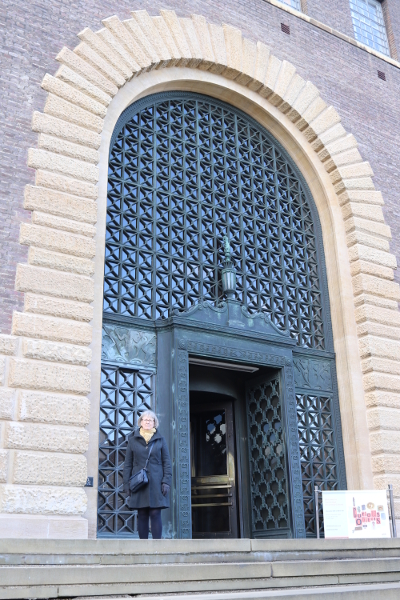
Door of opportunity: University Library, Cambridge
If I wrote it, he promised to publish it, and he did! You can find it on pages 20-23, after Michael Gove’s Foreward and just before the transcript of David Cameron’s speech on prisons.
Little did either of us realise the scale of interest from that one article.
Even before the book went to press I was catapulted into the media both local and National.
The local IMB board, IMB Secretariat, President of the National Council and National Council itself all decided that I needed to be shut up and shut up quickly.
The bullying started, then the intimidation, then the lies and then the prejudicial character assassination.
One Hollesley Bay IMB member who is still a member had the audacity to tell me that it would have helped if I had cried in front of the board whilst apologising for writing the article.
Call me contrary, but I make no apologies for having written the article. It was well grounded and factually correct, corroborated by the contents of the report by Karen Page Associates which the Ministry of Justice itself commissioned.
I did apologise for any offence caused as that was not my intention. The issues I raised are as important now as they were a year ago, I haven’t seen enough progress in any of the points I carefully considered and wrote about.
Those who truly know me can understand why I spoke out so passionately and continue to do so. I was given a platform which I took eagerly but never expected the venom, backlash, and dirty tactics by the IMB and MoJ in trying to destroy me my reputation and my working life.
But I have remained and will continue to remain steadfast in the knowledge that I spoke the truth and ultimately that’s all that matters.
My life has been turned upside down but I’m in some way I’m grateful for that. I have had the privilege to meet some of the most extraordinary people both in and out of prison and I have no regrets.
So, I’m not shutting up and I’m not going away
I’m #justgettingstarted
Join the conversation on Twitter: @fmspear #justgettingstarted
~

Over 60,000 allocated visits in prisons by the IMB
Did you know that there are between 60-65,000 allocated visits by the IMB to Prisons and Immigration Removal Centres each year?
This allocation is dependent on the money available for expenses such as travel and subsistence. But that is not the actual number of visits.
I can reveal to you for the first time that since April 2016 HMP/YOI Hollesley Bay, an open Cat D prison, only achieved 58% of its allocated visits.
That cannot be effective monitoring and yet the MoJ has repeatedly told me that effective monitoring is going on there. Really?
How many more prisons do not satisfy their allocations?
If the projected percentage of allocated visits turns out to be 58% in terms of actual visits across the custodial estate then monitoring in YOIs, HMPs and IRCs is dangerously low. It also means that this part of the National Preventative Mechanism (NPM) is dysfunctional.
The IMB is very topical on Twitter now and that’s not just because of my story.
There are many vacancies on boards from Cat D open prisons to closed and remand prisons. It’s not a glamorous job, you need passion, determination, time, and a true interest in the welfare of prisoners and the mechanisms of the prison estate. Oh and you won’t get paid, there are no guarantees that your voice will be heard and there is a lack of support from IMB Secretariat. If you can get beyond all that, apply.
Some IMB members only visit wings to retrieve applications from the IMB boxes and perhaps to speak to those that have asked to see them. But if the IMB members are regarded by prisoners as practically useless, having no influence and are part of the MoJ then what are tax payers paying for?
Annual Reports
Every IMB is required to write an Annual Report. However, by the time it is published it is so out of date that it precludes any chance of swift meaningful action to resolve issues and will be filed away to collect dust just as previous years.
Am I being harsh? NO.
I have spent hours and hours preparing, collating, and writing Annual Reports. I was determined that the 2015/16 Annual Report for HMP/YOI Hollesley Bay would be different, that it would not be cut and paste as previous years. But there will be no Annual Report for 2015/16. I don’t even know where all the preparations went it was abandoned when the HBIMB ambushed me on 19th April and ostracised me in reprisal for speaking out for reform.
I recently learned that HMP Doncaster didn’t publish an Annual Report and it does not even have an IMB board. When the Chair left the board followed and it then had to rely on members from other prisons dual boarding.
So how many other IMB’s are suffering from similar dilemmas?
Updated 07 March 2017
Its even worse at HMP/YOI Hollesley Bay than I revealed when I posted this blog on Sunday.
Information made available to me show new figures for the actual number of visits is even lower.
Allocated visits were 354 actual were 204. New figures allocated visits 354 actual were 196.
Just 55%, Lousy performance means that when monitoring is not effective it places people in custody and people who work there at higher risk.

Sorry, can you speak up?
The Independent Monitoring Boards (IMB) and the Association of Members of the Independent Monitor Boards (AMIMB) have been invited to give oral evidence to the Justice Select Committee on Tuesday 31st January 2017.
We will all watch with interest.
Especially since neither IMB or AMIMB have a voice.
The two bodies have not conducted themselves well in my opinion and in my experience. And have been ‘at loggerheads’ with each other for years.
Lack of support they show for their members is as shocking as it is lamentable.
It’s clear that I’m far from alone in thinking this; many others know it to be true but are, for the moment anyway, unable to vocalise it publicly for fear of reprisals, similar to those dished out to me.
UPDATED Wed 1st Feb
Well, did you attend or watch online?
In your opinion, how did they do?
~

Never be afraid to speak the truth to those in power*
A letter from the Ministry of Justice landed on my doormat yesterday morning. I was expecting it and with trepidation it was opened and carefully read.
To download and read, please click here.

I shed a few tears. And then I replied!
To download and read, please click here.
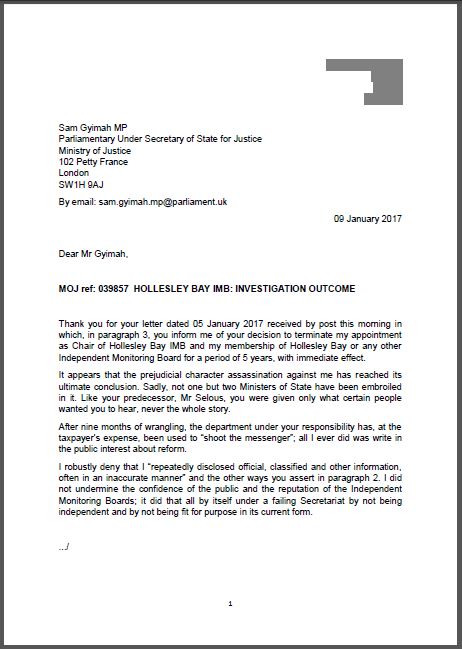
9 months after I wrote an article in The Prisons Handbook 2016 the curtain has fallen on my time in the Independent Monitoring Board (IMB). I am dismissed with immediate effect for a period of 5 years.
I kept my word and saw this sorry episode through to the end. There are no winners or losers.
What I now know through personal experience is that if you level criticism about the Criminal Justice System you can guarantee the weight of the system will be upon you. In my case I faced an investigation by the MoJ that was biased to begin with and full of lies.
Paperwork from the start shows this was a deliberate and prejudicial character assassination designed to shut me up in the hope I would give up go away and to discredit me. I have the evidence and so does the MoJ but they have been selective with it.
But I am stronger than that and I have done my best to stand up to everything that has been thrown at me. Reports that I have read about myself written by the MoJ bear no resemblance to me and yet they have been used against me and yes, the Prisons Minister Sam Gyimah has taken them on board and made his decision.
I cannot change this decision. I have appealed and my voice may have been ignored by him but my voice has traveled far.
So, what now?
I am already on the record as saying “The Ministry of Justice has left me with no alternative than to take more robust action in the public interest” and that is exactly what I will do.
This doesn’t mean I will retaliate and seek retribution. However, since I am not gagged anymore I could reveal considerably more information about dishonesty and real misconduct I have encountered.
The IMB Secretariat, current and former IMB members, MoJ wonks and HMP/YOI Hollesley Bay staff including Governors should reflect carefully on their own behaviour before shouting down a volunteer monitor who decides to write about what they have seen and heard.
They chose to make it personal whereas I wrote about the issues.
Throughout this last year, I have kept my integrity and I have been truthful about what happened. I have never sought to elevate myself.
I am passionate about the issues I have raised for prison reform and I have no intention on being quiet or giving up, no not for one moment.
As many readers will know my motto has become #notshuttingup #notgoingaway and that is how it will continue.
Our prisons are in crisis and reform is taking too long.
~
* acknowledgements to Sir Ivan Rogers‘ email

Why our prisons need to be reformed
First published 05 January 2017 in East Anglian Daily Times under the headline ‘Prison reform is taking too long, say ex-Hollesley Bay IMB chairman and former inmate’
Had the authorities listened to the Independent Monitoring Board (IMB) at HMP Birmingham the riot on 16 December maybe could have been prevented. In their annual report the IMB wrote:
“the increasingly difficult behaviour of individual prisoners coupled with staff resource constraints give the Board cause for concern… Many staff are now concerned for their personal safety as well as for the safety of the prisoners… A solution is required urgently.”
Instead what happened was described by the Prison Officers Association as the biggest prison riot since Strangeways in 1990.
So why have prisoners behaved in this way?
Toxic combination
Sentencing guidelines have placed more people in prison for longer periods of time and has, therefore, inflated the prison population to record numbers. This in turn has given rise to overcrowding, and together with under-staffing and the emergence of psychoactive substances also known as “legal highs”, our prisons have become places of deprivation on a record scale. It’s a toxic combination.

Faith Spear
Less well publicised factors such as restricted access to education, to facilities, and the right of association with one another add to the frustration felt by those living inside. People being locked in their cell for 23 hours every day or sometimes for days on end during “lock down” creates a volatile atmosphere.
A high number of people in custody suffer from genuine mental health issues. They are imprisoned sometimes to protect society. But those are in the minority. Many people in prison with mental health issues are only there because the courts have no idea what else to do with them. For their sake and for the sake of society in which we all live, it is entirely the wrong place to send them.
IPP is defunct
Others are in prison under the now defunct rules on Imprisonment for Public Protection, known simply as “IPP”. These people don’t have a release date. Many prisoners today under IPP have already served time far beyond the normal tariff They are left to languish until the parole board decides it is safe to let them out.
I’m not saying we should open the prison doors and let everyone walk out. That would be reckless and irresponsible. But I am saying it is time to speed up the process of evaluation to make sure that those who don’t pose any risk to the public be allowed to go home as soon as possible.
What concerns me most is the utter boredom that so many of people in custody must endure. They are invariably portrayed as having a low IQ, a high percentage with a reading age of an 11year old; many have been in care and come from seriously complex situations. What isn’t realised is that many people in custody are intelligent, well-educated and have skills that could benefit other prisoners and need something worthwhile to do.
In other words, purposeful activity whilst in prison must be a priority. Lives are wasted here; I see it all the time.
So many organisations are involved in the ‘prison industrial complex’. Big money is made from those who find themselves on the wrong side of the law. Everyone wants a slice of the profits, but too little is re-invested in the prisoners and in the conditions in which they are held.
There are not enough links with the outside community, with colleges and University. Too few businesses are willing to give prisoners another chance, but without a fresh start it is impossible for them to be reintegrated back into society.
Beyond the Gate
I have seen the crushing stigma that ex-prisoners live under on release; the failure of a system that is meant to be there for them beyond the gate, the lack of accommodation, the difficulties of finding work, the list goes on.
It’s time for society to think differently towards people who find themselves in prison.
“Our prisons are in crisis and prison reform is taking too long.”

2016: wow what a year
I’m in a reflective mood
My year started as always with birthday celebrations, yes my birthday is 1st January.
I also took up a new role as the Chairman of the Independent Monitoring Board (IMB) for HMP/YOI Hollesley Bay. I had fulfilled many of the duties the previous 2 years as Vice-chair but now having the title of Chairman I noticed there was more respect. Little did I know what was in store for me just three months later.
On 1st April I accepted an invitation from Mark Leech, editor Prisons Handbook, to write my personal views on the IMB from my experiences for the 2016 edition. My reasons were not to elevate myself in any way but to get the message out clear and concise that there must be changes as the system was not fit for purpose in its current form. A monitoring system within prisons is vital but it must have independence and it most certainly needs to have a voice, a loud one, it had neither.
Almost as soon as my fingers hit the keyboard the backlash began. Not only did the whole of my board turn against me and demand my immediate resignation but the IMB Secretariat and the National Council began behind the scenes to plot my downfall. I have been unable to reveal all as I have been ‘gagged’ threatened bullied and ostracised by them. I have had to face 2 investigations by the Ministry of Justice who have tried in every way to depict me in a bad way through a character assassination and attacking my honesty and integrity.
Yet I have refused to resign and have with the help of some very amazing people continued to stand and face everything including a disciplinary hearing.
So what was I accused of?
I wrote an article on prison reform and in the eyes of the MoJ this was misconduct
I continued to write about prison reform and in the eyes of the MoJ this was gros misconduct.
For those who know me either through social media or who have met me in person will know that I am passionate for prison reform and have worked hard getting the message out that “our prisons are in crisis and prison reform is taking too long”.
But I will not end the year with my head in my hands or with a heavy heart, I plan to celebrate as my birthday draws near.
Here are some of my highlights, photo memories and amazing people from 2016
Neil Barclay (Thameside)
Librarian with a difference and a Butler Award winner, I invited him to HMP/YOI Hollesley Bay for the 6 book challenge presentations. We then met up again in Thameside for an event with Sir Lenny Henry.
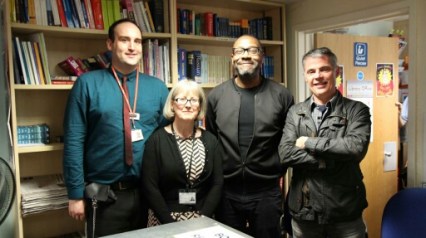
No I’m not sitting on a chair, Neil, Lenny and Peter never felt so short!
Trevor Peel (Chairman National Liberal Club Commonwealth Forum)
I have frequented the David Lloyd George room on many occasions and the afternoon tea was delicious, thank you Trevor. Discussing the Commonwealth and Human Rights and meeting HE Norman Hamilton, Malta High Commissioner was a highlight.
Christopher Moore (CEO Clink charity)
At the Restorative Practice Awards I was privileged to share a table with Chris, Peter Jukes, Jonathan Robinson, and Alison O’Regan. Such deep and important conversations we had!
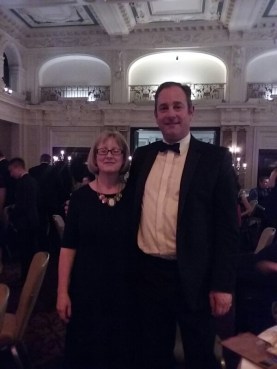
It’s been good to stay in touch and encourage each other. See you at the next awards ceremony.
Mark Leech (Editor, Prisons Handbook)
You have helped me shout louder than I have ever before. You believed in me and stuck by me. Daisy Mallet will be forever grateful.
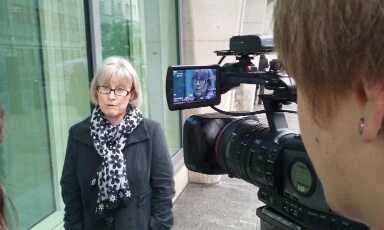
Jonathan Robinson (Author)
Well what can I say, we have bumped into each other on so many occasions this year anyone would think we both want prison reform! A tireless prison reformer and friend.
Ian Bickers (Executive Governor, HMP Wandsworth)
Memorable conversations this year. Thank you for inviting me to HMP Wandsworth to talk about prison reform. A man I admire with a very difficult job. Remember Ian I am behind you.

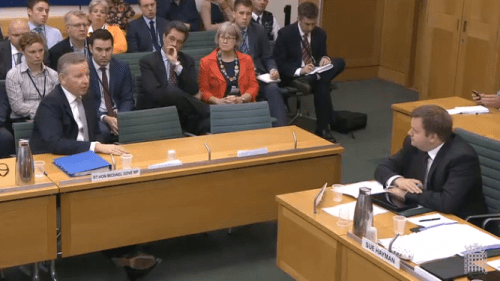
Yes, I really am. Thank you for your continued support and encouragement. This was one of my many times at the Justice Select Committee.
Juliet Lyon (PRT)
Lunch together, your kindness and compassion will stay with me
Ruth Armstrong and Amy Ludlow
Learning together: Prison and University Partnership Conference in HMP Grendon and St Johns College Cambridge. One of the most fascinating and enlightening conferences I have been to. Great to catch up with you both.
Richard Rowley
You have been there day and night, always ready on the other end of the phone to encourage support and offer advice. I can’t thank you enough.
Audrey Ludwig (Suffolk Law Centre)
An amazing lady who has supported me throughout this year and named me as one of her Suffolk Human Rights Heroes of 2016. Thank you, Audrey, and all in KOHRS.
The Tartan Con
We have met twice this year and both times have been profound and engaging, thank you for your friendship
Ian Dunt
Your interviews with me this year certainly caused a stir in Petty France
Paul Sullivan (InsideTime)
Endless cups of coffee and tea together and an interview that reached so many and the feedback from those in prison kept up the momentum of speaking out for prison reform.

There are many, many more people I could write about but I will save them for another blog.
The most important person and my best friend who has stood by me, held me up when I felt I was falling and has always believed in me should have the last word.

I think I’ve learned to be a pretty good judge of character and have learned to give fair and honest critique as much as take it. If I’d thought for one minute that Faith was somehow incorrect in what she wrote about prisons and monitoring, then I’d have chimed in with words of caution. She wasn’t. Instead she told it like it is – they do that “up north” you know – and she was entirely correct in what she wrote and the way she wrote it. Nothing could have prepared her for the reprisals or how she has been lambasted for the stand she has taken since. She’s paid a high personal cost, trust me I know the woman. But I also know that the friendships and expressions of support she’s received as a result of it, many from people who are unable to even be named, have helped sustain her. It has been enough to show me that the changes she’s calling for are precisely what needs to be changed. I’ve been truly amazed how a department of HM Government has conducted itself. I had expected better. But I’ve not been surprised at all how Faith has retained her integrity despite it. That’s who she is.
Latest Posts
-

VIDEO OF LABOUR’S BROKEN PROMISES TO NUCLEAR VETERANS HITS 10M VIEWS
Peter Stefanovic, lawyer and CEO of CAMPAIGN FOR SOCIAL JUSTICE, has produced a shocking video, supporting the nuclear test veterans’ campaign, LABRATS (Legacy of the…
-

Chocolate & Grace: Succeed in the face of adversity
Back in 2017, in The Clink restaurant in HMP Brixton, I had lunch with Chris Moore, the then Chief Executive of The Clink Charity, and…
-

Dichotomy of Lived v Learned Experience
I first stepped foot in a prison in 2010; I was invited to be a community witness for a victim awareness course at HMP/YOI Hollesley…
-
Campaigning Lawyer Calls On Prime Minister To Back Plan Drawn Up By Lord Thomas To End Shocking IPP Scandal In Viral Video
Campaigning Lawyer and CEO of CAMPAIGN FOR SOCIAL JUSTICE Peter Stefanovic – who’s films have been watched hundreds of millions of times online – has…
 The Criminal Justice Blog