Authors
 faithspear
Why rehabilitation is important for society

Society puts people in prison and expects them to reintegrate after their sentence and not reoffend. But recidivism is high because often the root cause of offending is not addressed.
Rehabilitation can be described as restoring, rebuilding, or repairing and in the context of those that have spent time in prison a means of re-joining society and hopefully being accepted, but that’s not always the case.
But what if they don’t want to be “rehabilitated” or don’t see the need for it? This is when questions arise such as:
Can true rehabilitation exist, if so what does it look like?
Does ‘rehabilitation’ force a way of life onto people that we deem ‘acceptable’?
Does our lifestyle fit the mould that we expect of those that have offended and ‘need to be rehabilitated’?
We must ask ourselves if we really want to give people a 2nd,3rd…chance or whether we as a society are too punitive to allow people to move forward with their lives.
So, society can and does hinder rehabilitation by placing certain requirements upon those that have broken the law that may not be relevant and therefore putting unnecessary pressures on them.
What we as part of society expect, could we even live up to and could it be said we are setting people up to fail so we can say “I told you so”?
It is too easy to recall over minor issues such as lateness to appointments or forgetfulness when we all fall foul of these from time to time. Making those expectations so high we could almost see rehabilitation as a form of control or conformity to a norm that many would not recognise.
For some picking up where they left off is not an option due to the nature of the crime, family circumstances or health.
But if we build a barrier to those who pose no threat to society which prevents them from re-joining their work sector then are we continuing to punish?
I have seen the crushing stigma that many live under on release; the failure of a system that is meant to be there for them beyond the gate, the lack of accommodation, the difficulties of finding work, the list goes on.
Recently David Gauke the Secretary of State for Justice said:
“…I want more employers to look past an offender’s conviction to their future potential.
How do we do that?
Well, we do it by working more closely with employers, so they open their eyes to the benefits of hiring ex-offenders…”
Sounds all well and good, however, the stigma of a criminal record can be a barrier to even getting an interview. As Christopher Stacey, Co-director of Unlock states:
“The current criminal record disclosure has multiple, harsh consequences and damaging effects on individuals, in particular it deters people from applying for employment and for those that do apply it brings high levels of stress, anxiety and feelings of shame and stigma. It acts as an additional sentence that often runs for life. It desperately needs reform”
https://twitter.com/unlockcharity/status/1008633161478176769
Is it time for society to think differently towards people who find themselves in prison and as Erwin James (The Guardian, 2013) succinctly wrote:
“…however unpalatable it may be to some, the fact is prisoners are still people, and if we want them to have any respect for society when they get out we need to be mindful of their dignity as fellow human beings” (Erwin James, The Guardian 2013)
first published on http://www.raggeduniversity.co.uk

The continuing IMB dilemma of Independence, Effectiveness, and Impact.
My response to Dame Anne Owers
As it’s Independence Day (USA) I thought it would be fitting to take a few moments to consider the independence of the Independent Monitoring Board (IMB) which operate in every prison and detention centre in England and Wales.
Yes, I have mentioned it before, once or twice.
Pages 4-6 of the June edition of ‘Independent Monitor’ the journal of the Association of Members of Independent Monitoring Boards (AMIMB) carries an article bylined to the National Chair of the IMB, Dame Anne Owers. The article sets out her thoughts on the current state of the IMB’s and her vision for their future.
It focuses on the new Governance structure highlighting that it must enhance
- The Independence of IMB’s
- The Effectiveness of IMB’s
- The Impact of IMB’s
Independence
When a National Chairman has to say “It is important to be clear what we are independent of, and what we are independent for” it should immediately ring alarm bells. For an organisation that has existed since April 2003, surely this should have been established and implemented years ago.
She continues: “The IMB’s as a whole need to be, and to be seen to be, independent of the departments that sponsor them”.
So, by her own admission they are not independent then?
How an organisation with its headquarters on 9th Floor, Orange Core, 102 Petty France, London can purport to be independent is frankly astonishing.
When I have sent emails to the IMB Secretariat it has been the MOJ that have responded, and vice versa. Talk about living in each other’s pockets.
This has been my argument for a couple of years.
And another gem:
“…we are developing a framework agreement with the Ministry of Justice, to clarify our independent role, our relationship with the sponsoring department and ministers…”
What! after 15 years?
Effectiveness
“Independence is an important touchstone for us all. But it exists for a purpose: to ensure that there is effective monitoring that has an impact on the conditions, treatment and outcomes for prisoners and detainees”
We have all seen the state of the prisons in England and Wales, the squalor, the fact that they are unsafe for both staff and prisoners and we have now have 11 prisons in special measures.
What does this say of the effectiveness of the IMB?
It is well documented in the public domain in reports by the Chief Inspector of Prisons, in local and national press, TV documentaries, hidden camera exposés, oral and written evidence given to various Select Committees, etc. that there very clearly is a unfolding humanitarian crisis in our prisons.
On the IMB website it states that for members “Their role is to monitor the day-to-day life in their local prison or removal centre and ensure that proper standards of care and decency are maintained”.
Proper standards of care have not been maintained. Proper standards of decency have not been maintained.
This means that the IMB has comprehensively failed in its purpose.
The IMB is not some vanity project for Ministers to appoint people to and to dismiss people from. Neither is it an arms-length body of any central Government department to sponsor in a whimsical way for its own ends.
IMB is part of the United Kingdom’s National Preventative Mechanism (NPM), created to meet the obligations of The Optional Protocol to the Convention against Torture and Other Cruel, Inhuman or Degrading Treatment or Punishment (OPCAT). This is an international human rights treaty designed to strengthen the protection of people deprived of their liberty.
https://www.nationalpreventivemechanism.org.uk/opcat/opcat/
When will the IMB be brought to account for being ineffective and not fulfilling their statutory requirements to protect people deprived of their liberty?
Impact of IMB’s
This week in Court No 1 at the Royal Courts of Justice, the IMB will come under the spotlight of the judiciary. The case is: R (Faulder and others) v Sodexo Limited and the Secretary of State for Justice.
The Howard League for Penal Reform has provided evidence as this case raises vital concerns about the state’s ability to monitor private prisons.
It’s CEO, Frances Crook, in her witness statement considers the monitoring of private prisons by Independent Monitoring Boards (IMBs), volunteer members, and the official watchdog, Her Majesty’s Inspectorate of Prisons (HMIP).
Omissions characterise many IMB Annual Reports thus giving an unsatisfactory view of the prison estate in England and Wales. I have already written extensively on this.
I agree with Dame Anne that the IMB has increased its public profile. However, it has not increased its impact; recommendations and points for improvement contained in IMB reports are still routinely ignored. And by virtue of their frequency, being annual, the reports are already wildly out of date at the time of publication.
This is a far cry from real time information Dame Anne aspires to. And a far cry from the level of impact a body of monitors needs to have, especially given the state of the prisons in England and Wales, worsening by the day.

StandOut: Giving prisoners another chance
I am relieved that the Secretary of State for Justice, David Gauke has at last addressed some of the fundamental issues that prisoners face; job opportunities can be scarce and are often limited on release from prison.
His speech at the Education and Employment Strategy Launch at HMP Isis on 24 May 2018 entitled “From the wings to the workplace: the route to reducing reoffending” stated that the first step is education.
I have noticed prisoners are invariably portrayed in the media as those having a low IQ and a high percentage with a reading age of an 11 year old. Yet, what they don’t report on is that there are intelligent prisoners, having skills that could benefit other prisoners and need something worthwhile or in other words purposeful activity to do whilst in prison.
I once spent time talking to two prisoners, both were sentenced for fraud and both were so bored. They didn’t want to retrain in bricklaying or painting and decorating or learn how to clean different types of flooring! They wanted to use their brains, but prison and especially resettlement prisons do not cater for that.
The second point David Gauke raised was moving from jobs on the wings to jobs in the workplace. Unfortunately, there are not enough links with the outside community, and too few businesses are willing to give prisoners another chance, but without a fresh start it is impossible for them to be reintegrated back into society.
For some picking up where they left off is not an option due to the nature of the crime, family circumstances or health.
But if we build a barrier to those who pose no threat to society which prevents them from re-joining their work sector then are we continuing to punish?
On the Unlock Opportunity, David Gauke continued to say:
“…I want more employers to look past an offender’s conviction to their future potential.
How do we do that?
Well, we do it by working more closely with employers, so they open their eyes to the benefits of hiring ex-offenders.
Our New Futures Network will do just that. It will create stronger links between prisons and employers, championing prisoners and acting as a broker between prisoners and employers.”
I am encouraged by this, but I feel there is something missing.
Does departure from a society that has basically forgotten your worth expect a re-introduction without barriers?
Those that have served a prison sentence often have a loss of confidence, self-esteem, and motivation, which can make the job market difficult to access.
Any course that can help navigate and offer guidance for this can only be a good thing.
A couple of weeks ago I was invited to HMP Wandsworth to attend the celebration of trainees completing the StandOut course by a friend Penny Parker.
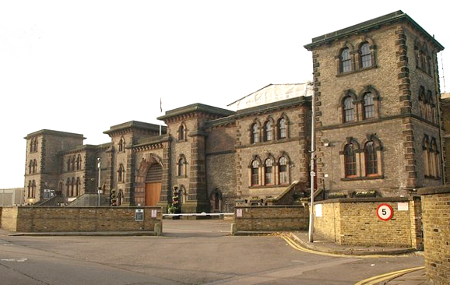
Photo: HMP Wandsworth by Derek Harper CC BY-SA 2.0
It is designed to equip people with the tools and skills to gain employment using coaching techniques to build self-confidence and self-esteem, to raise aspirations and motivate trainees to release their potential. This is done by challenging mindsets and attitudes, encouraging teamwork, leadership and developing communication skills.
Straight away I could see such a great rapport between the attendees and the trainers and for a moment I forgot I was in a prison. The celebration was a way of giving the men a chance to have their say and receive encouragement through positive recognition.
One attendee commented:
“I learnt resilience, learnt about the skills I already had. I feel like have been rehabilitated and that I have the tools to make it”
Each attendee, some with more confidence than others stood up in front of us and shared what the course had done for them. It was then the mentors turn and each described how they had witnessed the attendees moving forward week by week, celebrated their strengths and instead of just shaking their hand and giving out the certificates they paused and gave each one a challenge.
It wasn’t a well done pat on the head and then let’s move on to the next. It was a way of helping each one progress to the next stage in their journey.
The second and third stages of StandOut are the continued support (essential) through one-to-one coaching until release from prison, and then on a voluntary take-up basis, for as long as each trainee wishes after release.
I will finish on this StandOut story:
Ryan completed the first ever StandOut course in Wandsworth HMP in March 2017. He had been persuaded to come along to the course by a friend and wasn’t entirely sure what he was signing up to. His family kept his incarceration a secret from everyone and when he would call his mother would say he was calling from university. Ryan had never had a job before.
Ryan quickly began to engage with the StandOut course, enjoying the challenges of presentations, mock interviews and writing his CV and disclosure statement. He also grew in his desire to take responsibility for his choices and became determined to make positive steps when he returned home.
Once released things weren’t immediately straightforward for Ryan. A lead with an employer who had promised him a role ended in a dead end and despite showing initiative and determination he also failed his first attempt at his CSCS card.
However, Ryan was determined to prove his resilience and kept on pushing doors. All the time he was in contact with StandOut, asking for advice and keeping them informed.
We recently spoke to Ryan and he has now secured not one but two jobs. He is working as a courier and has also secured a job as a concierge. The concierge job was given to Ryan partly because he had the guts and honesty to hand the interviewer his disclosure letter. Ryan is now enjoying getting up at the same time as the rest of his family and joining them as they all leave for work
Ministry of Injustice?
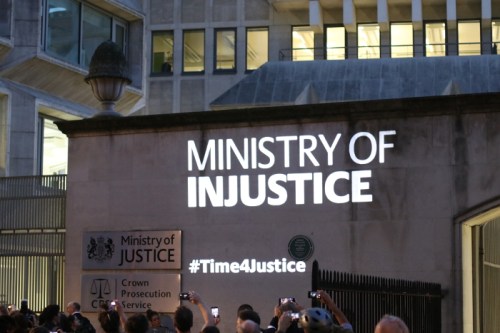
This week marked a very important milestone in the Criminal Justice System of England and Wales. On the evening of the 18th April a ‘Vigil for Justice’ took place outside 102 Petty France headquarters of the Ministry of Justice (MOJ). This uprising came from members of the establishment; Barristers were protesting. It signalled the transition from people being unhappy about, but living with, a broken legal system to people being unhappy, but vocalising their unhappiness, about it.
This week also marked a very important milestone for me. Two years ago I vocalised my unhappiness too. I attended the Independent Monitoring Board (IMB) monthly board meeting as the Chairman ready for a productive meeting with my colleagues when I encountered a carefully planned ambush. In that meeting I was required to give a statement confirming I was the author of the MOJ/IMB exposé “Whistle-Blower Without A Whistle” an article about the consequences of its poor governance which I had written for The Prisons Handbook 2016.
Today I have decided to make available my personal statement – word for word as delivered – which, until now, has never been shared publicly:
Statement from Faith Spear
Tuesday 19th April 2016
Please note: This statement is for the board only and has not be sent to any third party in part or as a whole.
“You will by now be aware of the lead Editorial bylined to Mark Leech and the article, which was dubbed as the special IMB exposé “Whistle-Blower Without A Whistle” bylined to Daisy Mallet, IMB Chair.
They have been published online at http://www.prisons.org.uk, they have been publicised on the social media channel Twitter @prisonsorguk and will soon to be published (on May 1st 2016) as part of a bound hardcopy in The Prisons Handbook 2016: Eighteenth Edition by Prisons.org.uk Limited. It’s a substantial work of reference with 1, 200-pages and a distribution circa 11,000 copies ISBN-10: 0957209851. ISBN-13: 978-0957209855
Before going to print both the Editorial and the special IMB piece were sent to and read by Rt. Hon Michael Gove MP, Lord Chancellor and Secretary of State for Justice, who has written the foreword to the book, to Andrew Selous MP, Parliamentary Under-Secretary for Justice, and to every member of the House of Commons Justice Select Committee.
In addition to that, on April 6th both articles were emailed to all IMB Chairs, all members, Clerks, the National Council and the Secretariat, by Billy Prendergast, IMB secretariat alongside a covering letter from John Thornhill (IMB President) without my prior knowledge.
These two articles tackle reforming the IMB and its governance. This makes them relevant for today’s Board meeting as we are focusing on governance. But they are also relevant to this Board for a second reason.
It was on Friday April 1st that the managing editor of The Prisons Handbook, Mark Leech, invited me to contribute a written piece to The Prisons Handbook 2016. He had read some of my work on prisons and thought I might have a view point that would interest the readers. He invited me to contribute a personal opinion piece to the debate towards improving the Independent Monitoring Board.
I accepted Mr Leech’s invitation and drafted a piece which he sub-edited. In fact my first draft took me just 2 hours because I already knew what I wanted to say. Anyway, there were several iterations back and forth. I was able to correct what I had personally written, to accept or reject the editor’s suggestions and to add or remove supplementary text in order to arrive at an opinion piece. I submitted my final version and it was accepted on April 6th.
The views expressed are my own private and personal views. Exercising my right of free speech, they are given as a private individual, an unpaid volunteer, appointed as an individual by the Secretary of State to be an IMB member.
The views are not given on behalf of this Board, the IMB, the National Council, the Secretariat, this prison, the MOJ or any other organisation or person. They are mine and mine alone.
My views are expressed in the hope of seeing much needed change. These are my own personal views and experiences, and I was not speaking on your behalf.
I get asked to contribute written work some is for academic journals some is for blogs. Those who know me know that I am interested in the bigger picture. I saw this as an opportunity to express my views to a wider audience within the Criminal Justice System. You know that I travel and visit other prisons, this piece is not a critique of Hollelsey Bay; it deals with the wider picture that I see across the prison estate in England and Wales.
Now, turning to one specific point, I fully understand concerns that some of you may have over the publication of this opinion piece, especially perhaps the paragraph on page 22 of the book in which I refer to recruitment of members to this Board. I wrote:
The consequence of the somewhat pathetic process is that I now have to steer certain members into their role when they are really hard work, and simply not suitable. On paper my Board is short of members, but in reality I just cannot face another recruitment campaign, so I try and build the team as best I can.
This reflects my opinion of the process of recruitment, not on you as individuals. If I had to initiate another recruitment campaign this is what would happen. It is not what is happening now, I am amazed at the enthusiasm I have seen from all the new members on our board and I feel we have a good team, and I really do appreciate you all.
There are other elements of the article that due to misinterpretation have been distorted and as a result may cause offence. This was never my intention and if it has caused any of you distress of any kind then I am truly sorry.
I have been asked why I did not send the draft to the board for editing. The draft of the article was not submitted to you in advance for review or approval because it is my own view.
If you had reviewed and approved it would become the view of this entire Board. It isn’t. It is my point of view, and I’m not asking for you to agree with it.
My sincere hope is that each one of you continues the important work we are doing here. Monitoring is very important. My aim is to continue to serve as Chair of this Board. We have much to do.
If in the light of the publication of this piece, and of the statement I have just made, your view of me has changed and you find you that you have questions about my ability to continue as Chair, you are free to express those views now.”
Several months later I learned from the MOJ that a draft copy of this statement had been circulated without my authorization to every member of the Board, which meant that they knew what I had planned to say and had ample time to collaborate and to commence their character assassination against me.
This set in motion a chain of events, including bullying, ostracization, suspension pending investigation, two investigations by the MOJ, and a disciplinary hearing at Petty France, which ultimately led to me being fired from my role as Chair by the Prisons Minister and banned from holding any role in the IMB for a period of five years.
Photo courtesy of @PrisonStorm

The State of our Prisons: England

My general take on prisons are that they are warehouses for the vulnerable.
Whatever happens in society is transferred to prisons, so if there is a problem with drugs on the outside there will certainly be a drug problem in prison. High walls, barbed wire and security is no real barrier. Bullying through debt is rife and so is corruption.
If you mean state of prisons as the fabric of the prisons then many are in disrepair. Neglect has come from outsourcing the maintenance to private companies and backlog of jobs even minor ones have had a detrimental effect on those that reside and work within the prison walls. I have seen vermin, rubbish thrown out of cell windows and food left to rot there. I have seen fire doors that are rotten and would provide no safety in the case of a fire.
Prisons are badly maintained often outdated and can be a fire hazard. So why do we continually fill them up? We knowingly put people in conditions that are not fit for habitation.
Prisons create more homeless individuals, more poverty and more mental health issues and they breed criminality.
Prisons have been underfunded for years and with cut backs year on year situations are only going to get worse. But as we have seen recently in the government there is a constant change of Ministers responsible for our prisons. This movement does not bring stability.
I don’t believe the Government when they say that loss of liberty is the punishment. No, once in prison you are punished, crammed into a room with another for up to 22 hours or more, eating beside your toilet with often the bare necessities. Little or no contact with the outside world.
Slave labour, I witnessed dismantling of DVD’s and CD’s for hours on end (Whitemoor), sewing wash bags and towels (Norwich), assembling poppies (Ford) all mind numbing and boring. Lack of use of any skills that they already have or have acquired within is farcical.
Punishment in prisons was a physical punishment but now it has become a mental torture. Lack of purposeful activity has stripped many of any hope for the future. Short sightedness on behalf of the Government is bringing the whole prison estate to its knees. Benchmarking, loss of experienced staff, under-investment has all resulted in volatile prisons where safety and security for staff and inmates alike is compromised. It’s like a ticking time bomb.
Incidents in prisons are now almost common place, but are lessons being learnt?
Society puts people in prison and expects them to reintegrate after their sentence and not reoffend. But recidivism is high because often the root cause of offending is not addressed.
I saw many with mental health issues that were not dealt with, I saw young men frightened, I witnessed the bullying and intimidation. In various prisons, I sat in on SMT meetings, case meetings, adjudications, equality meetings, security meetings etc. I listened to the way some Governors and Custodial Managers spoke about those in their prisons and wondered how they got to their positions.
There is a lot of unrest
Prisoners complained about:
- discrimination and equality
- unhelpful staff with even the most basic request
- not enough food, especially amongst the young men
- boredom
- too far away from their family for visits
- restricted regimes
- missing property when transferred from one prison to another (this is a very big issue)
- being bullied and getting into debt
- loss of hope
I want to try to bring some sort of balance
I have visited prisons with excellent initiatives for example I have been to Thameside prison twice, the first time with a former prisoner, now author and an actor from Eastenders. The second time was with Sir Lenny Henry. Both these events were organised by Neil Barclay a friend of mine who is the Librarian & Learning Lead and a Butler Trust winner. He plans these guests to help inspire the men.
I have been to HMP Oakwood and spent a day observing the Chrysalis Programme designed to provide a guide for change that goes beyond rehabilitation, and into engagement and re-integration. It is a Personal Leadership and Effectiveness Development Programme aiming to stimulate inmates thinking, attitude, social capability, and capacity.
Family days at HMP/YOI Hollesley Bay were fantastic with staff providing food and activities for children and adults. Team games, craft and sports were all laid on bringing much needed family time.
~

The State of our Prisons: WALES Overcrowded. Understaffed. Underfunded.
Mr David TC Davies (Twitter @DavidTCDavies), Conservative MP for Monmouth and chair of the Welsh Affairs Committee, has launched an inquiry into prison provision in Wales. At the moment, there are no facilities for women yet there are proposals for another “Titan” prison in South Wales at Baglan.
Let’s look briefly at the record
HMP Swansea, HMP Parc and HMP Cardiff rank amongst the worst prisons in the UK.
All have serious problems with prisoner-on-prisoner assaults, suicides, overcrowding and drugs. Here are some statistics:
Swansea: 80% of prisoners are in overcrowded cells. On arrival at the prison 53% have a drug problem and 32% have an alcohol problem.
Parc: this prison is ranked 111th place out of 117 in England and Wales. In 2017 there were 881 prisoner-on-prisoner assaults and 1451 incidents of self-harm.
Cardiff: 64.5% of prisoners are in overcrowded cells. There were 220 prisoner-on-prisoner assaults in 2017.
Usk/Prescoed: There is no full-time health care provision at either prison, concern by IMB of frequency of ‘lie downs’
If South Wales is serious about a new super prison it should first take a long look at what’s happened in North Wales:
Berwyn, the flagship of the MoJ which opened in February 2017.
Despite being Europe’s second biggest prison, with a capacity of more than 2,100, up to July of last year the £212m facility was less than a quarter full – with just over 500 inmates being catered for. By November there were 800 men.
Digging a little deeper, we find:
- HMP Berwyn received 319 complaints from prisoners February to September 2017.
- There were 219 complaints about the living quarters in the first seven months and 31 complaints about the quality of the food.
- There were 4 complaints about prisoner-on-prisoner violence or assault compared to 50 lodged by prisoners alleging abuse or assault by prison officers.
- Five of the alleged assaults were passed to North Wales Police for investigation, no action was taken over any of them.
- Ministry of Justice revealed that 376 items were confiscated from prisoners between its opening in February and October last year.
- 30 unspecified weapons, 56 items relating to drug paraphernalia and 34 mobile phones were among the items found in the possession of prisoners.
- Other items confiscated include 21 debt list items, 66 lighters, 17 USBs, 26 vaping objects and 10 chargers.
- There were also a number of items described as “miscellaneous” that were confiscated by prison officers.
So, whether prisons are new, old, Victorian, large, average size, have highly respected Governors or frankly those that should not be there (believe me I’ve met both!), it makes no difference as they all have similar issues to contend with:
Overcrowded. Understaffed. Underfunded.
To alleviate this prison crisis, we need fresh approaches in order to:
REDUCE the population: send fewer people to prison for non-violent offences
INCREASE the use of community orders
CUT the number of recalls
DEAL with indefinite sentences IPP’s convert to fixed length sentences?
FACILITATE prison release, therefore reduce self-inflicted deaths and reduce self-harm
REFORM prison estate and ensure all facilities are decent
SHARE best practice
INVEST in the long term and DELIVER in the short term
ADD more mental health facilities
The list can be endless and will depend on whether we see the purpose of prison as punishment, rehabilitation, both of these or a form of social cleansing.
Only last September, Lord McNally said in the House of Lords debate on prison overcrowding:
“We therefore have to understand the debate today which will be overwhelming in favour of sensible reform still has to pass that test of how we get a Secretary of State, a Prisons Minister and a Prime Minister who are willing to drive through reforms”
But that’s not the end of the story
We need a change in public attitude and that can only come from being informed and educated and not continually having issues covered up and hidden, the brushing under the carpet syndrome. There must be transparency.
We then need investment in life after prison in the provision of a home, a place of work, training or education and a reduction of the stigma in having a criminal record.
~

It’s been quite a year but not a quiet one. A retrospective on 2017
My year opened memorably
In January, the Prisons Minister, Sam Gymiah, wrote to sack me from my role as a Chairman of the Independent Monitoring Board (IMB) at HMP/YOI Hollesley Bay and to ban me for 5 years from IMB membership. I spoke out in the public interest for prison reform, highlighting key weaknesses I found in the MoJ. They shot the messenger.
I’ve written extensively on the reasons for this as those of you kind enough to have followed the story will know only too well.
No doubt the MoJ and IMB hoped they had heard the last from me.
I have not shut up and I have not gone away
In fact, if anything, as a direct result of media interest from radio, tv and the local and national press, my voice became heard more widely. I was given many chances to raise important issues on the state of prisons in England and Wales and I took them.
In April, I learned that I had been nominated for The Contrarian Prize 2017. It is a prestigious prize for those who have shown independence, courage and sacrifice. Those who nominated me liked the fact that I was unafraid to speak the truth to those in power, talking about the criminal justice system in the public interest. They recognised that doing so came at a huge personal cost including a face-off with the ‘goliath’ of the Ministry of Justice.

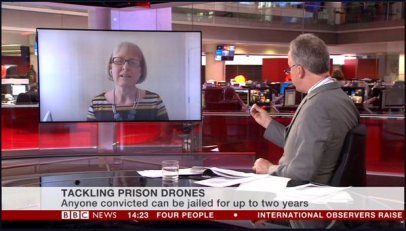
Also in April, producers at the BBC brought me onto a live link on BBC News Channel to talk about the problem of drones bringing in banned items into prisons. When presenter Julian Worricker asked for my take on it, I was able to outline the context of the issue and that it was impossible for all the drugs, phones etc within a prison to have been delivered via drones and that the new task force to be set up by the MoJ may have limited results. After working within the prison system for several years I was convinced that visitors and staff were likely routes in for contraband, yet security continued to be somewhat limited.
In May, I was delighted to join Lady Val Corbett, at her invitation, to attend the first of three ladies executive networking lunches. Each one inspired me and brought me into contact with remarkable women. Nicola McCalliog and Jo Apparicio are two women who I met through the lunches and who I especially admire; I look forward to the opportunity of working with them in the coming year. I have been amazed by the interest that was expressed in my own story and experience.
In my opinion, Lady Val has such determination, persistence, and guts! I thank her for accepting me into the Corbett Network as an associate member, it’s great to play an active part of something so vibrant.

In July, an article by Laurence Cawley was published on the BBC website. Here, the journalist wanted to explore in greater depth my experience with the IMB and the MoJ. The editorial team expected the article would get around 200,000 unique views. In fact, it reached 690,000 unique views on the first day and am told it was ranked the 8th most read article that day globally on the BBC. It was then I realised that there was a thirst by the public for coverage on justice matters.
In its mission statement, her Majesty’s Prison Service for England and Wales states that it:
“serves the public by keeping in custody those committed by the courts. Our duty is to look after them with humanity and help them lead law-abiding and useful lives in custody and after release.”
But it is shameful that HMPPS has fallen so short of its own mission statement. The situation in our prisons is worsening and really has become a humanitarian issue.

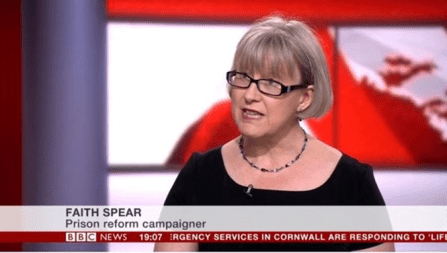
Also in July, I was invited to appear live on BBC News, this time in the studio, for an interview with Ben Brown about young people and children caught in the vagaries of the Criminal Justice System, highlighting the lack of care for these vulnerable individuals. This coverage proved a valuable opportunity to remind the public about the issue.
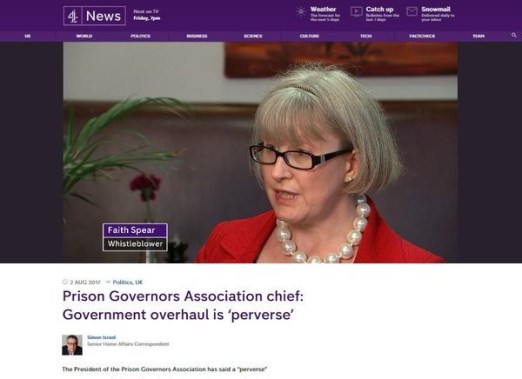
In August, I was invited to London to be interviewed by leading journalist, Simon Israel, who wanted to discuss the treatment I had encountered with the MoJ which tried to prevent me from speaking the truth concerning the prison crisis.
The interview went out on Channel 4 News causing quite a stir.
In the Autumn, I was part of one of the most important documentaries to be screened throughout the country. Here the theme was injustice and involved those from various angles within the Justice system. I was so delighted to meet those that had supported me over the last 18 months and together our voices were heard. There are more screenings planned for 2018.

This year new friendships were formed including Jane Gould (Clean Sheet) who works tirelessly in providing jobs for those that have been within the system and are often overlooked and penalised for having a criminal record. I joined her at the House of Lords for a tea reception.
My coffee and cake buddy Justin Williams has been a great friend. He has been a sounding board and has supported me when I have come under attack from those who have disagreed with my stand for prison reform.

On a lighter note, I was invited to the Opening Concert for Malta’s Presidency of the Council of the European Union by my friend Trevor Peel. Other invitations included ‘Why me’ evening at Clifford Chance with Peter Woolf and Mel Giedroyc; Probation Institute launch of Probation Services for Armed Forces Veterans under Supervision; ‘Fighting for Prison Reform’ at UCL and Robin Corbett Awards.
I have also taken up my usual seat at the Justice Select Committee on numerous occasions, the most memorable being when the IMB and AMIMB were in front of the committee. I listened carefully and made copious notes when the IMB President John Thornhill gave evidence. This man had caused so much harm to me and yet he was unaware that I was sitting right behind him. When he was informed who I was his face was like a rabbit in headlights. His plan to get rid of me had backfired, I was still there!
There were so many other events, meetings, coffee and cake times with those that have walked with me through 2017. I thank them all.
Richard Rowley, Daniel, Cranni, Jonathan Robinson, Jonathan Aitken, Unsound Robin, Charlotte, Khatuna, Chris Moore, Michael Irwin, Tracy Edwards…and more.
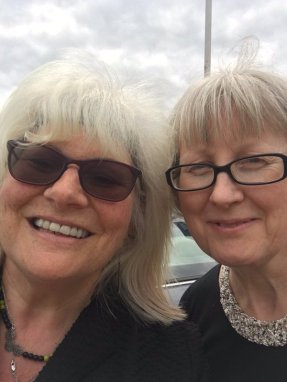
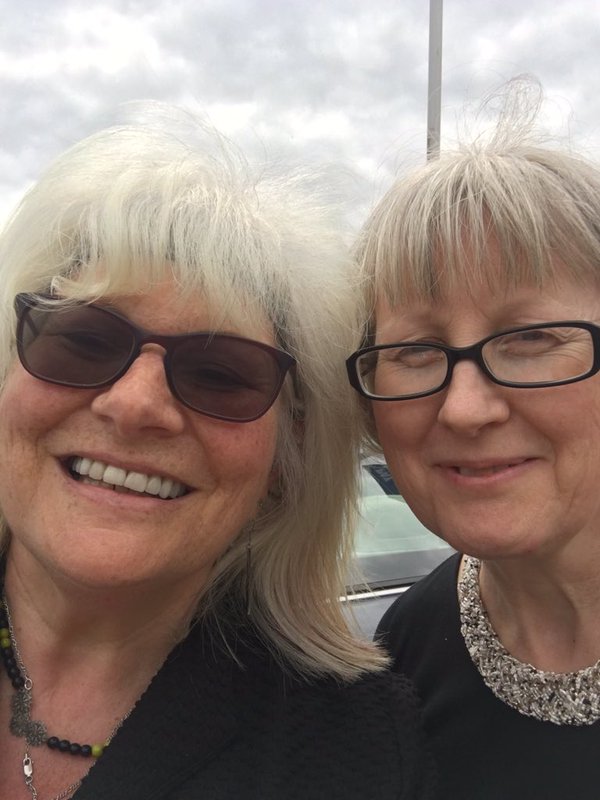
I started 2018 by celebrating with my twin sister our birthdays.
This year represents a year of great opportunity.
I intend to seize it with both hands.

Trying to silence me didn’t work
This month marks one year since I sat in front of a disciplinary hearing at Petty France.
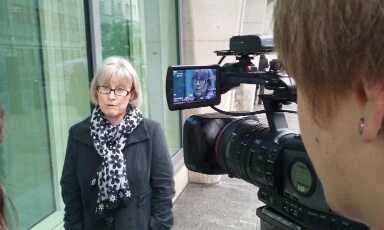
Interview outside Petty France straight after the disciplinary hearing
I had stood up and spoken out publicly on the state of our prisons and the state of the Independent Monitoring Boards that has a statutory role within each prison. Some may think I was too severe, and undermined the work that was done by volunteers. Others praised me for being brave enough to speak out as they were too fearful to face the consequences themselves.
I spoke from my experience and I spoke the truth. Seriously, the IMB is a shambles for the main part, a weak voiceless organisation that purports to be independent. Yes, there are some serious members that care about their role but blink and you will miss them! It’s not independent by any stretch of the imagination, it’s a department of the Ministry of Justice based at the MoJ headquarters Petty France.
I didn’t have to appear at the disciplinary hearing, the MoJ/IMB could have made a decision on my future as a Chairman of an IMB without my presence. I was determined to be there and try to uncover the ridiculous allegations against me. What a farce it was. I had been suspended from my role for 8 months and during that time was investigated twice by the MoJ.
During the investigation, I learnt that the article I wrote “Whistle blower without a whistle” in the Prisons Handbook 2016 was not an issue with the IMB Secretariat. The problem was that I spoke to the press. I was interviewed by my local paper ‘East Anglian Daily Times and by the ‘InsideTime’ prison newspaper. Suddenly my story was not only out in the open but was in every prison across the country.
Then came the prejudicial character assassination by both MoJ and IMB. I had struck a raw nerve. Three years previously the MoJ had commissioned Karen Page Associates to review the IMB. Conclusion was the IMB needed root and branch reform. They were so right, each board operating as a separate entity. There was nothing earth shattering about by article, I raised similar points to the review so why did the MoJ/IMB try to shut me down and silence me?
I believe it was a campaign initiated by a member of my board who had the audacity to send in additional material to the disciplinary hearing as he was scared that the decision would go in my favour and that I would reveal what was really going on in the IMB. It was rejected of course.
I didn’t realise that when you needed support or help in situations you faced as a member of an IMB it wouldn’t be available. There is so much I could say but basically the care team made up of members around the country that you could approach for support and guidance had been disbanded. So where difficult situations arose I was on my own.
Entering the hearing I was faced with a couple of familiar faces. The first panel member was on the executive committee for AMIMB. The same association that without permission had taken part of my article and printed it in their magazine and sent it to their members. So, no impartiality there.
I realised the MoJ had decided to change the terms of reference for the investigation without informing me, is that right?
The investigation was as a result of being suspended yet the direction and conclusion of the investigation had changed. I also found out the MoJ had been watching my every step for months and had a list of what I had said and when. Boy they were determined to silence me. I requested notes taken during the hearing and was disappointed but not surprised that so much that I had said was missed out. I don’t know what so-called “evidence” was sent to the Prisons Minister everything was done behind closed doors. They had made up their minds, nothing I could say or do would change that. Just as in the beginning of their campaign against me I knew there would not be fairness. Ironic that the IMB strapline is “Monitoring fairness and respect for those in custody”
Trying to silence me didn’t work
Since the hearing and at every opportunity without my hands being tied anymore, I have spoken out for positive change in the Criminal Justice System both locally and nationally.
I have met some amazing people, visited excellent schemes within prisons and worked with those I admire for their stand.
In trying to silence me the IMB/MoJ have given me a voice, a National voice. As I have said so many times before, I have never tried to raise my personal profile, for me the priority has been the issues I have raised. If you knew me you would understand this.
There have been so many that have walked beside me over the past year, some I have laughed with and some cried with. We have encouraged each other, we have shared our stories. I thank them all.
I am stronger now than I was a year ago and even more determined to play a part in the change that is needed within the Criminal Justice System.
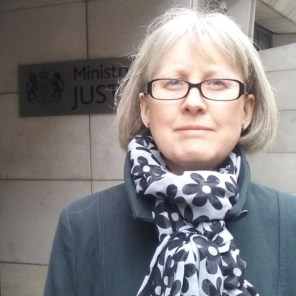

Our Prisons are in crisis: Prison overcrowding debate
“Can anyone doubt that today our prisons truly are in crisis—seriously overcrowded, understaffed and volatile—and that the solution cannot be simply to build more, but lies rather in adopting fresh approaches to reducing their population and restoring what is now almost entirely lost: the real prospect of prison sentences actually being used to reform and rehabilitate inmates?”
This was the opening paragraph from Lord Brown of Eaton-under-Heywood on the debate on Prison overcrowding 7th September 2017 that he brought to the House of Lords.
I was there in the Public Gallery watching and listening very carefully and was the only person who stayed in the public gallery for the whole debate.
Why is the subject of prison population one that makes everyone uncomfortable?
Coincidentally, it was exactly a year to the day when, in 2016, I sat watching and listening behind Liz Truss in the Justice Select Committee as she was grilled.
That was her first time in front of this committee and they wanted answers. On the subject of prison population, which is at an all-time high, she said this:
“…the metric I will judge myself on is not prison population”.
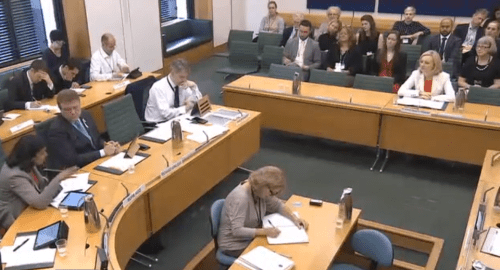
I have tried to pick out some of the main points made during this House of Lords debate below
Lord Brown of Eaton-under-Heywood was very clear when he said, “Warehousing has largely replaced rehabilitation”. He had four recommendations:
- Send fewer people to prison and for shorter terms
- Indefinite sentences, which are now commonplace, should become a rarity
- Facilitate prison release
- Drastically cut the number of recalls
Baroness Healy of Primrose Hill also picked up on the crisis that shows no sign of ending. Her suggestions included an urgent review of the use of short-term sentencing and to reverse the sharp decline in community orders. In addition, we should stop the imprisonment of women for non-violent offences and instead invest more in women’s centres.
Lord McNally “I fear that part of the problem of prison reform is that in a way, the whole of our Prison Service is like a paddle steamer driven by two paddles, but they go in different directions. One paddle is egged on by the media, influenced by public opinion and by politicians who, when given the hard choice between backing the difficult decision or playing for the politics of fear, have too often chosen the latter, and by political parties of all kinds, which, when it comes to elections, put out their leaflets telling their would-be voters how crime is rising and how they are going to deal with it. That paddle, pounding away, always makes it difficult to get the case for reform.”
Lord Ramsbotham “…if the Prison Service’s distortion of its role is to be rooted out, Ministers and officials must stop ignoring, and start listening, to the clarion calls of those who, for years, have been drawing their attention to the damage that overcrowding does to a system for which they are responsible and accountable to the public”
Lord Hope of Craighead “My Lords, there are far too many people in prison who ought not to be there at all. I have been concerned for some time about what can best be described as inflation in the length of the sentences being imposed by the courts”
“As for rehabilitation, the effect of overcrowding is that the opportunity for effective rehabilitation is greatly reduced. On the other hand, many more prisoners are being recalled now for breach of licence conditions than ever before”
“The Government need to address the reasons for these rises in prison numbers as much as they need to address the physical problems the overcrowding gives rise to.”
Lord Wigley “We desperately need a new fundamental review of the whole strategy of preventing crime, rehabilitating offenders and building communities at peace with themselves. We need radical new thinking and we need it very soon.”
Baroness Murphy “We put money into policies and we have no idea whether they are being delivered, simply because we have no way of measuring and there is nobody who can do the measuring. So policy ambitions are not being addressed. Of course, the prison regime is most likely to lead to depression, anomie and disturbed behaviour. Inside prisons the situation is dire.”
“Yes, we could have more mental health services but, frankly, it will not make any difference unless we solve the problem of how we are pouring people into the criminal justice system.”
Lord Cormack “We should constantly remind ourselves that punishment is sending somebody to prison, and the purpose of prison is rehabilitation. That has been neglected and forgotten for so long. One of the reasons, I fear, is the commercialisation of prisons.”
“We have to try to reduce the prison population. If we do not, we will continue to connive at perpetuating a blemish on our society. We are collectively indicting our own civilisation on our civilised values.”
Lord Harries of Pentregarth “…I wish to focus on one aspect only—the impact of overcrowding on self-inflicted deaths.”
“When a person is in prison the state has a particular responsibility to do all it can to ensure that they do not develop a state of mind where suicide is what they are tempted to do. Prison can lead to a sense of isolation, mental fragility and a feeling of hopelessness. For the reasons that I have outlined very briefly, the present overcrowding makes the situation much worse and is totally unacceptable.”
Baroness Masham of Ilton“If there was a more comprehensive aftercare system for vulnerable prisoners when discharged, with ongoing rehabilitation and a place to live for those who are homeless, maybe there would not be so much recidivism, which is one reason for prison overcrowding”
Lord Bradley “…reform is urgently required of indeterminate sentences for public protection. I support an approach recommended by the Prison Reform Trust, based on the three principles of convert, protect and rehabilitate. IPP sentences should be converted from indeterminate to fixed-length sentences, starting with the shortest tariff lengths where the greatest injustice seems to have occurred. The public should be protected with a guaranteed minimum licence period for all cases following release. As to rehabilitation, we should ensure that a proper investment is made in the support of IPP prisoners after release.”
Lord Alton of Liverpool “What is happening to the Government’s proposals for getting prisoners into jobs after release, for ensuring that prisoners learn English and maths and for league tables to evaluate progress on education? Where do education, training, secure schools and young offender institutions fit into the long-term strategy?”
“…we need an entirely new culture in our prisons and a different attitude to the way in which we run them”
Lord Hastings of Scarisbrick “We understand the heart of the difficult arguments, and now it is time to move towards answers and solutions, to cut the cost to the public purse and to stop the unnecessary incarceration of men and women who do not need to be in prison.”
“Why not invest our tax resources instead in their futures, and not in containing people in the despair and hopelessness of prison?”
Lord Lee of Trafford “…our prisons are a national embarrassment”
Lord Berkeley of Knighton “Overcrowding in prisons is severely hampering the opportunity for rehabilitation and the shining of a light in a dark place to illuminate a more redemptive path.”
Lord Birt “What is needed is not more obfuscatory press releases from the MoJ, with numbers unaccompanied by any convincing narrative at all, but an integrated and convincing five-to-10-year plan that moves us ahead of the curve and contains prudent forecasts of prisoner numbers, with plans to build an estate without any overcrowding and with a plan for officer numbers that will allow our prisons to become controlled, disciplined and civilised.”
The Lord Bishop of Southwark “It is imperative that we work together to increase hope and ensure that words and aspirations are matched by actions and delivery. There is an urgent need so to do.”
Lord Low of Dalston “We should look not only at the prosecution and sentencing practice of other countries but at what they do instead with those offenders, particularly categories of offender who are no longer sent to prison.”
Lord Phillips of Worth Matravers “My Lords, we are dealing with a problem that successive Governments have failed to solve for over half a century. The cause of that problem is that we send far too many people to prison for far too long: far longer than is necessary for rehabilitation and far longer than is needed to provide an effective deterrent.”
“What is needed is a change in the public attitude to keeping people locked up in prison: a recognition that the cost to society of this form of punishment is prohibitive; that the cost of each year that a man spends in prison simply by way of punishment is depriving us of resources that could otherwise be used to meet urgent social needs, including those that prevent young people turning into criminals. To bring about this change in attitude calls for leadership and courage on the part of Government. The aim should be, for a start, to halve the number of those in prison. IPP prisoners should be released. Old men who no longer pose any threat should not be held in expensive custody. Most importantly, legislation should reverse the trend of requiring ever longer sentences.”
Lord Colgrain “I have been drawn to three particular aspects of the prison system that seemed so anomalous that I subsequently drew them to the attention of the then Secretary of State for Justice, and I think that it is worth reiterating them now in the context of this debate on prison:
- Reduction of utilisable space, which in turn adds to the sense of overcrowding
- Delay in administration, which in turn restricts the execution of the system, which in turn leads to overcrowding
- Release late on a Friday afternoon, with limited ready funds and no protected environment within which to reside, must surely contribute to a higher possibility of reoffending than might otherwise be the case, with the subsequent prison overcrowding”
Baroness Hollins “Prison chaplains are trusted by prisoners. They are able to help counter the negative effects of overcrowding by offering personal and pastoral support to the prisoners in their care. Pressures created by overcrowding also threaten to undermine the quality and provision of family contact in prison—something particularly relevant to mothers with dependent children. As the noble Lord, Lord Farmer, stated in a recent review, family ties are as essential to rehabilitation as education and employment”
Lord Bird “Until we move on to prevention, until we start to dismantle poverty, we will have overcrowded prisons. I am sorry to say this, because overcrowded prisons are not prisons that work. We can be as clever as we like and come up with all sorts of solutions, but let us stop the churn; let us stop the arrival of people in prisons. That is the big, revolutionary need in terms of our thinking.”
Lord Judd “If our system is not rehabilitating people, it is a total failure. There needs to be a culture and a professional commitment at all times to rehabilitation. Rehabilitation means recognising that prisoners are individuals.”
“We all have a heavy responsibility to resist the cynical populism of the press and too many of our political colleagues when it comes to the challenge of prison reform. What we have now is generating crisis, not overcoming it.”
Lord Cullen of Whitekirk “…there is little evidence of overcrowding in Scotland’s 15 prisons.The most marked decrease has been in the number of young offenders. This points to the success of a whole system initiative which has encouraged a number of actions such as early intervention, opportunities for diversion from prosecution and support from the court process. For initiatives such as this the relatively small size of Scotland has assisted in bringing together the responsible agencies, sharing good practice and developing good teamwork.”
Lord Fellowes “If any other public service were in the position of our prisons, radical measures would have to be taken, and quickly. In the case of Britain’s prisons, this becomes more and more essential as the years go by, and the clear priority must be for a significant drop in overall numbers. The present numbers ensure that rehabilitation comes way down the priority list.”
“I know that our Government have much urgent business to complete, but the state of our prisons and the intolerable burden we place on the Prison Service continue to shame us and remain a danger to the stability of our society.”
Lord Woolf “In our system very powerful forces, coming largely from Parliament, continually drive up sentences and there is no equally powerful force which has the opposite effect of reducing them. That is what we have to focus upon…I suggest that we have to give the Sentencing Council a new remit whereby, if sentences are increased, it has to make recommendations under which they can be reduced. Unless we get a balancing factor of that sort, I am afraid that the present problems will continue.”
Baroness Stern “I would make two proposals to the Minister. First, a radical review could be a very practical and sensible way to proceed. Secondly, would she consider inviting the Secretary of State for Justice—who has a very good reputation—to find the time to listen to the views of some of those in your Lordships’ House in whom so much wisdom on this subject resides?”
Lord Elton “…it has been assumed that the problem that needs to be solved is how you treat criminals. But the problem would be solved with much less expenditure and much greater effect if you focus on how you treat children so that they do not become criminals.”
Lord Marks of Henley-on-Thames “The state of our prisons is one of the scandals of our times. They are neither humane nor civilised and they fail as places of rehabilitation and reform. The combination of overcrowding and understaffing is toxic.”
“…civilised society has a duty to ensure, by law when necessary—and experience has shown that it is—that prison is genuinely only used as a last resort; that prisons must be decent, humane and uncrowded; that sufficient staff must be employed to keep prisoners safe and secure; and that prisoners must be afforded full opportunities for education and work with a view to their rehabilitation. We should legislate to insist on achieving those standards. Only when we achieve them may we say that we have an acceptable penal system.”
Lord Beecham “I observe that we already have a world-class system—unfortunately, it is a third-world-class system. We do not know what the Government’s intentions are in respect of legislation. Perhaps the Minister could advise us. What has become of the claim in the Government press release of 23 February that the,
Historic Prisons and Courts Bill will transform the lives of offenders and put victims at the heart of the justice system, helping to create a safer and better society,
and that,
new legislation underpins measures outlined in the ground-breaking Prison Safety and Reform White Paper which will transform how our prisons operate?”
Baroness Vere of Norbiton “To reduce overcrowding, we must act in two areas. We must reform the prison estate and manage prisoner numbers.”
“I believe that the reforms and actions I have set out show how we are effectively managing the prison population, now and for the future. In an estate parts of which date back to Victorian times, there are of course significant challenges, but we know where those challenges lie and what is needed to rise to them. With our recruitment of record numbers of prison officers, with our unprecedented prison modernising programme and our focus on rehabilitation and reducing offending rates, we are getting on with that important work to build a prison systems that is safe and secure and transforms offenders’ lives.”
But is THIS the real problem
I will give the last word to Lord McNally
“We therefore have to understand that the debate today, which will be overwhelmingly in favour of sensible reform, still has to pass that test of how we get a Secretary of State, a Prisons Minister and a Prime Minister who are willing to drive the reforms through.”
I am a woman on a mission
With my kids no longer in education my summer doesn’t have a definite start or finish date any more. Summer just happens.
I’m not one to sit around and do nothing or to sit on the beach or by the pool changing into a darker shade of lobster. No that’s not for me. Here are some of my highlights.
May
So, I will start on 16th May at the David Jacobson Gallery. Contrarian Prize giving.
This was an extraordinary event and I was privileged to have been nominated for this prestigious prize. A few months earlier I had met the founder Ali Miraj and had prepared a short bio to be shown to the invited guests. It was a great evening and even though I didn’t win I was delighted to have been a part.
Two days later I attended a networking lunch with Lady Val Corbett, Professional Women’s network designed as a way for Executive ladies to support one another whilst raising money for the Robin Corbett Awards.  I have attended these awards for the last two years and to be part of this network is something I am proud of. I was introduced to the group of ladies by Lady Val which stimulated much conversation afterwards.
June
This month revolved mainly around coffee and food.
Coffee with Hugh Fraser, actor, and crime writer (Captain Hastings from Poirot) He was such a gentleman and we talked about crime, prisons etc
Lunch with Chris Moore, Chief Executive of the Clink Charity at Brixton Prison. Great food great company and lots to catch up together.
Dinner with Peter Holloway CEO Prison Fellowship England and Wales
Other stuff included:
Giving a talk to a local group on Restorative Justice
Being interviewed by a German journalist from DIE ZEIT
July
Started the month at a Rick Astley concert with my closest friend Helen, our dancing to 80’s hits was a sight for sore eyes!
Coffee with Zahid Mubarek Trust
Lunch with Ali Miraj (Contrarian Prize)
On 12th July BBC article by Laurence Cawley which he expected to get around 200,000 unique views, in fact it reached 690,000 unique views on the first day and was the 8th most read article that day globally on the BBC.
In Westminster for the launch of Proof magazine with the Justice Alliance

18th July Interview by Ben Brown live on BBC News Channel
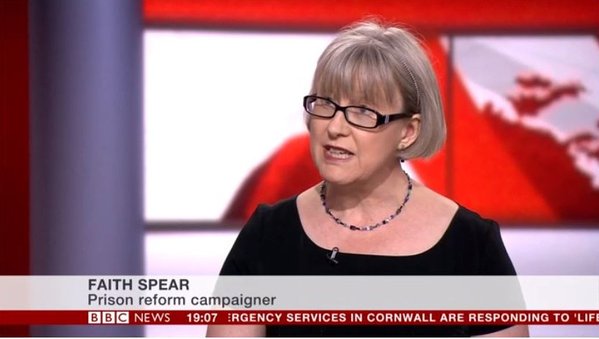
Met up with a friend who works in Petty France, good job walls don’t have ears!
Met Natasha Porter (Unlocked Grads) spent the morning chatting with the team and observing some of the training in the form of workshops
Interview with Injustice Documentary for a blog promoting new documentary out in October
August
Tea with a journalist friend in London for a catch-up
Travelled to London to be interviewed by Simon Israel for Channel 4 News at 7pm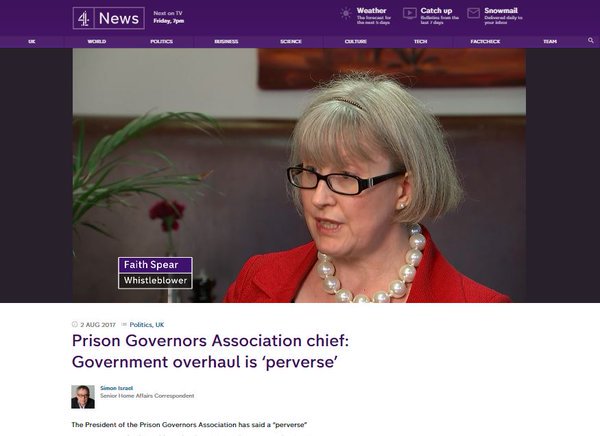
Afternoon tea with a friend, an ex-offender working within the prison system has a lot of experience and a true gentleman.
Bloomsbury book launch for Michael Irwin, meeting with other Criminologists and chatting over a G&T, perfect.

Lunch with various charities, yes food again including Jane Gould (Clean Sheet)
But now as Autumn has arrived there is work to do.
I am a woman on a mission.
Watch this space!
Latest Posts
-

VIDEO OF LABOUR’S BROKEN PROMISES TO NUCLEAR VETERANS HITS 11M VIEWS
Peter Stefanovic, lawyer and CEO of CAMPAIGN FOR SOCIAL JUSTICE, has produced a shocking video, supporting the nuclear test veterans’ campaign, LABRATS (Legacy of the…
-

Chocolate & Grace: Succeed in the face of adversity
Back in 2017, in The Clink restaurant in HMP Brixton, I had lunch with Chris Moore, the then Chief Executive of The Clink Charity, and…
-

Dichotomy of Lived v Learned Experience
I first stepped foot in a prison in 2010; I was invited to be a community witness for a victim awareness course at HMP/YOI Hollesley…
-

Keir Starmer whips AGAINST Lord Thomas amendment to end shocking #IPP scandal as campaigners vow to fight on
Campaigning Lawyer and CEO of CAMPAIGN FOR SOCIAL JUSTICE Peter Stefanovic – who’s films have been watched hundreds of millions of times online – has…
 The Criminal Justice Blog