
Home » prison overcrowding
Category Archives: prison overcrowding

Keir Starmer whips AGAINST Lord Thomas amendment to end shocking #IPP scandal as campaigners vow to fight on
Campaigning Lawyer and CEO of CAMPAIGN FOR SOCIAL JUSTICE Peter Stefanovic – who’s films have been watched hundreds of millions of times online – has posted a new film calling on Prime Minister Keir Starmer to end the IPP scandal once and for all by adopting a plan drawn up by Lord Thomas, the former Lord Chief Justice.

BACKGROUND
IPP sentences were introduced in England and Wales by the then New Labour government with the Criminal Justice Act 2003. It sought to prove it was tough on law and order by putting in place IPP sentences to detain indefinitely serious offenders who were perceived to be a risk to the public. However, they were also used against offenders who had committed low-level crimes, resulting in people spending 18 years in jail for trying to steal a coat or imprisoned for 11 years for stealing a mobile phone. In one instance 16 years in jail for stealing a flowerpot.
UNLAWFUL
In 2012, after widespread condemnation and a ruling by the European court of human rights that such sentences were, “arbitrary and therefore unlawful”, IPP terms were abolished by the Conservative government. But the measure was not retrospective, and thousands remain in prison.
Over 90 people serving sentences under the discredited IPP regime have sadly taken their own lives whilst in prison. In 2023 we saw the second year in a row of the highest number of self-inflicted deaths since the IPP sentence was introduced.
Former supreme court justice Lord Brown called IPP sentences: “the greatest single stain on the justice system”. When Michael Gove was justice secretary, he recommended, “executive clemency” for IPP prisoners who had served terms much longer than their tariffs. But he didn’t act on it. Lord Blunkett, the Labour Home Secretary who introduced the sentences, regrets them, stating: “I got it wrong.” And more recently, Dr Alice Edwards, the UN rapporteur for torture has called IPP sentences an “egregious miscarriage of justice.” Even former Justice Secretary Alex Chalk KC has called them a stain on the justice system, yet despite that, the previous Conservative Government refused to implement the Justice Committees recommendation to re-sentence all prisoners subject to IPP sentences.
CAMPAIGN FOR SOCIAL JUSTICE
Their families and campaign groups have been fighting to end this tragic miscarriage of justice for more than a decade and films posted online by social media sensation and campaigner Peter Stefanovic have ignited a wider public storm on this tragic miscarriage of justice gathering millions of views.
You can watch Stefanovic’s latest film here:
https://x.com/peterstefanovi2/status/1937394593672089988?s=46&t=g6PUk4YExrOYprJSzQZ3lw
It is not surprising that the public reaction to his films have been one of shock, outrage, and disbelief.
PUBLIC SUPPORT
Stefanovic has said: “The public support for my films has been overwhelming and the comments they are getting are a testament to the public’s anger, outrage and disbelief at this tragic miscarriage of justice.”
HOPE FOR JUSTICE
Now – the Labour government is being given the chance to end this monstrous injustice once and for all by adopting a plan drawn up Lord Thomas, the former Lord Chief Justice.
An expert working group convened by The Howard League and led by Lord Thomas has come forward with considered proposals aimed at protecting the public while ending the long-running IPP scandal.
Below are the members of the working group:
Farrhat Arshad KC, barrister
Dr Jackie Craissati, clinical and forensic psychologist
Andrea Coomber KC (Hon), Chief Executive of the Howard League for Penal Reform
Dr Laura Janes KC (Hon), solicitor
Dr Frances Maclennan, clinical psychologist
Andrew Morris, served IPP sentence
Dr Callum Ross, forensic psychiatrist
Claire Salama, solicitor Sir John Saunders, retired High Court judge and former Vice Chair and member of the Parole Board
Professor Pamela Taylor, psychiatrist and academic
Paul Walker, Therapeutic Environments Lead for the OPD Pathway (HMPPS)
The working group’s report puts forward six recommendations – the most important of which is a change to the Parole Board test which would require the Parole Board to give people on IPP sentences a certain release date, within a two-year window, and to set out what action is required to achieve that safely.
Setting a date of up to two years provides a long period of time to enable professionals and statutory agencies to work together and help the person to prepare for a safe release – it completely knocks on the head any argument the justice secretary has previously raised about public safety and will end once and for all one of the most cruel and monumental injustices of the past half century.
Campaigners have hit out at the “short-sighted” decision not to include prisoners on indefinite sentences in the plans announced by the government to reduce the prison population.
The government has recently published its long-awaited sentencing review, led by former Conservative justice secretary David Gauke, who recommended that some offenders who behave well in jail only serve a third of their term in custody before being released. Yet the Chair of the Justice Committee, Andy Slaughter MP has raised the point recently that “Even if David Gauke’s recommendations are wholly successful the prisons will still be full, and this has unintended consequences.”
With Government Ministers saying they have inherited a prison system “on verge of collapse” Stefanovic says this is “nonsensical”.
He concludes his latest film saying:
“With our prisons at breaking point now is the time for James Timpson – the prisons minister and Labour peer to accept this sensible, workable and detailed plan and seek to close this shameful chapter in the history of British criminal justice. If the Justice Secretary refuses to sign off on this plan for fear of handing ammunition to ignorant critics who accuse her of being soft on crime the Prime Minister, a former director of public prosecutions, who understands the criminal justice system better than any minister should instruct her to act on the proposals – because the simple fact is that by refusing to do so Keir Starmer’s government would become responsible for allowing one of the most cruel, inhumane and monumental injustices of the past half-century – a scandal rightly described as a stain on our justice system – a scandal described by the UN rapporteur for torture as an egregious miscarriage of justice and psychological torture – and which likely breaches Article 3 of the Human Rights Act – to be continued and perpetrated – and I for one cannot believe that that is what a Labour government would want to happen”
Update:
We have now found out that Keir Starmer has whipped against Lord Thomas to end this shocking IPP scandal.

CAMPAIGNING LAWYER BACKS PRIVATE MEMBERS BILL FOR RESENTENCING TO END SHOCKING IPP SCANDAL
INTRODUCTION
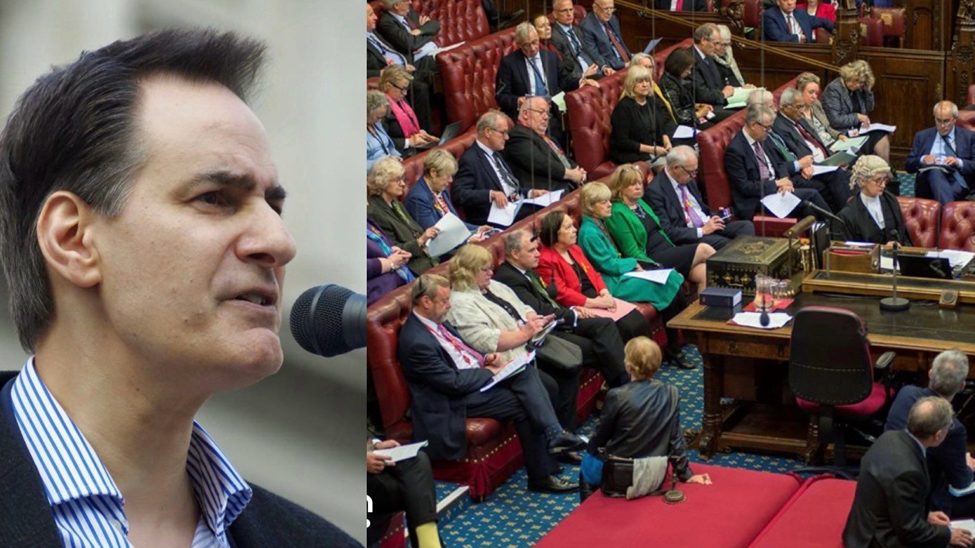
Campaigning Lawyer and CEO of CAMPAIGN FOR SOCIAL JUSTICE Peter Stefanovic, who’s films have been watched hundreds of millions of times online, has posted a new film backing a Private Members’ Bill by the Labour peer Lord Woodley – the Imprisonment for Public Protection (Resentencing) Bill. Stefanovic is calling on the new government to allow a free vote on the bill.
BACKGROUND
IPP sentences were introduced in England and Wales by the then New Labour government with the Criminal Justice Act 2003, as it sought to prove it was tough on law and order. They were put in place to detain indefinitely serious offenders who were perceived to be a risk to the public. However, they were also used against offenders who had committed low-level crimes. Astonishingly, this sentence has led to some people spending 18 years in jail for trying to steal a coat or imprisoned for 11 years for stealing a mobile phone. In one instance 16 years in jail for stealing a flowerpot.
UNLAWFUL
In 2012, after widespread condemnation and a ruling by the European court of human rights that such sentences were, “arbitrary and therefore unlawful”, IPP terms were abolished by the Conservative government. Yet the measure was not retrospective, and thousands still remain in prison.
Whilst in prison, under the discredited IPP regime, over 90 people serving this sentence have sadly taken their own lives. In 2023 we saw the second year in a row of the highest number of self-inflicted deaths since the IPP sentence was introduced.
Former supreme court justice Lord Brown called IPP sentences: “the greatest single stain on the justice system”. When Michael Gove was Justice Secretary, he recommended, “executive clemency” for IPP prisoners who had served terms much longer than their tariffs. But he didn’t act on it. Lord Blunkett, the Labour Home Secretary who introduced the sentences, regrets them, stating: “I got it wrong.” And more recently, Dr Alice Edwards, the UN rapporteur for torture has called IPP sentences an “egregious miscarriage of justice.” And yet, even when the former Justice Secretary Alex Chalk KC who also called them a stain on the justice system, the Conservative Government refused to implement the Justice Committees recommendation to re-sentence all prisoners subject to IPP sentences.
CAMPAIGNING
Campaign groups and their families have been fighting to end this tragic miscarriage of justice for more than a decade. In addition, films posted online by Peter Stefanovic, a lawyer and CEO of CAMPAIGN FOR SOCIAL JUSTICE have ignited a wider public storm on this tragic miscarriage of justice with over 20 MILLION VIEWS. It is not surprising that the public reaction to his films have been one of shock, outrage, and disbelief.
PUBLIC SUPPORT
Stefanovic has said:
“The public support for my films has been overwhelming and the comments they are getting are a testament to the public’s anger, outrage and disbelief at this tragic miscarriage of justice.”
PRIVATE MEMBERS BILL
Now – a fresh attempt will be made to resolve the IPP scandal once and for all in the form of a Private Members’ Bill by the Labour peer Lord Woodley – the Imprisonment for Public Protection (Resentencing) Bill – a bill which Stefanovic is backing. In his latest film Stefanovic included an interview with Lord Woodley in which he asked the Labour peer about the importance of his bill. This was Lord Woolley’s reply:
“We’ve got a right as human beings to try and get things right and that’s why it’s really important that we force the government to take action and resentence these people who have no hope in life whatsoever at the moment..3,000 prisoners, many of whom have served sentences way and beyond anything that would be fair or reasonable, even acceptable to human beings. Let’s help the individuals, their families, they’ve suffered far too much, and I believe it can be put to sleep pretty quickly if common sense appertains here.”
HOPE FOR JUSTICE
Lord Woodley agrees with calls for a free vote on his bill. “It takes the politics out of it, instead of everyone fighting to say we don’t want to be seen to be weak on crime. It’s not about weak, it’s about fairplay fairness, it’s about justice, it’s about treating families and family members with a degree of fairness and that’s why I think a free and open vote will allow people to see the justification in what we are asking for do the right thing” he says passionately.
NEXT STAGE
If Lord Woodley’s Bill becomes law, it will place the Justice Secretary under a legal obligation to ensure that all those serving an IPP sentence – whether in prison or in the community – are retrospectively given a determinate sentence. For the vast majority of IPP prisoners this will result in their swift and more than justified release.
On Friday 15th November, Lord Woodley’s bill passed its second reading and it now goes to committee stage, despite The Lord Timpson OBE DL, Minister for Prisons, Parole and Probation saying:
“Legislating to give every IPP prisoner a definite release date and post-release licence, or legislating to provide for a resentencing by court, would result in them being released automatically…either legislative approach would put the public at an unacceptable risk of harm, which the Government is not prepared to countenance.”
With recent reports suggesting there are fewer than 100 places available across the entire prison estate in England and Wales Stefanovic says:
“It’s a no brainer. It will go some way to heading off the medium-term prison capacity crisis and surely now is the time to completely take the politics out of this with a Free vote on the bill. Let’s now get this done – let’s work together to end one of the most shocking, cruel, inhumane and monumental injustices of the past half-century by getting behind and supporting Lord Woodleys bill – before more lives are tragically lost”

END THE “MONUMENTAL INJUSTICE” OF IPP SENTENCES
Today we have heard The Secretary of State for Justice, Shabana Mahmood announce a temporary change in the law, to release prisoners after completing 40% of their sentence in prison rather than 50%. But for those on an IPP sentence they once again see others released whilst they continue to languish in prison.
LETTER TO THE SECRETARY OF STATE FOR JUSTICE
Social media sensation Peter Stefanovic, a lawyer, campaigner & CEO of CAMPAIGN FOR SOCIAL JUSTICE has joined a coalition of 70 criminal justice experts, civil society organisations, leading activists and campaigners in signing an open letter to Keir Starmer’s new Labour Government and to the Justice Secretary, Shabana Mahmood, calling on them to deliver crucial reforms to Imprisonment for Public Protection (IPP) sentences, a national scandal which has claimed more than 100 lives since 2005.
Peter Stefanovic has produced films which have been viewed hundreds of million of times, his latest video covers some of his concerns expressed in the letter, he said:
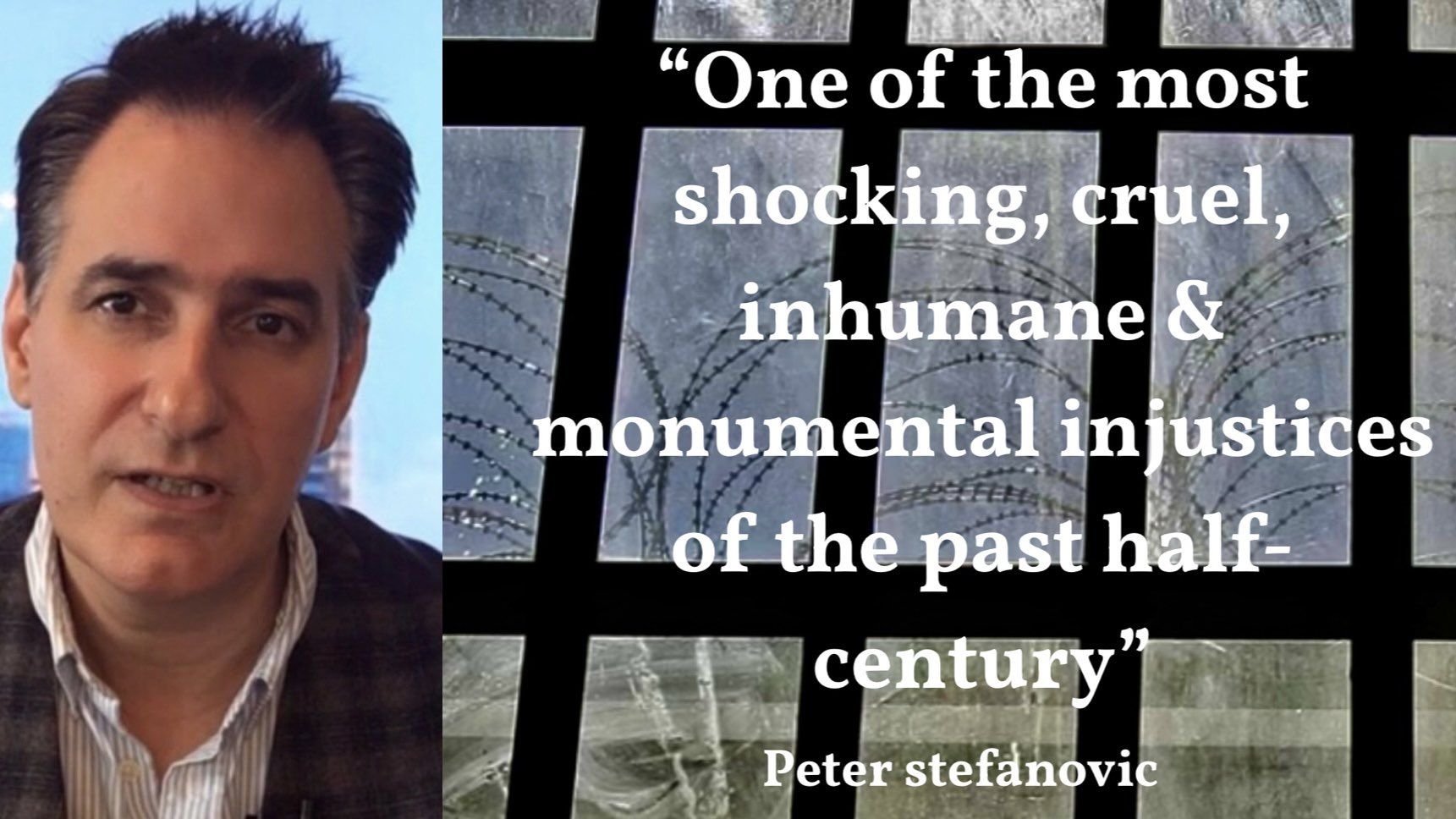
“I’ve just signed a letter calling on the new Justice Secretary to work at pace to end one of the most shocking, cruel, inhumane, degrading and monumental injustices of the past half-century – IPP sentences – a scandal which has a already claimed the lives of 90 people serving IPP sentences in prison and a further 31 that we know of in the community”
He continued:
“I cannot overstate the urgency on this – in June one person serving an IPP sentence – a staggering 12 years over tariff set himself alight, another began his second hunger strike. This insanity has got to end – we must now put a stop to this inhumane and indefensible treatment which has absolutely no place in a modern Britain and political leaders – previously lacking the courage to take action – must now find the courage to do so.”
BACKGROUND
IPP sentences were introduced in England and Wales by the New Labour government with the Criminal Justice Act 2003, as it sought to prove it was tough on law and order. They were put in place to detain indefinitely serious offenders who were perceived to be a risk to the public. However, they were also used against offenders who had committed low-level crimes.
Astonishingly, this sentence has led to some people spending 18 years in jail for trying to steal a coat or imprisoned for 11 years for stealing a mobile phone. Another served 16 years in jail on a three-year IPP tariff for stealing a flower pot at the age of 17.
ABOLISHMENT OF THE IPP SENTENCE
In 2012, after widespread condemnation and a ruling by the European court of human rights that such sentences were, “arbitrary and therefore unlawful”, IPP terms were abolished by the Conservative government. But the measure was not retrospective, and thousands remain in prison.
EGREGIOUS MISCARRIAGE OF JUSTICE
Former supreme court justice Lord Brown called IPP sentences: “the greatest single stain on the justice system”. When Michael Gove was justice secretary, he recommended, “executive clemency” for IPP prisoners who had served terms much longer than their tariffs. But he didn’t act on it. Lord Blunkett, the Labour Home Secretary who introduced the sentences, regrets them, stating: “I got it wrong.” And more recently, Dr Alice Edwards, the UN rapporteur for torture has called IPP sentences an “egregious miscarriage of justice.” Even former Justice Secretary Alex Chalk KC has called them a stain on the justice system, despite that, the previous Conservative Government refused to implement the Justice Committees recommendation to re-sentence all prisoners subject to IPP sentences.
HOUSE OF LORDS DEBATE
In a debate in the House of Lords in May, Lord Ponsonby – leading for Labour on justice said:
“In Government we will work at pace to bring forward an effective action plan that will allow the safe release of IPP prisoners where possible”
RESOLVE THIS INJUSTICE
In their letter, the campaigners “urge the new government to honour its commitment, made in opposition, to “work at pace” to resolve this injustice.
Stefanovic says “The new government must now honour the commitment it made in opposition and work at pace to end this cruel, inhumane, degrading and most monumental of injustices”

Video Igniting Public Storm On IPP Sentencing Scandal Hits 14 Million Views
A video that has been posted online by campaigner, lawyer and the CEO of Campaign for Social Justice Peter Stefanovic has ignited a public storm by bringing the issue of the IPP sentencing scandal to a wide audience.

Now on a staggering 14 million views the following are typical of the comments it is getting,
“Truly shocking”
“Absolutely horrifying”
“Unbelievable”
“Utterly awful”
“Madness”
“inconceivable”
“cruel”
There has been overwhelming public support for this film which has manifested in an online petition signed by thousands which has forced the Government to respond.
Peter Stefanovic, a social media sensation, said:
“The public support for my film has been overwhelming & the comments it is getting are a testament to the public’s anger, outrage & disbelief at this tragic miscarriage of justice. If Labour step up next week and back the amendments supported in the Lords by both Lib Dem and Green Party peers we can end this tragedy now. It’s time to do what we all know is right before more lives are tragically lost”
IPP sentences were introduced in England and Wales by the New Labour government with the Criminal Justice Act 2003, as it sought to prove it was tough on law and order. They were put in place to detain indefinitely serious offenders who were perceived to be a risk to the public. However, they were also used against offenders who had committed low-level crimes.
Astonishingly, this sentence has led to some people spending 18 years in jail for trying to steal a coat or imprisoned for 11 years for stealing a mobile phone.
In 2012, after widespread condemnation and a ruling by the European court of human rights that such sentences were, “arbitrary and therefore unlawful”, IPP terms were abolished by the Conservative government. But the measure was not retrospective, and thousands remain in prison.
90 people serving sentences under the discredited IPP regime have sadly taken their own lives whilst in prison. In 2023 we saw the second year in a row of the highest number of self-inflicted deaths since the IPP sentence was introduced.
The former supreme court justice Lord Brown has called IPP sentences: “the greatest single stain on the justice system”. When Rt Hon Michael Gove MP was justice secretary, he recommended, “executive clemency” for IPP prisoners who had served terms much longer than their tariffs.
But he didn’t act on it.
Lord Blunkett, the Labour home secretary who introduced the sentences, regrets them, stating: “I got it wrong.” And more recently, Dr Alice Edwards, the UN rapporteur for torture has called IPP sentences an “egregious miscarriage of justice.” Even the Justice Secretary Rt Hon Alex Chalk KC MP has also called them a stain on the justice system but the Government has so far refused to implement the Justice Committees recommendation to re-sentence all prisoners subject to IPP sentences.
CAMPAIGN FOR SOCIAL JUSTICE
Campaign groups & their families have been fighting to end this tragic miscarriage of justice for more than a decade and now the film posted online by Peter Stefanovic has ignited a wider public storm on this tragic miscarriage of justice. The public reaction to it his film has been one of shock, outrage, and disbelief.
HOPE FOR JUSTICE
Hope for justice at last now comes in the form of 2 amendments tabled in the House of Lords to the Victims & Prisoners Bill (161 & 167) by Lord Moylan which are backed by the Lib Dems and Green Party peers, and which have wide cross bench support.
Amendment 167 seeks to implement the Justice Committees recommendation to re-sentence all prisoners subject to IPP sentences. Amendment 161 would require the state to demonstrate that a prisoner is still a risk to the public rather than, as at present, requiring the prisoner to prove the opposite. Under the proposed amendment, they would be released unless the Parole Board “is satisfied that it remains necessary and proportionate for the protection of the public from serious harm that they should continue to be confined”.
Amendment is 161 is supported by Lord Blunkett, Baroness Chakrabarti & the former deputy president of the Supreme Court Lord Hope of Craighead. It’s also supported by the Bar Council, representing 17,000 barristers in England and Wales. The outpouring of public support generated by Stefanovic’s video adds further pressure on Keir Starmers Labour to step up and act by backing the amendments tabled by Lord Moylan that are supported by Lib Dem and Green Party peers.
With Labour support this stain on our justice system can finally be ended,
NOW.
The amendments above will be debated in the House of Lords on 12 March.
Let’s not wait for an ITV drama to do the right thing.
Let’s not sit by whilst more tragically lose their lives. We must act now & we must act URGENTLY.

HMP Berwyn: Does it raise more questions than it answers?
A bright summer’s day. A short car journey, a train, 2 tubes, 2 more trains and I finally arrived after more than 5 hours of travelling, into Wrexham. I’ve come to HMP Berwyn. I’m here with an open mind and at the invitation of the No 1 Governor, Russell Trent.
HMP Berwyn is not very well signposted, it’s as if the locality is reluctant to admit such a place exists in their own backyard. On the way here, I asked some locals for their opinion on the prison, its location and its size given that it is not yet at full capacity. Many local people were hesitant in speaking about it. Others were really bemused when I said I was on my way there to meet the Governor.
“Well, they need to build a bigger car park”, one local said.
On arrival, from the outside, it resembles a business park not a prison.
Entering through large open doors I was greeted by a uniformed officer with a friendly face who showed me the lockers for my bag and phone, and the door to enter the prison. But it was the wrong door. I wasn’t asked why I was there or even who I was. I was sent back outside to another door, this time I approached a glass window and said I was here to see Russell Trent. Simple.
Unfortunately, the officer there had no record of my visit. Great start. I was then asked to put my driving licence onto the window, so they could read my name. Bingo, the glass screens opened, and I was inside.
I fully expected to be patted down. I wasn’t. I expected an officer to pass a wand over me. They didn’t. This surprised me.
The site is huge. I was immediately impressed by the overall cleanliness, both inside and out, the wide-open spaces between communities and grass, yes real grass, and flower beds. There was even a small area where they hold services of remembrance.
Berwyn Values
V = value each other and celebrate achievements
A = act with integrity and always speak the truth
L = look to the future with ambition and hope
U = uphold fairness and justice in all we do
E = embrace Welsh language and culture
S = stick at it
Sitting on a comfortable sofa opposite Number 1 Governor Russell Trent in his office, he pointed out the motivational quote on the wall.
“When a flower doesn’t bloom you fix the environment in which it grows not the flower”
But motivational quotes are everywhere throughout the prison, on stairwells, in corridors alongside photos of Wales. Another one that caught my eye was:
“You have got to be the change you want to see”
The Governor handed me a small pack of cards; each card represents a different Berwyn practice for each day of the month.
Day 1. We recognise achievements and celebrate successes #thankyou
Day 2. We actively listen to each other and make eye contact #respect
Day 3. We offer and ask for help and feedback #support
You get the idea.
This is a first, I have never brought anything out of a prison that I haven’t taken in and I have never seen such motivational material in quite the same way in any other prison I have visited. And I’ve been to every category of prison, more than once.
Having the opportunity to accompany Governor Trent as he did his rounds meant we could talk as we toured communities, healthcare, college, library, horticulture, accommodation, etc.
 I watched as well as listened, as I always do, with my notebook at the ready for contemporaneous note taking. Governor Trent appears to be on the ball, knowing the names of the men and their sentence. Many politely came up to him with a query or problem they wanted resolving. If he didn’t have the answer, then he signposted or agreed to meet them later. I did find it odd when he was called “Russ” and even “Trenty”. I thought that was a bit over-familiar considering the whole ethos was of respect. Something didn’t quite add up.
In various conversations, the name of a certain community came up more than once and so did the name of a member of staff. It appeared some men felt fobbed off by this individual. I chose not to probe this but preferred to watch how it was dealt with.
I was introduced to the prosocial model of behaviour, a rehabilitative culture, making big feel small, the principle of normality and much more. Yes, Governor Trent is driven and considering over 90% of frontline staff have never worked in a prison before he has to sell his regime not only to the men but to the staff also.
The Ministry of Justice is very good at musical chairs, moving leaders around the prison service. It makes me wonder how long Governor Trent will remain at Berwyn.
Can Berwyn culture function without him and will the vision live on without his oversight?
Or will the settling cracks be more prominent or permanent?
In March 2018 there was a Death in Custody at Berwyn. The Prison and Probation Ombudsman (PPO) is still investigating and this death is unclassified as the cause is not yet known. I will not jump to any conclusions.
What I can say is during my visit I neither saw nor heard nor smelled any signs of drug abuse or spice.
Health and Wellbeing
Page 12 of ‘Rehabilitative Culture at Berwyn‘ states that “promotion of health and wellbeing is the responsibility of all whether they are living or working at Berwyn”. I think that collective ownership like this is a good thing because it means that the sole responsibility is not just carried on the shoulders of the healthcare team. The reason why this is good is because it replicates what goes on in the wider society.
I saw team sports in action, outdoor gym equipment and the outdoor running track. One initiative that caught my interest was the ‘Governor’s Running Club’. Men were proudly wearing their t-shirts which they were entitled to have once they had attended 5 successive weeks. Governor Trent emphasised to me that it was more about the commitment than the fitness.
Whilst all this looks favourable, one question I still have is the level of staff sickness at Berwyn. In ‘Annual HM Prison and Probation Service digest: 2017 to 2018, Chapter 15 tables – Staff sickness absence’ for the period 1st April 2017 to 31st March 2018 there were 3,628 working days lost (see Table 15.1, Column U, Row 18). It raises a concern as to why this is, given that Berwyn is not at full capacity and new communities are only opened once sufficient staff are in place.
Purposeful Activity
It’s all very well having unlock at 08:15 and lockup at 19:15 but if the industries, education, workshops, purposeful activities are not there then what?
And what do we mean by purposeful activity?
I saw one of the workshops, sewing prison regulation towels. A monotonous task, processing the same off-white coloured towelling. I’ve seen the same activity in other prisons such as HMP Norwich. Why is this happening in Berwyn? If sewing is to be one of the “purposeful activities” then surely this could be expanded to sewing something less bland and uninteresting using acquired skills that may be genuinely useful on release. For example, Fine Cell Work showcases how this is possible both inside and after release with their post-prison programme.
In another workshop I saw, I felt I was looking at something more purposeful; it was a call centre, provided by Census Group, run by a woman who was keen to praise the men in her group. I could see how skills learned here could translate into meaningful employment on the outside as well as provide interest, variation and a challenge for those participating in this activity.
I briefly stepped into the College building housing the prison library. If it wasn’t for the jangling of keys you could have been in any educational institution.
Accommodation
Whereas I had expected the heat, because my visit was in August, I had not expected the temperature levels inside on the landings of the communities and in the rooms I visited. It must have been at least 30 degrees.
I had heard a lot about the rooms here and saw many photos. However, you need to walk in one to fully understand the scale. For the rooms which are single occupancy they are compact, but I’ve seen smaller. A raised bed, with storage underneath, a desk with monitor, a plastic moulded chair. It has a shower/toilet/wash basin in the corner with a short curtain acting as a screen. And a small safe for locking away any medical supplies and that’s your lot.
Unfortunately, with only 30% of the rooms in Berwyn built for single occupancy the majority of the men have to double up.

In the double-occupancy rooms, it is the same layout for two but only slightly wider and another small bed with storage underneath. To share a room with someone you have never met and to have so little privacy going to the toilet or having a shower is entirely unacceptable for a new build prison in the 21st Century.
Here is where I have a problem with Berwyn as a model for Titan prisons.
According to ‘The Report of the Zahid Mubarek Inquiry’ published in June 2006, (download the PDF here) there were three main recommendations concerning enforced cell-sharing:
- The elimination of enforced cell-sharing should remain the objective of the Prison Service, and the achievement of this goal should be regarded as a high priority.
- The Prison Service should review whether the resources currently available to it might be better deployed towards achieving this goal, without compromising standards in other areas, and should set a date for realising this objective.
- If the resources currently available to the Prison Service are insufficient to produce a significant decrease in enforced cell-sharing, central government should allocate further funds to the Prison Service to enable more prisoners to be accommodated in cells on their own.
I’m sure I’m not the only one to be astonished that after 12 years these recommendations were not incorporated into the planning of Berwyn. They were made long before the architects’ drawings were prepared and before any ground works were dug.
How can the concept of a Titan prison be a showcase, a flagship, when recommendations such as these are willfully overlooked? Was it in pursuit of lower unit cost per prisoner?
Economies of scale
If it is such a flagship of the Ministry of Justice, a social experiment, a regime extraordinaire, or whatever you wish to call it, why hasn’t the Secretary of State for Justice or the Prisons Minister visited? I will urge them to come and see Berwyn for themselves.
I already have my doubts that Berwyn will ever reach its full capacity so in that case what is stopping it from turning all double rooms into single occupancy?
It has been built to 70% double, 30% single rooms, like a Walmart of the Prison Service, pack them high, sell them cheap
During my visit I was informed that the cost per head was £14,000. Afterwards, I contacted Berwyn to confirm and was told £13,500 per head. Compare this to the average annual overall cost of a prison place in England and Wales at £38,042 in 2017, according to Ministry of Justice report on ‘Costs per prison place and cost per prisoner by individual’, £35,182 in 2016 (download the 2017 PDF here and the 2016 PDF here). See: Table 2a, Summary Comparison
I wouldn’t be surprised if the figure was more like £11,000 – £12,000 per head at Berwyn, its “economies of scale” achieved by factors such as low salaries of frontline staff in their first year of service being the predominant workforce here.
The Berwyn Way
All the men arriving into HMP Berwyn are given Enhanced IEP status. The idea behind this is that the men then have to take some personal ownership to maintain that level. In other words, it leaves no room for incentives to improve status but only punishment if you don’t make the grade. In my opinion, it makes a nonsense of the IEP system and is inconsistent with many of the sending prisons of which there are 65. Is this demotivating those who have worked hard to achieve Enhanced elsewhere?
I remember when the last changes with IEP came into effect with Chris Grayling. Working in a prison where most of the men were on Enhanced yet half of them did not fulfil the new criteria to be on Enhanced. This brought about a two-tier system when people were transferred into the prison as they had to adhere to the new rules. This issue alone can have a big impact on the culture and effective daily operations inside a prison. I feel the same pitfall maybe true of Berwyn, albeit inadvertent.
I noted later that in the document ‘The Berwyn Way’ 3. Strategic priorities, Rehabilitative culture.
3.8 An important part of the realisation of Berwyn’s rehabilitative culture will be changing behaviour by reward, not punishment and everyone will work hard to uphold this ambition.
How can this be so when the IEP system is used not to reward, but to punish?
There is a clear disconnect here.
Respect: to get it you must give it
I noted that on one occasion entering a community, staff immediately stood up as we entered. My immediate thoughts, was this just a mark of respect or fear of reprisal later?
I rather hope it is the former rather than the latter.
But I have been in enough SMT meetings in other prisons, where Governing Governors have mouthed off over even a trivial matter, to know how that could have been out of fear.
I shook hands with many members of staff and the men housed there. Some men apologised for their language even though it wasn’t aimed at me. This showed self-awareness which is a vital characteristic in life as well as in living in a prison.
I came away with a brochure about the rehabilitative culture at Berwyn, a document on ‘The Berwyn Way’, a desk top flip chart and pack of cards of the Berwyn Values.
Summary
I’m commenting on a regime, I’m not criticising any individual. I’m evaluating and analysing what the consequences might look like for Berwyn based on what I have personally seen and heard.
The model of single-occupancy rooms is not a luxury, it’s a necessity.
It is time HMPPS stops putting profit before people.
Positive reinforcement of behaviour works much better than penalties.
In my opinion I would have to say, on the balance of probability, there should never be another prison built on the scale of Berwyn.
Featured photo courtesy of Inside Time which tweets as @InsideTimeUK
On-page photos courtesy of North Wales Daily Post which tweets as @dailypostwales
This visit to HMP Berwyn took place on Thursday 2nd August 2018.
My time and expenses were entirely self-funded.
~

The State of our Prisons: England

My general take on prisons are that they are warehouses for the vulnerable.
Whatever happens in society is transferred to prisons, so if there is a problem with drugs on the outside there will certainly be a drug problem in prison. High walls, barbed wire and security is no real barrier. Bullying through debt is rife and so is corruption.
If you mean state of prisons as the fabric of the prisons then many are in disrepair. Neglect has come from outsourcing the maintenance to private companies and backlog of jobs even minor ones have had a detrimental effect on those that reside and work within the prison walls. I have seen vermin, rubbish thrown out of cell windows and food left to rot there. I have seen fire doors that are rotten and would provide no safety in the case of a fire.
Prisons are badly maintained often outdated and can be a fire hazard. So why do we continually fill them up? We knowingly put people in conditions that are not fit for habitation.
Prisons create more homeless individuals, more poverty and more mental health issues and they breed criminality.
Prisons have been underfunded for years and with cut backs year on year situations are only going to get worse. But as we have seen recently in the government there is a constant change of Ministers responsible for our prisons. This movement does not bring stability.
I don’t believe the Government when they say that loss of liberty is the punishment. No, once in prison you are punished, crammed into a room with another for up to 22 hours or more, eating beside your toilet with often the bare necessities. Little or no contact with the outside world.
Slave labour, I witnessed dismantling of DVD’s and CD’s for hours on end (Whitemoor), sewing wash bags and towels (Norwich), assembling poppies (Ford) all mind numbing and boring. Lack of use of any skills that they already have or have acquired within is farcical.
Punishment in prisons was a physical punishment but now it has become a mental torture. Lack of purposeful activity has stripped many of any hope for the future. Short sightedness on behalf of the Government is bringing the whole prison estate to its knees. Benchmarking, loss of experienced staff, under-investment has all resulted in volatile prisons where safety and security for staff and inmates alike is compromised. It’s like a ticking time bomb.
Incidents in prisons are now almost common place, but are lessons being learnt?
Society puts people in prison and expects them to reintegrate after their sentence and not reoffend. But recidivism is high because often the root cause of offending is not addressed.
I saw many with mental health issues that were not dealt with, I saw young men frightened, I witnessed the bullying and intimidation. In various prisons, I sat in on SMT meetings, case meetings, adjudications, equality meetings, security meetings etc. I listened to the way some Governors and Custodial Managers spoke about those in their prisons and wondered how they got to their positions.
There is a lot of unrest
Prisoners complained about:
- discrimination and equality
- unhelpful staff with even the most basic request
- not enough food, especially amongst the young men
- boredom
- too far away from their family for visits
- restricted regimes
- missing property when transferred from one prison to another (this is a very big issue)
- being bullied and getting into debt
- loss of hope
I want to try to bring some sort of balance
I have visited prisons with excellent initiatives for example I have been to Thameside prison twice, the first time with a former prisoner, now author and an actor from Eastenders. The second time was with Sir Lenny Henry. Both these events were organised by Neil Barclay a friend of mine who is the Librarian & Learning Lead and a Butler Trust winner. He plans these guests to help inspire the men.
I have been to HMP Oakwood and spent a day observing the Chrysalis Programme designed to provide a guide for change that goes beyond rehabilitation, and into engagement and re-integration. It is a Personal Leadership and Effectiveness Development Programme aiming to stimulate inmates thinking, attitude, social capability, and capacity.
Family days at HMP/YOI Hollesley Bay were fantastic with staff providing food and activities for children and adults. Team games, craft and sports were all laid on bringing much needed family time.
~

The State of our Prisons: WALES Overcrowded. Understaffed. Underfunded.
Mr David TC Davies (Twitter @DavidTCDavies), Conservative MP for Monmouth and chair of the Welsh Affairs Committee, has launched an inquiry into prison provision in Wales. At the moment, there are no facilities for women yet there are proposals for another “Titan” prison in South Wales at Baglan.
Let’s look briefly at the record

HMP Swansea, HMP Parc and HMP Cardiff rank amongst the worst prisons in the UK.
All have serious problems with prisoner-on-prisoner assaults, suicides, overcrowding and drugs. Here are some statistics:
Swansea: 80% of prisoners are in overcrowded cells. On arrival at the prison 53% have a drug problem and 32% have an alcohol problem.
Parc: this prison is ranked 111th place out of 117 in England and Wales. In 2017 there were 881 prisoner-on-prisoner assaults and 1451 incidents of self-harm.
Cardiff: 64.5% of prisoners are in overcrowded cells. There were 220 prisoner-on-prisoner assaults in 2017.
Usk/Prescoed: There is no full-time health care provision at either prison, concern by IMB of frequency of ‘lie downs’
If South Wales is serious about a new super prison it should first take a long look at what’s happened in North Wales:
Berwyn, the flagship of the MoJ which opened in February 2017.
Despite being Europe’s second biggest prison, with a capacity of more than 2,100, up to July of last year the £212m facility was less than a quarter full – with just over 500 inmates being catered for. By November there were 800 men.
Digging a little deeper, we find:
- HMP Berwyn received 319 complaints from prisoners February to September 2017.
- There were 219 complaints about the living quarters in the first seven months and 31 complaints about the quality of the food.
- There were 4 complaints about prisoner-on-prisoner violence or assault compared to 50 lodged by prisoners alleging abuse or assault by prison officers.
- Five of the alleged assaults were passed to North Wales Police for investigation, no action was taken over any of them.
- Ministry of Justice revealed that 376 items were confiscated from prisoners between its opening in February and October last year.
- 30 unspecified weapons, 56 items relating to drug paraphernalia and 34 mobile phones were among the items found in the possession of prisoners.
- Other items confiscated include 21 debt list items, 66 lighters, 17 USBs, 26 vaping objects and 10 chargers.
- There were also a number of items described as “miscellaneous” that were confiscated by prison officers.
So, whether prisons are new, old, Victorian, large, average size, have highly respected Governors or frankly those that should not be there (believe me I’ve met both!), it makes no difference as they all have similar issues to contend with:
Overcrowded. Understaffed. Underfunded.
To alleviate this prison crisis, we need fresh approaches in order to:
REDUCE the population: send fewer people to prison for non-violent offences
INCREASE the use of community orders
CUT the number of recalls
DEAL with indefinite sentences IPP’s convert to fixed length sentences?
FACILITATE prison release, therefore reduce self-inflicted deaths and reduce self-harm
REFORM prison estate and ensure all facilities are decent
SHARE best practice
INVEST in the long term and DELIVER in the short term
ADD more mental health facilities
The list can be endless and will depend on whether we see the purpose of prison as punishment, rehabilitation, both of these or a form of social cleansing.
Only last September, Lord McNally said in the House of Lords debate on prison overcrowding:
“We therefore have to understand the debate today which will be overwhelming in favour of sensible reform still has to pass that test of how we get a Secretary of State, a Prisons Minister and a Prime Minister who are willing to drive through reforms”
But that’s not the end of the story
We need a change in public attitude and that can only come from being informed and educated and not continually having issues covered up and hidden, the brushing under the carpet syndrome. There must be transparency.
We then need investment in life after prison in the provision of a home, a place of work, training or education and a reduction of the stigma in having a criminal record.
~

Our Prisons are in crisis: Prison overcrowding debate
“Can anyone doubt that today our prisons truly are in crisis—seriously overcrowded, understaffed and volatile—and that the solution cannot be simply to build more, but lies rather in adopting fresh approaches to reducing their population and restoring what is now almost entirely lost: the real prospect of prison sentences actually being used to reform and rehabilitate inmates?”
This was the opening paragraph from Lord Brown of Eaton-under-Heywood on the debate on Prison overcrowding 7th September 2017 that he brought to the House of Lords.
I was there in the Public Gallery watching and listening very carefully and was the only person who stayed in the public gallery for the whole debate.
Why is the subject of prison population one that makes everyone uncomfortable?
Coincidentally, it was exactly a year to the day when, in 2016, I sat watching and listening behind Liz Truss in the Justice Select Committee as she was grilled.
That was her first time in front of this committee and they wanted answers. On the subject of prison population, which is at an all-time high, she said this:
“…the metric I will judge myself on is not prison population”.

I have tried to pick out some of the main points made during this House of Lords debate below
Lord Brown of Eaton-under-Heywood was very clear when he said, “Warehousing has largely replaced rehabilitation”. He had four recommendations:
- Send fewer people to prison and for shorter terms
- Indefinite sentences, which are now commonplace, should become a rarity
- Facilitate prison release
- Drastically cut the number of recalls
Baroness Healy of Primrose Hill also picked up on the crisis that shows no sign of ending. Her suggestions included an urgent review of the use of short-term sentencing and to reverse the sharp decline in community orders. In addition, we should stop the imprisonment of women for non-violent offences and instead invest more in women’s centres.
Lord McNally “I fear that part of the problem of prison reform is that in a way, the whole of our Prison Service is like a paddle steamer driven by two paddles, but they go in different directions. One paddle is egged on by the media, influenced by public opinion and by politicians who, when given the hard choice between backing the difficult decision or playing for the politics of fear, have too often chosen the latter, and by political parties of all kinds, which, when it comes to elections, put out their leaflets telling their would-be voters how crime is rising and how they are going to deal with it. That paddle, pounding away, always makes it difficult to get the case for reform.”
Lord Ramsbotham “…if the Prison Service’s distortion of its role is to be rooted out, Ministers and officials must stop ignoring, and start listening, to the clarion calls of those who, for years, have been drawing their attention to the damage that overcrowding does to a system for which they are responsible and accountable to the public”
Lord Hope of Craighead “My Lords, there are far too many people in prison who ought not to be there at all. I have been concerned for some time about what can best be described as inflation in the length of the sentences being imposed by the courts”
“As for rehabilitation, the effect of overcrowding is that the opportunity for effective rehabilitation is greatly reduced. On the other hand, many more prisoners are being recalled now for breach of licence conditions than ever before”
“The Government need to address the reasons for these rises in prison numbers as much as they need to address the physical problems the overcrowding gives rise to.”
Lord Wigley “We desperately need a new fundamental review of the whole strategy of preventing crime, rehabilitating offenders and building communities at peace with themselves. We need radical new thinking and we need it very soon.”
Baroness Murphy “We put money into policies and we have no idea whether they are being delivered, simply because we have no way of measuring and there is nobody who can do the measuring. So policy ambitions are not being addressed. Of course, the prison regime is most likely to lead to depression, anomie and disturbed behaviour. Inside prisons the situation is dire.”
“Yes, we could have more mental health services but, frankly, it will not make any difference unless we solve the problem of how we are pouring people into the criminal justice system.”
Lord Cormack “We should constantly remind ourselves that punishment is sending somebody to prison, and the purpose of prison is rehabilitation. That has been neglected and forgotten for so long. One of the reasons, I fear, is the commercialisation of prisons.”
“We have to try to reduce the prison population. If we do not, we will continue to connive at perpetuating a blemish on our society. We are collectively indicting our own civilisation on our civilised values.”
Lord Harries of Pentregarth “…I wish to focus on one aspect only—the impact of overcrowding on self-inflicted deaths.”
“When a person is in prison the state has a particular responsibility to do all it can to ensure that they do not develop a state of mind where suicide is what they are tempted to do. Prison can lead to a sense of isolation, mental fragility and a feeling of hopelessness. For the reasons that I have outlined very briefly, the present overcrowding makes the situation much worse and is totally unacceptable.”
Baroness Masham of Ilton“If there was a more comprehensive aftercare system for vulnerable prisoners when discharged, with ongoing rehabilitation and a place to live for those who are homeless, maybe there would not be so much recidivism, which is one reason for prison overcrowding”
Lord Bradley “…reform is urgently required of indeterminate sentences for public protection. I support an approach recommended by the Prison Reform Trust, based on the three principles of convert, protect and rehabilitate. IPP sentences should be converted from indeterminate to fixed-length sentences, starting with the shortest tariff lengths where the greatest injustice seems to have occurred. The public should be protected with a guaranteed minimum licence period for all cases following release. As to rehabilitation, we should ensure that a proper investment is made in the support of IPP prisoners after release.”
Lord Alton of Liverpool “What is happening to the Government’s proposals for getting prisoners into jobs after release, for ensuring that prisoners learn English and maths and for league tables to evaluate progress on education? Where do education, training, secure schools and young offender institutions fit into the long-term strategy?”
“…we need an entirely new culture in our prisons and a different attitude to the way in which we run them”
Lord Hastings of Scarisbrick “We understand the heart of the difficult arguments, and now it is time to move towards answers and solutions, to cut the cost to the public purse and to stop the unnecessary incarceration of men and women who do not need to be in prison.”
“Why not invest our tax resources instead in their futures, and not in containing people in the despair and hopelessness of prison?”
Lord Lee of Trafford “…our prisons are a national embarrassment”
Lord Berkeley of Knighton “Overcrowding in prisons is severely hampering the opportunity for rehabilitation and the shining of a light in a dark place to illuminate a more redemptive path.”
Lord Birt “What is needed is not more obfuscatory press releases from the MoJ, with numbers unaccompanied by any convincing narrative at all, but an integrated and convincing five-to-10-year plan that moves us ahead of the curve and contains prudent forecasts of prisoner numbers, with plans to build an estate without any overcrowding and with a plan for officer numbers that will allow our prisons to become controlled, disciplined and civilised.”
The Lord Bishop of Southwark “It is imperative that we work together to increase hope and ensure that words and aspirations are matched by actions and delivery. There is an urgent need so to do.”
Lord Low of Dalston “We should look not only at the prosecution and sentencing practice of other countries but at what they do instead with those offenders, particularly categories of offender who are no longer sent to prison.”
Lord Phillips of Worth Matravers “My Lords, we are dealing with a problem that successive Governments have failed to solve for over half a century. The cause of that problem is that we send far too many people to prison for far too long: far longer than is necessary for rehabilitation and far longer than is needed to provide an effective deterrent.”
“What is needed is a change in the public attitude to keeping people locked up in prison: a recognition that the cost to society of this form of punishment is prohibitive; that the cost of each year that a man spends in prison simply by way of punishment is depriving us of resources that could otherwise be used to meet urgent social needs, including those that prevent young people turning into criminals. To bring about this change in attitude calls for leadership and courage on the part of Government. The aim should be, for a start, to halve the number of those in prison. IPP prisoners should be released. Old men who no longer pose any threat should not be held in expensive custody. Most importantly, legislation should reverse the trend of requiring ever longer sentences.”
Lord Colgrain “I have been drawn to three particular aspects of the prison system that seemed so anomalous that I subsequently drew them to the attention of the then Secretary of State for Justice, and I think that it is worth reiterating them now in the context of this debate on prison:
- Reduction of utilisable space, which in turn adds to the sense of overcrowding
- Delay in administration, which in turn restricts the execution of the system, which in turn leads to overcrowding
- Release late on a Friday afternoon, with limited ready funds and no protected environment within which to reside, must surely contribute to a higher possibility of reoffending than might otherwise be the case, with the subsequent prison overcrowding”
Baroness Hollins “Prison chaplains are trusted by prisoners. They are able to help counter the negative effects of overcrowding by offering personal and pastoral support to the prisoners in their care. Pressures created by overcrowding also threaten to undermine the quality and provision of family contact in prison—something particularly relevant to mothers with dependent children. As the noble Lord, Lord Farmer, stated in a recent review, family ties are as essential to rehabilitation as education and employment”
Lord Bird “Until we move on to prevention, until we start to dismantle poverty, we will have overcrowded prisons. I am sorry to say this, because overcrowded prisons are not prisons that work. We can be as clever as we like and come up with all sorts of solutions, but let us stop the churn; let us stop the arrival of people in prisons. That is the big, revolutionary need in terms of our thinking.”
Lord Judd “If our system is not rehabilitating people, it is a total failure. There needs to be a culture and a professional commitment at all times to rehabilitation. Rehabilitation means recognising that prisoners are individuals.”
“We all have a heavy responsibility to resist the cynical populism of the press and too many of our political colleagues when it comes to the challenge of prison reform. What we have now is generating crisis, not overcoming it.”
Lord Cullen of Whitekirk “…there is little evidence of overcrowding in Scotland’s 15 prisons.The most marked decrease has been in the number of young offenders. This points to the success of a whole system initiative which has encouraged a number of actions such as early intervention, opportunities for diversion from prosecution and support from the court process. For initiatives such as this the relatively small size of Scotland has assisted in bringing together the responsible agencies, sharing good practice and developing good teamwork.”
Lord Fellowes “If any other public service were in the position of our prisons, radical measures would have to be taken, and quickly. In the case of Britain’s prisons, this becomes more and more essential as the years go by, and the clear priority must be for a significant drop in overall numbers. The present numbers ensure that rehabilitation comes way down the priority list.”
“I know that our Government have much urgent business to complete, but the state of our prisons and the intolerable burden we place on the Prison Service continue to shame us and remain a danger to the stability of our society.”
Lord Woolf “In our system very powerful forces, coming largely from Parliament, continually drive up sentences and there is no equally powerful force which has the opposite effect of reducing them. That is what we have to focus upon…I suggest that we have to give the Sentencing Council a new remit whereby, if sentences are increased, it has to make recommendations under which they can be reduced. Unless we get a balancing factor of that sort, I am afraid that the present problems will continue.”
Baroness Stern “I would make two proposals to the Minister. First, a radical review could be a very practical and sensible way to proceed. Secondly, would she consider inviting the Secretary of State for Justice—who has a very good reputation—to find the time to listen to the views of some of those in your Lordships’ House in whom so much wisdom on this subject resides?”
Lord Elton “…it has been assumed that the problem that needs to be solved is how you treat criminals. But the problem would be solved with much less expenditure and much greater effect if you focus on how you treat children so that they do not become criminals.”
Lord Marks of Henley-on-Thames “The state of our prisons is one of the scandals of our times. They are neither humane nor civilised and they fail as places of rehabilitation and reform. The combination of overcrowding and understaffing is toxic.”
“…civilised society has a duty to ensure, by law when necessary—and experience has shown that it is—that prison is genuinely only used as a last resort; that prisons must be decent, humane and uncrowded; that sufficient staff must be employed to keep prisoners safe and secure; and that prisoners must be afforded full opportunities for education and work with a view to their rehabilitation. We should legislate to insist on achieving those standards. Only when we achieve them may we say that we have an acceptable penal system.”
Lord Beecham “I observe that we already have a world-class system—unfortunately, it is a third-world-class system. We do not know what the Government’s intentions are in respect of legislation. Perhaps the Minister could advise us. What has become of the claim in the Government press release of 23 February that the,
Historic Prisons and Courts Bill will transform the lives of offenders and put victims at the heart of the justice system, helping to create a safer and better society,
and that,
new legislation underpins measures outlined in the ground-breaking Prison Safety and Reform White Paper which will transform how our prisons operate?”
Baroness Vere of Norbiton “To reduce overcrowding, we must act in two areas. We must reform the prison estate and manage prisoner numbers.”
“I believe that the reforms and actions I have set out show how we are effectively managing the prison population, now and for the future. In an estate parts of which date back to Victorian times, there are of course significant challenges, but we know where those challenges lie and what is needed to rise to them. With our recruitment of record numbers of prison officers, with our unprecedented prison modernising programme and our focus on rehabilitation and reducing offending rates, we are getting on with that important work to build a prison systems that is safe and secure and transforms offenders’ lives.”
But is THIS the real problem
I will give the last word to Lord McNally
“We therefore have to understand that the debate today, which will be overwhelmingly in favour of sensible reform, still has to pass that test of how we get a Secretary of State, a Prisons Minister and a Prime Minister who are willing to drive the reforms through.”
 The Criminal Justice Blog