
Home » LTHSE
Category Archives: LTHSE
A Story of Two Brothers: Rob and Roddy
Over a period of 3½ years writing about the Imprisonment for Public Protection (IPP) sentence, and almost 20 articles later this may become my most important piece. Without overstating this issue, I am now persuaded that IPP is a matter of life and death. Allow me to explain why.
What follows is a long-form article. This is deliberate because it portrays the lives of real people. I have chosen to include the views and recollections of Roddy, over a span of time, shared with me in the hope that his brother Rob will not become yet another death in custody statistic.
Growing up in a rural village, their childhood was difficult and could be seen as abusive.
As a teenager Rob learnt to play the guitar and was a drummer in a band playing at various venues across England and Wales and remained an active musician right into adulthood.
Drinking socially, smoking cannabis and dropping acid had become part of Rob’s teenage years and early adulthood. His working life started as a vehicle accident repair technician where he developed an interest in fabrication, working as a highly skilled fabricator with various engineering businesses. After some short relationships and at least one long term relationship Rob eventually married a woman who had three boys from a previous relationship. To this day, two boys from his marriage speak highly of him.
At some point before marriage, he stopped dropping acid and smoking cannabis but was still drinking socially and at family home gatherings. But Rob’s drinking became problematic to the point that his marriage broke up and he lost his employment. Alcohol consumption increased and Rob resumed taking cannabis products.
Rob recognised that he had problems and sought help from his GP and other medical professionals. He was diagnosed as being alcohol dependant and was recognised by medical professionals that he was suffering with some form of mental health impairment. On more than one occasion Rob was admitted to a mental health hospital and was also an outpatient with mental health services.
There were concerns regarding suicide and the mental health services considered various diagnoses. Rob was prescribed various anti-psychotic medication and was taking the prescribed medications.
While under the care of mental health services, he worked as a volunteer in the community, grass cutting, hedge cutting and strimming, using his own petrol-powered equipment to do the community work.
He still played as a band member and was active on the pub social scene. However, during this time, he became involved in an on/off relationship with a person who was to later become the sole victim of his wrongdoing.
Roddy recollects:
“In August 2009, my brother’s on/off partner informed him that she was having an intimate relationship with someone else. My brother was aggravated and became distressed at this confession. He got intoxicated and sent voice and text messages threatening to burn his victim and he then went to his victim’s home where he continued to threaten to burn her. She ran to a neighbour, called the police and stated that she felt in fear for her life.”
Rob has always acknowledged that he made threats. He has maintained that his intention was never to kill his victim, he has said that he wanted his victim to have an understanding and feel the distress that he was feeling! His victim stated that she felt in fear for her life.
When arrested, Rob claimed that the police should have referred him to mental health services by way of sectioning under The Mental Health Act. Instead he was put before a Magistrates Court which chose to refer the matter to Crown Court rather than handing him a hospital order, even though he had no previous convictions other than for a speeding offence. Rob was charged with threat to kill. He didn’t agree with the entirety of the victim statements but recognised and accepted his wrongdoing.
What is very clear here and very sad is that there were three missed opportunities to section Rob: shortly after arrest by police; at the Magistrates Court and at the Crown Court. This set Rob on a trajectory that should never have occurred.
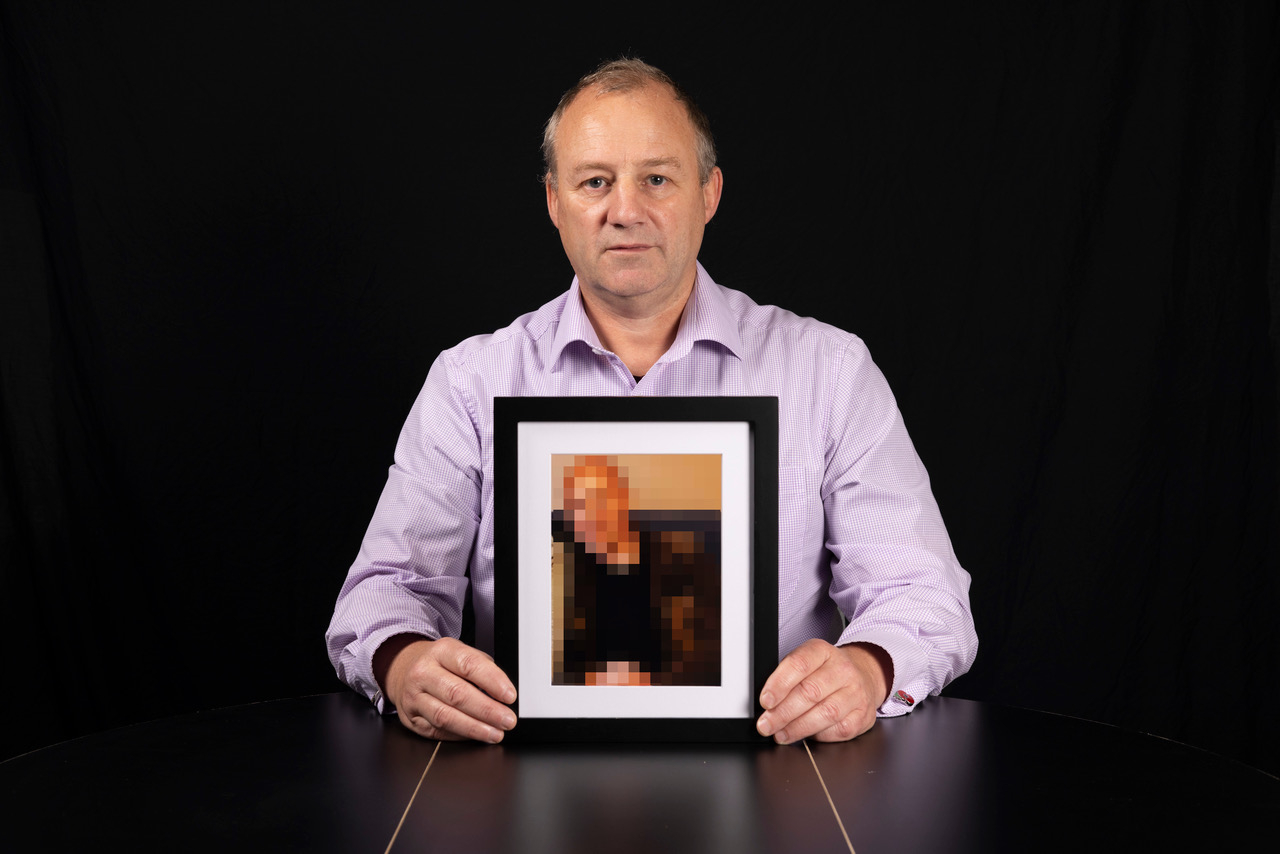
Roddy continued:
“My brother entered a guilty plea. This meant there was no trial for the victim, my brother or the court to endure. My brother’s mental health history was not considered by the crown court, and a mental health professional told the court that there were no significant mental health factors to be concerned with.
However, in fact my brother was an outpatient with mental health services and had been prescribed and was taking anti-psychotic medication that should not be prescribed to an alcoholic who was intoxicated at the time of wrongdoing and was also known to take cannabis products with a history of taking recreational opiates such as acid.”
It makes you question who this “mental health professional” was. Surely, they would have had access to medical records, and if so, why did they choose to ignore or disregard those clinical notes?
In the Crown Court, Rob was handed an Imprisonment for Public Protection (IPP) sentence with a tariff of 3 years reduced to two and a half years on appealing the sentence tariff.
As far as Roddy is aware, from the point of arrest and so far, Rob stopped consuming alcohol and other recreational drugs, and has remained sober and drug free.
HM Prison and Probation Service (HMPPS) staff did not provide Rob with his prescription medication at the strict time he was instructed to take it and eventually stopped the prescription medication completely.
Rob concluded that if you mix a cocktail of alcohol, recreational drugs and anti-psychotic medication coupled with the emotional effects of a dysfunctional relationship with his victim, all within the context of being unfaithful and/or with an interest in polyamorous intimacy, you have a recipe for him or anyone else to act un-characteristically dangerous at the time of committing these acts of wrongdoing. Rob has since refused to take any anti-psychotic medication that healthcare professionals might prescribe.
During his two-and-a-half-year tariff period, Rob was fully engaged with the HMPPS regime, completing the 12 Step Alcohol Dependency Treatment Programme and engaging in various other activities such as Alcoholics Anonymous, Education, Gymnasium, Changing Tunes music group, Chaplaincy, Koestler Awards and many other productive initiatives along with producing and playing a lead part in a Les Misérables musical theatre performance attended by the then Duchess of Cornwall, now Queen Camilla.
Rob also achieved the Enhanced Incentivised Earned Privileges (IEP) award, often seen as coercive and controlling measures used by HMPPS, and could therefore see no reason as to why he would not be released from prison.
Roddy expanded:
“At or near his tariff expiry and on the run up to his first Parole, HMPPS staff stated that he would need to complete a Healthy Relationship Programme (HRP). This was a Ministry of Justice (MOJ)/HMPPS Offender Behaviour Programme (OBP) that my brother did not qualify for as his Offender Violence Predictor scores (OVP) were too low.
Later this programme was discredited and shut down as it was found to be ineffective and arguably delivered the opposite of what it was supposed to achieve. My brother was shoehorned onto the HRP and found himself distressed and unable to cope with the course and some of the other attendees. Rob was removed from the HRP programme, and HMPPS staff blamed him for his distress.
My brother did not get his Parole direction for release.”
It was around this point that Rob realised an IPP sentence was a life sentence and concluded he was never going to be released. The effect turned out to be devastating; he withdrew into himself, stopped his personal care and stopped engaging with HMPPS, attempting suicide on at least two occasions and asking a prisoner to throttle him to death. On another occasion he placed a chair leg across his neck asking another prisoner to jump onto the chair leg. These were acts of desperation.
Roddy explained what happened next:
“HMPPS Safer Custody contacted me stating that they had become concerned for the welfare of my brother. I decided to visit.
This was to be my first ever visit to someone in a prison. Once in the visits hall, HMPPS staff informed me to make my way to the table and chairs of the person I had come to visit. I couldn’t see my brother, so I was instructed to go to a chair and table identified by an alpha numeric code. A person was sat on a chair at the table. It was my brother. I didn’t even recognise him, he was unkept, emaciated, grimy and grubby. He looked like the depictions of Jesus shown nailed to the cross. He wouldn’t give any eye contact, was on a frightened hyper vigilant alert looking around the visits hall and I couldn’t get him to engage in any coherent conversation or accept an offer of food and drink from the visits hall tuck shop. Staff called time on the visit, and I left and broke down in tears from seeing my brother in such a terribly neglected physical and mental state.”
Eventually, Rob was transferred from prison to a low secure mental health hospital, the same hospital he had been admitted to when he had sought help from his GP. But this time he required physical treatments before they could start any mental health treatments. He was transferred to a hospital to have an ingrowing toenail surgically removed; it had grown so far up into his foot that amputation of the foot was considered. He was also taken to a dental hospital to deal with some issues regarding the neglect of oral care.
Back at the low secure hospital, Rob was so emaciated that his body couldn’t process solid food, which meant that he had to be fed on gels. Recovery was slow, nevertheless he started to engage and receive visitors. He prepared and cooked meals, trained in the hospital gym, started playing guitar and engaged in other mental health therapies. The hospital staff, probation staff, a social worker, family and a friend all participated with getting Rob well.
A community reintegration package was developed, and Rob was informed that this could not be implemented until after he had been returned to prison and then transferred from prison back to the hospital. He was led to believe that he would go back to prison for six months and then be returned to hospital. But he was transferred back to prison and not returned to the hospital.
Rob phoned Roddy from prison in a distressed state.
At or just before the six-month period of having been returned to prison, HMPPS staff informed Rob that he was to be placed on an Offender Behaviour Programme (OBP) called Kaizen. He informed staff he did not qualify to do Kaizen as his Offender Violence Predictor scores (OVP) were too low and that he was to be returned to hospital for reintegration into the community.
Roddy picks up the story:
“This led to some form of altercation between my brother and several HMPPS staff. Up to this point, my brother’s incarceration had been in the closed category C training prisons. I and others visited my brother during this period, and my brother kept in contact with me and with his support network through telephone calls and ‘email a prisoner exchanges’.”
The altercation led to a regressive move into the category B prison estate where the Kaizen OBP was available. Rob refused to do Kaizen and this OBP has since been removed as it was found to be ineffective in much the same way as the HRP OBP.
Continuing to maintain that he did not qualify for any HMPPS OBP’s due to his OVP scores being so low, Rob refused to do any OBP that HMPPS suggested.
Adjudications followed with periods in segregation, Rob was downgraded to the basic IEP level and moved around different cells and wings. He was beaten on several occasions with one beating resulting in a hospital admission where 17 stitches were needed to Rob’s head.
HMPPS Forensic Psychology Services claimed that Rob had what they call an Offender Personality Disorder (OPD). The MoJ OPD diagnosis is highly questionable as the criteria is loose and ambiguous. Once on this pathway the label is hard to shift. It is not listed in either the Diagnostic Statistical Manual of Mental Health Disorders (DSM) or the International Classification of Diseases Manual (ICD).
In fact, it was devised by the MoJ, which recruited Forensic Psychologists and trained them through their own programme. In other words, the MoJ created an OPD diagnosis purely for the purpose of justifying the Offender Behaviour Programmes (OBP) and the OBP pathway. Furthermore, the Forensic Psychologists own professional body being the British Psychological Society (BPS) have been critical of this, stating on more than one occasion that Forensic Psychologists and the OPD diagnosis is causing IPP prisoners harm.
Huge questions arise when you realise that 96% of IPP prisoners receive this OPD diagnosis, a blanket and sham diagnosis, which has also been referred to as an abuse of power, especially when you also discover it was invented by politicians and officials and not through grounded clinical decision.
During this time, Roddy continued to visit his brother. They exchanged emails and Rob phoned both his brother and others who had been a support.
Then another transfer occurred. Rob was sent to a Long-Term and High Security Estate (LTHSE) Category B prison. He continued to disengage accepting that this type of prison is where he will spend the rest of his life.
More distress came when he was refused attendance at his mum’s funeral or seeing her in the funeral directors Chapel of Rest. At this point he was still engaged with other prisoners around him and accepted visits from Roddy but claimed he felt too unsafe to leave his cell which meant that on occasions he didn’t turn up for visits.
For Roddy, this was a 600-mile round road trip, and contact remained via email and phone.
After several years in the category B LTHSE, Rob was transferred to a private medium secure hospital. But this was seen as another regressive move.
Roddy explains:
“My brother is not best pleased and questions as to the reasons why, and demanding he is returned to prison. The hospital claim that they cannot diagnose my brother as he is not engaging and is refusing to take anti-psychotic medication. It is around this time that I discover the parole process is paused when a prisoner is transferred to hospital. The United Nations Working Group on Arbitrary Detention experts claim that suspending parole when a prisoner is in hospital is discriminatory. I and others visit my brother in hospital, telephone communication becomes difficult and email communication is not facilitated. After several months, my brother is transferred on another regressive move to the category A LTHSE.”
More anguish followed as Rob became distressed with this further regressive move; Rob believed he will be killed if incarcerated in a category A prison. Calls from HMPPS and the chaplain, and confirmation from a call from Rob, informed Roddy where his brother was held.
But this was the last phone call, there were no more emails or accepting visits either, Rob totally disengaged and housed within the Healthcare unit of the prison.
A call from the Chaplin informed Roddy that his brother, now on an induction wing was too frightened to leave his cell, even for slopping out. Due to no in cell sanitation a bucket is supplied for any waste. However, Rob accepted the chaplain’s offer to escort him.
An arrangement by Roddy for an in-person visit resulted yet again in a no show. The Chaplain explained that Rob had stopped engaging with anyone and was on the Healthcare wing and he suggested Roddy arrange another in-person visit and if Rob didn’t show again then arrangements could be made for Roddy to actually visit his cell.
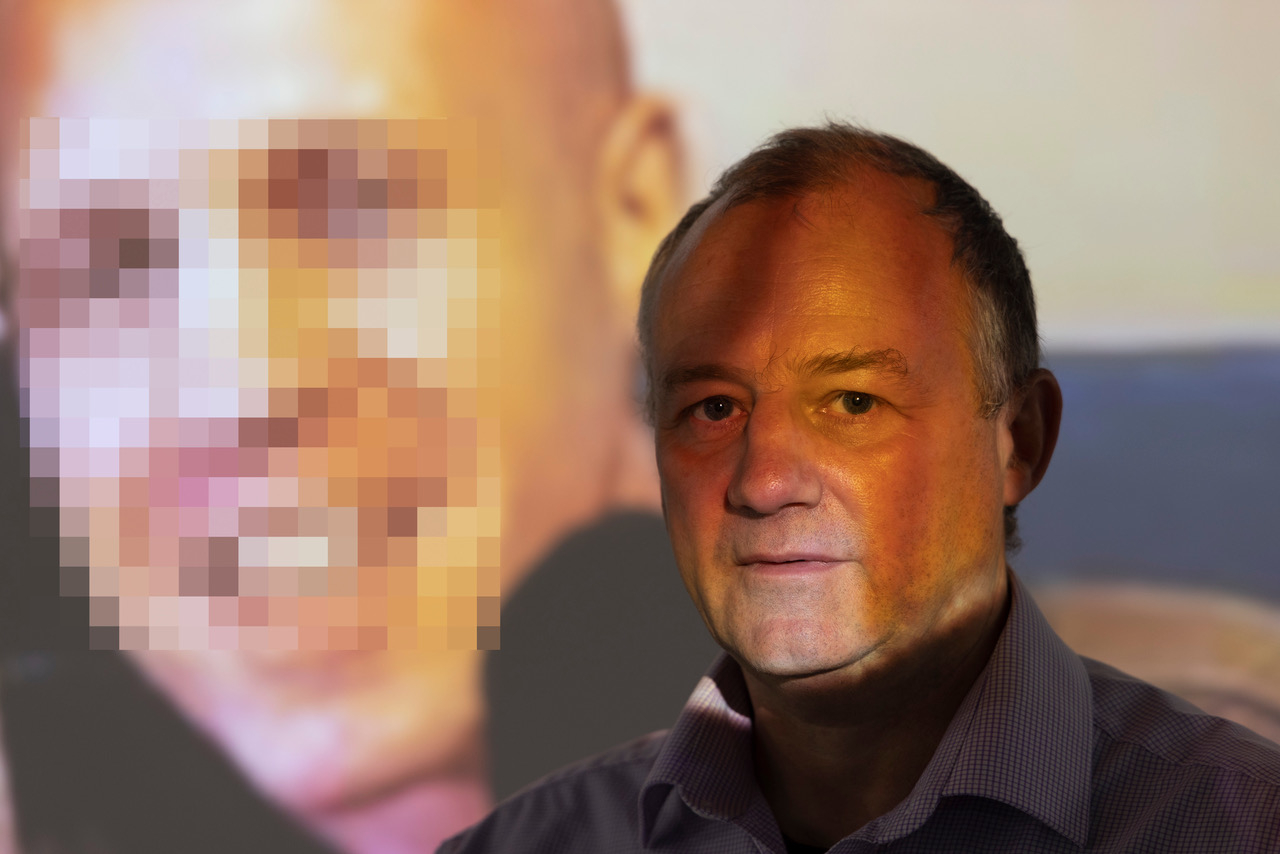
Roddy recollects:
“I’m met in the visit hall by my brothers HMPPS Assessment Care in Custody Treatment (ACCT) manager and taken to the prison healthcare unit, my stress and anxiety levels are through the roof. I’m ushered into a side room and put in front of a panel of HMPPS staff comprising the ACCT manager, a Forensic Psychologist, a Mental Health worker, a Safer Custody representative, the Prison Chaplain, and an Independent Monitoring Board (IMB) member. The ACCT manager proceeds to inform everyone what has been observed and what has happened with my brother. I cannot recall what other comments might have been made by the other panel members. However, I feel that I am there as a last-ditch effort to try and get my brother to engage. I recall informing the panel about the disgraceful way in which the MOJ and HMPPS treat my brother and other IPPs and that what we need are whistleblowers. I inform the panel that they will not whistle blow on the mistreatment of IPPs when their salaries depend upon it and I direct most of what I am saying to the forensic psychologist asking her not to take personally what I’m saying as I’m directing what I’m saying at the forensic and mental health professions.
I’m taken to the healthcare cell to see my brother. I’m almost overwhelmed with what I see. My brother is sat in the middle of a bed, feet on the floor staring at the floor dressed in filthy grey prison clothes. Strewn across the floor in front of my brother are what appears to be personal effects contained in opaque plastic bags. Standing in the open-door space is the HMPPS Safer Custody representative and just inside the doorway is the ACCT manager and in front of him is the prison chaplain. I can’t smell anything as I believe my senses are overwhelmed to the point that my sense of smell has shut down.
Before sitting on the bed next to my brother, I asked if it was okay for me to sit on the bed next to him. He did not respond so I informed him that I was going to sit on the bed next to him. I tried to get him to engage in conversation, I do not recall what I said. I did not get any response. I asked my brother if I could put my arm across his shoulders. He did not respond. I put my arm across his shoulders. I asked my brother if I could give him a hug. He did not respond. I hugged him and sat on the bed next to him with my arm across his shoulders and continued trying to get him to engage. He did not respond. I started to refer to The Bible. He responded by grizzling Stop, Stop, Stop. I stopped. I remained sat in silence with my brother, observing the awful environment that he was incarcerated within and had many intrusive thoughts running through my own mind. The chaplain broke the silence stating he was needed elsewhere and said goodbye. Rob remained sat staring at the floor. We sat a while longer in silence until two staff in the doorway stating it was time for me to leave, and I was ushered back to the side room with all the panel members other than the prison chaplain. I was too distressed to say much and felt that it best to say very little other than to thank the staff for facilitating the visit. The ACCT manager escorted me back through the prison to the visit hall and I left with a lot of mixed emotions.”
Roddy later found out that he had been used by HMPPS to close the ACCT so that his brother could be discharged from prison healthcare and transferred onto a regular prison wing. This was very troubling for Roddy who then sought privately funded counselling for himself to help deal with the trauma caused by this dreadful situation.
Yet again another no show at a visit, no phone calls and no response to emails led Roddy to believe Rob was still disengaged. Roddy was informed by a member of staff that Rob didn’t want to see him. When pressed for more information that same member of staff said he had never met Rob, but would go to his cell and ask him if he would attend the visit. News came back that Rob just grunted when asked about the visit, this was interpreted as a No.
Roddy asked if his brother was self-isolating. Wing staff didn’t think so as his cell was neat and tidy and he collected his meals without engaging with anyone. Yet staff hadn’t specifically looked at the board or asked the wing staff if he was self-isolating. This was a contrast to the chaotic state of Rob’s cell previously when Roddy was escorted to it by members of staff.
Roddy’s brother Rob is now fourteen and a half years beyond tariff and he in his eighteenth year of continuous incarceration for making threats whilst in a state of personal distress. Roddy gets no response from his brother from emails and information he sends regarding IPP prisoners.
This month Roddy has learnt that Rob has been moved yet again to a hospital. There has been no communication with the family as to this move or reasons why. Meanwhile, Roddy’s name as next of kin has been removed, it is unclear if this is just temporary as how would else would Roddy learn of his brother’s condition or even visit him?
I have found this to be a remarkable story. As it sinks in, we must all be mindful that there are hundreds more stories where families and friends serve the sentence alongside their loved ones. Roddy will never give up on his brother Rob or other IPP prisoners and their families.
Prevention of Future Deaths
This tale of two brothers culminates in a call to real action. IPP prisoners have died in custody, that is they have died by suicide, signalling that in their cases the sheer mental attrition proved too much for them to bear any longer.
Roddy does not want this for his brother. Why wait for someone else to die, surely something must be done now. The system is not only setting people up to fail, but in reality, is the system as it stands setting people up to die?
According to Gov.uk, Coroners have dealt with approximately 30,000 inquests so far this year, of which 377 resulted in them issuing a Regulation 28: Report to Prevent Future Deaths. This is within the coroners’ legal powers, and which are publicly available online. Coroners may issue their report to anyone the coroner believes must define the steps they will take to prevent future deaths, and who are given 56 days to reply.
Among them are four inquests concerning IPP prisoners which came to my attention whilst writing this piece, two from 2026. What I found was astoundingly chilling. In the small sample where a Regulation 28 Report on Prevent Future Deaths (PFD) was issued by the coroner, the coroner took care to define the harm that IPP causes.
In the investigation and inquest of Ronald Meikle aged 47 who died on 30 April 2024 in custody at HMP Woodhill, the PFD issued by Sean Cummings, Assistant Coroner for the coroner of area of Milton Keynes, under Concern 7, Mr. Cummings wrote:
“I am concerned that Mr Meikle’s IPP status was not sufficiently recognised as a material risk factor requiring structured support, regular review and coordinated care.”
The reply from NHS Central and North West London NHS Foundation Trust (CNWL) dated 18 May 2026 was on time, 3 pages long, structured and considered. It was clinically grounded across all 12 concerns raised by the coroner. In their reply to Concern 7: Vulnerability of IPP prisoners, they wrote:
“We are explicitly considering IPP status within clinical risk assessment and referral processes. Because this is an explicit vulnerability, we can structure our clinical support packages and ensure regular reviews by the MDT.”
In sharp contrast to that reply, the reply from HM Inspectorate of Prisons dated 4 June 2026 was late, curt, unstructured and nonchalant. It read like a copy and paste from a playbook. It made no direct reference to the 12 concerns raised by the coroner, but instead generalised and mashed together everything in the context of an Urgent Notification process invoked by the Chief Inspector of Prisons. Tellingly, and this is a key point, the reply from HM Inspectorate of Prisons made zero reference to the fact that Mr Meikle was an IPP prisoner, nor answered the coroner’s concern 7 on the specific harm of IPP.
Regulation 28 Reports to Prevent Future Deaths are an existing instrument to obtain detailed answers and, as the title suggests, to ascertain clear actions to prevent future deaths.
So again, I ask, why wait for someone else to die? Something else must be done, and done now.
Glimmers of hope
When Andy Burnham became Prime Minister there was an acknowledgement from Mr. Burnham that IPP is unjust, and he declared that he would end IPP before the next Parliament. This has been welcomed. However, this is not the first announcement providing a glimmer of hope. Many such glimmers have come and gone without any tangible or meaningful change. Therefore, I will leave the last words to Roddy:
“I’m hoping he [Andy Burnham] remains true to his words and takes expedient action to end IPP which has been ruled by United Nations experts as torturous, cruel, inhuman, degrading conditions and that the incarceration of IPPs is arbitrary and therefore unlawful. I believe that Rob and most IPPs like Rob need trauma treatments without MOJ, HMPPS and parole interference. Hospital and Community Treatment Orders are in my view the way forwards. It’s been done for at least one IPP who is now a former IPP and IPP survivor.”
~
Photo credit: Copyright © Andy Aitchison Photographer. All rights reserved. Used with kind permission. To view his images, please visit the website www.andyaitchison.uk
First published by The Criminal Justice Blog 15 Nov 2026.
Article: Copyright © Faith Spear FRSA. All rights reserved.
Contributions: Copyright © Roddy Russell. All rights reserved.
~
References cited in this article
https://commonslibrary.parliament.uk/research-briefings/sn06086
https://assets.publishing.service.gov.uk/media/5a7ce48eed915d7c849ade01/glossary-programmes.pdf
https://www.psychiatry.org/psychiatrists/practice/dsm
https://www.who.int/standards/classifications/classification-of-diseases
https://www.psychiatry.org/psychiatrists/practice/dsm
https://www.judiciary.uk/courts-and-tribunals/coroners-courts/reports-to-prevent-future-deaths
https://www.legislation.gov.uk/uksi/2013/1629/part/7/made
https://preventabledeathstracker.net/
https://insidetime.org/newsround/andy-burnham-pledges-to-scrap-ipp-but-cancels-more-early-releases/
https://news.un.org/en/story/2023/08/1140237
~
References consulted and suggested further reading
https://www.gov.uk/guidance/offending-behaviour-programmes-and-interventions
https://www.gov.uk/guidance/hmpps-accredited-programmes
https://prisonreformtrust.org.uk/adviceguide/offender-management-and-sentence-planning/
https://www.gov.uk/guidance/offending-behaviour-programmes-and-interventions
https://www.gov.uk/algorithmic-transparency-records/hmpps-violence-in-prisons-estimator
https://www.judiciary.uk/guidance-and-resources/chapter-16-reports-to-prevent-future-deaths-pfds/
https://preventabledeathstracker.net/
https://www.bps.org.uk/forensic-psychologist-job-profile
https://doi.org/10.1348/135532503762871273
https://doi.org/10.1348/135532503762871255
https://www.bps.org.uk/research-digest/research-mental-health-prisoners-digested
https://www.psychologytoday.com/gb/basics/dsm
https://www.psychologytoday.com/gb/basics/international-classification-of-diseases-icd
~

