Home » LGBT
Category Archives: LGBT

2020 need I say more…
A retrospective of 2020
The author Peter Mayle once wrote “The year began with lunch…” which pretty much mirrored mine, although for me it started on Aldeburgh beach in the freezing cold, eating chips, and surrounded by family celebrating my birthday.
Cambridge is a favourite place of mine, having spent hours in libraries, museums and taking in the splendour of the architecture. So in February when I was invited to a seminar in the Institute of Criminology (IoC), I immediately responded. I have entered that building many times, studied in their library, attended seminars and even had tea in Professor Bottom’s office.
The subject was ‘Can Prisons Rehabilitate?’, delivered by Yvonne Jewkes. Rehabilitation is a subject I have thought long and hard about. Whilst awaiting the start, I received a very warm welcome from Rebecca L. Greene, Artist in Residence at IoC. It was good to catch up with those I hadn’t seen for a while, chat to Ben Crewe and have some interesting conversations with students who were keen to engage with me.
Months later Rebecca kindly invited me to take part in the digital exhibition Drawing Connections at the edges, Arts in Prison at the Museum of Cambridge following on from the Festival Of Ideas: Arts in Prisons, what changes can they bring? in 2019. The title to consider was “How did lockdown make you feel?” drawing on experiences of lockdown relating to the perception of my work with people within the Criminal Justice System. For my contribution I decided to write a poem:
Dare I compare my lockdown to theirs?
Can I not reach out to those in prison to manage my isolation and to draw on their resources to get through this challenging time?
Perhaps this has been a way to understand their hopes, fears and feelings too, leading to a breakdown of mental and spiritual barriers between us.
No longer is it just about reaching out to those in prison, instead it is an opportunity for us to be reached out to, from those within the prison walls.
Their voices illuminating
Their voices resonating
Their voices compelling
Are we not all part of society?
Has lockdown reinforced this?
Can freedom come from within and can freedom come from without?

I invited Rebecca to say a few words for inclusion in this retrospective and this is what she wrote:
“I was honoured to be asked by Faith Spear to write a short piece on how we met for her blog: as the year which has proved challenging and complex for everyone in myriad ways draws to a close, it seems hard to believe it was only in February of 2020. We met, when I welcomed her to a Public Seminar presented by Professor Yvonne Jewkes’ Can Prisons Rehabilitate?, hosted by the Institute of Criminology, my place of work. Faith’s ability to speak clearly and concisely has meant her work is something I have taken an interest in since my first engagement with the CJS through Learning Together in 2016. The material Faith shares on Justice and Social matters is done so, I feel, with fairness and truth and since our meeting this has been further enhanced through a shared love of the Arts and their restorative qualities.” (Rebecca L. Greene)
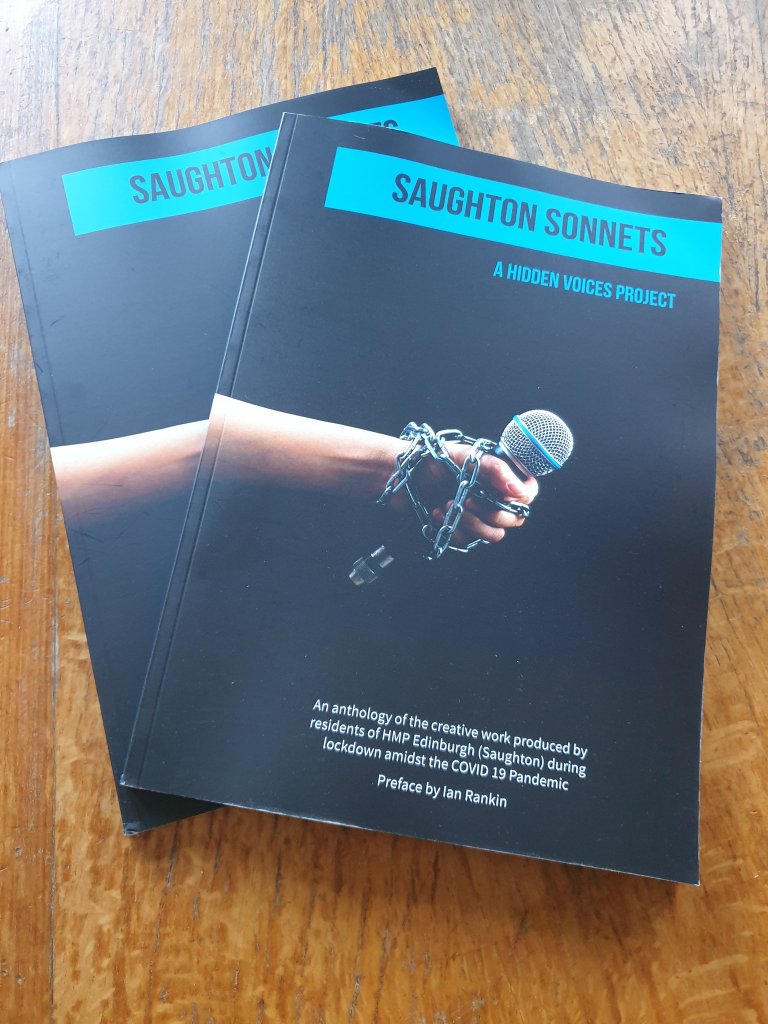
Poetry played a major role in my activities this last year. After being approached by Gerry Hamill, @FirstTimeInside, I became a panel member and part of a community for a Hidden Voices project with HMP Edinburgh. This was a poetry competition open to men and women entitled ‘Saughton Sonnets‘. The prisoners were asked to express their feelings on lockdown and Covid-19 and how they have been affected by this crisis. For 5 weeks a new batch of poems were sent to us to judge, score and comment on. Each weeks winners were then scored to find an overall winner. It was brilliant to work alongside other community members and to discover the amazing potential in those that are so often overlooked. The finale was to see these sonnets in print and to hear how those that had taken part had been encouraged to continue to write.
Writing is steadily becoming a passion for me, and I have been fortunate enough to have two book reviews printed in the InsideTime newspaper:
In June 2020 edition: ‘Can I have a word Boss’ written by Phil O’Brian after 40 years within Her Majesty’s Prison Service. His passion and drive come across in every chapter. Sadly, this kind of experience is now fading as his calibre is being replaced by those with little experience in the world, let alone within the justice arena. Is this a good thing? Only time will tell.
In November 2020 edition: ‘The Grass Arena‘ written by John Healy is a book centred round a world I thankfully have never ventured into – either by choice or circumstance. Drink, drugs, vagrancy, death, prostitution and money – the somewhat graphic portrayal of a life I can only describe as ‘brutal’. This book was recommended to me by Charlie Ryder after having read a blog I wrote the previous year “A Conversation with: Erwin James“.
Erwin kindly sent that review to John Healy and days later I received a supportive and positive response from John inviting me to keep in touch.
Sadly many conversations have not been face to face, with numerous events cancelled, meetings postponed and travelling almost non existent. Instead we have all embraced/tolerated/accepted, zoom, video calls and the old fashioned just picking up the phone to communicate. For example, I had a zoom call with Chris Daw QC, quizzing him on his new book ‘Justice on Trial‘ and trying to find the answers to so many questions I had.
During the year, I have written about two conversations with amazing individuals and their enthralling journeys in life.
The first was “A Conversation with: Phil Forder“, we chatted for hours, a remarkable man. When I asked “Who is Phil Forder?” the response was brilliant:
“My job title is community engagement manager at HMP Parc but as you so rightly said previously. ‘There is more to an individual than their job.’ I’m also a painter writer and woodcarver. LGBT rights supporter. Environmentalist Nature lover. Lecturer, etc.

But in a nutshell
“Just a bloke doing what I think is right and enjoy doing”
I asked Phil if he would like to say a few words for inclusion in this retrospective. This is Phil’s contribution:
“Over the years I had read so much about conditions in prisons on social media, most of it not good, that as a person who works in one I decided to launch my own account in 2017. Although a lot of what was being written about was true, I also knew there was another side to it where positive initiatives and positive people were striving to make a difference under increasingly difficult circumstances. So I put my head above the parapet, using my own name, and began to try and show another side to prison life, of which examples were daily. Twitter can be a pretty ugly place as I soon found out. There were times aplenty I was disheartened and tempted to stop as I began to receive flack from all directions but then I noticed it wasn’t all bad as a lady called Faith was following me and what’s more she had started retweeting my work and making constructive comments too. Although not alone in doing so, as there were others, that constant support was, and still is, invaluable in putting out the work that I do. As anyone who follows Faith will know, she is pretty fearless in her pursuit of Truth and not someone to take lightly. But what is so refreshing, especially on social media, is to hear a voice that is not only honest and always well-thought out but one that is objective and well-balanced too. Through her insights, Faith has proved herself, again and again, a valuable member of the prison community that we are lucky to have in such a complex prison system. And as for me personally, she continues to be a constant source of inspiration and support”
My second “A Conversation with Dr Sarah Lewis, Director of Penal Reform Solutions” was equally inspiring. I felt that her overall message was one of HOPE:
Sarah said: I believe in people
I don’t quite believe in the system yet.
I have hope in individuals.
I believe in them.
We need to be actively hopeful in people. Let them know “I believe in you”
I have hope in people.
We talked about rehabilitation, complexities within the prison estate, radical reforms and so much more. But the question to her that I received the most feedback on was: “Do we need more research on prisons, are there gaps or do we need to push for changes based on existing knowledge?”
Sarah’s reply:
“Yes to both. We know enough to know what works. The difficulty is how we apply that knowledge. Academia needs to move out of its ivory tower and on to the shop floor. There’s plenty of research, you need to create a growth environment (climate) and capture this impact with understanding. Research takes so long, from ethics approval to peer review to publication. More creativity is needed with research, capture stories, motivate staff.
Academic research needs creativity, inclusion, and we must learn from our mistakes”
As I have mentioned before, we all know the saying ‘action speaks louder than words’ yet often you have to speak before any action can take place. So this year I was pleased to work together with a number of charities in the justice sector to write a consultation submission to the Ministry of Justice. In addition, I have offered advice and encouragement, assisted in media articles, proof read books, edited web sites and also shared a bit more of my story for Female Leaders At 50 – Women Behind the Network Series.
But the cherry on the cake for me was to be invited to write the forward for a book. Phil Martin published in November ‘The People in Prison and their Potential: Insights into imprisonment and true stories of rehabilitation’. As I have discovered for myself, the potential in prisons is vast and this book highlights what can be achieved. We appeared to be on the same wavelength here. Those with convictions do have potential, deserve to be given opportunities and can be valuable members of society. Many are willing to change but are we willing to accept them?
This is just a snippet of what became a challenging year both personally and professionally. Yet I enter this new year 2021 with anticipation, a renewal of energy and a continued determination in speaking truth to power. I will not be on mute.
In the context of a blog like this, it’s possible to only mention a fraction of the workload, time and miles covered. For obvious reasons you will appreciate I’m unable to share the full extent of everyone I have met or all that has been done.
~

A conversation with: Phil Forder
I was delighted when Phil Forder agreed for me to interview him. There is always a lot more to a person than their job so I wanted to learn more about him. When I asked why he agreed, he responded:
“Because you are a speaker of truth”
So, who is Phil Forder?
“My job title is community engagement manager at HMP Parc but as you so rightly said previously. ‘There is more to an individual than their job.’ I’m also a painter writer and woodcarver. LGBT rights supporter. Environmentalist Nature lover. Lecturer, etc. “
But in a nutshell
“Just a bloke doing what I think is right and enjoy doing”
One thing we have in common is our association with Suffolk, I believe you were born there?
“I moved from Suffolk at 3 weeks old. Mum and Dads parents were from Suffolk, we then moved to Somerset and to Harlow in Essex where I grew up. I am one of six children.
Just before lockdown, I found the time to go through my mum’s memories she had written down before she passed away.
Mum grew up as a child in Beccles, Suffolk. Working class, brought up in the country before 2nd World War.
Grandfather prisoner of war in Germany, but never spoke about it.
Dad was a strict Catholic and worked at Downside Abbey, in Somerset and whilst there trained in teaching.”
“We moved to Harlow on the outskirts of London, in limbo between two worlds and was voted as the 2nd most boring place in British Isles.”
But Living in Essex Phil felt excluded because of his sexuality and tried to avoid facing up to it.
Whilst searching for his own identity and a way of fitting in somewhere and searching for a way out of Harlow, he decided to train to be a priest, but 3 months later he realised that was not the direction for him.
Before college Phil hitched to Afghanistan then blagged his way into Art college without an interview even though he had failed most of his exams. During his time, he managed to get a sabbatical and hitchhiked a second time to Kashmir.
Was he running away again?
But the problem is you can’t run away from self.
Back to Art college to finish his course and was voted Student of the Year.
He decided to live in isolation in a caravan and worked in a wholefood shop and then was promoted to managing it. But still there was a struggle within as to who he really was and what he should do in life.
There were many changes in the pursuing years including being a father, wanting a different kind of education for his child led to home-schooling and eventually attendance at an alternative Steiner School. This somewhat alternative way of educating was based on the idea that a child’s moral, spiritual and creative sides need as much attention as their intellect.
Helping out in Kindergarten as an assistant influenced Phil to train as a Steiner teacher in alternative education.
“But after 8 years, I wanted to do something completely different”
“A friend who was a magistrate phoned me up and said there was a job going as an Art teacher at HMP/YOI Parc, talk about a baptism of fire”

Phil Forder
Such a contrast from working in a nurturing environment where parents cared for their children, were financially secure and where children grew up in a healthy environment.
He was then faced with dysfunctional families reminding him of his upbringing in Harlow that he had fought so hard to leave behind.
“Many of the lads in the YOI had known poverty, had mental health problems, history of abuse, came from dysfunctional families, history of crime in their family, history of substance misuse in their family and had poor education”
“Look what they were born into, their formative years. These young men then become society’s problem by falling through every net and ending up in prison”
Phil’s job changed when he became Equalities Manager and as he aptly said to me:
“To make an impression on a person you have to work with them and not against them.”
He developed a course to help the inmates engage and address their behaviour as most courses focus on what is wrong with them. But some are so ashamed of what they have done they cannot talk about it or even admit it. Phil wanted them to focus on what was good about themselves, what they had achieved, and only then when in a position of strength and comfortable can you tackle some of the issues.
“I brought a three day course into prison “The Forgiveness Project” founded by Marina Cantacuzino. It’s an amazing course, it’s important to put yourself with the prisoners and teach by example”
In addition:
“I joined the Sports Council for an equalities point of view and invited a gay football club (Cardiff Dragons) and a gay rugby team (Swansea Vikings) to play against the prisoners. I wanted to break down stereotypes”
Who has inspired you?
“One of the most influential person has been Barbara Saunders Davis, her life very much influenced by Rudolf Steiner, came from an aristocratic family having studied in Paris and lived on her estate in Pembrokeshire. She taught me self-worth, life, Rudolph Steiner and anthroposophy (a philosophy based on the teachings of Rudolf Steiner (1861–1925) which maintains that, by virtue of a prescribed method of self-discipline, cognitional experience of the spiritual world can be achieved) I was honoured at her funeral to read the eulogy”
In your Twitter bio you have an impressive list apart from your work. Can you expand on some of these?
Author
“In 2015, I wrote a book “Inside and Out”, a compilation of writings from LGBT people within HMP/YOI Parc, both prisoners and staff alike”
https://menrus.co.uk/wp-content/uploads/2015/10/Inside-and-out-2015.pdf
This book was featured in the Guardian in an interview by Erwin James.
His boss at HMP Parc, director Janet Wallsgrove, expressed pride in what Phil and his colleagues achieved.
“This book is a statement,” she says.
“It’s saying that we at Parc recognise and support everyone’s right to be respected as an individual. It’s both about tackling homophobia and challenging people who express views that are unacceptable and about getting people to feel comfortable with themselves and more motivated to buy into a rehabilitative culture in prison and in society.”
Another book Phil wrote was:
Coming out: LGBT people lift the lid on life in prison: https://www.theguardian.com/society/2015/aug/12/lgbt-people-prison-struggle-book
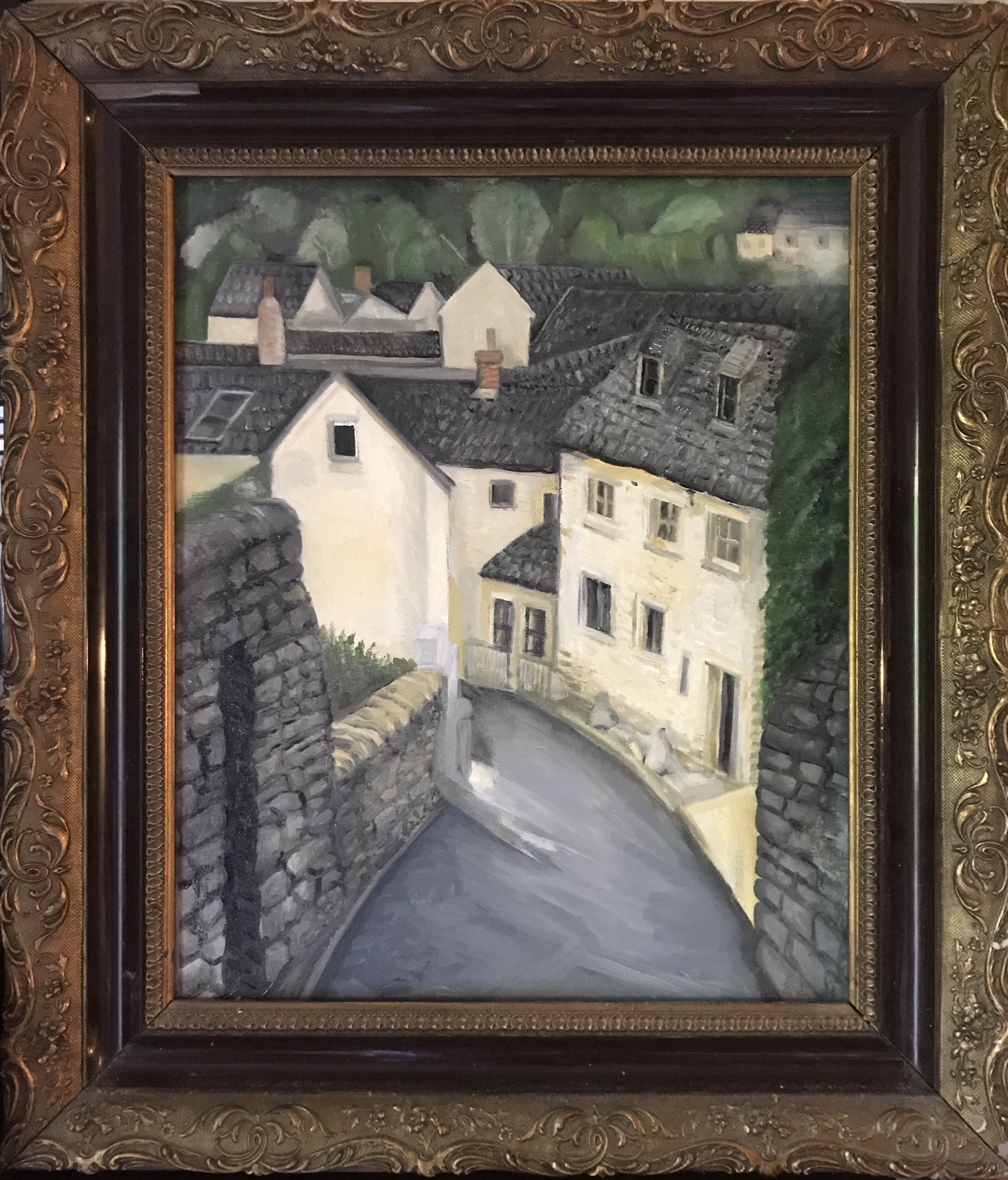
Painter
“When I first started working in the prison, I realised there was no art available on the Vulnerable Prisoners Unit. As there was no classroom available, I taught art on the wing, with up to 30 men although resources were scarce”
Lecturer
“Over the years I have been asked to lecture on various aspects of prison life mainly to do with LGBT in prisons”
Trustee
“I am a trustee of two charities, the first FIO a theatre company that tells stories that are or would otherwise go untold or unheard
and the second is the Ruskin Mill Education Trust for young people with learning difficulties.”
The last words go to Marina Cantacuzino:
“In the 10 years I was closely involved with several prisons in England and Wales I met three exceptional staff members who worked far and beyond what was expected of them, and were responsible for supporting charities like The Forgiveness Project to deliver their programmes to help change prisoners’ lives. The other two people burnt out – and left the prison service but Phil is still there! He seems to have reinvented himself a couple of times but his complete dedication to supporting prisoners is I think unprecedented. I don’t know what it is about him – is it his sense of humour, his deep creative/artistic streak, his compassion, his humanity, all of this! – that allows him to continue and keep doing outstanding work in this field. I now follow his progress on Twitter but for a long time he was our mainstay in Parc prison – the person who brought in the RESTORE programme and ensured it continued even when he was no longer in charge of this area. A wonderful human being!”
Thank you, Phil.
~
Photo credit: contributed by Phil Forder
 The Criminal Justice Blog