Home » Justice Committee (Page 2)
Category Archives: Justice Committee

As IPP film hits 13 million views new figures scupper Government argument against resentencing.
IPP sentences were introduced in England and Wales by the New Labour government with the Criminal Justice Act 2003, as it sought to prove it was tough on law and order. They were put in place to detain indefinitely serious offenders who were perceived to be a risk to the public. However, they were also used against offenders who had committed low-level crimes.
Astonishingly, this sentence has led to some people spending 18 years in jail for trying to steal a coat or imprisoned for 11 years for stealing a mobile phone.
In 2012, after widespread condemnation and a ruling by the European court of human rights that such sentences were,
“arbitrary and therefore unlawful”,
IPP terms were abolished by the Conservative government. But the measure was not retrospective, and thousands remain in prison. Sadly, many have taken their own lives.
The former supreme court justice Lord Brown has called IPP sentences:
“the greatest single stain on the justice system”.
When Rt Hon Michael Gove MP was justice secretary, he recommended,
“executive clemency”
for IPP prisoners who had served terms much longer than their tariffs. But he didn’t act on it. Lord Blunkett, the Labour home secretary who introduced the sentences, regrets them, stating:
“I got it wrong.”
And more recently, Dr Alice Edwards, the UN rapporteur for torture has called IPP sentences an
“egregious miscarriage of justice.”
Even the Justice Secretary Rt Hon Alex Chalk KC MP has also called them a stain on the justice system but the Government has so far refused to implement the Justice Committees recommendation to re-sentence all prisoners subject to IPP sentences.
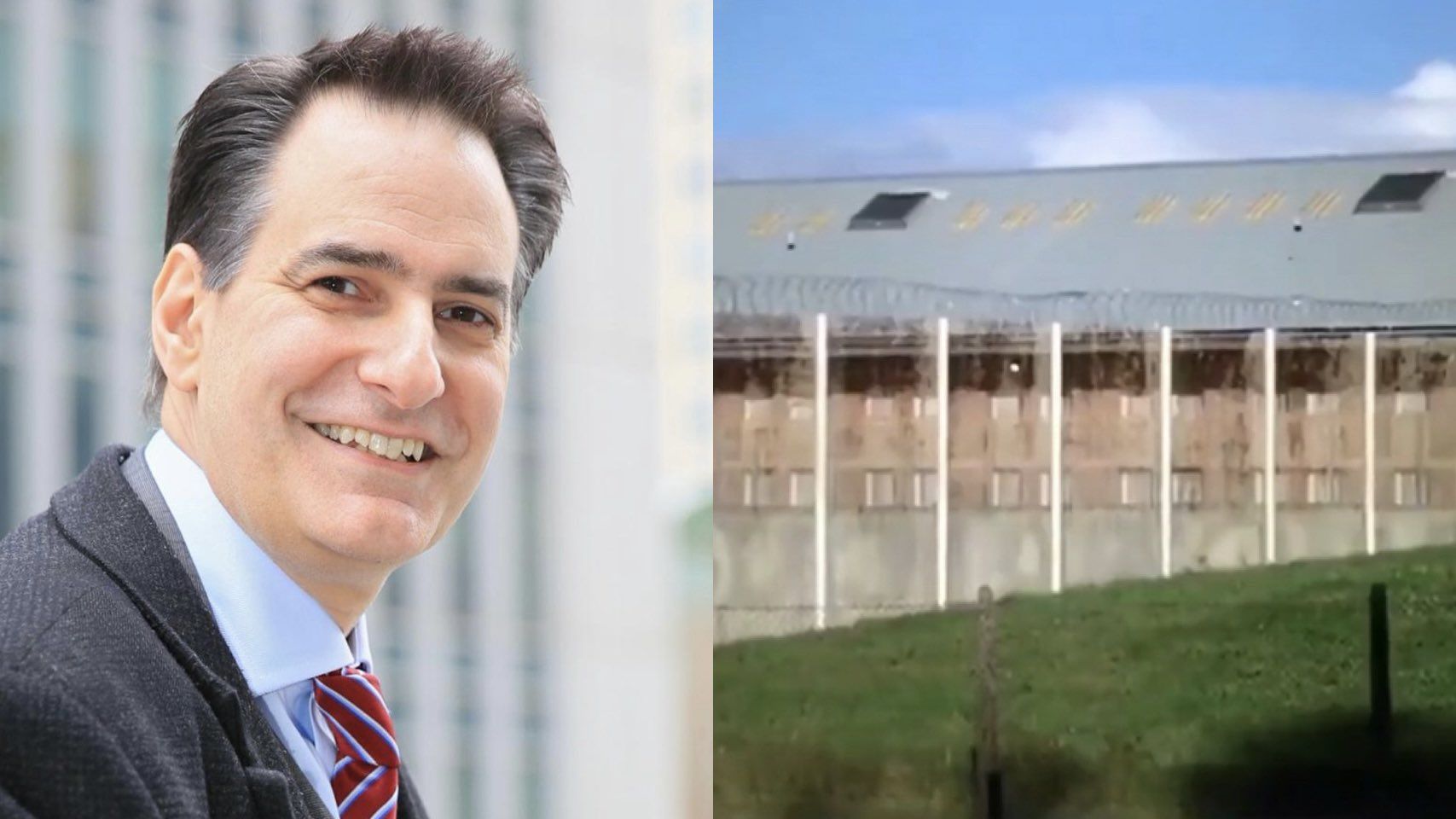
Campaign groups & their families have been fighting to end this tragic miscarriage of justice for more than a decade and now a film posted online by media sensation and CEO of Campaign for Social Justice Peter Stefanovic has ignited a storm by bringing the issue to wider public attention. It has already had over 13 million views online and the public’s reaction to it has been one of shock, outrage, and disbelief.
Despite calls from parliament’s own Justice Select Committee – which said the sentence was “irredeemably flawed” and had caused “acute harm” to those serving them – the government has resisted calls to resentence remaining IPP prisoners, citing concerns for public safety.
But new figures obtained by SKY News through a Freedom of Information (FOI) appear to scupper the Government’s argument against resentencing. The request shows only 83 IPP prisoners who have been released since 2012 have been convicted of a serious further offence (SFO) upon or after their release, including those who may have been released, recalled back to custody and rereleased.
The figure represents just 1.7% of the 4,776 IPP prisoners who have been released since the sentence was abolished, although the Ministry of Justice (MoJ) has said this does not account for those who have been recalled back into custody. The new figures appear to make a mockery of the government’s argument against implementing the primary recommendation of parliament’s own Justice Select Committee for re-sentencing those serving IPP sentences.
The Labour Party is still to clarify its position on this issue.
However, in a letter written by Kevin Brennan MP- now Shadow Minister for Victims and Sentencing and sent to the then Secretary of State for Justice, The Rt Hon Dominic Raab MP in March 2023 he outlines a meeting with Bernadette Emerson, a constituent of his, concerning her husband in prison under an IPP sentence. In the third paragraph, Kevin Brennan MP stated,
“It was the correct thing to do when the government abolished these sentences in 2012”, but as you will be aware there is a terrible legacy issue of injustice for those who are effectively serving a life sentence despite having been convicted of a crime that carried a fairly low tariff”.
Mr Brennan MP continued his letter:
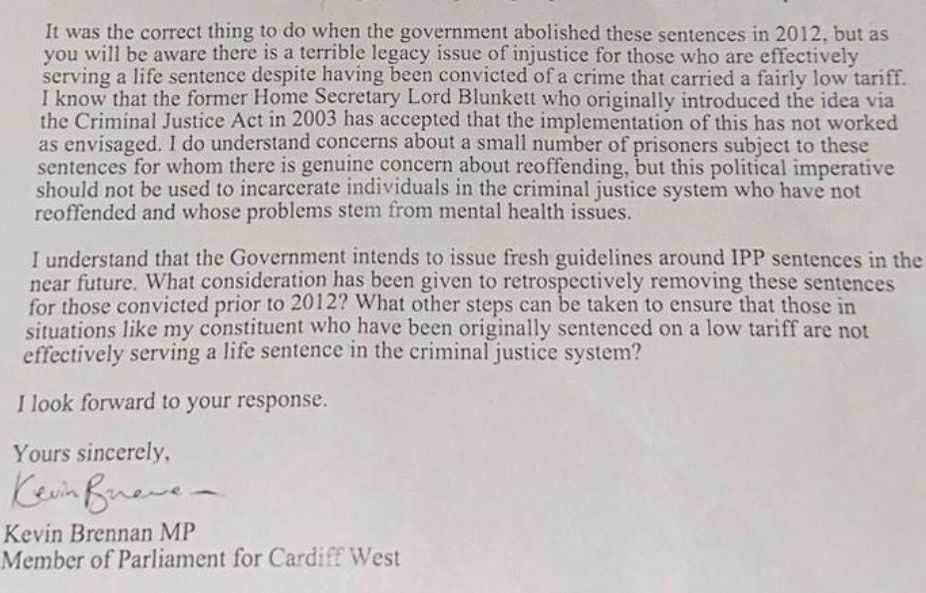
“I know that the former Home Secretary Lord Blunkett who originally introduced the idea via the Criminal Justice Act in 2003 has accepted that the implementation of this has not worked as envisaged. I do understand concerns about a small number of prisoners subject to these sentences for whom there is genuine concern about reoffending, but this political imperative should not be used to incarcerate individuals in the criminal Justice system who have not reoffended and whose problems stem from mental health issues.”
Mr Brennan MP goes on to ask the question,
“What consideration has been given to retrospectively removing these sentences for those convicted prior to 2012?”
What Mr Brennan MP says is both welcome and not surprising given this tragic miscarriage of justice has sadly already taken many lives.
But the position of the Labour Party on this egregious miscarriage of justice is now in question.
On 6th December, during the second reading in the House of Commons of the Victims and Sentencing Bill, Chair of the Justice Committee, Conservative MP Sir Bob Neill, proposed “new clause 1” which would add a resentencing exercise to the Bill in line with the Justice Committees long standing recommendation. Sir Neill’s proposed amendment would help to end this accepted miscarriage of justice.
However, Kevin Brennan MP, surprisingly, given his letter just a few months earlier, opposed the idea, saying:
“Unfortunately, given the impact of the Government’s effective destruction of the criminal justice system, we lack the infrastructure and resources to keep the public safe, should his new clause be implemented immediately. Our priority is, and always must be, the safety of the British public. We are concerned that if new clause 1 were enacted without provisioning for significant improvements in probation and parole, we would potentially significantly increase the risk to the public and to the prisoners themselves.”
However, the new data now obtained by SKY News will add pressure on Labour to get behind the Justice Committee recommendation for resentencing.
HOPE FOR JUSTICE
Hope for justice at last now comes in the form of 2 amendments tabled in the House of Lords to the Victims & Prisoners Bill (161 & 167) by Lord Moylan which are backed by the Lib Dems and Green Party peers, and which have wide cross bench support.
Amendment 167 seeks to implement the Justice Committees recommendation to re-sentence all prisoners subject to IPP sentences.
Amendment 161 would require the state to demonstrate that a prisoner is still a risk to the public rather than, as at present, requiring the prisoner to prove the opposite.
Under the proposed amendment, they would be released unless the Parole Board “is satisfied that it remains necessary and proportionate for the protection of the public from serious harm that they should continue to be confined”.
Amendment is 161 is supported by Lord Blunkett, Baroness Chakrabarti & the former deputy president of the Supreme Court Lord Hope of Craighead. It’s also supported by the Bar Council, representing 17,000 barristers in England and Wales.
This is finally a real opportunity to put right an egregious miscarriage of justice. But for the amendments, backed by both Lib Dem & Green Party peers (as well as many cross benchers) to succeed, Labour front bench support will be needed. Hopefully the new data obtained by SKY News will embolden Labour to do the right thing.
The question now is whether Keir Starmers Labour party will step up for justice or will we have to wait for ITV to produce another compelling drama series like Mr Bates vs The Post Office?

Is the IPP Prisoner scandal the next Mr. Bates vs the Post office?
IPP sentences were introduced in England and Wales by the New Labour government with the Criminal Justice Act 2003, as it sought to prove it was tough on law and order. They were put in place to detain indefinitely serious offenders who were perceived to be a risk to the public. However, they were also used against offenders who had committed low-level crimes.
Astonishingly, the sentence has led to some people spending 18 years in jail for trying to steal a coat or imprisoned for 11 years for stealing a mobile phone.
In 2012, after widespread condemnation and a ruling by the European court of human rights that such sentences were “arbitrary and therefore unlawful”, IPP terms were abolished by the Conservative government. But the measure was not retrospective, and thousands remain in prison. Sadly, many have taken their own lives.
The former supreme court justice Lord Brown has called IPP sentences “the greatest single stain on the justice system”. When Rt Hon Michael Gove MP was justice secretary, he recommended “executive clemency” for IPP prisoners who had served terms much longer than their tariffs. But he didn’t act on it. Lord Blunkett, the Labour home secretary who introduced the sentences, regrets them, stating: “I got it wrong.”
And more recently, Dr Alice Edwards, the UN rapporteur for torture has called IPP sentences an “egregious miscarriage of justice.”
Even the Justice Secretary Rt Hon Alex Chalk KC MP has also called them a stain on the justice system but the Government has so far refused to implement the Justice Committees recommendation to re-sentence all prisoners subject to IPP sentences.
CAMPAIGN FOR SOCIAL JUSTICE
Campaign groups & their families have been fighting to end this tragic miscarriage of justice for more than a decade and now a film posted online by campaigning lawyer and CEO of CAMPAIGN FOR SOCIAL JUSTICE Peter Stefanovic has ignited a storm by bringing the issue to wider public attention. It has already had over 12 million views online and the public’s reaction to it has been one of shock, outrage, and disbelief.

The Labour Party is still to clarify its position on this issue. However, in a letter written by Kevin Brennan MP- now Shadow Minister for Victims and Sentencing and sent to the then Secretary of State for Justice, The Rt Hon Dominic Raab MP in March 2023 he outlines a meeting with Bernadette Emerson, a constituent of his, concerning her husband in prison under an IPP sentence.
In the third paragraph, Kevin Brennan MP stated,
“It was the correct thing to do when the government abolished these sentences in 2012”, but as you will be aware there is a terrible legacy issue of injustice for those who are effectively serving a life sentence despite having been convicted of a crime that carried a fairly low tariff”.
Mr Brennan MP continued his letter:
“I know that the former Home Secretary Lord Blunkett who originally introduced the idea via the Criminal Justice Act in 2003 has accepted that the implementation of this has not worked as envisaged. I do understand concerns about a small number of prisoners subject to these sentences for whom there is genuine concern about reoffending, but this political imperative should not be used to incarcerate individuals in the criminal Justice system who have not reoffended and whose problems stem from mental health issues.”
Mr Brennan MP goes on to ask the question,
“What consideration has been given to retrospectively removing these sentences for those convicted prior to 2012?”
What Mr Brennan MP says is both welcome and not surprising given this tragic miscarriage of justice has sadly already taken many lives.
But the position of the Labour Party on this egregious miscarriage of justice is now in question.
On 6th December, during the second reading in the House of Commons of the Victims and Sentencing Bill, Chair of the Justice Committee, Conservative MP Sir Bob Neill, proposed “new clause 1” which would add a resentencing exercise to the Bill in line with the Justice Committees long standing recommendation. Sir Neill’s proposed amendment would help to end this accepted miscarriage of justice.
However, Kevin Brennan MP, surprisingly, given his letter just a few months earlier, opposed the idea, saying:
“Unfortunately, given the impact of the Government’s effective destruction of the criminal justice system, we lack the infrastructure and resources to keep the public safe, should his new clause be implemented immediately. Our priority is, and always must be, the safety of the British public. We are concerned that if new clause 1 were enacted without provisioning for significant improvements in probation and parole, we would potentially significantly increase the risk to the public and to the prisoners themselves.”
So where does Labour stand?
Surely the Labour Party can’t possibly be suggesting that “given the impact of the Government’s effective destruction of the criminal justice system” it plans to continue and perpetrate a gross miscarriage of justice? Was Mr Brennan perhaps referencing in December only the “small number of prisoners subject to these sentences for whom there is genuine concern about reoffending.”
HOPE FOR JUSTICE
Hope for justice at last now comes in the form of 2 amendments tabled in the House of Lords to the Victims & Prisoners Bill (161 & 167) by Lord Moylan which are backed by the Lib Dems and Green Party peers, and which have wide cross bench support.
Amendment 167 seeks to implement the Justice Committees recommendation to re-sentence all prisoners subject to IPP sentences.
Amendment 161 would require the state to demonstrate that a prisoner is still a risk to the public rather than, as at present, requiring the prisoner to prove the opposite.
Under the proposed amendment, they would be released unless the Parole Board “is satisfied that it remains necessary and proportionate for the protection of the public from serious harm that they should continue to be confined”.
Amendment is 161 is supported by Lord Blunkett, Baroness Chakrabarti & the former deputy president of the Supreme Court Lord Hope of Craighead. It’s also supported by the Bar Council, representing 17,000 barristers in England and Wales. This proposed amendment also appears to allay any concerns previously expressed by the Labour Party front bench.
This is finally a real opportunity to put right an egregious miscarriage of justice. But for the amendments, backed by both Lib Dem & Green Party peers (as well as many cross benchers) to succeed, Labour front bench support will be needed.
The question now is whether Keir Starmers Labour party will step up for justice and do the right thing or will we have to wait for ITV to produce another compelling drama series like Mr Bates vs The Post Office?

IPP Scandal: Labour front bench clarification needed
I have just read again a copy of a letter that was written by Kevin Brennan MP- Shadow Minister for Victims and Sentencing and sent to the then Secretary of State for Justice, The Rt Hon Dominic Raab MP in March 2023. It outlines a meeting with Bernadette Emerson, a constituent of his, concerning her husband in prison under an IPP sentence.
In the third paragraph, Kevin Brennan MP stated,
“It was the correct thing to do when the government abolished these sentences in 2012”, but as you will be aware there is a terrible legacy issue of injustice for those who are effectively serving a life sentence despite having been convicted of a crime that carried a fairly low tariff”.
The position set out by Mr Brennan in his letter is perhaps not surprising. Former supreme court justice Lord Brown has called IPP sentences “the greatest single stain on the justice system” (a view shared by the current Justice Secretary Alex Chalk). When Michael Gove was justice secretary, he recommended “executive clemency” for IPP prisoners who had served terms much longer than their tariffs but he didn’t act on it. David Blunkett, the Labour home secretary who introduced the sentences, regrets them, stating “I got it wrong” and the UN rapporteur for torture has called IPP sentences an “egregious miscarriage of justice.”
Mr Brennan continued his letter I know that the former Home Secretary Lord Blunkett who originally introduced the idea via the Criminal Justice Act in 2003 has accepted that the implementation of this has not worked as envisaged. I do understand concerns about a small number of prisoners subject to these sentences for whom there is genuine concern about reoffending, but this political imperative should not be used to incarcerate individuals in the criminal Justice system who have not reoffended and whose problems stem from mental health issues.”
Mr Brennan goes on to ask the question “What consideration has been given to retrospectively removing these sentences for those convicted prior to 2012?”
Again what Mr Brennan says is both welcome and not surprising given this tragic miscarriage of justice has sadly already taken many lives.
But the position of the Labour Party on this egregious miscarriage of justice is now in question.
On 6th December, during the second reading in the House of Commons of the Victims and Sentencing Bill, Chair of the Justice Committee, Conservative MP Sir Bob Neill, proposed “new clause 1” which would add a resentencing exercise to the Bill in line with the Justice Committees long standing recommendation. Sir Neill’s proposed amendment would help to end this long standing and accepted miscarriage of justice.
However, Kevin Brennan, surprisingly, given his letter just a few months earlier, opposed the idea, saying: “Unfortunately, given the impact of the Government’s effective destruction of the criminal justice system, we lack the infrastructure and resources to keep the public safe, should his new clause be implemented immediately. Our priority is, and always must be, the safety of the British public. We are concerned that if new clause 1 were enacted without provisioning for significant improvements in probation and parole, we would potentially significantly increase the risk to the public and to the prisoners themselves.”
So where does Labour stand?
Surely it can’t possibly be suggesting that “given the impact of the Government’s effective destruction of the criminal justice system” it plans to continue and perpetrate this gross miscarriage of justice which has seen people spend 18 years in jail for trying to steal a coat and imprisoned for 11 yrs for stealing a mobile phone? Was Mr Brennan perhaps referencing in December only the “small number of prisoners subject to these sentences for whom there is genuine concern about reoffending.”
This needs urgent clarification.
Will Labour see sense and do the right thing, only time will tell.
Later this month an amendment to the Victims and Prisoners Bill will be tabled in the House of Lords to implement the Justice Committee recommendation to re-sentence all those subject to an IPP sentence. I am given to understand that the Lib Dems and Greens are likely to support it.
If Labour stand up for justice and join the growing cross bench alliance there is every chance the amendment will pass. The Government might then accept it. An egregious miscarriage of justice can finally end.
In November 2023, a video posted by Peter Stefanovic and CAMPAIGN FOR SOCIAL JUSTICE highlighted the injustice of the IPP sentence. Just 2 months later it has reached 10 million views on social media.
That is extraordinary.
The public response to his film has been one of shock, outrage, and disbelief.
The IPP sentence is breaking people, and the overwhelming support from the public to end this sentence cannot be ignored. The Government will only be held to account if the public makes its views known.
How you can help:
Please sign the petition for re-sentencing, the link is HERE

Joe Outlaw, an IPP: In his own words, part 1.
You may remember back in April 2023 a prisoner staged a 12-hour protest on the roof of Strangeways prison about the injustice of IPP prisoners. His name is Joe Outlaw, 37 years old and with 33 previous convictions. I was sent his story…
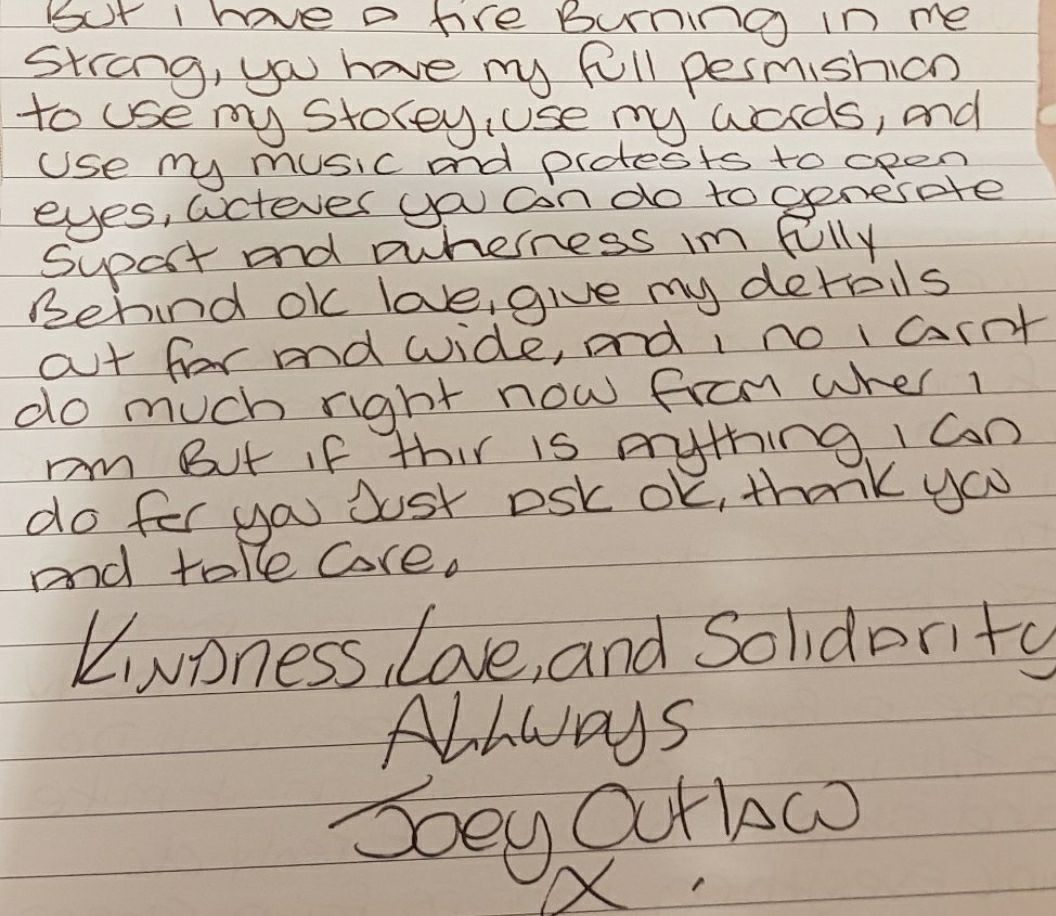
This is his story, in his own words
My story began in Bradford, Sunny West Yorkshire, and one of two children. The other being my sister Jill. At the start was a typical council estate life in the late 1980s. My Mom tried her best to bring us up as well as she could, but was cursed sadly by manic depression, what they now call bipolar. But this was not a fashion statement back then, it was dangerous and scary to witness. My Father was a gypsy from Hungary who never honoured his responsibilities as a father. Instead choosing to do a David Copperfield and disappear.
My sister was seven years older than me and would soon become my mum to be. By age three social services were involved and after one of my mom’s manic episodes, it was too dangerous for them to risk leaving us there. We were both placed on a full care order, which would cave the path years of painful memories I wish I could erase. Thankfully, they kept and Jill together in a wide range of foster parent, children’s homes and respite carers. Jill tried her best and I’m grateful for all the love she gave despite having to deal with her own sorrow as a young woman.
By the time she was 18 she had to leave me and that’s when I went off the rails. Constantly running away, and naively feeling more secure on the streets.
This stage of teenage growth embedded criminal dynamics to my survival and behaviour.
By fourteen social services basically gave up on me and I tell no lies when I say I was put in a B&B to live by myself, and no homes would take me. I was on a full care order until eighteen. Yet they lacked the support, guidance and interventions to raise me as expected. This happen twice, once in Shipley, West Yorkshire, and once in Wales at fifteen.
My criminality and reckless actions would continue for years.
I will say though, I was never a violent young offender. It was always nicking cars, motorbikes stealing etc. More a thief then a robber. I never sadly did manage to become rooted. I was always galivanting around the country, place to place. From twelve to nineteen life was an adventure, me a tent and a dog. Somehow, I always managed to pick up a stray for somewhere. I’ve always found animals and nature amazing. As a child I would find comfort and solace in beings alone in woods or on beaches. Just me and the pooch pondering life and all its confusions.
Well at age nineteen as destined, I get my first bit of proper jail.
Someone passed me an air rifle at a bus stop in the sticks in north Wales, and as he passed it to me, I generally shot him in the foot by mistake. I just grabbed the gun and the trigger was so sensitive, it popped and went off. I got three and a half years for that. But when I think back, I can barely remember it, it was just a life being in a children’s home, but I couldn’t run away and people were older, strange eh! Well to jump forward some years, by 23 I found love while I was travelling yet again. And for the first time in my life rooted in western-super-mare.
Despite being rooted my lifetime habits of survival were too deeply set.
To survive I sold weed, wheeling and dealing etc. and one night I was late in and my girlfriend at the time was arguing with me saying she was sick of me having my phone going off all the time, coming in late etc. She would take Valium on a night to sleep and said for me to take some and wind down, but I didn’t take any drugs like that back then. I had gone through all drug phases from young, except crack and heroin and by that time all I did was smoke weed. Well after some arguing, I just wanted to shut her up frankly, and I took three little blue tablets off her. Now little did I know that among the criminal knowledge, Valium are called Little Blue charge sheets, referring to their colour being blue, and the fact that people with criminal tendencies either wake up in cells, hence the charge sheet reference or they wake up surrounded by phones, money etc and not to have a clue how it all got there or what they had been up to obtain said items.
Needless to say, this inadvertently would be the little blue charge sheet that changed my life forever.
I do not remember a single thing of what I’m about to tell you and this is only what people have told me and information from statements etc. I took the tablets and drank some Southern Comfort, passed out, woke up and demanded more valium off my girlfriend. Once taken three more I then left the flat and went to a party. Where I stole a shotgun and shells, and then went into my local takeaway, where I went to every day by the way, and held it up at gunpoint. I left after being in this 60 seconds, and now rich with a grand sum of 200 pounds. Which by the way I would earn that in two hours selling weed etc. By the morning the police had come into my flat and arrested me. I woke up dazed and confused with a hangover from hell and realised I was in a police station. I had no idea how I had got there or why I was there. I got on the bell and ask them, and then I was told, I quote, you were brought in for armed robbery. I had no need to do what I did that night.
I cannot tell you why or what I did it for because I’ve been asking myself that for many years now.
I’m just glad I never hurt anyone that night. I’m trying to write to the shopkeeper through probation to ask for his forgiveness and do what I can to apologise. Any trauma I might have caused that night. Sadly, by the time I realised I needed to do this. It was too late. I was given an 18-year sentence for that on a guilty plea. So, the judge would have given me around 25 years for that. It was a determinate sentence without my guilty credit taken off. However, I was to become an IPP prisoner, so the 18 years would be halved, and a tariff would be put on it. I did appeal and got this taken to a 4½ year sentence. So, all I would have to do is keep my head down, do some courses and take the rehabilitation offered. I’d be out in four and a half, right?
I was like a lamb to the slaughter. Little did I know then the world of hate, pain, violence, despair, I will be thrown into.
On reflection now, it’s actually quite hard for me to put into words how I got to the place I’m at now physically and mentally. It’s not isolated to one place of fault or blame, there is so many different factors that contribute to the IPP crisis that I see today. Also, everyone is different, some can endure more than others. But the one thing that I am certain of is that it is the repetition of trauma that is most damaging. Trauma is trauma, we go through it and depending on what level of trauma one endures it’s about being able to deal with that, having the time, help, support and space to do so and heal.
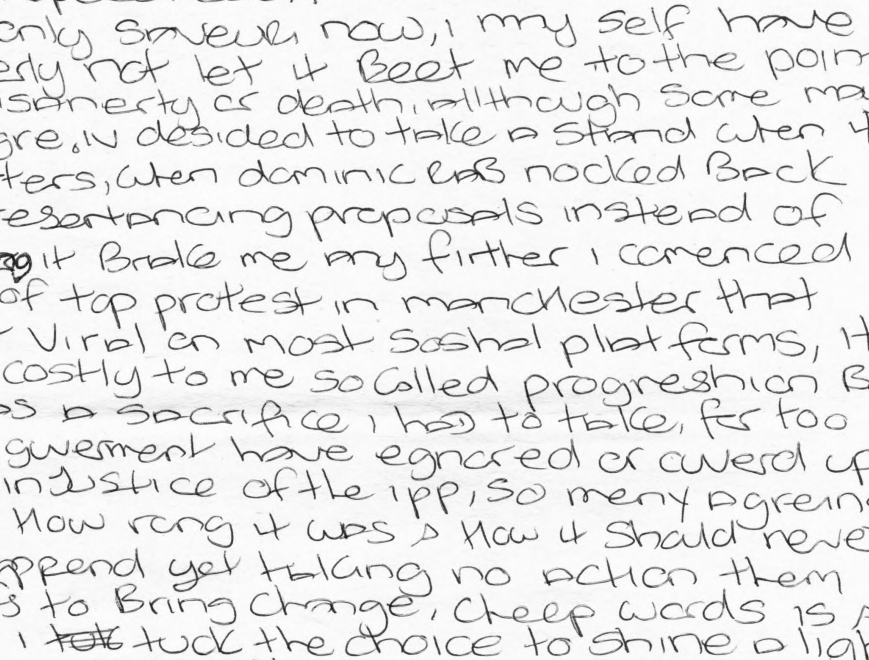
The problem with the IPP is that every single thing needed to go through the healing process is not accessible and furthermore, over time we go through it again and again until we become a product of the environment, we can’t escape.
This trauma then becomes torture and the strangest thing of all is the people who create or enforce this way of life then take no responsibility for doing so. When a broken man sits in front of them they blame the man for indeed breaking.
Due to government cuts on prison staff, education, etc. wings are flooded with drugs, kilos coming in on drones on a nightly basis. An addict then comes to prison. But little does he know that he’s just swapping one drug house for another. And in this drug house, drugs are cheaper, and he hasn’t got to go shoplifting to get money to use. Then when he has a piss test, he is punished for using drugs. The prisoner estate covers everything up, they will portray that yeah, there is the problem, there always will be, but we’re working on it. When the truth is the whole system is burning with flame from hell, they have an obligation to provide criminals with drug free environments to progress, yet they will punish an addict for using drugs when it is the prison who has served it to them on a plate. It’s like telling an alcoholic not to drink but making him live and sleep in a bar. I’m sorry I’m digressing somewhat though. There is just so many systematic failures that contribute to the prison crisis that we live and see today.
As a normal prisoner, it is hard enough like I said at the start, but as an IPP is a soul-destroying environment to live in. Using a similar comparison as a drug addict, as IPPs we were told that under no circumstances can we get involved in violence. This is a big no no, yet the wings are some of the most violent places you have ever seen.
Do not let anyone fool you.
I have lived it and seen it for too long now. The things that I have witnessed are truly things of horror films. To be able to navigate yourself through this for years is so difficult. The social dynamics on wings is not the same as in the community. If faced with any confrontation, you only have three choices.
1. You submit and hope for the best, but now you are weak among your peers.
2. You stand your ground which can result in death or being slashed or stabbed.
3. Which is what the prison would expect you to do, go to staff and tell them. Now you’re a snitch and a target from everyone.
They are the only choice you have in an environment that is ever growing more violent and dangerous by the minute. I fear to see how things will be in years to come.
We as IPPs are put in impossible positions and as the years go by, the worse it gets.
And the more trauma we endure again and again. That in my opinion, is why so many IPPs now are suffering with PTSD, drug abuse, personality disorders, etc. The system has destroyed them and will continue to do so until people push for change.
There is only one resolution in my opinion, and that the Justice select committee had its spot on. Government needs to face facts and, on some level, admit what everyone else seems to know and that is that the system failed to rehabilitate them in the start, failed to rehabilitate during, and is failing to do so now 10 years after the abolition.
To the ones who remain that are sinking deeper and into hopelessness, freedom is indeed the only Saviour now.
I myself have luckily not let it beat me to the point of insanity or death, although some may disagree.
I decided to take a stand when it matters, when Dominic Raab knocked back the resentencing proposals.
Instead of letting it break me any further,
I commenced a roof top protest in Manchester that went viral on most social platforms.
It was costly to my so-called progression, but it was a sacrifice I had to take.
For too long government have ignored or covered up the injustice of the IPP, so many agreeing with how wrong it was and how it should never have happened yet taking no action themselves to bring change. Cheap words is all.
Well, I took the choice to shine a light on it and not let them hide.
I did a 12-hour protest for not only myself and all those still on IPP, but for all them families of the 81 lost souls.
All them must be held accountable who contributed to the failures that led to them poor people taking them lives. Even if it is for 12 hours, the support and love that I have received since then, has been overwhelming, at times truly beautiful.
Well after that I was sent to HMP Frankland, where their intention to punish me for my activism was made clear by the foul things they did to me in that segregation. They refused to give me my special NHS diet that I had had for over four years due to my health, starved me, then one day while moving me cell, jumped on me and began assaulting me. I was stripped naked and placed in a box cell for hours on end. Right there and then, I decided, I was not going to take been treated this way. Days later I went out on the yard and managed to scale the wall. I then use a CCTV camera to break the cage roof and escape the seg, becoming the only man to ever escape a cat A segregation in the UK.
I then got my own back for the weeks of bully boy treatment and abuse by smashing the place to pieces. Then having a nice sunbathe in my boxers. This made the papers again, so now in eight weeks I’ve scaled 2 roofs and I’ve been in the press in countless papers. For this level of exposure,
I have now been sent to HMP Belmarsh unit segregation, where I stay totally isolated from everyone.
I get what I have done embarrass the prison state, but some would say it was a long time coming. I stand up for what I believe in and I know my values and principles. I should be proud of decency, respect, honesty, loyalty, humility, and dignity. It is the system that lacks in these principles, not me. In 13 years I have not once assaulted a member of staff yet I’ve been battered, stabbed, had my nose broken, lit split, teeth knocked out and that is just the physical abuse. Yet despite all this I shall keep my resolve.
My life now consists of exercise with four screws, a dog unit and I’m handcuffed and made to wear flip flops. Anyone would think I’m Bruce Lee. Some would say justified I’ll leave that up to you.
Since being here I’ve been subjected to over 170 full body strip searches in 14 weeks, sometimes four or more a day for three months. I was told all my visit rights had been stopped. Thankfully, they developed a change of heart and I now get visits. When will they let me back on the wings. I don’t know how long until I see a person’s face in this place that’s not a staff member, I also don’t know.
What I do know is that try as they might, my spirit will not be broken.
There is a movement out there that I am part of which gives me such strength and resolve. The other day I heard a man’s voice that I’ve never met being played to me down the phone by my girlfriend. This man spoke in a demo outside the prison about my story and all the IPPs, I love that, I felt through that voice I’ve never felt better. I was instantly elevated and overwhelmed. I used to feel lost, I used to feel lonely.
But now while I sit in the most lonely, isolated part of a prison system I am loved, I am supported, and I am strong.
But there are many, many more that sadly are not and for them I hope they find strength.
Kindness and love always.
Joe outlaw
Let’s end this injustice now, TOGETHER: IPP Scandal
The momentum is building, and more of society are becoming aware of the IPP Scandal, where prisoners can be languishing in prison with no end date to their sentence. Over 80 with an IPP sentence have taken their own life, their hope deferred time and time again. This sentence was abolished in 2012, but not retrospectively. Stories of those caught up in this tragedy in our justice system can be heard in a series of podcasts, by the Zinc Media Group. Click HERE for the link.
Sir Bob Neil MP has tabled an amendment to the Victims and Prisoners Bill to implement the recommendation of the Justice Select Committee to re-sentence all IPPs. In order for this to happen we need this amendment supported by the majority of MPs from all parties.
This is where we all can assist.
Firstly: click HERE to watch a film By Peter Stefanovic highlighting the injustice for those serving an IPP sentence. It has now been viewed over 2.5M times.
Secondly: repost this video and tag your MP. If you are not sure the name of your MP, click HERE to find out .
Thirdly: write to your MP. Below is a template produced by UNGRIPP, that can be used to encourage your MP to vote to accept the important amendment for re-sentencing.
Click HERE for the link and explanation of how to prepare and send, or copy and paste the sample letter below. Of course, if you do not have access to a printer or simply prefer to hand write letters, then feel free to use part of this sample letter. MPs pay particular attention to hand written letters.
{YOUR FULL NAME}
{YOUR FULL ADDRESS}
{YOUR POSTCODE}
{EMAIL ADDRESS}
{DATE}
Dear {MP NAME},
My name is {YOUR NAME} and I am a constituent of {YOUR CONSTITUENCY/AREA WHERE YOU LIVE}. I am writing to you because I would like to see changes made to the Indeterminate Sentence for Public Protection (known as the IPP sentence); a type of indefinite sentence given to 8,711 people between 2005 and 2013 for a wide range of major and minor crimes, and abolished by the Government in 2012. I have enclosed further information about the sentence, in case you are not already aware of it.
I would like you to take forward my concerns, set out below, by backing Amendment NC1 to the Victims and Prisoners Bill, proposed by Sir Bob Neill, Chair of the Justice Select Committee. The amendment, entitled ‘Resentencing those serving a sentence of Imprisonment for Public Protection’ would make provision a resentencing exercise carefully planned by an expert group. You can view the full amendment here: https://bills.parliament.uk/bills/3443/stages/17863/amendments/10008642
In August 2023, the United Nations Special Rapporteur on Torture stated the Government should urgently review IPP. They expressed ‘serious alarm’ about the suicides of people serving an IPP sentence (a concern recently echoed by the Prison & Probation Ombudsman), and stated that the sentence ‘violates basic principles of fair justice and the rule of law.’
As a member of the public, I am concerned that thousands of people are still serving an abolished sentence condemned by an international human rights body on torture. I do not think such a sentence has any place in our justice system. As you may already be aware, the IPP sentence was abolished because it was agreed to be unjust and ineffective. Thousands of people were given a life sentence for crimes that would never attract a life sentence today. The sentence was based on the premise that we can accurately predict a person’s risk of committing future crime; something that is complex, difficult, and flawed. It is a stain on the reputation of our justice system that thousands of people are still subject to an abolished sentence, and have served years longer than the time it was agreed they deserved as punishment. It is also reprehensible that their families and children continue to suffer the consequences. {IF YOU WANT TO, ADD YOUR EXTRA THOUGHTS ON THE SENTENCE HERE, AND EDIT THE ABOVE TO REFLECT YOUR VIEWS}
In 2022, the Justice Select Committee published a report on their inquiry into the IPP sentence. The report gives a damning indictment of a regime of indefinite detention that has caused widely documented harm, and departed from public notions of justice, fairness and proportionality.
The Committee concluded that even though there are ways to improve how the IPP sentence works, there is no way to truly fix it, and it is “irredeemably flawed”. Their main recommendation is a resentencing exercise. That means that everybody serving IPP would be individually resentenced by a judge, to a sentence available under current sentencing law, following the principle of balancing public protection with justice, judicial independence, and the appointment of an independent panel to implement the exercise.
I would be grateful if you would speak to the Secretary of State for Justice, Alex Chalk and request that he consider the proposed amendment, as well as advocating for it yourself. Shadow Justice Minister Ellie Reeves signalled in a Westminster Hall debate on 27th April 2023 that Labour will work constructively with the Conservatives in a cross-party effort on this issue.
The upcoming proposed amendment to the Victims and Prisoners Bill is a window of opportunity to rectify the wrongs to a sentence that has been condemned by the European Court of Human Rights, the Prison Reform Trust, the Howard League, Liberty, Amnesty International, the former Home Secretary who introduced the sentence (Lord Blunkett), and the former Lord Chief Justice Lord Brown who has called it “the greatest single stain on our justice system”. Your help on this matter is crucial.
If you are unable to address this personally, I would like to request that you escalate my letter to the relevant Minister or department. Please do keep me informed of any progress made. I look forward to hearing from you.
Yours faithfully,
{YOUR NAME}
Finally: remember to show your support on social media for those campaigning hard for the vital change in re-sentencing all those trapped within the IPP sentence.
Thank you
TOGETHER we can end this injustice.
Public reaction to the IPP Scandal
On Monday 20th November, Peter Stefanovic, CEO, Campaign For Social Justice, said in a short film:
“Imagine a country where a man has spent 18 years in jail for trying to steal a coat or imprisoned for 11 years for stealing a mobile phone – sentences described by the United Nations as egregious miscarriages of justice it’s unthinkable & it’s happening in this country NOW”
Peter was referring to the Imprisonment for Public Protection (IPP) sentence, that has been described as “a stain on British justice” and was abolished in 2012.
This short video Peter put out on social media (X) has been viewed over 2.5M times. This is astonishing and shows the public reaction of shock, outrage, and disbelief.
On 28th September 2022, the Justice Select Committee, chaired by Sir Bob Neil MP, published a report calling for the Government to re-sentence all prisoners subject to IPP sentences. Unsurprisingly, Rt Hon Dominic Raab MP, the then Secretary of State for Justice, rejected this stating re-sentencing:
“could lead to the immediate release of many offenders who have been assessed as unsafe for release by the Parole Board, many with no period of supervision in the community”.
Then once again, a new Secretary of State for Justice, Rt Hon Alex Chalk KC MP even after the intervention from Dr Alice Edwards, United Nations special rapporteur on torture and other cruel, inhuman or degrading treatment or punishment, still refused to re-sentence those on an IPP sentence.
An amendment to the Victims and Prisoners Bill, tabled by Sir Bob Neil MP to implement the Justice Select Committee’s recommendation to re-sentence all IPP’s will be considered by the Government shortly. This must be supported by the majority of MPs from all parties.
The latest podcast from Trapped: The IPP Prisoner Scandal Episode 9 entitled Set up to Fail, tells the stories of two women, Nicole and Madison on a life licence, both of which served a sentence way beyond their original tariff. Even after release, many on an IPP sentence feel that they are set up to fail and are constantly walking on eggshells. This episode also relays the story of the tragic suicide of Matthew, having been released since 2013. In a letter, he wrote:
“I am stuck in a never-ending cycle of which suicide is quite possibly really the only way out. Asking for help will go against me, not asking for help will most likely kill me”.
Many have lost hope and have taken their own lives.
The IPP sentence is breaking people, and the overwhelming support from the public to end this sentence cannot be ignored. The Government will only be held to account if the public makes its views known.
So many people think “well what can I do?”
My response to that is:
Contact your MP in writing and ask them to support this amendment.
Watch the film.
Listen to the Trapped podcasts.
Inform those around you of this cruel and inhuman sentence.

Who watches the Watchdog?
The website for the Independent Monitoring Board (IMB) states:
“Inside every prison, there is an Independent Monitoring Board (IMB) made up of members of the public from all walks of life doing an extraordinary job!
You’ll work as part of a team of IMB volunteers, who are the eyes and ears of the public, appointed by Ministers to perform a vital task: independent monitoring of prisons and places of immigration detention. It’s an opportunity to help make sure that prisoners are being treated fairly and given the opportunity and support to stop reoffending and rebuild their lives.”
Anyone can see this is a huge remit for a group of volunteers.
IMB’s about us page also states:
“Their role is to monitor the day-to-day life in their local prison or removal centre and ensure that prisoners and detainees are treated fairly and humanely”
Another huge remit.
For those who believe they can make a difference, and I have met a few who have, the joining process is quite lengthy.
Once you have completed the online application form, bearing in mind you can only apply to prisons which are running a recruiting campaign (that doesn’t mean to say there are no vacancies in others) the applicant is then invited for an interview and a tour of the prison.
So, what is wrong with that you may ask?
At this point NO security checks have been done, so literally anyone can get a tour of a prison, ask questions, and meet staff and prisoners.
This is surely a red flag.
And then there is the ‘interview’.
Two IMB members from the prison you have applied to and one from another prison take it turn in asking questions. It is basically a ‘tick box exercise’; I know this because I have been involved myself, sitting on both sides of the table.
It is based on scores, so if you are competent in interviews, you will do well. With IMB boards desperate for members it means that as long as your security check comes through as okay, you will have made it on to the IMB board.
However, no references are required to become a prison monitor. NONE.
A red flag too?
One of the main problems I encountered was that if the IMB board member comes from a managerial background they will want to manage. But the IMB role is about monitoring a prison and not managing it. I have seen where members and staff have clashed over this.
Well done, you made it on to the board, what next?
Back to the IMB website:
“You do not need any particular qualifications or experience, as we will provide all necessary training and support you need during a 12-month training and mentoring period”
The first year is the probationary year where you are mentored, accompanied, and trained. To be accompanied for this period is unrealistic, there are insufficient members having neither the time nor resources to get new members up to speed before they start monitoring.
In addition, induction training can be between 3-6 months after joining and can be said it is at best haphazard.
As reported Tuesday by Charles Hymas and others in The Telegraph newspaper, and citing a set-piece statement from the MOJ press office, “a spokesman said that although they had unrestricted access, they were given a comprehensive induction…”
I beg to differ; the induction for IMB board members is hardly comprehensive.
I believe this needs to change.
For such an essential role, basic training must take place before stepping into a prison. Yes, you can learn on the job but as we have seen recently, IMB members are not infallible.
Membership of the IMB is for up to 15 years which leads to culture of “we’ve always done it this way”, a phrase all too often heard, preventing new members from introducing fresh ideas.

What if something goes wrong?
Not all IMB members have a radio or even a whistle or any means of alerting others to a difficult situation or security risk. If for any reason you need support from the IMB Secretariat, don’t hold your breath.
The secretariat is composed of civil servants, MOJ employees, a fluctuating workforce, frequently with no monitoring experience themselves who offer little or no assistance. I know, I’ve been in that place of needing advice and support.
What support I received was pathetic. Even when I was required to attend an inquest in my capacity as a IMB board member no tangible help was provided and I was told that IMB’s so-called ‘care team’ had been disbanded.
From the moment you pick up your keys, you enter a prison environment that is unpredictable, volatile and changeable.
As we have seen this week, an IMB member at HMP Liverpool has been arrested and suspended after a police investigation where they were accused of smuggling drugs and phones into prison.
This is not surprising to me and may be the tip of the iceberg. IMB board members have unrestricted access to prisons and prisoners. As unpaid volunteers they are as susceptible to coercion as paid prison officers.
Radical change needs to be put in place to tighten up scrutiny of, and checks on, members of the IMB when they visit prisons either for their board meetings or their rota visits.
In 4 years of monitoring at HMP/YOI Hollesley Bay I was never searched, and neither was any bag I carried. In over 10 years of visiting prisons, I can count on one hand, with fingers to spare, the number of times I have been searched. When visiting a large scale prison such as HMP Berwyn I only had to show my driving licence and the barriers were opened.
Whilst the situation at HMP Liverpool is an ongoing investigation and whilst the outcome of the investigation is not yet known, I do urge Dame Anne Owers, the IMB’s national Chair, to look urgently at the IMB recruitment process, at the IMB training and at the provision of on-going support for IMB board members.
Complacency has no part in prisons monitoring.
~

Just how ‘independent’ is the Independent Monitoring Board?
For many years I have struggled with the concept of the Independent Monitoring Board (IMB) being actually independent.
This is an organisation which was based at the Ministry of Justice (MoJ) HQ, Petty France for many years, but now shares open plan offices in a Government Hub at Canary Wharf alongside HM Inspectorate of Prisons, Prison and Probation Ombudsman (PPO), Parole Board for England and Wales and the Lay Observers Secretariat.
The introduction of IMB’s new Governance structure, where the role of President was replaced by a Chair and an additional layer of management, has failed to persuade me otherwise.
Dame Anne Owers, formerly Chair of The Independent Police Complaints Commission (IPCC) and prior to that Chief Inspector of Prisons (2001-2010), took up the role of National Chair of the IMB in November 2017.
We appear to differ on the definition of independence. Or do we? Across a committee room in the House of Lords, she and I exchanged glances as soon as the word “independence” was mentioned. I get the impression she knows it’s not.
Does it matter that the IMB is not independent?
It unquestionably matters because an application to the IMB requires a response within a certain time frame from an “independent” voice. But as the IMB is a department of the Ministry of Justice any problems or issues highlighted cannot be dealt with in a proper manner if they are basically monitoring themselves. The phrase “marking their own homework” comes to mind.
Is this the reason why the IMB does not have any real powers?
The IMB was established by statute (Offender Management Act 2007, Section 26), unlike the National Chair or the Management Board, neither of which are statutory entities. IMB responsibilities within prisons are set out in Section 6 of the Prison Act 1952 (as amended), Prison Rules Part V 1999, and Young Offenders Institution Rules Part V 2000.
In addition, IMB responsibilities in the Immigration Detention Estate (IDE) are set out in Section 152 of the Immigration and Asylum Act 1999, the Detention Centre Rules Part IV 2001 and the Short-term Holding Facilities Rules Part 7 2018.
In Summer 2019, MoJ and IMB co-produced a 23-page document “Protocol between The Ministry of Justice as the department and the Management Board of the Independent Monitoring Boards” A copy is available via this page of the IMB website.
This is where it gets interesting.
This protocol was drawn up by the MoJ and the Management Board of the IMB, setting out the role of each body in relation to the other. Furthermore, it sets out the responsibilities of the principal individuals running, sponsoring and overseeing the IMB Secretariat.
At this point, it’s relevant to look at the IMB structure:
-
First, we have the National Chair: Dame Anne Owers, appointed by the Secretary of State for Justice (Ministerial appointment) and a non-statutory public appointment
-
Second, there is the IMB Management Board, appointed by the National Chair which sets out the overall strategy and corporate business plans for the IMB (Protocol, p. 2: 1.3)
Both work with and through a regional representative’s network also appointed by the National Chair, providing support and guidance to the IMB.
-
Third, we come to the IMB Secretariat, a team of MoJ civil servants providing the IMB with administrative and policy support. This team is tasked by the National Chair and Management Board
It is the National Chair, Management Board and regional representatives that have the responsibility for the operation of this protocol. Yet with all the effort in its production this protocol does not confer any legal powers or responsibilities (Protocol, p.2: 1.6).
This protocol is approved by the Permanent Secretary of the MoJ, who is Sir Richard Heaton, and the sponsoring Minister. It is signed and dated by the Permanent Secretary (i.e. Sir Richard Heaton) and the National Chair (i.e. Dame Anne Owers).
But why should the independence of the IMB, the National Chair and the Management Board be of paramount importance? (Protocol, p.4: 3.1)
Let me try to answer this succinctly.
The IMB is part of the UK’s National Preventive Mechanism (NPM), designated by the Government to meet the obligations of the United Nations Optional Protocol to the Convention Against Torture and other Cruel, Inhuman or Degrading Treatment or Punishment (OPCAT).
To be part of the OPCAT, it is necessary to be independent (Part I, Art 1; Part II, Art 5.6; Part IV, Art 17; Part VII, Art 35).
NPMs are required to be functionally and operationally independent. Therefore, the IMB is required to be functionally and operationally independent.
Yet:
-
IMBs are sponsored by MoJ
-
National Chair is a ministerial appointment
-
IMBs receive funding through the MoJ and the Home Office
-
MoJ is responsible for ensuring the use of funds meets the standards of governance, decision-making and financial management, as set out in Managing Public Money 2013 revised 2018
-
The head of the IMB Secretariat accounts to the Principal Accounting Officer (PAO) for the appropriate use of resources
-
The PAO is the Permanent Secretary of the MoJ (Sir Richard Heaton) and is responsible for ensuring that IMB meets the standards set out in Managing Public Money
-
MoJ has appointed a sponsorship team
-
The sponsorship team is drawn from the Sponsorship of Independent Bodies Team in the MoJ’s Policy, Communications and Analysis Group. Its policy responsibilities are to act as the policy interface for the IMBs and assurance responsibilities are to act as a “critical friend” to the IMBs
-
The Head of the IMB Secretariat is a civil servant and employee of the MoJ and has accountability for IMB finances
In conclusion
It appears throughout this document that the MoJ exerts operational and functional control of the IMB. If that is the case then it is not independent, cannot call itself “Independent” and questions should now be asked concerning its membership of NPM and OPCAT.
IMB is not some vanity project for Ministers to appoint people to and to dismiss people from. Neither is it an arms-length body of any central Government department to sponsor in a whimsical way for its own ends.
Related Links
Protocols:
MoJ and HM Inspectorate Probation Download PDF
20 pages
Dated: 17 Apr 2018
Signed: Heaton 17 Apr 2018 and Stacey 02 May 2018
Published: 17 May 2018
MoJ and PPO Download PDF
19 pages
Dated: 01 Mar 2019
Signed: Heaton 20 Feb 2019 and McAllister 27 Feb 2019
Published: 12 Mar 2019
MoJ and IMB Download PDF
23 pages
Dated: 25 Jul 2019
Signed: Heaton 11 Jul 2019 and Owers 25 Jul 2019
Published: 14 Aug 2019
MoJ and HM Inspectorate Prisons Download PDF
24 pages
Dated: 10 Oct 2019
Signed: Heaton 30 Sep 2019 and Clarke 14 Oct 2019
Published:
Can you see the common denominator between all these protocols?
NB. The Protocol between MoJ and HMI Prisons was promised by the Ministry to the Commons Justice Select Committee back in March 2016.
~
This article was first published in Converse, November 2019 print edition and The Prison Oracle on 14 October 2019.
~

An interview on a Summer’s day
How/why did your involvement in the CJS come about?
I turned down a place to study for a degree and instead moved from Lincolnshire to Essex at the age of 19. My first “proper” job was in admin with NACRO in Colchester. I worked primarily in wages and finance. At that point NACRO provided 6 months work placements in painting and decorating or in gardening teams etc for those who had just come out of prison. I heard amazing stories from those men and some brought newspaper cuttings to show me of their various escapades, including a headline “Most wanted man in Britain” They made me laugh and some made me shed a few tears. But for me I had many questions that were never answered.
What happens after 6 months?
What about their families, how can they support them financially?
Was this really a way for integration back into society?
Why is only manual labour available?
I helped set up and train staff for a new branch of NACRO and then moved on to work in Finance for the NHS. However, I believe a seed was planted all those years ago.
Fast forward 25 years, I was accepted into University. I became a full-time student studying Criminology with 2 kids at school, 1 at college, a part time job and my husband working full time and studying also, I embarked on a very busy 3 years of multi-tasking!
For my first presentation I chose to speak on Women in prison and the Corston report, I researched thoroughly but was marked down because no one was interested in prisons and especially not women in prison, it was deemed not an exciting enough subject. Great start. My next presentation was about Restorative Justice and yet again I was questioned as to why I was interested, one lecturer even said, “What’s that?”. A pattern was emerging of my interest into those within the CJS and those that had been released increased. I was not put off and in my 3rd year the title for my dissertation was: Restorative Justice: Is it delivering strategic change in England and Wales or just a cost cutting exercise by the Government?
To understand the significance of Restorative Justice I arranged interviews with experts in the UK, NZ and USA, even Howard Zehr widely regarded as the Grandfather of RJ agreed to help. I consumed document after document on RJ and was a frequent visitor at the Cambridge University Library, floor 6 (those stairs almost killed me!) and the Institute of Criminology Library.
I graduated with an honours degree in Criminology and looked for my next step.
I joined the Independent Monitoring Board (IMB) at HMP/YOI Hollesley Bay and in just three years became the Chair.
I wrote about the things I saw and heard but what I didn’t expect was what happened next. I was confronted with a prejudicial character assassination brought against me, a fight to clear my name, being investigated twice by the Ministry of Justice, called in front of a disciplinary hearing in Petty France and the involvement of not one but two Prison Ministers. I felt that I was on my own against a bastion of chauvinism. Not the last bastion of their kind I would come across. Welcome to the IMB!
My continuing journey can be found in my blog: The Criminal Justice Blog www.faithspear.wordpress.com
Because my story is fairly unique it has been covered by BBC News, Channel 4 News, BBC Radio Oxford, BBC Radio Suffolk, 5Live, LBC as well as National and Local newspapers, law journals and online publications etc.
Religion is clearly important to you, what role does God play in your life?
I remember going to Chapel with my grandparents as a young child and hearing my Dad and Grandfather sing the old hymns with deep sincerity. Christianity has always been part of my life. My faith in God has often been tested.
How do you balance work and life responsibilities?
I often say I’m a Mum first, always have been always will be. My husband and my kids are the most important people in my life, I have a great relationship with them all. They understand who I am and what motivates me to do what I do. They understand the bigger picture and that for me it is a cause and not merely a job. That in itself I realise is exceptional and I find I am continually grateful because I know that the level of family support I have is sadly not available to everyone. I can’t do this stuff on my own. They are also aware of the work I do behind the scenes and the many hours of support I give freely.
What role, if any, has luck played in your life?
Things happens for a reason, we don’t always know or understand the reason why. We all have issues to face and hurdles to climb and times of joy and celebration. Luck doesn’t fit in my life at all.
Not only have you been a source of inspiration to me in certain areas, I have also seen you inspire others and would like to know who inspired, or inspires you and why?

A few years ago, I wrote a journal article with a friend of mine, Dr David Scott about a remarkable woman, Lady Constance Lytton, commemorating 100 years since her book Prisons and Prisoners was published. In it she presented one of the most significant challenges to 20th Century anti-suffrage politics. Her book is a harrowing personal account of her four prison sentences as a militant suffragette. It is also a compelling insight into the mind of a young woman consumed by a cause which would prove to be instrumental in prison reform and votes for women, as well as tragically being a contributory factor to her death. My inspiration, which comes from her being consumed by a cause, makes me wonder if that is still possible. This wasn’t a phase she was going through or a pastime, it was a lifestyle.
I admire her courage and determination. I see this in so few people but when I find it, it is unmistakable. Let me give you an example, Tracy Edwards MBE. At the age of 26 she was the skipper for the first all-female crew for the Whitbread Round the World Race. It is not so much the fact that she sailed around the world, although that in itself is remarkable, but it is the reason why that I find compelling. She said “First time in my life I stood up for something I believed in” I have met and chatted with Tracy, she is an inspiration to me without a doubt.
What would you say is your greatest accomplishment and/or achievement is?
I think that my greatest accomplishment is staying true to myself, maintaining integrity and not bowing to pressure to conform.
In terms of my greatest achievement let me give you a couple of examples. First, being nominated for the Contrarian prize 2017 especially when you realise the key criteria that the judges look for are Independence, Courage and Sacrifice.

Ali Miraj and Faith Spear
Second, last year I was deeply moved and excited to learn that I had been counted as one of the 100 inspirational Suffolk women alongside people such as Dame Millicent Fawcett.


As a female leader, what has been the most significant barrier in your career?
On one of my visits to the House of Parliament I took time to seek out one of the most outspoken MP’s known for saying it as it is. I sat down next to Dennis Skinner and asked him a very simple question. I asked, “How do you get heard in this place?”. Mr Skinner looked me straight in the eye and offered me advice I will never forget. With his characteristic directness, he said, “You have to be seen to be heard”. I’ve taken his advice and applied it to all I do. This has not come naturally to me as people who know me will tell you.
Everybody wants to have their say and everyone has an opinion. But there is a big difference between those who say their piece ad nauseum and those who have something to say.
In one sense all that people have heard from me so far is simply learning to overcome the barriers of not being heard. When I have learned enough then I am sure I will have gained the clarity with what I have to say.
If you were given the prisons and probation ministers role, what changes would you make?
I would scrap the titan prison building programme and instead invest in smaller local units, making families more accessible and start to break down the barriers between those in prison and those on the outside.
I would encourage industry to step out of their comfort zone and give more people with convictions a second chance. To remove the stigma of a criminal record so that it is not forever hanging around people’s necks. We are a deeply divided and hurt society that is full of prejudices.
I would ban all industries within prisons that do not provide purposeful activities and a decent wage. People need to be work ready on release with housing and job options already in place. Families should be able to stay together and be supported, children should be prioritised.
I would make sure everyone working within the CJS were trained sufficiently for their roles and supported in their jobs.
As a prisons minister you can only change what is in your field of influence to change. In other words, you need to be precise, you need be pragmatic and you need to learn whose advice you can trust. Then act on it.
One of my priorities as Prisons Minister would be to take advice to demonstrate better things to invest in. Diversion, or Restorative Justice or Community.
Put money into early years, into youth etc.
We have to stop this madness of believing that we can change people and their behaviour by banging them up in warehouse conditions with little to do and not enough to eat and sanitation from a previous century.
As Prisons Minister I would initiate change that would lead to every prison Governor carrying personal accountability for the way they run the prisons they are responsible for. It’s not their prison, its ours and they must run it properly, giving people in their care decent conditions and personal dignity regardless of what crime the courts have sent them to prison for. The moment Governors carry that personal accountability is the moment you will see astonishing changes in HMPPS.
I will ensure under performing Governors leave the service and are not continually rotated around the prison estate or promoted to more senior positions. They have to know the weight of the accountability they carry.
Finally, what are you hopes and aspirations for the future of the criminal justice, and also for you?
Transparency and Accountability should underline every decision made. No more carpets where issues are swept under. No more excuses for the crisis within the system. We talk too much, we deliberate too much and have too many committees. There are too many roundtable events, conferences, discussions where everyone is saying they are experts yet so much remains the same. We produce too many reports, reviews and paperwork that gets filed away. Now is the time for action, for investment in people and for priorities to change. Lets just get on with it and stop competing and instead work toward a common objective, such as drastically reducing the prison population
In the next five years, I will continue to speak up truthfully and will add my voice to the very many voices calling for change. I will support policies introduced by the current Prisons and Probation Minister or by their successor where those policies do bring about real change. However, I shall not hesitate in bringing a strong critique where those policies gloss over the hard questions or where they shirk the implementation of measures for real reform. I will finish on this:
Vision is often personal, but a cause is bigger than any one individual
People don’t generally die for a vision, but they will die for a cause
Vision is something you possess, a cause possess you
Vision doesn’t eliminate the options; a cause leaves you without any options
A good vision may out live you, but a cause is eternal
Vision will generate excitement, but a cause generates power
[Adapted from Houston (2001)]

Courage for the year ahead

Faith Spear
Introduction
The year 2018 was historic for many reasons not least because it saw the first statue of a woman placed in Parliament Square, London.
More so its message, marking a pivotal moment in social history, with “Courage calls to courage everywhere”
And for me personally, I can look back on a year of Exploration, Celebration and Collaboration.
Exploration
I traveled many miles in 2018 including two trips to Wales.
I was delighted to be invited to the Welsh Assembly, the Synedd, Cardiff in January to sit on a panel after the screening of the Injustice Documentary.

Faith with Claire Melville
The whole subject of injustice was brought home though an introduction to Michael O’Brien jailed for 11 years for a murder he did not commit.
One woman at that event stood out for me, Claire Melville, who has since become a source of great encouragement.
My second trip to Wales took me north to Wrexham where, at the beginning of August, I visited HMP Berwyn on the invitation of the Governing Governor, Russell Trent. I have already written about my experience in a previous blog.
However, my visit and subsequent write-up caused quite a stir as within a week Russell was suspended from his duties and not just the media but trolls on Twitter had a field day.
The BBC and Channel 4 contacted me to ask if what I wrote was “the cause”. I raised some important points concerning the design and build of this “Titan prison” a flagship of the Ministry of Justice, which I sincerely hoped would be the last.
I made the most of my time whilst in the area and met with Erwin James (InsideTimes), had dinner with Arfon Jones (Police and Crime Commission for North Wales) and a working lunch with Keith Fraser, (retired Police Superintendent and Clean Sheet Ambassador). It was an enlightening few days to say the least.
Celebration
I have had many reasons to celebrate in 2018, let me share some of them with you.
As the two-year anniversary of my article ‘Whistle-blower without a whistle‘ published in the Prisons Handbook 2016, approached, I was informed that the 2018 edition had been dedicated to me.
That was quite something as my original article upset those who walk the corridors of power in the Ministry of Justice, challenged the Independence of the Independent Monitoring Board and involved not one but two Prisons Ministers.
But the celebrations didn’t end there.
2018 has been a celebration of women; 100 years since women were given the vote and 100 years since the first women MP.

Womens Voices Womens Votes
In July I was named one of the 100 Inspirational Suffolk women from the past and present day alongside many amazing women including Dame Millicent Garrett Fawcett GBE campaigner for women’s suffrage. It is the statue of Millicent Fawcett which can be found in Parliament Square.
What an honour and a privilege to be recognised alongside women like that. And yes, I did make a big song and dance about it, why not. Who wouldn’t?
Then in September I received an email out of the blue from Brad Jones, Editor, EADT and Ipswich Star (Archant), which said:
Dear Faith,
It is 100 years since women won the right to vote, and to mark this anniversary Archant Suffolk, which publishes the East Anglian Daily Times and Ipswich Star, launched a very special project.
We asked the public to help us choose Inspiring Women of Suffolk…
I am delighted to say that you have been nominated and chosen as one of our Inspiring Women of Suffolk…
It was the public that chose me, and I am so grateful for everyone that voted.
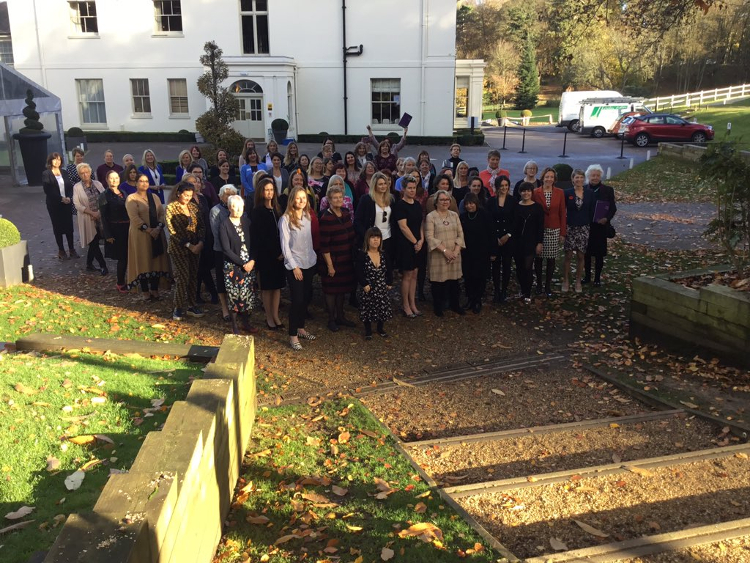
Suffolk’s Inspiring Women
I even celebrated the birthday of HM the Queen with members and guests of the National Liberal Club at a champagne reception on the invitation of my friend Trevor Peel.
What a highlight to discuss the criminal justice system with MP’s, an Ambassador and even a Royal Navy Admiral.
Isn’t it strange how talking about celebrations brings out the good, the bad and the ugly in people.
Social media is no exception.
Consequently, I have had to put up with a barrage of abuse from people. They have never met me, don’t know me but time after time they target their rancour at me. I know I’m not the only one under fire.
In November, I was invited by the Fawcett Society to Portcullis House for an All Party Parliamentary Group (APPG) to celebrate 100 years of Women MP’s. How appropriate then that during the question and answer slot the main topic was abuse on social media and how women should not expect it, or accept it.
Collaboration
For many years I have been concerned about the lack of opportunities within prisons to educate, train and equip individuals on release.
People with a criminal record are immediately penalised in the job market regardless of whether they have the relevant skills; it’s an uphill battle.
So, you can imagine my delight when in March I was invited on to the Board of trustees of Clean Sheet, a charity with one simple purpose – to offer people with convictions the hope of a better future by finding real, permanent employment.
Clean Sheet’s Annual Review took place at the House of Lords attended by Rory Stewart MP OBE.
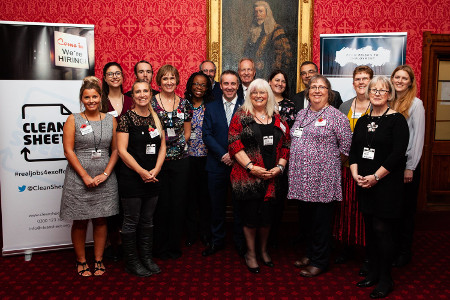
Clean Sheet team
In April, I took up my usual seat behind people giving evidence at the Justice Select Committee.
Once the formalities of the meetings finish, the room usually empties very quickly and ministers hurry back into the corridors and disappear. But not this time.
After giving evidence, just weeks into his new job as Prisons and Probation Minister, Rory Stewart hung back, so I stood up and shook his hand.
“I thought I would introduce myself, I am Faith, Faith Spear”
“Yes, hello Faith, I follow you on Twitter,” he said
“It would be good to meet sometime,” I added
“Let’s do it now,” he replied
Slightly gobsmacked, I followed him out of the room where he was met by his entourage and those wanting to ‘have a quick word’.
“I’m with Faith” he said as we started walking down the corridor. He gave me his full attention.
We went into the atrium of Portcullis House, found a table and talked together. It was a productive conversation and we agreed to keep in touch.
Invitations
As a year celebrating women, my list would have to include Sarah Burrows (Children Heard and Seen). In March, I attended an event in Oxford at Sarah’s invitation ‘What would it be like to have a parent in prison?’
The event displayed incredible art work from their competition judged by Daniel Lee and Korky Paul, who wrote and illustrated the book ‘Finding Dad’, and Sir Trevor McDonald OBE, newsreader and journalist.

Faith with Sir Trevor McDonald
A moving short film was screened made by a young man Luke and his mentor about having his father in prison, including an interview with, Ralph Lubkowski, then Deputy Governor of HMP Leicester.
I had the pleasure of having dinner at ‘Malmaison’ Oxford with Ralph, Sarah and all the judges. Sarah seated me next to Sir Trevor and we exchanged thoughts and experiences with each other about prisons.
A week later, I was discussing women in the Criminal Justice System at the House of Lords at the invitation of the Rt Revd Rachel Treweek Bishop of Gloucester and the Rt Hon the Baroness Jean Corston.
Women’s voices
I remember a time a couple of years ago, when I was sat in the Central Lobby at the Houses of Parliament talking to Dennis Skinner MP. I asked him:
“How do you get heard in this place?”
He looked me in the face.
“You have to be seen to be heard,” he said.
This is one of the reasons why you have seen me in so many diverse places:
In Westminster Hall listening to David Lammy, at the RSA listening to David Gauke, taking part in panels such as at Warwick University with SafeGround and Sheffield Hallam Uni, having discussions with leading Professors, Criminologists, PCC’s, at Police HQ’s, at roundtable events with the Criminal Justice Alliance, in Westminster for the Children’s Inquiry Report launch with Volteface, at the Parmoor and Longford Lectures and why I accept invitations to Prison Reform Trust wine receptions and listening to Lady Hale at the Fawcett Society lecture at the Royal Society.
I’m told some of my critics accuse me of being a ‘social climber’. Nothing could be futher from the truth.
If you don’t understand the issues, and unknown to the very people who can change things, how can you play a part in the solutions?
My part is: I ask questions
Tough questions
Some find that uncomfortable
I will continue to ask questions
In the last year I have seen first-hand how our Criminal Justice System can be an unjust system, I have seen how it breaks people, distresses children and separates families. I have seen inhumane conditions in prisons, I have spoken about it on the radio and television and I have written about it.
I have also spent time with victims and, yes, shed many a tear for them and with them.
Yet in 2018 I have also seen some good practice in purposeful activity, having sat in prisons at award ceremonies, having had guided tours of prisons by Governors, having eaten at restaurants within Prisons.
In all these places I have sensed optimism, hope and met those that believe in doing all they can to help with rehabilitation and re-integration.
Among the most inspiring women I have met is Khatuna Tsintsadze, Prison Programme Director for the Zahid Mubarek Trust. We worked together again this year and I have learnt so much from her, including human rights, equality and discrimination.
Unpicking myths
And finally, in this blog I wanted the last words to come from three people who have met me for the first time in 2018. I hope this will unpick some of the myths as to who I am and what matters to me.
“I first got to know Faith following her visit to HMP Berwyn, and the tour of our Prison Industries operation.
My first impression was one of her passion and conviction for getting to the real core of how we were working with the men to deliver real life work and training opportunities and asking specific questions – really emphasising that she had the best interests of the prisoners at heart. We rarely meet people that spend time engaging at this level whilst on a ‘guided tour’.
Subsequently I have had the opportunity to engage with Faith on a number of levels and have found her to always be absolutely trustworthy, insightful and generous with her network and her time.
She is not afraid to challenge the status quo, often attracting those that criticise her belief in wanting to make the CJS a better environment for its employees and those in its care”
Kelly Coombs, Co-founder Census Group
“I am drawn to people who are prepared to push boundaries in order to achieve change. Not rule breakers, but rule questioners. People who are not afraid to ask difficult questions but who are also prepared to help with the hard work needed to address the answers they might find. With this in mind, it was with no little amount of excitement that I met Faith Spear last year. Our areas of interest sit alongside each other yet might be a million miles from one another. Both feed each other in a continuous loop, creating demand and have long term impact on the people who become part of the Criminal Justice System.
Faith has stood her ground where many others have feared to tread and of course I admire this characteristic immensely but more than that, she has survived and continued her quest with renewed vigour.
When I met with Faith, I was contemplating a new step in my own quest but was still uncertain whether I would go ahead. Faith inspired me and left me believing not only that I ‘could’ do it, but that I really ‘should’ do it!
In a world full of naysayers, spending time with Faith is like finding water in a desert. ‘What would Faith do?’ has become my mantra”
Cate Moore, Independent Chair of Lincolnshire Police Ethics Panel
“I first met Faith Spear at a Corbett Network meeting in April 2018. I was hugely impressed by her warm-hearted nature, incredible knowledge and clear passion to make a positive difference in people’s lives.
We immediately clicked, in part due to our involvement with the award-winning charity Clean Sheet – Faith is a trustee, I am an ambassador – and also our shared vision to tackle the immense barriers that people with convictions face moving forward with their lives.
We both play very different roles in this hugely important agenda, but since my first meeting Faith she has become a great support to me, and I, in turn, have become a massive fan of her work and her brilliant thought-provoking blog. I look forward to continuing to collaborate with Faith for many years to come”
Dominic Headley, Director of Dominic Headley & Associates
In the context of a blog like this, it’s possible to only mention a fraction of the workload, time and miles covered. For obvious reasons you will appreciate I’m unable to share the full extent of everyone I have met or all that has been done.
Featured Photo: Faith with Michael Woodfood, Contrarian Prize 2013 winner and former CEO Olympus. To learn about Michael’s story please visit the Contrarian Prize website.
~
 The Criminal Justice Blog