Home » Independent Monitoring Board (Page 2)
Category Archives: Independent Monitoring Board

Just how ‘independent’ is the Independent Monitoring Board?
For many years I have struggled with the concept of the Independent Monitoring Board (IMB) being actually independent.
This is an organisation which was based at the Ministry of Justice (MoJ) HQ, Petty France for many years, but now shares open plan offices in a Government Hub at Canary Wharf alongside HM Inspectorate of Prisons, Prison and Probation Ombudsman (PPO), Parole Board for England and Wales and the Lay Observers Secretariat.
The introduction of IMB’s new Governance structure, where the role of President was replaced by a Chair and an additional layer of management, has failed to persuade me otherwise.
Dame Anne Owers, formerly Chair of The Independent Police Complaints Commission (IPCC) and prior to that Chief Inspector of Prisons (2001-2010), took up the role of National Chair of the IMB in November 2017.
We appear to differ on the definition of independence. Or do we? Across a committee room in the House of Lords, she and I exchanged glances as soon as the word “independence” was mentioned. I get the impression she knows it’s not.
Does it matter that the IMB is not independent?
It unquestionably matters because an application to the IMB requires a response within a certain time frame from an “independent” voice. But as the IMB is a department of the Ministry of Justice any problems or issues highlighted cannot be dealt with in a proper manner if they are basically monitoring themselves. The phrase “marking their own homework” comes to mind.
Is this the reason why the IMB does not have any real powers?
The IMB was established by statute (Offender Management Act 2007, Section 26), unlike the National Chair or the Management Board, neither of which are statutory entities. IMB responsibilities within prisons are set out in Section 6 of the Prison Act 1952 (as amended), Prison Rules Part V 1999, and Young Offenders Institution Rules Part V 2000.
In addition, IMB responsibilities in the Immigration Detention Estate (IDE) are set out in Section 152 of the Immigration and Asylum Act 1999, the Detention Centre Rules Part IV 2001 and the Short-term Holding Facilities Rules Part 7 2018.
In Summer 2019, MoJ and IMB co-produced a 23-page document “Protocol between The Ministry of Justice as the department and the Management Board of the Independent Monitoring Boards” A copy is available via this page of the IMB website.
This is where it gets interesting.
This protocol was drawn up by the MoJ and the Management Board of the IMB, setting out the role of each body in relation to the other. Furthermore, it sets out the responsibilities of the principal individuals running, sponsoring and overseeing the IMB Secretariat.
At this point, it’s relevant to look at the IMB structure:
-
First, we have the National Chair: Dame Anne Owers, appointed by the Secretary of State for Justice (Ministerial appointment) and a non-statutory public appointment
-
Second, there is the IMB Management Board, appointed by the National Chair which sets out the overall strategy and corporate business plans for the IMB (Protocol, p. 2: 1.3)
Both work with and through a regional representative’s network also appointed by the National Chair, providing support and guidance to the IMB.
-
Third, we come to the IMB Secretariat, a team of MoJ civil servants providing the IMB with administrative and policy support. This team is tasked by the National Chair and Management Board
It is the National Chair, Management Board and regional representatives that have the responsibility for the operation of this protocol. Yet with all the effort in its production this protocol does not confer any legal powers or responsibilities (Protocol, p.2: 1.6).
This protocol is approved by the Permanent Secretary of the MoJ, who is Sir Richard Heaton, and the sponsoring Minister. It is signed and dated by the Permanent Secretary (i.e. Sir Richard Heaton) and the National Chair (i.e. Dame Anne Owers).
But why should the independence of the IMB, the National Chair and the Management Board be of paramount importance? (Protocol, p.4: 3.1)
Let me try to answer this succinctly.
The IMB is part of the UK’s National Preventive Mechanism (NPM), designated by the Government to meet the obligations of the United Nations Optional Protocol to the Convention Against Torture and other Cruel, Inhuman or Degrading Treatment or Punishment (OPCAT).
To be part of the OPCAT, it is necessary to be independent (Part I, Art 1; Part II, Art 5.6; Part IV, Art 17; Part VII, Art 35).
NPMs are required to be functionally and operationally independent. Therefore, the IMB is required to be functionally and operationally independent.
Yet:
-
IMBs are sponsored by MoJ
-
National Chair is a ministerial appointment
-
IMBs receive funding through the MoJ and the Home Office
-
MoJ is responsible for ensuring the use of funds meets the standards of governance, decision-making and financial management, as set out in Managing Public Money 2013 revised 2018
-
The head of the IMB Secretariat accounts to the Principal Accounting Officer (PAO) for the appropriate use of resources
-
The PAO is the Permanent Secretary of the MoJ (Sir Richard Heaton) and is responsible for ensuring that IMB meets the standards set out in Managing Public Money
-
MoJ has appointed a sponsorship team
-
The sponsorship team is drawn from the Sponsorship of Independent Bodies Team in the MoJ’s Policy, Communications and Analysis Group. Its policy responsibilities are to act as the policy interface for the IMBs and assurance responsibilities are to act as a “critical friend” to the IMBs
-
The Head of the IMB Secretariat is a civil servant and employee of the MoJ and has accountability for IMB finances
In conclusion
It appears throughout this document that the MoJ exerts operational and functional control of the IMB. If that is the case then it is not independent, cannot call itself “Independent” and questions should now be asked concerning its membership of NPM and OPCAT.
IMB is not some vanity project for Ministers to appoint people to and to dismiss people from. Neither is it an arms-length body of any central Government department to sponsor in a whimsical way for its own ends.
Related Links
Protocols:
MoJ and HM Inspectorate Probation Download PDF
20 pages
Dated: 17 Apr 2018
Signed: Heaton 17 Apr 2018 and Stacey 02 May 2018
Published: 17 May 2018
MoJ and PPO Download PDF
19 pages
Dated: 01 Mar 2019
Signed: Heaton 20 Feb 2019 and McAllister 27 Feb 2019
Published: 12 Mar 2019
MoJ and IMB Download PDF
23 pages
Dated: 25 Jul 2019
Signed: Heaton 11 Jul 2019 and Owers 25 Jul 2019
Published: 14 Aug 2019
MoJ and HM Inspectorate Prisons Download PDF
24 pages
Dated: 10 Oct 2019
Signed: Heaton 30 Sep 2019 and Clarke 14 Oct 2019
Published:
Can you see the common denominator between all these protocols?
NB. The Protocol between MoJ and HMI Prisons was promised by the Ministry to the Commons Justice Select Committee back in March 2016.
~
This article was first published in Converse, November 2019 print edition and The Prison Oracle on 14 October 2019.
~

An interview on a Summer’s day
How/why did your involvement in the CJS come about?
I turned down a place to study for a degree and instead moved from Lincolnshire to Essex at the age of 19. My first “proper” job was in admin with NACRO in Colchester. I worked primarily in wages and finance. At that point NACRO provided 6 months work placements in painting and decorating or in gardening teams etc for those who had just come out of prison. I heard amazing stories from those men and some brought newspaper cuttings to show me of their various escapades, including a headline “Most wanted man in Britain” They made me laugh and some made me shed a few tears. But for me I had many questions that were never answered.
What happens after 6 months?
What about their families, how can they support them financially?
Was this really a way for integration back into society?
Why is only manual labour available?
I helped set up and train staff for a new branch of NACRO and then moved on to work in Finance for the NHS. However, I believe a seed was planted all those years ago.
Fast forward 25 years, I was accepted into University. I became a full-time student studying Criminology with 2 kids at school, 1 at college, a part time job and my husband working full time and studying also, I embarked on a very busy 3 years of multi-tasking!
For my first presentation I chose to speak on Women in prison and the Corston report, I researched thoroughly but was marked down because no one was interested in prisons and especially not women in prison, it was deemed not an exciting enough subject. Great start. My next presentation was about Restorative Justice and yet again I was questioned as to why I was interested, one lecturer even said, “What’s that?”. A pattern was emerging of my interest into those within the CJS and those that had been released increased. I was not put off and in my 3rd year the title for my dissertation was: Restorative Justice: Is it delivering strategic change in England and Wales or just a cost cutting exercise by the Government?
To understand the significance of Restorative Justice I arranged interviews with experts in the UK, NZ and USA, even Howard Zehr widely regarded as the Grandfather of RJ agreed to help. I consumed document after document on RJ and was a frequent visitor at the Cambridge University Library, floor 6 (those stairs almost killed me!) and the Institute of Criminology Library.
I graduated with an honours degree in Criminology and looked for my next step.
I joined the Independent Monitoring Board (IMB) at HMP/YOI Hollesley Bay and in just three years became the Chair.
I wrote about the things I saw and heard but what I didn’t expect was what happened next. I was confronted with a prejudicial character assassination brought against me, a fight to clear my name, being investigated twice by the Ministry of Justice, called in front of a disciplinary hearing in Petty France and the involvement of not one but two Prison Ministers. I felt that I was on my own against a bastion of chauvinism. Not the last bastion of their kind I would come across. Welcome to the IMB!

My continuing journey can be found in my blog: The Criminal Justice Blog www.faithspear.wordpress.com
Because my story is fairly unique it has been covered by BBC News, Channel 4 News, BBC Radio Oxford, BBC Radio Suffolk, 5Live, LBC as well as National and Local newspapers, law journals and online publications etc.
Religion is clearly important to you, what role does God play in your life?
I remember going to Chapel with my grandparents as a young child and hearing my Dad and Grandfather sing the old hymns with deep sincerity. Christianity has always been part of my life. My faith in God has often been tested.
How do you balance work and life responsibilities?
I often say I’m a Mum first, always have been always will be. My husband and my kids are the most important people in my life, I have a great relationship with them all. They understand who I am and what motivates me to do what I do. They understand the bigger picture and that for me it is a cause and not merely a job. That in itself I realise is exceptional and I find I am continually grateful because I know that the level of family support I have is sadly not available to everyone. I can’t do this stuff on my own. They are also aware of the work I do behind the scenes and the many hours of support I give freely.
What role, if any, has luck played in your life?
Things happens for a reason, we don’t always know or understand the reason why. We all have issues to face and hurdles to climb and times of joy and celebration. Luck doesn’t fit in my life at all.
Not only have you been a source of inspiration to me in certain areas, I have also seen you inspire others and would like to know who inspired, or inspires you and why?

A few years ago, I wrote a journal article with a friend of mine, Dr David Scott about a remarkable woman, Lady Constance Lytton, commemorating 100 years since her book Prisons and Prisoners was published. In it she presented one of the most significant challenges to 20th Century anti-suffrage politics. Her book is a harrowing personal account of her four prison sentences as a militant suffragette. It is also a compelling insight into the mind of a young woman consumed by a cause which would prove to be instrumental in prison reform and votes for women, as well as tragically being a contributory factor to her death. My inspiration, which comes from her being consumed by a cause, makes me wonder if that is still possible. This wasn’t a phase she was going through or a pastime, it was a lifestyle.
I admire her courage and determination. I see this in so few people but when I find it, it is unmistakable. Let me give you an example, Tracy Edwards MBE. At the age of 26 she was the skipper for the first all-female crew for the Whitbread Round the World Race. It is not so much the fact that she sailed around the world, although that in itself is remarkable, but it is the reason why that I find compelling. She said “First time in my life I stood up for something I believed in” I have met and chatted with Tracy, she is an inspiration to me without a doubt.
What would you say is your greatest accomplishment and/or achievement is?
I think that my greatest accomplishment is staying true to myself, maintaining integrity and not bowing to pressure to conform.
In terms of my greatest achievement let me give you a couple of examples. First, being nominated for the Contrarian prize 2017 especially when you realise the key criteria that the judges look for are Independence, Courage and Sacrifice.

Ali Miraj and Faith Spear
Second, last year I was deeply moved and excited to learn that I had been counted as one of the 100 inspirational Suffolk women alongside people such as Dame Millicent Fawcett.


As a female leader, what has been the most significant barrier in your career?
On one of my visits to the House of Parliament I took time to seek out one of the most outspoken MP’s known for saying it as it is. I sat down next to Dennis Skinner and asked him a very simple question. I asked, “How do you get heard in this place?”. Mr Skinner looked me straight in the eye and offered me advice I will never forget. With his characteristic directness, he said, “You have to be seen to be heard”. I’ve taken his advice and applied it to all I do. This has not come naturally to me as people who know me will tell you.
Everybody wants to have their say and everyone has an opinion. But there is a big difference between those who say their piece ad nauseum and those who have something to say.
In one sense all that people have heard from me so far is simply learning to overcome the barriers of not being heard. When I have learned enough then I am sure I will have gained the clarity with what I have to say.
If you were given the prisons and probation ministers role, what changes would you make?
I would scrap the titan prison building programme and instead invest in smaller local units, making families more accessible and start to break down the barriers between those in prison and those on the outside.
I would encourage industry to step out of their comfort zone and give more people with convictions a second chance. To remove the stigma of a criminal record so that it is not forever hanging around people’s necks. We are a deeply divided and hurt society that is full of prejudices.
I would ban all industries within prisons that do not provide purposeful activities and a decent wage. People need to be work ready on release with housing and job options already in place. Families should be able to stay together and be supported, children should be prioritised.
I would make sure everyone working within the CJS were trained sufficiently for their roles and supported in their jobs.
As a prisons minister you can only change what is in your field of influence to change. In other words, you need to be precise, you need be pragmatic and you need to learn whose advice you can trust. Then act on it.
One of my priorities as Prisons Minister would be to take advice to demonstrate better things to invest in. Diversion, or Restorative Justice or Community.
Put money into early years, into youth etc.
We have to stop this madness of believing that we can change people and their behaviour by banging them up in warehouse conditions with little to do and not enough to eat and sanitation from a previous century.
As Prisons Minister I would initiate change that would lead to every prison Governor carrying personal accountability for the way they run the prisons they are responsible for. It’s not their prison, its ours and they must run it properly, giving people in their care decent conditions and personal dignity regardless of what crime the courts have sent them to prison for. The moment Governors carry that personal accountability is the moment you will see astonishing changes in HMPPS.
I will ensure under performing Governors leave the service and are not continually rotated around the prison estate or promoted to more senior positions. They have to know the weight of the accountability they carry.
Finally, what are you hopes and aspirations for the future of the criminal justice, and also for you?
Transparency and Accountability should underline every decision made. No more carpets where issues are swept under. No more excuses for the crisis within the system. We talk too much, we deliberate too much and have too many committees. There are too many roundtable events, conferences, discussions where everyone is saying they are experts yet so much remains the same. We produce too many reports, reviews and paperwork that gets filed away. Now is the time for action, for investment in people and for priorities to change. Lets just get on with it and stop competing and instead work toward a common objective, such as drastically reducing the prison population
In the next five years, I will continue to speak up truthfully and will add my voice to the very many voices calling for change. I will support policies introduced by the current Prisons and Probation Minister or by their successor where those policies do bring about real change. However, I shall not hesitate in bringing a strong critique where those policies gloss over the hard questions or where they shirk the implementation of measures for real reform. I will finish on this:
Vision is often personal, but a cause is bigger than any one individual
People don’t generally die for a vision, but they will die for a cause
Vision is something you possess, a cause possess you
Vision doesn’t eliminate the options; a cause leaves you without any options
A good vision may out live you, but a cause is eternal
Vision will generate excitement, but a cause generates power
[Adapted from Houston (2001)]

HMP Berwyn: Does it raise more questions than it answers? Part 2
The Wales Governance Centre, a research centre and part of Cardiff University’s School of Law and Politics undertakes innovative research into all aspects of the law, politics, government and political economy of Wales.
This week they released a report: Sentencing and Imprisonment in Wales 2018 Factfile by Dr Robert Jones
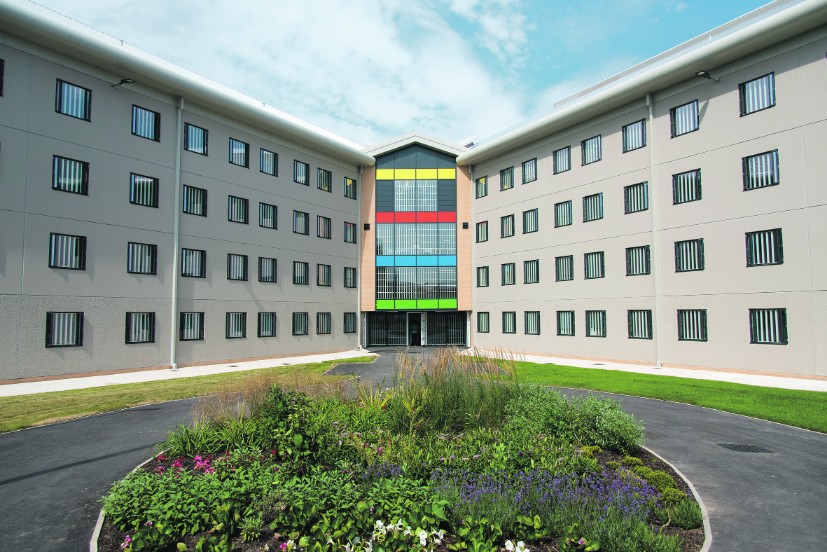
Before looking at this report, lets put things in context by referring to the first unannounced inspection by HMIP of HMP Berwyn in March 2019. Here it is reported that “impressive” support procedures are in place for new arrivals. Positive note. However, use of force was considerably higher than at similar prisons and 1 in 4 prisoners (23%) told HMIP that they felt unsafe. Alarm bells?
Below are the four tests when inspecting a prison, Safety, Respect, Purposeful activity and Rehabilitation and release planning. Not the best outcome for the first inspection.
Safety: Outcomes for prisoners were not sufficiently good against this healthy prison test.
Respect: Outcomes for prisoners were reasonably good against this healthy prison test.
Purposeful activity: Outcomes for prisoners were not sufficiently good against this healthy prison test.
Rehabilitation and release planning: Outcomes for prisoners were not sufficiently good against this healthy prison test.
HMP Berwyn prison has only been open just over 2 years, hasn’t reached full capacity and has its 3rd governing Governor.
Now let’s look at some of the facts revealed that are not easy reading
The number of self-harm incidents
2017 = 231
2018 = 542
Self-harm incidents rose by 135% in 2018
Rate of self-harm: (48 per 100 prisoners)
This is what the Government website states:
“Self-harm may occur at any stage of custody, when prisoners are trying to deal with difficult and complex emotions. This could be to punish themselves, express their distress or relieve unbearable tension or aggression. Sometimes the reason is a mixture of these. Self-harm can also be a cry for help, and should never be ignored or trivialised” https://www.gov.uk/guidance/suicide-self-harm-prevention-in-prison
This is what the HMIP report states:
“The strategic management of suicide and self harm required improvement. Strategic meetings were poorly attended and too little was done to analyse, understand and take action to address the causes of self-harm. Most of the at-risk prisoners on assessment, care in custody and teamwork (ACCT) case management did not feel sufficiently cared for. ACCT documents required improvement, and initial assessments and care plans were weak”
Yet below are more uncomfortable facts showing that this prison is not just dangerous for prisoners but for staff too. Nothing to celebrate here.
The number of prisoner-on-prisoner assaults rose by 338% in 2018
Rate of prisoner-on-prisoner assaults: (20 per 100 prisoners)
The number of assaults on staff at HMP Berwyn increased by 405% in 2018
Rate of recorded assaults on staff (18 per 100 prisoners)
You would think that a new prison would have a security department second to none, with little chance of items being brought in. Yet these figures show that weapons, drugs, alcohol and tobacco are increasingly being found. Some may say hats off to the staff for finding these items, but really there’s still no cause for celebration…
The number of incidents where weapons were found in prison, years ending
March 2017 = 1
March 2018 =25
March 2019 Berwyn = 138
The rate of weapon finds (11 per 100 prisoners) year ending March 2019
This was the highest rate per prisoners in all prisons in Wales, astonishing. Serious problems with security.
The number of drug finds at HMP Berwyn increased by 328% in the year ending March 2019 (prison population increased by 67% during this period)
The rate of drug finds (16 per 100 prisoners)
Where are the robust measures to stop drugs coming into the prison?
The number of incidents where alcohol was found in HMP Berwyn years ending March
2017 = 0
2018 = 21
2019 = 146
Alcohol finds at HMP Berwyn rose by 595% (prison population increased by 67% during this period)
Rate of alcohol finds (12 per 100 prisoners) year ending March 2019.
Yet again the highest rate of alcohol finds in all the prisons in Wales
The number of incidents where tobacco was found in HMP Berwyn years ending March
2018 = 20
2019 = 61
Rate of tobacco finds (5 per 100 prisoners)
The prison is covered in photos of Wales and the countryside, everywhere you look there is a motivational quote, there are flowers, bees, greenhouses yet one in 4 prisoners didn’t feel safe.
Comfy chairs in reception, pretty pictures, colourful décor does not appear to contribute to the safety of HMP Berwyn.
Motivational quotes such as “When a flower doesn’t bloom you fix the environment in which it grows not the flower” means nothing if a quarter of the population feel unsafe.
Prisons can be austere places, drab, filthy, old and not fit for purpose. But here we have a new prison with serious problems. There can be no excuse that these are teething problems, we are talking about peoples lives.
Remember the Berwyn Values?
V = value each other and celebrate achievements
A = act with integrity and always speak the truth
L = look to the future with ambition and hope
U = uphold fairness and justice in all we do
E = embrace Welsh language and culture
S = stick at it
Is this just a marketing ploy, designed for a feel-good factor, making us all think that the money spent on this Titan prison was worth every penny?
Independent monitors have praised the work of staff at HMP Berwyn describing their efforts to establish a new prison as a ‘considerable achievement” (Recent comment by IMB) After this shocking report, what will they now say? Or will they remain silent?
I don’t doubt there are some hard working, diligent and caring staff. In fact, I met some on my visit last year. But when the prison opened in 2017 over 90% of staff had never worked in a prison before. When you have prisoners arriving from over 60 prisons all with different regimes, you find they have far more experience of the prison estate than the majority of prison officers.
But more worryingly is that the Government is continuing with its programme of building new prisons. A new prison will be built in Wellingborough as part of the Government’s Prison Estate Transformation Programme. I’ve read gushing articles on how this prison will benefit the community etc, similar to when HMP Berwyn began construction. Just like HMP Berwyn there are many promises and opportunities, but theory and practice can be a million miles apart.

Whistle while you work
Is whistleblowing a band wagon to jump onto?
Usually you don’t suddenly wake up in the morning and say, “Today I’m going to be a whistle-blower”. The negative connotations surrounding whistleblowing such as being an informant, betrayer, or even a backstabber is not something to aspire to.
Yet, these descriptions cannot truly explain why there are those in the minority that will put their head above the parapet, will risk their reputation and often lose their job through speaking out.
So, have we become largely a society that will cower rather than stand up, do we lack courage or integrity or both?
Fear of reprisals can cause us to retreat, to stay silent but in so doing are we not being true to ourselves. It takes more than just determination to be vocal about issues you are passionate about. Unfortunately, when living in such a punitive society, the norm is to shut people down rather than to listen.
Having sat at an employment tribunal with an experienced Prison Officer listening to their case of dismissal, my thoughts were not that they wanted revenge, not at all. I saw passion, I heard a very determined individual with a story that has affected not only their work, their life but possibly their health too.
It’s too easy for society to ignore the reality in our prisons in England and Wales, where violence, instability and a lack of investment over decades has reduced them to warehouses of the vulnerable. Numerous are inhumane and on the point of crisis.
Equally, let’s not point the finger at those that want transparency in the Criminal Justice System, instead we should push for accountability and not lose sight that one day those in prison may be a loved one or will become our neighbour.
Time to stop shooting the messenger
Recently I met Michael Woodford, the inaugural winner of the Contrarian Prize and former CEO of Olympus who exposed a $1.7 billion fraud at the heart of Olympus and was sacked for doing so. He had more than most to lose by speaking out.

Faith Spear and Michael Woodford
According to: https://www.gov.uk/whistleblowing
“As a whistleblower you’re protected by law – you should not be treated unfairly or lose your job because you ‘blow the whistle’.
You can raise your concern at any time about an incident that happened in the past, is happening now, or you believe will happen in the near future”
But is this really so?
It also states:
“You’re a whistleblower if you’re a worker and you report certain types of wrongdoing”
But what if you are a volunteer?
Yes, you work and often very hard, but where is the protection mechanism?
In my experience, being a volunteer for many years offers little protection especially when dealing with the Ministry of Justice. Even going through the “normal” channels produces little response. Suddenly people become hard of hearing, blind to what is happening all around them and stick their heads in the sand.
I’m not like that, I am very aware of many untold stories and issues within the justice system.
I put my head above the parapet once, I have no regrets even now still living with the consequences.
I would do it again.
And plan to do shortly!
I don’t look back in anger
As the second anniversary rapidly approaches of the disciplinary hearing I stood in front of in Petty France, my heart tries not to sink.
Yes, I am still banned from being a member of the IMB, just over three years to go.
I am often asked if I would want to join again, I can honestly say in its current form, no, not at all. I want to see a monitoring board that is truly independent not just in title but in actions, the prisoner’s perceptions and their Annual Reports.
I miss the work, it was work to me and I took it seriously even though the Governor once said, “you don’t work here, you are a volunteer” This kind of attitude stinks and shows how little he regarded the IMB.
Even now many IMB members face opposition from their boards when they stand up and challenge the “but we always do it that way” brigade. It’s not good enough.
I recently chatted to an IMB member who recognised me and wanted to meet and was keen to explain that she had tried to implement some of my suggestions, such as out of hours visits. But that hadn’t gone down well with her board, apparently nothing happens outside of office hours in a prison and there’s nothing to see, therefore, IMB members are not needed. A short-sighted response. I have heard it before and I’m sure I will hear it again.
My article for the Prisons Handbook 2016 is just as relevant today as it was two and a half years ago when it was first published. There are still the same questions and very few answers.
Although the new Governance structure appears to be a re-package concept with little bite, there is a hint of optimism.
I haven’t given up, I haven’t disappeared into one of the many cracks of the Criminal Justice System, I am aware that some would want that to happen. Too bad.
I am very much alive and kicking.
I have a voice and I use it.
#notshuttingup
#notgoingaway

The continuing IMB dilemma of Independence, Effectiveness, and Impact.
My response to Dame Anne Owers
As it’s Independence Day (USA) I thought it would be fitting to take a few moments to consider the independence of the Independent Monitoring Board (IMB) which operate in every prison and detention centre in England and Wales.
Yes, I have mentioned it before, once or twice.
Pages 4-6 of the June edition of ‘Independent Monitor’ the journal of the Association of Members of Independent Monitoring Boards (AMIMB) carries an article bylined to the National Chair of the IMB, Dame Anne Owers. The article sets out her thoughts on the current state of the IMB’s and her vision for their future.
It focuses on the new Governance structure highlighting that it must enhance
- The Independence of IMB’s
- The Effectiveness of IMB’s
- The Impact of IMB’s
Independence
When a National Chairman has to say “It is important to be clear what we are independent of, and what we are independent for” it should immediately ring alarm bells. For an organisation that has existed since April 2003, surely this should have been established and implemented years ago.
She continues: “The IMB’s as a whole need to be, and to be seen to be, independent of the departments that sponsor them”.
So, by her own admission they are not independent then?
How an organisation with its headquarters on 9th Floor, Orange Core, 102 Petty France, London can purport to be independent is frankly astonishing.
When I have sent emails to the IMB Secretariat it has been the MOJ that have responded, and vice versa. Talk about living in each other’s pockets.
This has been my argument for a couple of years.
And another gem:
“…we are developing a framework agreement with the Ministry of Justice, to clarify our independent role, our relationship with the sponsoring department and ministers…”
What! after 15 years?
Effectiveness
“Independence is an important touchstone for us all. But it exists for a purpose: to ensure that there is effective monitoring that has an impact on the conditions, treatment and outcomes for prisoners and detainees”
We have all seen the state of the prisons in England and Wales, the squalor, the fact that they are unsafe for both staff and prisoners and we have now have 11 prisons in special measures.
What does this say of the effectiveness of the IMB?
It is well documented in the public domain in reports by the Chief Inspector of Prisons, in local and national press, TV documentaries, hidden camera exposés, oral and written evidence given to various Select Committees, etc. that there very clearly is a unfolding humanitarian crisis in our prisons.
On the IMB website it states that for members “Their role is to monitor the day-to-day life in their local prison or removal centre and ensure that proper standards of care and decency are maintained”.
Proper standards of care have not been maintained. Proper standards of decency have not been maintained.
This means that the IMB has comprehensively failed in its purpose.
The IMB is not some vanity project for Ministers to appoint people to and to dismiss people from. Neither is it an arms-length body of any central Government department to sponsor in a whimsical way for its own ends.
IMB is part of the United Kingdom’s National Preventative Mechanism (NPM), created to meet the obligations of The Optional Protocol to the Convention against Torture and Other Cruel, Inhuman or Degrading Treatment or Punishment (OPCAT). This is an international human rights treaty designed to strengthen the protection of people deprived of their liberty.
https://www.nationalpreventivemechanism.org.uk/opcat/opcat/
When will the IMB be brought to account for being ineffective and not fulfilling their statutory requirements to protect people deprived of their liberty?
Impact of IMB’s
This week in Court No 1 at the Royal Courts of Justice, the IMB will come under the spotlight of the judiciary. The case is: R (Faulder and others) v Sodexo Limited and the Secretary of State for Justice.
The Howard League for Penal Reform has provided evidence as this case raises vital concerns about the state’s ability to monitor private prisons.
It’s CEO, Frances Crook, in her witness statement considers the monitoring of private prisons by Independent Monitoring Boards (IMBs), volunteer members, and the official watchdog, Her Majesty’s Inspectorate of Prisons (HMIP).
Omissions characterise many IMB Annual Reports thus giving an unsatisfactory view of the prison estate in England and Wales. I have already written extensively on this.
I agree with Dame Anne that the IMB has increased its public profile. However, it has not increased its impact; recommendations and points for improvement contained in IMB reports are still routinely ignored. And by virtue of their frequency, being annual, the reports are already wildly out of date at the time of publication.
This is a far cry from real time information Dame Anne aspires to. And a far cry from the level of impact a body of monitors needs to have, especially given the state of the prisons in England and Wales, worsening by the day.
Ministry of Injustice?

This week marked a very important milestone in the Criminal Justice System of England and Wales. On the evening of the 18th April a ‘Vigil for Justice’ took place outside 102 Petty France headquarters of the Ministry of Justice (MOJ). This uprising came from members of the establishment; Barristers were protesting. It signalled the transition from people being unhappy about, but living with, a broken legal system to people being unhappy, but vocalising their unhappiness, about it.
This week also marked a very important milestone for me. Two years ago I vocalised my unhappiness too. I attended the Independent Monitoring Board (IMB) monthly board meeting as the Chairman ready for a productive meeting with my colleagues when I encountered a carefully planned ambush. In that meeting I was required to give a statement confirming I was the author of the MOJ/IMB exposé “Whistle-Blower Without A Whistle” an article about the consequences of its poor governance which I had written for The Prisons Handbook 2016.
Today I have decided to make available my personal statement – word for word as delivered – which, until now, has never been shared publicly:
Statement from Faith Spear
Tuesday 19th April 2016
Please note: This statement is for the board only and has not be sent to any third party in part or as a whole.
“You will by now be aware of the lead Editorial bylined to Mark Leech and the article, which was dubbed as the special IMB exposé “Whistle-Blower Without A Whistle” bylined to Daisy Mallet, IMB Chair.
They have been published online at http://www.prisons.org.uk, they have been publicised on the social media channel Twitter @prisonsorguk and will soon to be published (on May 1st 2016) as part of a bound hardcopy in The Prisons Handbook 2016: Eighteenth Edition by Prisons.org.uk Limited. It’s a substantial work of reference with 1, 200-pages and a distribution circa 11,000 copies ISBN-10: 0957209851. ISBN-13: 978-0957209855
Before going to print both the Editorial and the special IMB piece were sent to and read by Rt. Hon Michael Gove MP, Lord Chancellor and Secretary of State for Justice, who has written the foreword to the book, to Andrew Selous MP, Parliamentary Under-Secretary for Justice, and to every member of the House of Commons Justice Select Committee.
In addition to that, on April 6th both articles were emailed to all IMB Chairs, all members, Clerks, the National Council and the Secretariat, by Billy Prendergast, IMB secretariat alongside a covering letter from John Thornhill (IMB President) without my prior knowledge.
These two articles tackle reforming the IMB and its governance. This makes them relevant for today’s Board meeting as we are focusing on governance. But they are also relevant to this Board for a second reason.
It was on Friday April 1st that the managing editor of The Prisons Handbook, Mark Leech, invited me to contribute a written piece to The Prisons Handbook 2016. He had read some of my work on prisons and thought I might have a view point that would interest the readers. He invited me to contribute a personal opinion piece to the debate towards improving the Independent Monitoring Board.
I accepted Mr Leech’s invitation and drafted a piece which he sub-edited. In fact my first draft took me just 2 hours because I already knew what I wanted to say. Anyway, there were several iterations back and forth. I was able to correct what I had personally written, to accept or reject the editor’s suggestions and to add or remove supplementary text in order to arrive at an opinion piece. I submitted my final version and it was accepted on April 6th.
The views expressed are my own private and personal views. Exercising my right of free speech, they are given as a private individual, an unpaid volunteer, appointed as an individual by the Secretary of State to be an IMB member.
The views are not given on behalf of this Board, the IMB, the National Council, the Secretariat, this prison, the MOJ or any other organisation or person. They are mine and mine alone.
My views are expressed in the hope of seeing much needed change. These are my own personal views and experiences, and I was not speaking on your behalf.
I get asked to contribute written work some is for academic journals some is for blogs. Those who know me know that I am interested in the bigger picture. I saw this as an opportunity to express my views to a wider audience within the Criminal Justice System. You know that I travel and visit other prisons, this piece is not a critique of Hollelsey Bay; it deals with the wider picture that I see across the prison estate in England and Wales.
Now, turning to one specific point, I fully understand concerns that some of you may have over the publication of this opinion piece, especially perhaps the paragraph on page 22 of the book in which I refer to recruitment of members to this Board. I wrote:
The consequence of the somewhat pathetic process is that I now have to steer certain members into their role when they are really hard work, and simply not suitable. On paper my Board is short of members, but in reality I just cannot face another recruitment campaign, so I try and build the team as best I can.
This reflects my opinion of the process of recruitment, not on you as individuals. If I had to initiate another recruitment campaign this is what would happen. It is not what is happening now, I am amazed at the enthusiasm I have seen from all the new members on our board and I feel we have a good team, and I really do appreciate you all.
There are other elements of the article that due to misinterpretation have been distorted and as a result may cause offence. This was never my intention and if it has caused any of you distress of any kind then I am truly sorry.
I have been asked why I did not send the draft to the board for editing. The draft of the article was not submitted to you in advance for review or approval because it is my own view.
If you had reviewed and approved it would become the view of this entire Board. It isn’t. It is my point of view, and I’m not asking for you to agree with it.
My sincere hope is that each one of you continues the important work we are doing here. Monitoring is very important. My aim is to continue to serve as Chair of this Board. We have much to do.
If in the light of the publication of this piece, and of the statement I have just made, your view of me has changed and you find you that you have questions about my ability to continue as Chair, you are free to express those views now.”
Several months later I learned from the MOJ that a draft copy of this statement had been circulated without my authorization to every member of the Board, which meant that they knew what I had planned to say and had ample time to collaborate and to commence their character assassination against me.
This set in motion a chain of events, including bullying, ostracization, suspension pending investigation, two investigations by the MOJ, and a disciplinary hearing at Petty France, which ultimately led to me being fired from my role as Chair by the Prisons Minister and banned from holding any role in the IMB for a period of five years.
Photo courtesy of @PrisonStorm

The State of our Prisons: WALES Overcrowded. Understaffed. Underfunded.
Mr David TC Davies (Twitter @DavidTCDavies), Conservative MP for Monmouth and chair of the Welsh Affairs Committee, has launched an inquiry into prison provision in Wales. At the moment, there are no facilities for women yet there are proposals for another “Titan” prison in South Wales at Baglan.
Let’s look briefly at the record
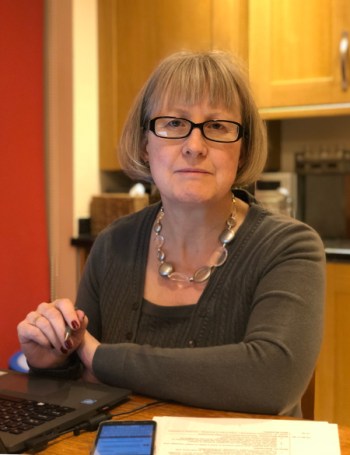
HMP Swansea, HMP Parc and HMP Cardiff rank amongst the worst prisons in the UK.
All have serious problems with prisoner-on-prisoner assaults, suicides, overcrowding and drugs. Here are some statistics:
Swansea: 80% of prisoners are in overcrowded cells. On arrival at the prison 53% have a drug problem and 32% have an alcohol problem.
Parc: this prison is ranked 111th place out of 117 in England and Wales. In 2017 there were 881 prisoner-on-prisoner assaults and 1451 incidents of self-harm.
Cardiff: 64.5% of prisoners are in overcrowded cells. There were 220 prisoner-on-prisoner assaults in 2017.
Usk/Prescoed: There is no full-time health care provision at either prison, concern by IMB of frequency of ‘lie downs’
If South Wales is serious about a new super prison it should first take a long look at what’s happened in North Wales:
Berwyn, the flagship of the MoJ which opened in February 2017.
Despite being Europe’s second biggest prison, with a capacity of more than 2,100, up to July of last year the £212m facility was less than a quarter full – with just over 500 inmates being catered for. By November there were 800 men.
Digging a little deeper, we find:
- HMP Berwyn received 319 complaints from prisoners February to September 2017.
- There were 219 complaints about the living quarters in the first seven months and 31 complaints about the quality of the food.
- There were 4 complaints about prisoner-on-prisoner violence or assault compared to 50 lodged by prisoners alleging abuse or assault by prison officers.
- Five of the alleged assaults were passed to North Wales Police for investigation, no action was taken over any of them.
- Ministry of Justice revealed that 376 items were confiscated from prisoners between its opening in February and October last year.
- 30 unspecified weapons, 56 items relating to drug paraphernalia and 34 mobile phones were among the items found in the possession of prisoners.
- Other items confiscated include 21 debt list items, 66 lighters, 17 USBs, 26 vaping objects and 10 chargers.
- There were also a number of items described as “miscellaneous” that were confiscated by prison officers.
So, whether prisons are new, old, Victorian, large, average size, have highly respected Governors or frankly those that should not be there (believe me I’ve met both!), it makes no difference as they all have similar issues to contend with:
Overcrowded. Understaffed. Underfunded.
To alleviate this prison crisis, we need fresh approaches in order to:
REDUCE the population: send fewer people to prison for non-violent offences
INCREASE the use of community orders
CUT the number of recalls
DEAL with indefinite sentences IPP’s convert to fixed length sentences?
FACILITATE prison release, therefore reduce self-inflicted deaths and reduce self-harm
REFORM prison estate and ensure all facilities are decent
SHARE best practice
INVEST in the long term and DELIVER in the short term
ADD more mental health facilities
The list can be endless and will depend on whether we see the purpose of prison as punishment, rehabilitation, both of these or a form of social cleansing.
Only last September, Lord McNally said in the House of Lords debate on prison overcrowding:
“We therefore have to understand the debate today which will be overwhelming in favour of sensible reform still has to pass that test of how we get a Secretary of State, a Prisons Minister and a Prime Minister who are willing to drive through reforms”
But that’s not the end of the story
We need a change in public attitude and that can only come from being informed and educated and not continually having issues covered up and hidden, the brushing under the carpet syndrome. There must be transparency.
We then need investment in life after prison in the provision of a home, a place of work, training or education and a reduction of the stigma in having a criminal record.
~

It’s been quite a year but not a quiet one. A retrospective on 2017
My year opened memorably
In January, the Prisons Minister, Sam Gymiah, wrote to sack me from my role as a Chairman of the Independent Monitoring Board (IMB) at HMP/YOI Hollesley Bay and to ban me for 5 years from IMB membership. I spoke out in the public interest for prison reform, highlighting key weaknesses I found in the MoJ. They shot the messenger.
I’ve written extensively on the reasons for this as those of you kind enough to have followed the story will know only too well.

No doubt the MoJ and IMB hoped they had heard the last from me.
I have not shut up and I have not gone away
In fact, if anything, as a direct result of media interest from radio, tv and the local and national press, my voice became heard more widely. I was given many chances to raise important issues on the state of prisons in England and Wales and I took them.
In April, I learned that I had been nominated for The Contrarian Prize 2017. It is a prestigious prize for those who have shown independence, courage and sacrifice. Those who nominated me liked the fact that I was unafraid to speak the truth to those in power, talking about the criminal justice system in the public interest. They recognised that doing so came at a huge personal cost including a face-off with the ‘goliath’ of the Ministry of Justice.

Also in April, producers at the BBC brought me onto a live link on BBC News Channel to talk about the problem of drones bringing in banned items into prisons. When presenter Julian Worricker asked for my take on it, I was able to outline the context of the issue and that it was impossible for all the drugs, phones etc within a prison to have been delivered via drones and that the new task force to be set up by the MoJ may have limited results. After working within the prison system for several years I was convinced that visitors and staff were likely routes in for contraband, yet security continued to be somewhat limited.
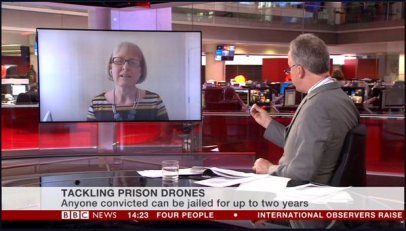
In May, I was delighted to join Lady Val Corbett, at her invitation, to attend the first of three ladies executive networking lunches. Each one inspired me and brought me into contact with remarkable women. Nicola McCalliog and Jo Apparicio are two women who I met through the lunches and who I especially admire; I look forward to the opportunity of working with them in the coming year. I have been amazed by the interest that was expressed in my own story and experience.
In my opinion, Lady Val has such determination, persistence, and guts! I thank her for accepting me into the Corbett Network as an associate member, it’s great to play an active part of something so vibrant.

In July, an article by Laurence Cawley was published on the BBC website. Here, the journalist wanted to explore in greater depth my experience with the IMB and the MoJ. The editorial team expected the article would get around 200,000 unique views. In fact, it reached 690,000 unique views on the first day and am told it was ranked the 8th most read article that day globally on the BBC. It was then I realised that there was a thirst by the public for coverage on justice matters.
In its mission statement, her Majesty’s Prison Service for England and Wales states that it:
“serves the public by keeping in custody those committed by the courts. Our duty is to look after them with humanity and help them lead law-abiding and useful lives in custody and after release.”
But it is shameful that HMPPS has fallen so short of its own mission statement. The situation in our prisons is worsening and really has become a humanitarian issue.

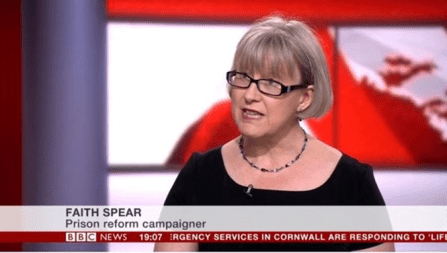
Also in July, I was invited to appear live on BBC News, this time in the studio, for an interview with Ben Brown about young people and children caught in the vagaries of the Criminal Justice System, highlighting the lack of care for these vulnerable individuals. This coverage proved a valuable opportunity to remind the public about the issue.
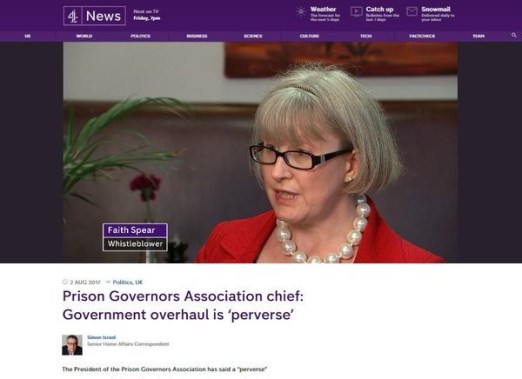
In August, I was invited to London to be interviewed by leading journalist, Simon Israel, who wanted to discuss the treatment I had encountered with the MoJ which tried to prevent me from speaking the truth concerning the prison crisis.
The interview went out on Channel 4 News causing quite a stir.
In the Autumn, I was part of one of the most important documentaries to be screened throughout the country. Here the theme was injustice and involved those from various angles within the Justice system. I was so delighted to meet those that had supported me over the last 18 months and together our voices were heard. There are more screenings planned for 2018.

This year new friendships were formed including Jane Gould (Clean Sheet) who works tirelessly in providing jobs for those that have been within the system and are often overlooked and penalised for having a criminal record. I joined her at the House of Lords for a tea reception.
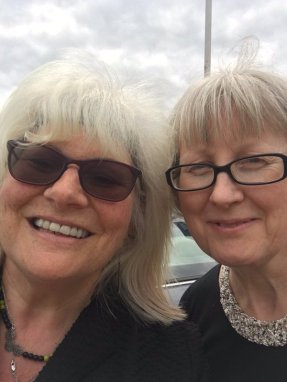
My coffee and cake buddy Justin Williams has been a great friend. He has been a sounding board and has supported me when I have come under attack from those who have disagreed with my stand for prison reform.

On a lighter note, I was invited to the Opening Concert for Malta’s Presidency of the Council of the European Union by my friend Trevor Peel. Other invitations included ‘Why me’ evening at Clifford Chance with Peter Woolf and Mel Giedroyc; Probation Institute launch of Probation Services for Armed Forces Veterans under Supervision; ‘Fighting for Prison Reform’ at UCL and Robin Corbett Awards.
I have also taken up my usual seat at the Justice Select Committee on numerous occasions, the most memorable being when the IMB and AMIMB were in front of the committee. I listened carefully and made copious notes when the IMB President John Thornhill gave evidence. This man had caused so much harm to me and yet he was unaware that I was sitting right behind him. When he was informed who I was his face was like a rabbit in headlights. His plan to get rid of me had backfired, I was still there!
There were so many other events, meetings, coffee and cake times with those that have walked with me through 2017. I thank them all.
Richard Rowley, Daniel, Cranni, Jonathan Robinson, Jonathan Aitken, Unsound Robin, Charlotte, Khatuna, Chris Moore, Michael Irwin, Tracy Edwards…and more.
I started 2018 by celebrating with my twin sister our birthdays.
This year represents a year of great opportunity.
I intend to seize it with both hands.

Trying to silence me didn’t work
This month marks one year since I sat in front of a disciplinary hearing at Petty France.

Interview outside Petty France straight after the disciplinary hearing
I had stood up and spoken out publicly on the state of our prisons and the state of the Independent Monitoring Boards that has a statutory role within each prison. Some may think I was too severe, and undermined the work that was done by volunteers. Others praised me for being brave enough to speak out as they were too fearful to face the consequences themselves.
I spoke from my experience and I spoke the truth. Seriously, the IMB is a shambles for the main part, a weak voiceless organisation that purports to be independent. Yes, there are some serious members that care about their role but blink and you will miss them! It’s not independent by any stretch of the imagination, it’s a department of the Ministry of Justice based at the MoJ headquarters Petty France.
I didn’t have to appear at the disciplinary hearing, the MoJ/IMB could have made a decision on my future as a Chairman of an IMB without my presence. I was determined to be there and try to uncover the ridiculous allegations against me. What a farce it was. I had been suspended from my role for 8 months and during that time was investigated twice by the MoJ.
During the investigation, I learnt that the article I wrote “Whistle blower without a whistle” in the Prisons Handbook 2016 was not an issue with the IMB Secretariat. The problem was that I spoke to the press. I was interviewed by my local paper ‘East Anglian Daily Times and by the ‘InsideTime’ prison newspaper. Suddenly my story was not only out in the open but was in every prison across the country.
Then came the prejudicial character assassination by both MoJ and IMB. I had struck a raw nerve. Three years previously the MoJ had commissioned Karen Page Associates to review the IMB. Conclusion was the IMB needed root and branch reform. They were so right, each board operating as a separate entity. There was nothing earth shattering about by article, I raised similar points to the review so why did the MoJ/IMB try to shut me down and silence me?
I believe it was a campaign initiated by a member of my board who had the audacity to send in additional material to the disciplinary hearing as he was scared that the decision would go in my favour and that I would reveal what was really going on in the IMB. It was rejected of course.
I didn’t realise that when you needed support or help in situations you faced as a member of an IMB it wouldn’t be available. There is so much I could say but basically the care team made up of members around the country that you could approach for support and guidance had been disbanded. So where difficult situations arose I was on my own.
Entering the hearing I was faced with a couple of familiar faces. The first panel member was on the executive committee for AMIMB. The same association that without permission had taken part of my article and printed it in their magazine and sent it to their members. So, no impartiality there.
I realised the MoJ had decided to change the terms of reference for the investigation without informing me, is that right?
The investigation was as a result of being suspended yet the direction and conclusion of the investigation had changed. I also found out the MoJ had been watching my every step for months and had a list of what I had said and when. Boy they were determined to silence me. I requested notes taken during the hearing and was disappointed but not surprised that so much that I had said was missed out. I don’t know what so-called “evidence” was sent to the Prisons Minister everything was done behind closed doors. They had made up their minds, nothing I could say or do would change that. Just as in the beginning of their campaign against me I knew there would not be fairness. Ironic that the IMB strapline is “Monitoring fairness and respect for those in custody”
Trying to silence me didn’t work
Since the hearing and at every opportunity without my hands being tied anymore, I have spoken out for positive change in the Criminal Justice System both locally and nationally.
I have met some amazing people, visited excellent schemes within prisons and worked with those I admire for their stand.
In trying to silence me the IMB/MoJ have given me a voice, a National voice. As I have said so many times before, I have never tried to raise my personal profile, for me the priority has been the issues I have raised. If you knew me you would understand this.
There have been so many that have walked beside me over the past year, some I have laughed with and some cried with. We have encouraged each other, we have shared our stories. I thank them all.
I am stronger now than I was a year ago and even more determined to play a part in the change that is needed within the Criminal Justice System.
 The Criminal Justice Blog