Home » HMI Prisons
Category Archives: HMI Prisons

Fork in the road or end of the road for IMBs?
The first of April had always been April Fools Day, a day to play jokes and when living in France sticking paper fish on each other’s backs.
But in 2016, all that changed. It was as though I had swapped the fish on my back for a target. On the first of April, I was invited to write an article in The Prisons Handbook with a deadline of a week later. The subject matter, My experiences of the Independent Monitoring Board (IMB).
I had been a member since December 2012, Vice-Chair for two years and the Chair for three months. My life had been overtaken with not just monitoring my local prison HMP/YOI Hollesley Bay but managing my team of nine individuals. I was tired and frustrated to say the least and the invitation by the Editor Mark Leech was just what I needed to release my thoughts. I had already written half of it even before Mark asked me as I often wrote to clear my head.
Daisy Mallet

We had agreed that I would not put my name on the piece but to use a pseudonym. For me it was important for issues to be raised and not my profile. So, the author ‘Daisy Mallet’ was born and the article “Whistle-Blower without a whistle” was ready for publication, on time.
Sometimes you have to expect the unexpected
The President of the IMB, John Thornhill received a copy of my article before publication and sent it with a covering letter to every member of the IMB, including the Secretariat basically dismissing everything I had raised and added that he had forwarded it to the Ministry of Justice lawyers!
Oh boy I had opened a can of worms. Not the first time and probably not the last.
Two years previously the MoJ had commissioned, at taxpayers’ expense, Karen Page Associates to review the IMB. Its conclusion was that the IMB needed root and branch reform. They were so right, each board operating as a separate entity.
It wasn’t long before it was discovered that the author of the article was in fact me and to this day I don’t know how that happened.
There was nothing earth shattering about my article, I raised similar points to the Karen Page review so why did the MoJ/IMB try to shut me down and silence me? The Ministry of Justice, President of the National Council, IMB Secretariat, National Council and the local IMB board all decided that I needed to be shut up and shut up quickly.
The bullying started, then the intimidation, then the lies and then the prejudicial character assassination.
Over a period of nine months, they all tried unsuccessfully to silence me, I was suspended from my position by the Prisons Minister, investigated twice by the Ministry of Justice, faced a disciplinary hearing in Petty France, and finally dismissed from my role by the next Prisons Minister and banned from membership of the IMB for five years.
All because I told the truth.
But I stood by all I had written.
And still do.
Media interest
During this period, I was inundated with requests by the press for interviews, local, national and international, catapulted into the media world, a world I had little knowledge of. Suddenly my story was not only out in the open but was in every prison across the country. I was listened to and the invisible walls surrounding the IMB were slowly but surely crumbling away.
It wasn’t just me that had come to the realization that the IMB had become an ineffective organisation, its mission statement was not fit for purpose, claiming that:
“Their role is to monitor the day-to-day life in their local prison or removal centre and ensure that proper standards of care and decency are maintained”
In my experience this was grossly misleading because they were unable to ensure anything. I had seen for myself that proper standards of care had not been maintained in prisons and neither had proper standards of decency been maintained. In reality the IMB had therefore comprehensively failed in its purpose.
Not shutting up and not going away
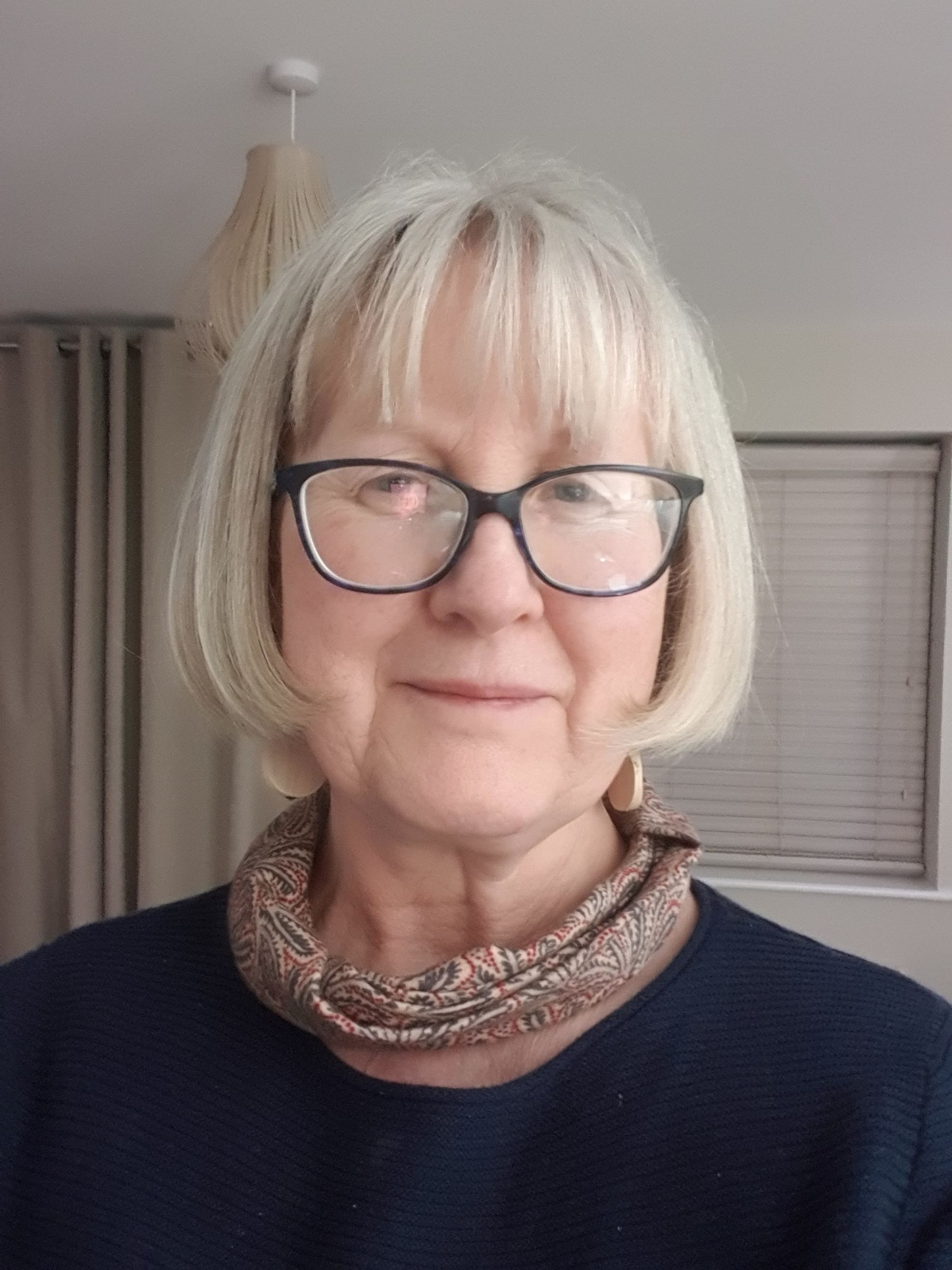
Over the past 10 years I have not stayed silent and continue to write articles, some controversial, not just on my own blogsite www.thecriminaljusticeblog.com but in magazines, newspapers and journals around the world.
A respected leader in the justice sector recently wrote this about me:
“Faith Spear is an independent criminal justice commentator, criminologist, and the author of The Criminal Justice Blog. She has become a powerful voice in the national conversation about prisons, justice, and reform.
Drawing on research, frontline insight, and lived experience, Faith shines a light on the realities of the prison system and the people within it. Her work is grounded in a simple belief: if we want a safer and fairer society, we must be willing to ask difficult questions and challenge the systems that are not working.
Through her writing and public commentary, Faith brings attention to the issues that too often remain hidden. She amplifies voices that are rarely heard, exposes systemic failings, and encourages honest dialogue about what meaningful reform should look like.
Over the years she has built a reputation as an advocate who is thoughtful, courageous and unafraid to speak truth to power. Her work seeks not only to highlight problems but to encourage solutions rooted in humanity, fairness, and hope”.
This accurately portrays what I have tried to do all along. Despite the pain, stress and abuse I have endured as a result of writing “Whistle-blower without a whistle”, I would not want to turn back the clock.
Ten years after my article was published, the IMB is still far from being independent, members are still not paid for the work they do, and annual reports are left sitting on the proverbial shelf to collect dust. Year after year the same issues are raised with little progress.
The President has been replaced by a National Chair; more layers of management have been introduced, and now an interim National Chair is in place, that person is Jane Leech (no relation to Mark)
Do I have high hopes for change?
No, not really and that’s because I have come across that name before.
The same Jane Leech was on the panel which considered my complaint of being bullied by members of my board in our April 2016 board meeting. My complaint was dismissed out of hand. “that on a balance of probability (9 members versus myself) the complaint has not been substantiated”. This was on the basis of the evidence that was provided. That speaks volumes. In actual fact the members of my board had blindsided the investigator, they colluded against me and the panel including Jane Leech had accepted their assertion that “…there is consistent evidence that the meeting was managed in a professional and calm manner”.
It wasn’t professional and it wasn’t calm. It was bullying in the workplace, pre-meditated and organised with prior knowledge of the MoJ. They know it and I know it.
Exceptionally, no minutes of that meeting were to be found. The panel pointed out that formal minutes would have assisted in assessing what was said and by whom.
We always minuted every meeting.
The panel also mentioned that no independent person was present.
I’m sure that was intentional too.
I still have many questions, but I doubt they will ever willingly give me the answers.
The membership of the IMB has halved since I was part of it.
Their mission statement has changed too:
“IMB members are the eyes and ears of the public, appointed by ministers to perform a vital task: independent monitoring of prisons and immigration detention. They report on whether the individuals held there are being treated fairly and humanely…”
You can report all you like but when IMB annual reports are already wildly out of date by the time they are published and some IMB’s fail even to write an annual report, does the public receive the true picture of the crisis within our prisons?
Slow painful demise of IMBs sped up by cost cutting of all Arm’s-Length Bodies across government
Between writing this article and publishing it, the Insidetimes newspaper had a scoop, the headline:
“EXCLUSIVE: Prison watchdog merger spells the end for Independent Monitoring Boards”
The Independent Monitoring Boards, HM Inspectorate of Prisons and Lay Observers are to merge as a cost-cutting exercise as a result of a review within the Ministry of Justice.
This hasn’t come as a surprise to me as there have been many whispers in the so-called corridors of power in Westminster. In addition, in 2020 I was involved in writing a response on behalf of several charities in the consultation “Strengthening the Independent Scrutiny Bodies through legislation”
The final question: “Do you think that HMI Prisons, the IMB’s, and the Lay Observers should all be merged under HMI Prisons (the Scottish model) reflecting what HMI Prisons Scotland have where HM’s Chief Inspector of Prisons for Scotland (HMCIPS) has the responsibility for prison inspections, prison monitoring and prison escorts? Please give a reason/s for your answer.”
Five years and countless Justice Ministers later and the watering down of scrutiny bodies will be reaching its conclusion. In what form the merger will take place, who knows. But in my experience, cost cutting schemes rarely bring about effective solutions.
One thing I will be delighted about is that there will no longer be an independent monitoring board that is everything but independent. Hopefully the new revised organisation will finally fulfil its remit as part of the National Preventative Mechanism (NPM) and OPCAT.
But what I do know is that our prisons are in crisis and reform of our prisons is taking too long.

Prisons: still we build them and still we fill them
Transcript of speech by Faith Spear FRSA delivered at Battle of Ideas, Church House, Westminster, London on 20 October 2024.
“I’m not a political person… I’ve never wanted to get involved… I don’t like the idea of having to play to someone else’s tune and say things I don’t necessarily believe in.”
For those who know me, they would say that this sounds like something Faith would say, but it wasn’t me this time. In fact it was James Timpson – Lord Timpson, Minister of State for Prisons, Parole and Probation – talking with Andy Coulson in an interview a couple of years ago.
Now as Prisons minister, he must have changed his tune?
In the same interview he also said that instead of people serving 50% of a sentence in prison, this should be reduced to 25%. I wonder if he has changed his mind about that too?
But one thing that I have said repeatedly is:
“We have to stop this madness of believing that we can change people and their behaviour by banging them up in warehouse conditions with little to do and not enough to eat and sanitation from a previous century.”
The prison estate is running out of space and Early release schemes have been implemented by the new government to avoid gridlock in the justice system.
Mainstream media frequently report on prisons in England and Wales that are squalid and fuelled by drugs.
I have seen it for myself and have been writing about it for over 10 years. The lack of rehabilitation, the lack of education, lack of purposeful activity, overcrowding, understaffing, gang related violence.
Yet still we build them and still we fill them.
In 2016 I was invited to write an article from my experience as a chair of an Independent Monitoring Board (IMB) in my local prison in Suffolk. It was factual, honest and challenged the independence of the IMB. Even before it went to print in The Prisons Handbook, I received notification that it had been sent to the Ministry of Justice lawyers.
What followed was 9 months of hell; I was bullied, suspended from my role, gagged and investigated by the MoJ – twice – called in front of a disciplinary hearing at Petty France and then dismissed.
Two Prisons Ministers were involved in the whole debacle.
My crime? I broke the IMB code of conduct.
One of the investigators wrote:
“In my view she breached the code of conduct, but as there is no clear IMB code of conduct or any reference to the Cabinet Office guidance, this was not entirely Ms Spear’s fault.”
Allegedly I broke the code of conduct which did not exist.
Even the then President of the IMB wanted to rewrite the ‘Constitution Template’, to close a loophole to dissuade others in the IMB from speaking out.
Not the last bastion of chauvinism I have come across.
HM Chief Inspector of Prisons, Charlie Taylor, is saying the same things today as I said then. He’s paid to say these things; I was dismissed for saying these things.
People always harp on about the prisons in Scandinavia, Halden and Bastøy in Norway seem to be the best known. But few seem to know that a prison in England had visitors from Scandinavia looking at their regimes etc with a view to model some of their best practices.
It was called HMP Blantyre House located in Kent, and over in Norway a resettlement prison was set up based on the principles and methods used at Blantyre House.
So, how was this beacon of best practice recognised here?
Instead of promoting their good practice, the then Director General of the Prison Service authorised squads of approx 80 officers and dogs, led by the then Governor of Swaleside prison, to raid Blantyre House.
They trashed it.1
All prisoners were tested for drugs, yet not a single test proved positive. The whole episode ruined a lot of the trust built up between prisoners and staff.
The then Governor of HMP Blantyre House was unaware of what was about to happen because he was removed from his position hours before.
But it was a prison that exceeded all their key performance targets and had the lowest rate of drug abuse of any prison in the UK.
Even when something works, still they trash it.
So, when we read the Ministry of Justice mission statement: “The Ministry of Justice is a major government department, at the heart of the justice system. We work to protect and advance the principles of justice. Our vision is to deliver a world-class justice system that works for everyone in society” I just don’t believe it.
And neither should you.
~

From the speech by Faith Spear FRSA given 20 October 2024 at Battle of Ideas 2024 held at Church House, Westminster, London, convened by Academy of Ideas.
Speaker bio https://www.battleofideas.org.uk/speaker/faith-spear-frsa/
~
- Book ‘Beyond Redemption: The Truth Behind the Raid on Her Majesty’s Prison Blantyre House’ by Eoin Edward McLennan-Murray. Hardcover – 19 Oct. 2023 ↩︎

The watering down of prison scrutiny bodies
I want to concentrate on two scrutiny bodies: His Majesty’s Inspectorate of Prisons (HMIP) and the Independent Monitoring Boards (IMB).
It appears that both have changed their remit to compensate for the ineffectiveness of their scrutiny. Are they trying to improve something, or are they trying to hide something?
Does the Ministry of Justice (MoJ) want these bodies to obfuscate the facts of the state of prisons? The dilution of scrutiny results in degradation of conditions for your loved ones in prison, staff and inmates alike, both in the same boat.

His Majesty’s Inspectorate of Prisons (HMIP)
Website https://www.justiceinspectorates.gov.uk/hmiprisons/
HMIP inspections have routinely issued recommendations to prisons where failure in certain areas needed to be addressed and in cases where it is possible for issues to be rectified or improved. Applying the healthy prison test, prisons are rated on the outcomes for the four categories below:
- Safety
- Care
- Purposeful activity
- Resettlement
Since 2017, if the state of a prison is of particular concern an Urgent Notification (UN) has been issued. This gives the Secretary of State 28 calendar days to publicly respond to the Urgent Notification and to the concerns raised in it. There have been twelve Urgent Notifications issued so far, and the details from the latest urgent notification for HMYOI Cookham Wood, for example, is uncomfortable reading:
“Complete breakdown of behaviour management”
“Solitary confinement of children had become normalised”
“The leadership team lacked cohesion and had failed to drive up standards”
“Evidence of the acceptance of low standards was widespread”
“Education, skills and work provision had declined and was inadequate in all areas”
“450 staff were currently employed at Cookham Wood. The fact that such rich resources were delivering this unacceptable service for 77 children indicated that much of it was currently wasted, underused or in need of reorganisation to improve outcomes at the site.”
Source: https://www.justiceinspectorates.gov.uk/hmiprisons/wp-content/uploads/sites/4/2023/04/HMYOI-Cookham-Wood-Urgent-Notification-1.pdf
However, the Inspectorate now have a new system where recommendations have been replaced by 15 key concerns, of these 15, there will be a maximum of 6 priorities. On their website it states:
“We are advised that “change aims to encourage leaders to act on inspection reports in a way which generates real improvements in outcomes for those detained…”
Source: https://www.justiceinspectorates.gov.uk/hmiprisons/about-our-inspections/reporting-inspection-findings/
One of my concerns is whether this change will act as a pretext to unresolved issues being formally swept under the carpet. A further concern is what was seen as a problem previously will now be accepted as the norm. As a consequence how will the public be able to get a true and full picture of the state of the prisons?
Will there be a reduction in Urgent Notifications?
I think not.
Or will the issuing of urgent notifications be the only way to get the Secretary of State for Justice to listen and act? In my view, issues that would previously have been flagged up during an inspection are more likely to disappear into the abyss along with all past recommendations which have been left and ignored.
Could it be said that this change of reporting is a watering down of inspection scrutiny that you expect of the Inspectorate?
Before you answer that, let’s look at the IMB.
Independent Monitoring Board (IMB)
Website: https://imb.org.uk/
Until very recently, the Independent Monitoring Board (IMB) website stated that for members: “Their role is to monitor the day-to-day life in their local prison or removal centre and ensure that proper standards of care and decency are maintained.”
But looking at the IMB website today I have noticed that they have changed their role. Instead, it now states that members: “They report on whether the individuals held there are being treated fairly and humanely and whether prisoners are being given the support they need to turn their lives around.”
Contrast that with what the Government website http://www.gov.uk displays, where you will find two more alternatives to what the IMB do:
- 1st. “Independent Monitoring Boards (IMBs) monitor the treatment received by those detained in custody to confirm it is fair, just and humane, by observing the compliance with relevant rules and standards of decency.”
Source: https://www.gov.uk/government/organisations/independent-monitoring-boards-of-prisons-immigration-removal-centres-and-short-term-holding-rooms
The first is a large remit for volunteers as there are rather a lot of rules to be aware of. I’m sure the IMB training is unable to cover them all, so how can members be required to know if the prison is compliant or not.
- 2nd. “Independent Monitoring Boards check the day-to-day standards of prisons – each prison has one associated with it. You don’t need specific qualifications and you get trained.”
Source: https://www.gov.uk/volunteer-to-check-standards-in-prison
This checking comes across as a mere tick box exercise, which it certainly should not be. Again, I question whether IMB members training is sufficient. What they say and what actually happens is another example of the absence of ‘joined-up’ government.
In point of fact, the IMB has never been able to ensure anything; if it had then they have completely failed in their remit, as evidenced by the decline in the state of prisons in England and Wales. Clarifying their role is an important change, and one I have been calling out the IMB on for years.
Could it be said that this change of wording is a watering down of monitoring scrutiny you can expect of IMB members?
To help you answer that, you may also need to consider the following:
Although the IMB has become a little more visible, I still have to question their sincerity whether they are the eyes and ears in the prisons of society, of the Justice Secretary, or of anyone else?
The new strapline adopted by IMB says: “Our eyes on the inside, a voice on the outside.” Admirable ambition, and yet compare that with the lived reality, for example, of my being the eyes on the inside and a voice on the outside, which was exactly the reason why, in 2016, I was targeted in a revolt by the IMB I chaired, suspended by the then Prisons Minister Andrew Selous MP. For being the eyes on the inside and a voice on the outside I was subjected to two investigations by Ministry of Justice civil servants (at the taxpayer’s expense), called to a disciplinary hearing at MoJ headquarters 102 Petty France, then dismissed and banned from the IMB for five years from January 2017 by the then Prisons Minister, Sam Gyimah MP.
If the prisons inspectorate have one sure-fire way of attracting the attention of the Secretary of State for Justice in the form of an Urgent Notification, then why doesn’t the IMB have one too? Surely the IMB ought to be more aware of issues whilst monitoring as they are present each month, and in some cases each week, in prisons. Their board members work on a rota basis. Or should at least.
And then of course there is still the persistent conundrum that these two scrutiny bodies are operationally and functionally dependent on – not independent of – the Ministry of Justice, which makes me question how they comply with this country’s obligation to United Nations, to the UK National Preventative Mechanism (NPM) and Optional Protocol to the Convention against Torture and other Cruel Inhuman of Degrading Treatment or Punishment (OPCAT), which require members to be operationally and functionally independent.
In 2020, I wrote: “When you look long enough at failure rate of recommendations, you realise that the consequences of inaction have been dire. And will continue to worsen whilst we have nothing more compelling at our disposal than writing recommendations or making recommendations.”
and: “Recommendations have their place but there needs to be something else, something with teeth, something with gravitas way beyond a mere recommendation.”
As a prisons commentator I will watch and wait to see if the apparent watering down of both of these organisations will have a positive or detrimental effect on those who work in our prison environments and on those who are incarcerated by the prison system.
As Elisabeth Davies, the new National Chair of the Independent Monitoring Boards, takes up her role from 1st July 2023 for an initial term of three years, I hope that the IMB will find ways to no longer be described as “the old folk that are part of the MoJ” and stand up to fulfil the claim made in their new strapline: “Our eyes on the inside, a voice on the outside”.
And drop the misleading title “Independent.”
~
Photo: Pexels / Jill Burrow. Creative Commons
~

