
A couple of months ago, I travelled to Edinburgh to interview Simon Israel, Former Senior Home Affairs Correspondent at Channel 4 News.
I braced myself for the weather and arrived by train in a storm where an umbrella proved completely useless. Yet within half an hour a rainbow welcomed me to my stay at The Royal Scots Club. I invited Simon to join me there and what a wonderful opportunity we had to talk and have lunch together.

FS: How did it all start?
SI: I studied maths and logic at Aberdeen University. I hated it, but I did it. Whilst there I got involved in the student newspaper and I thought it was wonderful. No rules.
I came out of university and thought I’m going to be a broadcast journalist in radio. Commercial radio was booming, so there were loads of jobs out there. I did 3 months at the National Broadcasting School, Soho then started off in local radio. I then arrived in London LBC IRN and was there for an awful long time, maybe too long, probably. Working in local radio I really had a brilliant time. I went all over; India, South Africa, Bosnia during the war, Kenya, and various places in Europe. I did lots of things.
Then ended up at ITN – pissed off the editor in radio who suggested I might want to go to another department.
I went to Channel 4 and said, “I know nothing about TV.”
“Ok, we will take you,” they said.
I knew a lot about journalism and stayed at Channel 4 for more than 25 years. I loved the ethos of Channel 4 News, that is where I think I fitted better than anywhere else.
FS: When I have listened to your reporting, there are very few what I call Happy Stories.
SI: No, I don’t do happy stories, well, I’ve done one or two but not very many. I drifted into the area of Criminal Justice and Policing, and it is not a world of happy stories; it never is really.
FS: So, you have focused on injustice.
SI: I think that was a very key theme, it manifested itself in various ways.
I came back to this idea that of giving people a voice that would struggle to get one.
I dabbled in politics, but nothing in politics is secure for very long. Everything is a moveable feast in politics, and I found that difficult as I needed a set of actions that I can build on. That’s a fact, that’s a fact, that’s a fact. I cannot build on X has got an opinion, or X tells me this is what is going on.
FS: Does that prevent people accusing you of bias?
SI: They can accuse me of bias – I can only be biased if I skew things so much that I’ve distorted the story. I try very hard not to.
This is the world of entertainment – radio-television, so it is not the same as newspapers as its dependent on pictures. In radio I felt much more secure because you could tell things straight.
My idea was if the person stopped watching or listening within the first 5 or 10 seconds, however long the rest of the piece was, I would have lost the whole point of why I was doing it. So, I was conscious all of the time however long or short the report was, I had to keep their attention.
FS: I suppose it is like that with writing a book you have got to keep people’s attention.
SI: You have to keep them going to the end, they have got to be interested, outraged, sad or anything that can sustain their attention throughout the whole thing. It’s not about whether you liked it or not, might agree or disagree with it. I think you get to the end to allow a justifiable thought about whatever it was that I was reporting on.
Someone would say “I watched you, but I got distracted after a few minutes, then I failed didn’t I.
FS: Do you go back and listen?
SI: I could have gone back in post-mortem style.
Most of the stuff I do people were interested in, they are interested in grim stuff. I’ve been told by an editor:
“Make them cry in front of the camera.”
I said, “Excuse me.”
I can see where the editor is coming from, and you can learn to some extent. There is an element of manipulation sometimes because you know what sort of questions might produce, for example a tear. I know that sounds weak, you do try and avoid as there’s a tendency to say I am here because I am praying on your emotions, I’m not here to give you a voice or find out a different view to what’s happened.
So to that classic question “How do you feel?” How would I feel being asked the same question?
I interviewed Mina Smallman in her house. I broke the story along with Vikram Dodd, we both had different sources.
I had sat on the story for 2 or 3 days, because I couldn’t get a second source. There was a risk other people knew what I knew. I always have to have 2 sources; they might not necessarily know the same things, but they have to share the knowledge (some agreement in what they know) that something happened.
In the process, the Met Police behaved appallingly, they wouldn’t confirm or deny anything. They wouldn’t give us a statement until we said we are running this tonight and the Guardian are running it too. We will just say you refused to comment.
We turned up at her doorstep to deliver a letter saying what we knew and the person at the door said Martin Bashir was there with a camera and she is not talking at the moment. Mina Smallman knew Martin Bashir (Religious Correspondent editor) as she was in the clergy at Chelmsford Diocese.
It took me many months to persuade her to talk to me, partly because of what she was going through, losing her daughters, the way the Met Police had treated her and the trial etc. at that time the investigation was still live. God knows what was going through her mind.
FS: When you have to cover stories such as that, where does your strength come from, family, colleagues?
SI: No, no. I don’t know. It comes from 30 years of experience. I don’t know, I’ve never been asked that before. You just do it.
I like to think I am very sensitive to other people’s emotions. I realise that many of these interviews are not easy for them. Easy for me; I just ask the questions, pack up and leave. If they have agreed to do one then somehow, they manage to find the strength from somewhere.
FS: So, you give people a platform to be able to speak?
SI: Yes, I’ve watched interviews where some get others to speak in quick 20 second terms. But to engineer answers out of people to me is wrong. It’s not my job to tell people how to answer the questions. I’ve watched interviews where they have asked the interviewee to leave off bits.
I can’t do that.
I’m not here to try and engineer people into saying things that are convenient to me.
FS: When you interviewed me in 2017 that never came across. You asked the questions fairly sensitively, managed to get the main points over and it fitted with the story.
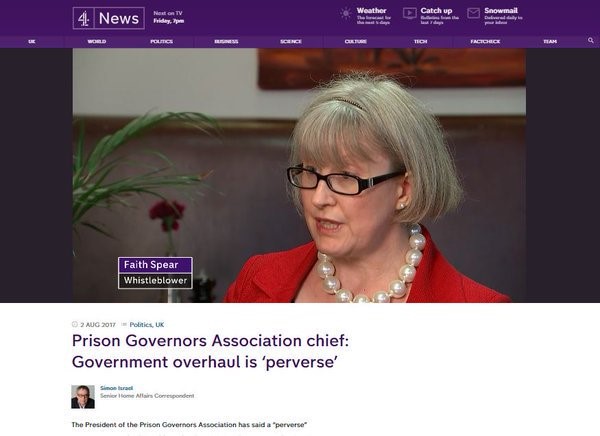
SI: You gave a very good interview, I didn’t tell you how to do it, I didn’t tell you how to answer the questions.
I did a story over a period of time on student suicides, that was really difficult as I have attended enough inquests to understand the utter vacuum created by someone who has killed themselves. The family find it nigh on impossible to come to grips with something like that.
When someone has been killed by another, there is a focus on the other person, trial – justice – truth. But in suicide it’s a completely different world and the self-blame and anguish constantly thinking “I should have done something”.
Families tend to throw themselves into campaigns, a way of managing their own conscience, I think.
FS: To try and raise the issue so that others can be prevented from going through the same?
SI: Yes, there are limited positive ways of moving on.
When you interview you can’t ask “how much do you blame yourselves for…” and even if you got an answer would it be a fair answer anyway?
Unless someone has left a note or have explained in detail why they got to the point they have, it doesn’t stop people thinking.
If I had known…
I would have made sure…
I would have done this…
Their own memory can become distorted because they did all those things anyway.
In reporting on efforts to get justice, you have to be minded that people see justice and tragedy in different ways, so they need to be handled in different ways.
You sub-consciously learn if I am really honest the ways to try and allow people to have the freedom to say what they want to say, yet make sure you are still independent. To be fair to a story is trying to figure out where in a vague sense the truth is – that sounds a bit worthy. You go for what you think or may come closest to the truth. That’s part of your role as a journalist. You may not find the truth; you would be naïve to think if you did. It you get closer to it, that’s as good as you can do really.
I have covered a lot of prison deaths where I found things utterly appalling and wandered off thinking “why can’t I get the public to care more about this than they do”. Gaining public sympathy is a real uphill struggle even when I have seen things that are so outrageous and I’m going, “why aren’t they the responsible all banged up?”
FS: Where’s the accountability?
SI: That’s my argument, it effects the system so much that they are so used to being too avoiding that the politician is the same “I’ll get no votes…”. Most of these people in prison will come out and end up being someone’s neighbour at some point… SO GET THEM READY.
I appreciate prisons have been in crisis for years, this isn’t new today. But we’ve done that classic thing where we park that world in a layby and just shrugged our shoulders.
FS: Do you believe we live in a punitive society?
SI: We live in a society full of cowards, utter cowards, can’t stand up and say “do you know what, this can’t happen anymore”
When you look at the Children’s Commissioner stand up because they know they will get an audience and so people will listen when they shout. But once someone is 18 and someone stands up and says exactly the same thing, people will stop listening and that’s ridiculous. It’s not rational really, it’s absolutely ridiculous.

FS: You are working with Frances Crook at the moment – a commission – what is this and what is its aim?
SI: Her background is essentially a Labour one. Frances took me to lunch and asked if I would like to be on this panel looking at the relationship between the Executive and the voter. Essentially the shape of democracy, but it was also designed to fit in with the end of the reign of Queen Elizabeth II, the start of a new monarch and the idea that, somehow or other, there had to be a better way of holding the Executive to account following the recriminations over Boris Johnson and his government, basically. So, because Britain doesn’t have a constitution in reality, it was designed to look at what a better system could have for holding the executive to account.
But how do you hold the executive to account when they go off piste and create all those walls you have to climb and moats you have to cross where you go “Drawbridge is up, you cannot come in”?
I get the point.
You come back to the journalism; the unelected part of the journalism is not really just to call people to account but to change things.
I was always trying to do stories to be a factor in trying to change the thing that wasn’t right. I have done that once or twice; I know I have. It’s not that I have moved mountains, but I’ve improved the lives of people of individuals, so that makes it worthwhile to me.
An example was the Cherry Groce case. I have to say legally, was accidently shot by a police officer in a raid on her home looking for one of her sons, who wasn’t there, this sparked the 1985 Brixton riots. She was paralyzed and ended up in a wheelchair for the rest of her life. In that room where she was shot was her son Lee aged 11 years.
A police officer was put on trial and was acquitted. After Cherry’s death, in 2011, the pathology report linked the shooting and the kidney failure that led to her death. This in turn triggered an inquest. Cherry had lived longer than what was expected, and the trial had never addressed the circumstances on how his mother came to die.
I was at Channel 4 at the time and received a tip off about the pending inquest. I contacted Lee to ask if he would be willing to talk. He said, “I’ll get back to you”. He never did, and I never saw any write up of this inquest.
About a year later he called me, “I think I need your help.”
“The police have a secret report which they won’t let me see, damming of the Met and I can’t get legal aid for the inquest, which has been delayed. All the other parties have QC’s, and they won’t give me legal aid.”
I said we are going to do a story, I did a piece which was well received. To force things to happen a petition was put up on change.org and once the story was out the signatures increased to 120,000. We had started the motion and the Lewisham MP got involved by banging on the door of the legal aid agency and managed to get Lee legal aid.
Lee got his unlawful killing verdict, the Met had to release the report and the man that shot Cherry came to give evidence.
Lee walked away saying “That was for my mum, I got it”.
The head of the Met apologised face to face and the family were paid compensation as the original money paid out was to cover only up to 10 years as that was the estimate of how long Cherry would live after being shot. She lived 16 more years with the financial burden on the family.
In 2020, Lee Lawrence won the Costa Biography Award for his book “The Louder I Will Sing: A story of racism, riots and redemption”.
In Brixton Square there is a huge structure put up by the Met Police to honour the life of Cherry Groce.
So I made a difference.
FS: What makes you laugh?
SI: Children make me laugh, I love children, their humour is instantaneous.
FS: What makes you cry?
SI: I’m not sure loss does, I lost my dad, but didn’t cry, quite a long time ago. Will I cry if my Mum died? Not so sure, not because I don’t love them or care about them.
I sometimes cry out of frustration and sometimes out of appreciating someone’s hurt. The sheer inhumanity of it all. I cried in Rwanda when we picked up a desperately injured child and took them to hospital. I think I cried out of the sheer chaos of everything, and this manifested itself on this poor child who had no control over anything. I had met them for half an hour max.
I manifest my emotions that are linked to other people’s emotions I think, whoever that might be rather than my own.
I’ve led a fairly happy life; I haven’t suffered really in any shape or form that I can say is relevant to anything.
I had a great childhood.
I had a great education.
I had a relatively great career, maybe I didn’t get all the way to the top, but that didn’t matter. I got to do what I wanted to do and still do.
You look back and say, “I can’t really grumble.”
~
Photographs used by kind permission of Simon Israel.
~



 The Criminal Justice Blog